
What I Learned From Drinking 800 Beers…
A unique look at beer and responsible alcohol consumption.
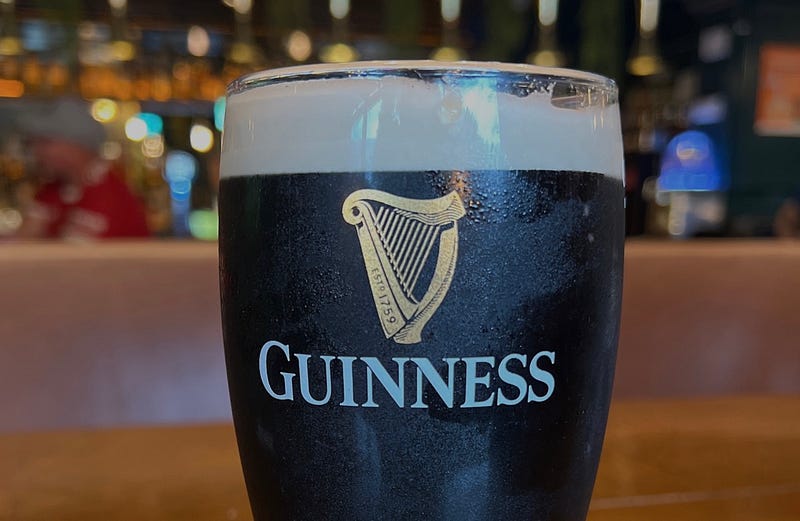
That’s 800 unique beers, to be more exact. This is going to be a very unusual and perhaps unexpected post from me. I’ve already been toying with the idea of writing about this at 500 beers, but then I got busy reviewing Apple Silicon Macs, building bucketloads of LEGO or educating folks on accessibility and the Medium Partner Program. I got distracted. But, I caught myself a week or so ago thinking about this article again and sharing some learnings around the love of beer as a lightweight read, just like a good session IPA.
A word of caution. There is nothing wrong with liking alcohol. However, alcohol abuse is very dangerous. This article does not condone or encourage alcohol abuse. If you’re struggling with alcohol addiction, please skip this article and reach out to your sponsor, nearest professional or support group.
My love of beer officially started on the 30th of September 2017 in a pretty well-known place called Copenhagen, in Denmark. I was visiting a friend of mine who was already a good few steps into her beer discovery journey. I was a noob who had the occasional Heineken, cheap Spanish supermarket beer from brands that nobody heard of, and maybe a Guinness here and there. My friend, Timea, in a single night managed to change that by introducing me to IPA alongside this fairly popular app call Untappd.
Since September 2017, I have been religiously recording every new beer I’ve tried.
Nearly six years later, I am looking at 802 unique beers recorded on my Untappd profile. You can check the profile out yourself, I ain’t shittin’ you, I got nothing to hide. In fact, if you’re into beer, add me as a friend. On that note, let me grab myself a beer, and make that a grand total of 803. Sláinte! Today’s special is no other than Mikkeller’s Passion Pool Shallow, a sour, non-alcoholic beer, which brings me to my first point.
Non-alcoholic beer is good!
I never drink to get drunk, and I never in my life got drunk. That is never the intention or the point. For me, it’s all about flavours, having something nice to sip while having a conversation or getting refreshed. The great news for anyone who loves beer is that non-alcoholic beer is getting better and better. The first one I tried was Heineken, but here’s the problem with Heineken. It’s a shite beer regardless. It’s horse-piss. With or without alcohol, it’s just as bad.
Thankfully, breweries realised quickly that there is a considerable market for beer that’s legal even when you’re driving, or if you’re a minor. Or perhaps you’re pregnant, but would still like to enjoy a cold one. In all of those cases and many more, non-alcoholic beers are your best friend, and they’re getting really good. This sour one I’m having right now is quickly becoming one of my favourites. I rated it a 4/5, but I’m starting to think it deserves a 4.5/5 at least!
And don’t for a second think that only certain beers can be made non-alcoholic. Oh, no! I’ve had nice IPAs, lagers and even stouts, like the latest non-alcoholic Guinness, which yes, doesn’t taste 100% like Guinness, it feels a tad more chocolatey and perhaps a little less like liquid lunch, but it’s great, nevertheless, and I highly recommend it.
Endless diversity in a glass…
We talk about people being diverse and unique, but you know what? I think beer beats human diversity any day. In these six years, I have discovered so many differentiators between beers, it’s nuts. From lagers to stouts, from IPAs to sours, from session IPAs to imperial stouts and ales, there’s just so much to discover and experience!
Then, of course, there are all the flavours. Some fruity and sweet, others more bitter and harsher than your mother in law on a bad day. Some will fuck with your brain in ways you never expected, chief among them Más Agave Clásica Lime by Founders. At 10% alcohol you’d think it’s a boozy drink, but my God it’s easy to down. So are all the Northern Monk beers. One juicier than the other. And then there are at the famous wheat beers or even the rice beers!
The beverage diversity that breweries can generate with just a few ingredients is mind-boggling, but you’ll only experience it if you actively search for places that sell beers made by smaller breweries or pubs that sell craft beers, be that on tap, bottle or can.
Sour beer is an acquired taste
I felt this needed to be called out separately. Most people are familiar with lagers, stouts and even IPAs, but there is a lot less known about sour beers. There are several reasons, one of them being that traditionally they were a lot more difficult to produce as they needed time to ferment and mature, sometimes as many as a few years. This is now changing, and thus there are more sour beers on the shelves. Regardless, many people discover them accidentally, just like I did.
My first experience with sour beers wasn’t great. There is your first initial shock of expecting beer and then tasting something else, something sour. Your first instinct will be that perhaps the beer has gone off, and you need to throw it out. I would advise you not to do that. It took me another three or so different sour beers to get accustomed to the flavours. If you want a very gentle introduction that doesn’t send your brain into overdrive trying to decide whether it’s vinegar or beer you’re drinking, try Green Zebra by Founders.
The myths of beer on tap
This won’t be a popular opinion, but I’m known to care very little about popularity. Beer on tap often isn’t noticeably better than beer in a bottle or can. Draught beer is nice, don’t get me wrong, but honest to God, unless you have the two beers side by side, at the same temperature, you probably won’t ever notice the difference.
In fact, canned beer can actually be better than draught beer, simply because of its airtight seal. In a glass bottle, there is some chance of oxygen leaking in, and so will light through the glass, yes, even the brown one, which will affect the quality of the beer, but here’s the thing: most brewing companies are moving to cans as it removes both potential contaminants from the equation, keeping the beer fresh for a lot longer.
IBU and ABV levels
Did you know that a beer’s bitterness is measured? I didn’t until 2017. It turns out, if you don’t like bitter beers, it’s easy to avoid them, by just looking at the IBU (International Bitterness Units, the lower, the less bitter) count on the can or the bottle. Super useful. I have no problem whatsoever with a bitter beer. In fact, I went as high as 303 with the Tin Can of Emotion by YellowBelly Beer. It wasn’t the best of beers, though. I only rated it 3.5/5.
When it comes to alcohol level, or ABV, every time I see folks being worried about a 6% IPA, I feel like they really need to try a nice barrel aged beer like the №40 Barrel Aged Rye Wine by The White Hag. At 13% ABV, you won’t be downing it like it’s Coors Light! By the way… Coors Light, man, that’s some abomination. Just like Bud Light and Heineken. Horse piss of the worst kind.
Inexhaustible options
You’d think that after 803 unique beers, I’m out of options. Heck, I thought I’d never manage to get as far as 500! But my local shop just keeps bringing new beers all the time. I have been a semi-regular customer for roughly six years, and while it definitely takes longer now to identify the ones I haven’t had yet, there are still plenty of new ones to try every time I go. In fact, they realised I’m not the only one recording my beers on Untappd and looking for new beers, so they have created a special section for all the new beers. That’s some real proactive customer service right there.
Price don’t mean shit
Word on the street is, the more expensive the wine, the better it is. Maybe. When it comes to beer, though, if you hear anyone saying that, tell them they’re wrong. I expected it to be true, but frankly the vast majority of expensive beers, like 7–10 euro a can, did not taste any better than the 4–5 euro cans.
Where price does seem to play a bit of a role though is craft beers. In general, they tend to be pricier than your bog-standard Corona — a decent beer by the way — but I will have to admit that around 70% of the time, craft beers do carry a bit of extra quality, richness, and personality than all the others, so the slightly higher price does make some sense. But still, we’re talking 4–6 euros per can, so nothing exorbitant.
Drink responsibly
At first look, that 800+ beers sounds like a shocking number. But as with everything in life, context matters. Had I consumed those 800 unique beers in the space of a single year, that would have meant nearly 2.5 beers every day, and that’s classed as substance abuse and alcoholism.
This is an important note to everyone who wants to genuinely enjoy alcoholic beverages. Never drink to get drunk. I know both where my limit is, and how to ensure I never drink to get drunk or find solace in alcohol.
Those 800+ beers, over the space of six years, mean no more than three beers a week. If we account for the number of non-alcoholic beers, the number actually goes down to about two alcoholic beers a week, and from where I’m standing, that is rather responsible.
The world of beer is an excellent one to delve into and discover, as long as you watch your numbers. It’s a fun, tasty and surprising world of hops, barley, wheat, yeasts and other local and exotic ingredients.
Attila Vago — Software Engineer improving the world one line of code at a time. Cool nerd since forever, writer of codes and blogs. Web accessibility advocate, LEGO fan, vinyl record collector. Loves craft beer! Read my Hello story here! Subscribe and/or become a member for more stories about LEGO, tech, coding and accessibility! For my less regular readers, I also write about random bits and writing.


