avatarTerry Day

Free AI web copilot to create summaries, insights and extended knowledge, download it at here

5691

Abstract

m the 1950s into the 1960s, in the face of growing competition from airlines, trucking companies, and the Interstate Highway System.</p><p id="e9ad">In 1960 SAL reported 9,910 million net ton-miles of revenue freight and 484 million passenger miles, not including Gainesville Midland and Tavares & Gulf.</p><p id="2b93">To counter competition, SAL merged with Atlantic Coast Line Railroad when the Interstate Commerce Commission approved it in 1967. On July 1 of that year, SAL and ACL merged to form Seaboard Coast Line Railroad (SCL).</p><p id="93c2">On May 1, 1971, SCL turned over all its passenger operations to Amtrak, which continued to operate the profitable <i>Silver Meteor </i>and <i>Silver Star</i> alongside a former Coast Line streamliner, the <i>Champion</i>, while eliminating others.</p><figure id="938d"><img src="https://cdn-images-1.readmedium.com/v2/resize:fit:800/1*-DYXOk8XSY3p9e29qBGQfA.png"><figcaption>File: Richmond, Fredericksburg, and Potomac E8A 1005 with Train 21 The Silver Star, arriving at Alexandria VA. Union Station on March 23, 1969 (25865987470).jpg, Author railfan 44, Mel Finzer, the heirs of this work’s copyright holder (the creator) have released it into the public domain. This applies worldwide. <a href="https://commons.wikimedia.org/wiki/File:Richmond,_Fredericksburg_and_Potomac_E8A_1005_with_Train_21_The_Silver_Star,_arriving_at_Alexandria_VA._Union_Station_on_March_23,_1969_(25865987470).jpg">File: Richmond, Fredericksburg, and Potomac E8A 1005 with Train 21 The Silver Star, arriving at Alexandria VA. Union Station on March 23, 1969 (25865987470).jpg — Wikimedia Commons</a></figcaption></figure><figure id="6580"><img src="https://cdn-images-1.readmedium.com/v2/resize:fit:800/1*poq_E_vT2qqysuwPR5A2NQ.png"><figcaption>Description Postcard depiction of Atlantic Coast Line Railroad’s train “The Champion”, which traveled between New York City and Miami. Author C.R. Adamson, Miami/Teichnor, Boston, this work is in the public domain in the United States because it was published in the United States between 1928 and 1977, inclusive, without a copyright notice. <a href="https://commons.wikimedia.org/wiki/File:The_Champion_Atlantic_Coast_Line_1941.JPG">File: The Champion Atlantic Coast Line 1941.JPG — Wikimedia Commons</a></figcaption></figure><p id="93bf">By 1972, Seaboard Coast Line and its corporate relatives Louisville and Nashville, Georgia Railroad, Atlanta and West Point Railroad, Western Railway of Alabama, and Clinchfield Railroad began advertising themselves as the Family Lines System.</p><p id="a48b">The Family Lines logo was applied to their rolling stock. The Family Lines name was a marketing strategy, and all the railroads remained separate legal and operating entities.</p><p id="d85e">The Family Lines System and the Chessie System (The Chessie System was a holding company that owned the Chesapeake and Ohio Railway, the Baltimore and Ohio Railway, The Western Maryland Railway, and the Baltimore and Ohio Chicago Terminal Railroad) became subsidiaries of the CSX Corporation on November 1, 1980.</p><p id="08ab">These railroads still operated as separate railroads. The Family Lines name and logo were dropped when all of the Family Lines merged on December 29, 1982, to form the Seaboard System Railroad.</p><p id="3348">On July 1, 1986, the Seaboard System’s name was changed to CSX Transportation. The Chessie System was merged into CSX Transportation on August 31, 1987.</p><h2 id="66f9">Steamship operations</h2><p id="dd05">The <b></b>Old Bay Line<b>,” </b>as the Baltimore Steam Packet Company was known, operated steamships between Norfolk, Virginia, and Baltimore, Maryland, carrying mail and freight as well as passengers and vehicles on the overnight run.</p><figure id="3a62"><img src="https://cdn-images-1.readmedium.com/v2/resize:fit:800/1*f5sBEGp9DGNox0D_CjOSSA.png"><figcaption>Description English: The Baltimore Steam Packet Company’s terminal on Light Street in Baltimore, Maryland (1898–1950), as it appeared in 1911. The now-demolished terminal’s former Pier 10 Light Street site is between the present Harborplace and Maryland Science Center. Author Unknown, this media file is in the public domain in the United States. This applies to U.S. works where the copyright has expired, often because its first publication occurred before January 1, 1928, and if not then due to lack of notice or renewal. <a href="https://commons.wikimedia.org/wiki/File:Old_Bay_Line_terminal_in_1911.jpg">File: Old Bay Line terminal in 1911.jpg — Wikimedia Commons</a></figcaption></figure><figure id="2ddd"><img src="https://cdn-images-1.readmedium.com/v2/resize:fit:800/1*iXGeBx1x3dZwWAzFMiimoA.png"><figcaption>Description English: The Baltimore Steam Packet Company’s District of Columbia steamboat in a 1949 publicity photo, Author From the collection of User: JG Howes, this work is in the public domain in the United States because it was published in the United States between 1928 and 1977, inclusive, without a copyright notice. <a href="https://commons.wikimedia.org/wiki/File:District_of_Columbia_(steamship).png">File: District of Columbia (steamship).png — Wikimedia Commons</a></figcaption></figure><p id="b6dd">The Seaboard and Roanoke acquired a controlling interest in the steamship company in 1851. They used it to provide valuable northward connections from the docks at Norfolk for the railroad’s passenger and freight business.</p><p id="0e3d">Control passed to the Richmond, Fredericksburg, and Potomac Railroad in 1901. The Old Bay Line became a subsidiary of the SAL. Warfield was named president of the Seaboard as well.</p><p id="30b9">In 1941, the Chesapeake Steamship Com

Options

pany, owned by the Atlantic Coast Line and the Southern, was merged into the Old Bay Line. Because of the impact of interstate highways and air travel on steamships the steamship company was liquidated in 1962.</p><h2 id="c256">Passenger trains</h2><p id="e932">The SAL and Southern Railway had a cooperative relationship. Southern Railway covered the traffic to the western part of the upper South and the Midwest. SAL covered destinations south of Jacksonville Union Station.</p><p id="f464">Jacksonville was the gateway hub for trains from the Midwest and the Northeast to Florida destinations. Examples included the Southern Railway’s <i>Kansas City-Florida Special, Ponce de Leon, </i>and <i>Royal Palm.</i></p><p id="ba92">The Southern and the SAL railroads pooled their operations for the <i>Florida Sunbeam,</i> a wintertime train from Detroit and Cleveland to Florida. The Florida Sunbeam was inaugurated on Jan. 1, 1936, as a winter train between Cincinnati and both coasts of Florida.</p><p id="2157">In 1949 it was replaced with the much faster, streamlined New Royal Palm on a changed route. The postcard (below) depicts an ALCO DL-109 diesel locomotive pulling the train. It was advertised as being diesel-powered between Cincinnati, Ohio, and Valdosta, Georgia.</p><figure id="4f63"><img src="https://cdn-images-1.readmedium.com/v2/resize:fit:800/1*dHhtaGBvApYYY5D47T_1Ng.png"><figcaption>Description English: Postcard of New Union Terminal Building, Jacksonville, Florida, built-in 1919. Unknown author, <i>this media file is in </i>the public domain in the<i> United States. </i>This applies to U.S. works where the copyright has expired, often because its first publication occurred before January 1, 1928, and if not then due to lack of notice or renewal. <a href="https://commons.wikimedia.org/wiki/File:New_Union_Terminal,_Jacksonville,_Florida,_1910s.png">File: New Union Terminal, Jacksonville, Florida, 1910s.png — Wikimedia Commons</a></figcaption></figure><figure id="ec20"><img src="https://cdn-images-1.readmedium.com/v2/resize:fit:800/1*e-9XD0fqu7XNbKdPuanUqg.png"><figcaption>Description Postcard depiction of the lounge car of Frisco Railroad’s Kansas City-Florida Special. Note the lounge car has a working fireplace. Author Frisco Railroad, this work is in the public domain in the United States because it was published in the United States between 1928 and 1977, inclusive, without a copyright notice. <a href="https://commons.wikimedia.org/wiki/File:Frisco_lounge_car_with_fireplace.jpg">File: Frisco lounge car with fireplace.jpg — Wikimedia Commons</a></figcaption></figure><figure id="f5e2"><img src="https://cdn-images-1.readmedium.com/v2/resize:fit:800/1*cRbQWhAInHrlZk3tLiFRJA.png"><figcaption>Description Postcard depiction of the Southern Railways train “The Royal Palm”. Author Southern Railways, this work is in the public domain in the United States because it was published in the United States between 1928 and 1977, inclusive, without a copyright notice. <a href="https://commons.wikimedia.org/wiki/File:Royal_Palm_Southern_Railway.JPG">File: Royal Palm Southern Railway.JPG — Wikimedia Commons</a></figcaption></figure><figure id="0d70"><img src="https://cdn-images-1.readmedium.com/v2/resize:fit:800/1*lpReJPvmgjwH8hNEkcEsVQ.png"><figcaption>Classic Streamliners, Route of the Florida Sunbeam, Unknown Author, <a href="https://chasewaterstuff.wordpress.com/2014/09/01/classic-streamliners-route-of-the-florida-sunbeam-the-city-of-los-angeles/?blogsub=confirming#subscribe-blog">Classic Streamliners — ‘Route of the Florida Sunbeam’ & The City of Los Angeles | Chasewaterstuff’s Railway & Canal Blog (wordpress.com)</a></figcaption></figure><p id="8e8e">A partial list of passenger trains that Seaboard operated during the first half of the 20th century is provided in the next article. Some of these trains were continued by successors Seaboard Coast Line (SCL) and Amtrak as indicated below.</p><p id="133b">Trains originating in New York were handled by the Pennsylvania Railroad from New York to Washington; by the Richmond, Fredericksburg, and Potomac Railroad from Washington to Richmond; and by Seaboard from Richmond to points south.</p><p id="a008">This concludes article 4 of 6 articles on SAL. I hope you enjoyed reading it and found it interesting. We now have just 2 more articles and then we have covered SAL with a broad-stroke pen. Thanks for hanging in there and for reading about this important railroad.</p><p id="819a">If you liked this article, please clap for it, mark yourself as a follower of mine, and join me on my journey in writing as I contribute to various publications on medium.com.</p><p id="e722">The more time people spend reading my articles, the more it encourages me to continue writing. Many thanks for taking the time to read what I have written. Get access to unlimited articles here on Medium!</p><p id="5b4a">Your small membership fee supports Terry Day and other writers you read. You’ll also get full access to every story on Medium. What a bargain!</p><p id="711d">Where else can you read articles written by artistic and creative authors on so many different topics for 5 a month?</p><p id="210d">If you are not yet a medium member, please consider membership (5 is a steal), and please mark yourself as one of my followers. My account on Medium is @tday597706. Many thanks in advance for your support!</p><p id="b052">Please join my email list, this allows you to be notified as soon as I post something new. My success in writing is dependent on readers like you who appreciate and support my writing. Thanks so much for taking the time to read and support me.</p></article></body>

In the World of Locomotive Companies — SAL Made Fortune

Fascinating Focus and Fearless Leadership Made Railroad Successful Article 4 of 6
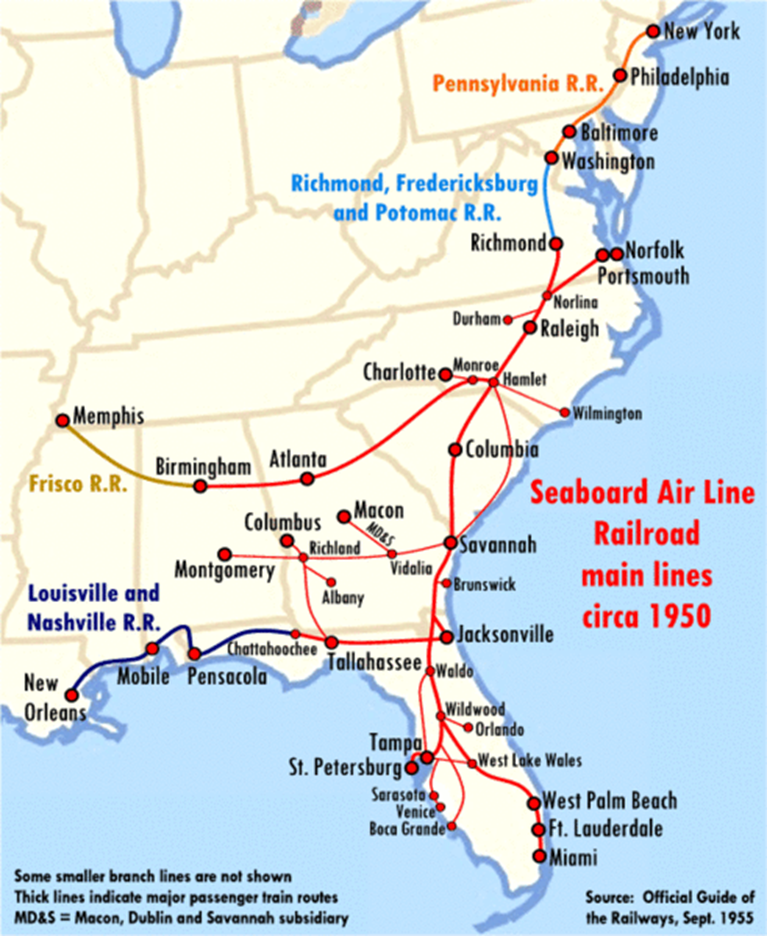
Description A schematic map of Seaboard Air Line Railroad main lines, circa 1950, with major passenger routes indicated by thick lines. Author Textorus, This file is licensed under the Creative Commons Attribution-Share Alike 3.0 Unported license. File: Seaboard Air Line RR main lines 1950.gif — Wikimedia Commons

Dear Reader,

In the last article we looked at Carpetbaggers, Edward Reed, New Line, John Williams Stirs Things Up, Incorporation, James Dooley Helps out, Thomas Fortune Ryan, Solomon Warfield Leads, Warfield, and the South Florida expansion. Here is a link to article 3 https://readmedium.com/78e1ed1dce75?source=friends_link&sk=4a425760984afa8695bc94214b4de8ea

In this article (4 of 6), we continue with our important story, and we will look at Solomon Warfield again, the effects of the Great Depression and World War II on this railroad, then we will look at the 20th century, steamship operations, and passenger trains.

This is where we look at some of the tragic events this country experienced and their effects on the operations of the railroad. Please continue to read through the 6-article series as I am sure you will not want to miss anything. All Aboard!

Introduction

Warfield commissioned the West Palm Beach architectural firm of Harvey & Clarke, led by Gustav Maass, to design a series of now historic Mediterranean Revival stations in Florida. Mediterranean Revival is an architectural style introduced in the United States and Canada.

The movement drew on the style of palaces and seaside villas and applied them to expanding coastal resorts in Florida and California.

The Great Depression and World War II

Warfield passed away in October 1927. His successor, Legh R. Powell, had worked his way up on the financial side of the railroad. The railroad was in an unfortunate position due to being sandwiched in the South between two well-to-do rivals, the Atlantic Coast Line Railroad (ACL) and the Southern Railway.

Warfield’s expansion down the west coast of Florida was seen as unnecessary extravagance due to the presence of the ACL in the same area. In December 1930, the Seaboard again entered bankruptcy following the collapse of the Florida land boom (this land boom left behind new planned developments incorporated into towns and major cities.

Easy access to credit for buyers, and fast appreciating property values ended in a financial collapse that ruined thousands of investors and property owners and crippled the economy for years.

The onset of the Great Depression led to an economic depression that had devastating effects that lasted until the start of World War II. Incomes fell as did prices, tax revenues, and profits. Cities that depended on heavy industry were hard hit. International trade fell by 50% percent and unemployment rose to 23%.

The United States District Court in Norfolk, Virginia — oversaw the railroad for the next 14½ years — appointed Powell as a receiver. A receiver is a person placed in custodial responsibility for the property of others, including tangible and intangible assets and rights.

The receiver’s powers come from the document used to appoint him or her. For example, a statute, financing agreement, or court order.

With loans obtained from the federal government’s Reconstruction Finance Corporation, the railroad set about modernizing its equipment with new steam freight locomotives and new and rebuilt passenger cars.

Such extravagance demanded that expenses be cut. In 1942, the SAL abandoned a 27-mile section of its then 15-year-old Fort Myers-Naples extension between South Fort Myers and Naples.

Other sections of branch lines that had not been used much were also abandoned. Aggressive marketing and technological innovations drew travelers to the line, such as the popular Silver Meteor streamliner, introduced in 1939, Seaboard managed to regain its financial footing.

The economic boom of World War II also helped replenish the railroad’s coffers. In 1944, the Silver Meteor alone turned a profit of over $8 million, almost as much as the deficit of the whole railroad in the Depression year of 1933.

In May 1945, Seaboard properties were sold under foreclosure at an auction sale to bondholders for $52 million. In 1946, the railroad was reorganized as the Seaboard Air Line Railroad.

Later 20th century

The Seaboard dieselized all its mainline trains in the 1950s. It also installed Centralized Traffic Control (CTC) signaling across its system. CTC is a form of railway signaling that originated in North America.

It consolidates train routing decisions that local signal operators and train crews had made before it was available. CTC generated time and money savings and improved safety.

Seaboard saw a decline in revenues, and passenger traffic, from the 1950s into the 1960s, in the face of growing competition from airlines, trucking companies, and the Interstate Highway System.

In 1960 SAL reported 9,910 million net ton-miles of revenue freight and 484 million passenger miles, not including Gainesville Midland and Tavares & Gulf.

To counter competition, SAL merged with Atlantic Coast Line Railroad when the Interstate Commerce Commission approved it in 1967. On July 1 of that year, SAL and ACL merged to form Seaboard Coast Line Railroad (SCL).

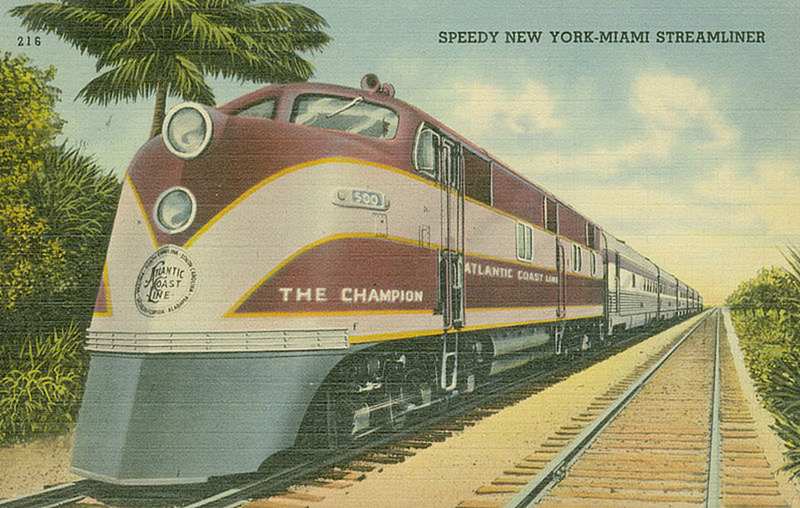
On May 1, 1971, SCL turned over all its passenger operations to Amtrak, which continued to operate the profitable Silver Meteor and Silver Star alongside a former Coast Line streamliner, the Champion, while eliminating others.
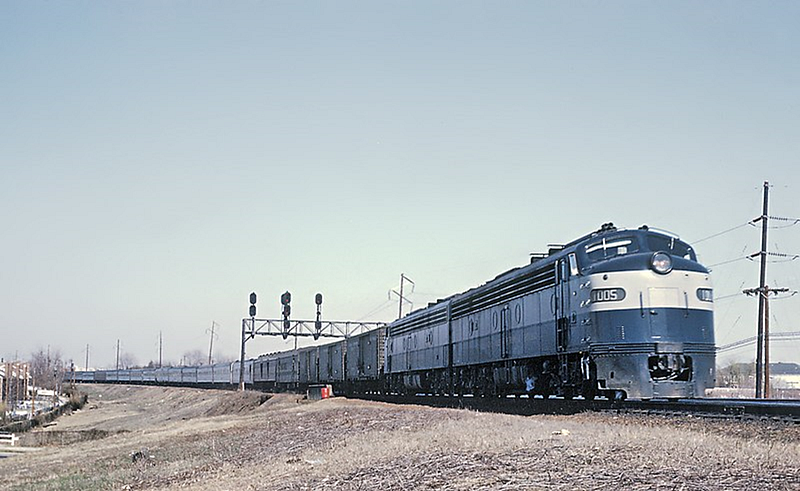
File: Richmond, Fredericksburg, and Potomac E8A 1005 with Train 21 The Silver Star, arriving at Alexandria VA. Union Station on March 23, 1969 (25865987470).jpg, Author railfan 44, Mel Finzer, the heirs of this work’s copyright holder (the creator) have released it into the public domain. This applies worldwide. File: Richmond, Fredericksburg, and Potomac E8A 1005 with Train 21 The Silver Star, arriving at Alexandria VA. Union Station on March 23, 1969 (25865987470).jpg — Wikimedia Commons
Description Postcard depiction of Atlantic Coast Line Railroad’s train “The Champion”, which traveled between New York City and Miami. Author C.R. Adamson, Miami/Teichnor, Boston, this work is in the public domain in the United States because it was published in the United States between 1928 and 1977, inclusive, without a copyright notice. File: The Champion Atlantic Coast Line 1941.JPG — Wikimedia Commons

By 1972, Seaboard Coast Line and its corporate relatives Louisville and Nashville, Georgia Railroad, Atlanta and West Point Railroad, Western Railway of Alabama, and Clinchfield Railroad began advertising themselves as the Family Lines System.

The Family Lines logo was applied to their rolling stock. The Family Lines name was a marketing strategy, and all the railroads remained separate legal and operating entities.

The Family Lines System and the Chessie System (The Chessie System was a holding company that owned the Chesapeake and Ohio Railway, the Baltimore and Ohio Railway, The Western Maryland Railway, and the Baltimore and Ohio Chicago Terminal Railroad) became subsidiaries of the CSX Corporation on November 1, 1980.

These railroads still operated as separate railroads. The Family Lines name and logo were dropped when all of the Family Lines merged on December 29, 1982, to form the Seaboard System Railroad.

On July 1, 1986, the Seaboard System’s name was changed to CSX Transportation. The Chessie System was merged into CSX Transportation on August 31, 1987.

Steamship operations

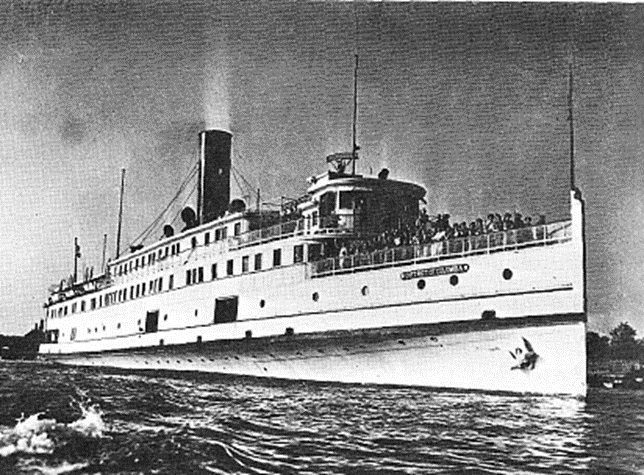
The Old Bay Line,” as the Baltimore Steam Packet Company was known, operated steamships between Norfolk, Virginia, and Baltimore, Maryland, carrying mail and freight as well as passengers and vehicles on the overnight run.
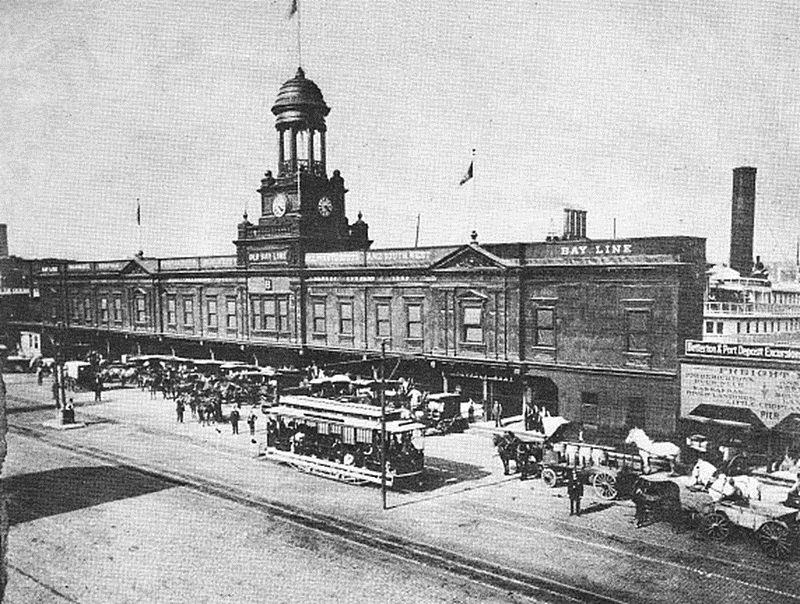
Description English: The Baltimore Steam Packet Company’s terminal on Light Street in Baltimore, Maryland (1898–1950), as it appeared in 1911. The now-demolished terminal’s former Pier 10 Light Street site is between the present Harborplace and Maryland Science Center. Author Unknown, this media file is in the public domain in the United States. This applies to U.S. works where the copyright has expired, often because its first publication occurred before January 1, 1928, and if not then due to lack of notice or renewal. File: Old Bay Line terminal in 1911.jpg — Wikimedia Commons
Description English: The Baltimore Steam Packet Company’s District of Columbia steamboat in a 1949 publicity photo, Author From the collection of User: JG Howes, this work is in the public domain in the United States because it was published in the United States between 1928 and 1977, inclusive, without a copyright notice. File: District of Columbia (steamship).png — Wikimedia Commons

The Seaboard and Roanoke acquired a controlling interest in the steamship company in 1851. They used it to provide valuable northward connections from the docks at Norfolk for the railroad’s passenger and freight business.

Control passed to the Richmond, Fredericksburg, and Potomac Railroad in 1901. The Old Bay Line became a subsidiary of the SAL. Warfield was named president of the Seaboard as well.

In 1941, the Chesapeake Steamship Company, owned by the Atlantic Coast Line and the Southern, was merged into the Old Bay Line. Because of the impact of interstate highways and air travel on steamships the steamship company was liquidated in 1962.

Passenger trains

The SAL and Southern Railway had a cooperative relationship. Southern Railway covered the traffic to the western part of the upper South and the Midwest. SAL covered destinations south of Jacksonville Union Station.

Jacksonville was the gateway hub for trains from the Midwest and the Northeast to Florida destinations. Examples included the Southern Railway’s Kansas City-Florida Special, Ponce de Leon, and Royal Palm.

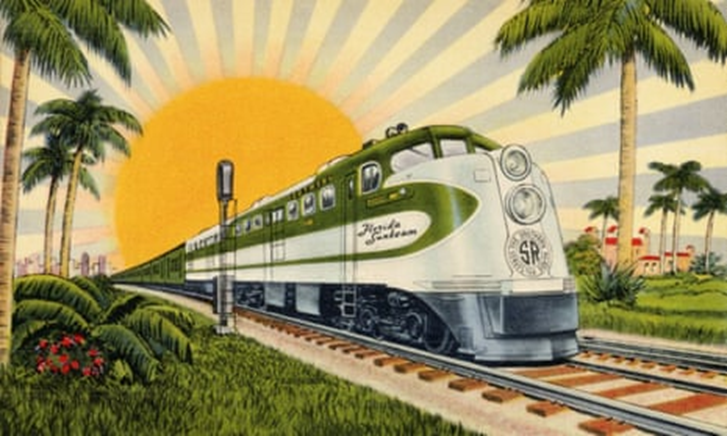
The Southern and the SAL railroads pooled their operations for the Florida Sunbeam, a wintertime train from Detroit and Cleveland to Florida. The Florida Sunbeam was inaugurated on Jan. 1, 1936, as a winter train between Cincinnati and both coasts of Florida.

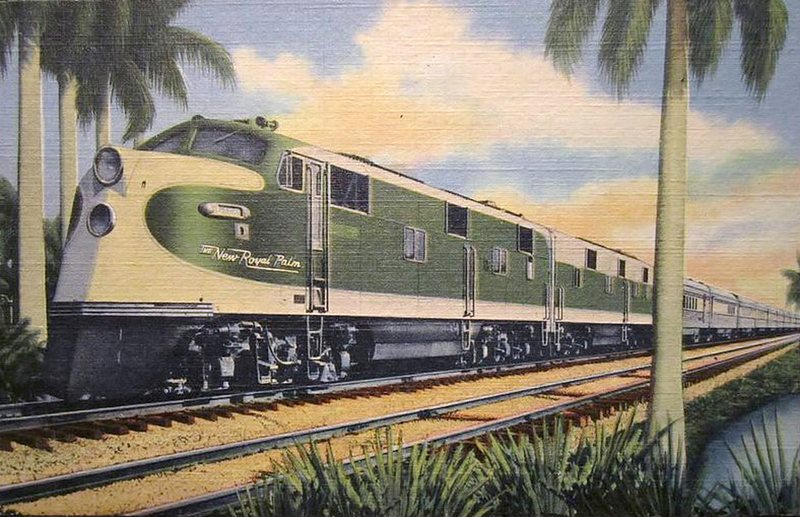
In 1949 it was replaced with the much faster, streamlined New Royal Palm on a changed route. The postcard (below) depicts an ALCO DL-109 diesel locomotive pulling the train. It was advertised as being diesel-powered between Cincinnati, Ohio, and Valdosta, Georgia.
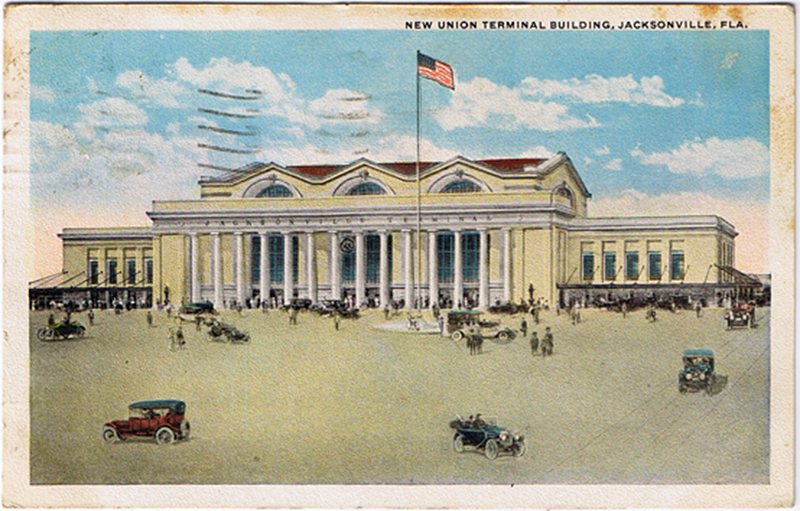
Description English: Postcard of New Union Terminal Building, Jacksonville, Florida, built-in 1919. Unknown author, this media file is in the public domain in the United States. This applies to U.S. works where the copyright has expired, often because its first publication occurred before January 1, 1928, and if not then due to lack of notice or renewal. File: New Union Terminal, Jacksonville, Florida, 1910s.png — Wikimedia Commons
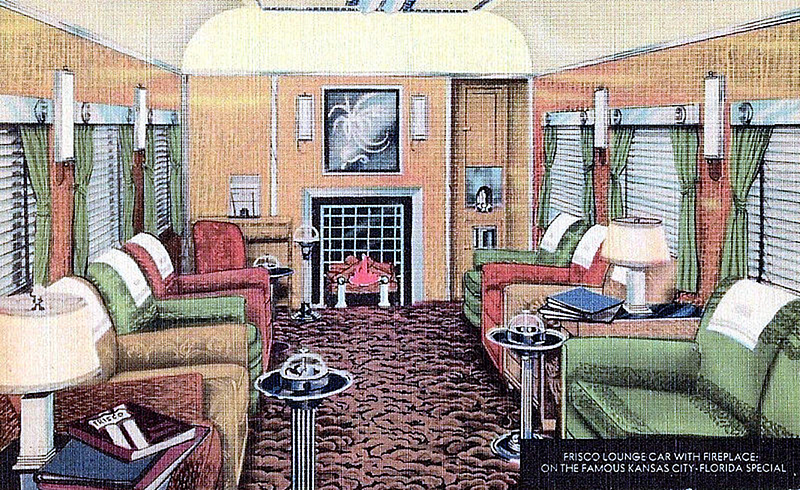
Description Postcard depiction of the lounge car of Frisco Railroad’s Kansas City-Florida Special. Note the lounge car has a working fireplace. Author Frisco Railroad, this work is in the public domain in the United States because it was published in the United States between 1928 and 1977, inclusive, without a copyright notice. File: Frisco lounge car with fireplace.jpg — Wikimedia Commons
Description Postcard depiction of the Southern Railways train “The Royal Palm”. Author Southern Railways, this work is in the public domain in the United States because it was published in the United States between 1928 and 1977, inclusive, without a copyright notice. File: Royal Palm Southern Railway.JPG — Wikimedia Commons
Classic Streamliners, Route of the Florida Sunbeam, Unknown Author, Classic Streamliners — ‘Route of the Florida Sunbeam’ & The City of Los Angeles | Chasewaterstuff’s Railway & Canal Blog (wordpress.com)

A partial list of passenger trains that Seaboard operated during the first half of the 20th century is provided in the next article. Some of these trains were continued by successors Seaboard Coast Line (SCL) and Amtrak as indicated below.

Trains originating in New York were handled by the Pennsylvania Railroad from New York to Washington; by the Richmond, Fredericksburg, and Potomac Railroad from Washington to Richmond; and by Seaboard from Richmond to points south.

This concludes article 4 of 6 articles on SAL. I hope you enjoyed reading it and found it interesting. We now have just 2 more articles and then we have covered SAL with a broad-stroke pen. Thanks for hanging in there and for reading about this important railroad.

If you liked this article, please clap for it, mark yourself as a follower of mine, and join me on my journey in writing as I contribute to various publications on medium.com.

The more time people spend reading my articles, the more it encourages me to continue writing. Many thanks for taking the time to read what I have written. Get access to unlimited articles here on Medium!

Your small membership fee supports Terry Day and other writers you read. You’ll also get full access to every story on Medium. What a bargain!

Where else can you read articles written by artistic and creative authors on so many different topics for $5 a month?

If you are not yet a medium member, please consider membership ($5 is a steal), and please mark yourself as one of my followers. My account on Medium is @tday597706. Many thanks in advance for your support!

Please join my email list, this allows you to be notified as soon as I post something new. My success in writing is dependent on readers like you who appreciate and support my writing. Thanks so much for taking the time to read and support me.

Illumination
Nonfiction
Business
Technology
Transportation
Recommended from ReadMedium