
Just Before Turning 90, My Stepfather Beat a Severe Case of COVID-19: Here are 18 Lessons Learned
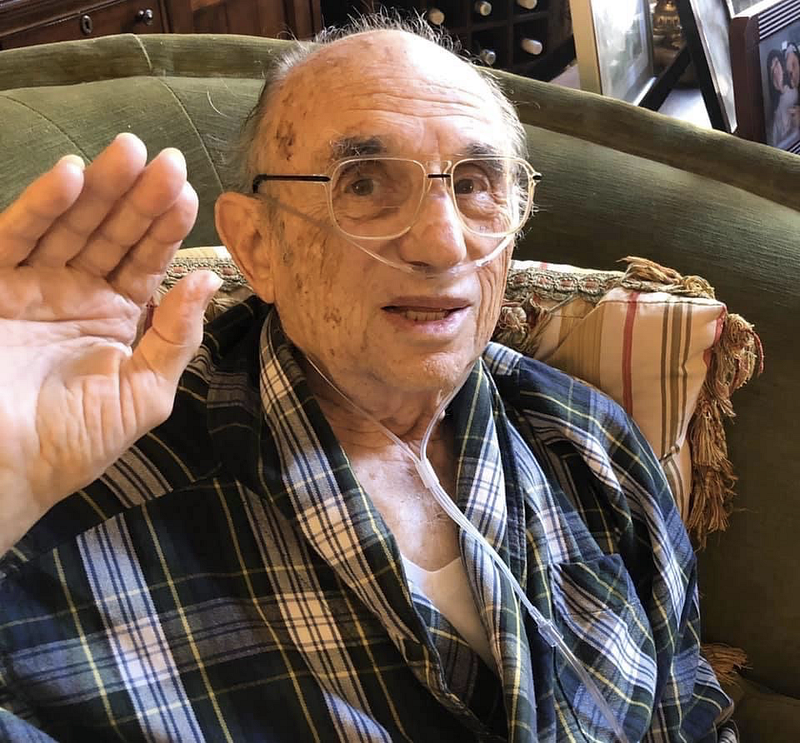
Our family started the year in February planning a summer celebration in Maine to ring in my Mother’s 80th birthday and my stepfather’s 90th birthday. Just a month later in March, we were doing everything we could to save my stepfather’s life as his battle with COVID-19 raged on intensely. Fortunately, this story has a happy ending.
My stepfather Richard is 89 years old and has multiple underlying health conditions (diabetes, heart disease, a weakened immune system, and high blood pressure), placing him in the highest possible risk category for COVID-19 severe symptoms or death.
After testing positive in NYC on March 19, with fever, fatigue, and a cough, followed by weeks of extreme exhaustion, spiking high fevers, low blood oxygen levels, and pneumonia, he won the war against COVID-19; since May, he tested negative, is fever free, and has gained enough strength to embrace daily life and to go for walks more than two miles long. His recovery could be considered a miracle based on his age and medical conditions.
Our family took a fact based, methodical, and creative approach to support recovery. It is our perspective that this story of winning the war against COVID-19 for an individual at highest risk can help bring hope and practical learnings to those fighting this difficult and demanding disease.
We’ve documented 18 specific actions taken and lessons learned to help fight the virus.
1. Pulse oximeter: we purchased an inexpensive ($25) but essential device in the home to measure blood oxygen levels. Levels need to stay above 90 otherwise a doctor should be consulted; measurements are taken multiple times a day, in tandem with temperature checks.
2. Oxygen concentrator: Richard’s doctor prescribed an oxygen concentrator because his blood oxygen levels were in the 80s. A portable, lightweight, battery powered, multi flow oxygen concentrator was acquired for him as a result. Think of this device as a practical in-home option between normal breathing and a hospital ventilator; it can be used in conjunction with the oximeter for measurement and can be covered by insurance/Medicare, if prescribed by a doctor.
3. Respiratory therapist: A respiratory therapist came to the home to demonstrate how to use the oxygen concentrator; this visit was included as part of receiving the oxygen device.
4. Crowd sourced masks, gloves, and hand sanitizer: hitting roadblocks at pharmacies and online sites, we received a heartwarming response from family, friends, and extended networks sending home made masks, gloves, and hand sanitizer from all over the country.
5. Simulated hospital environment: knowing the severe challenges at NYC hospitals in COVID-19 wards, we did everything we could to keep Richard at home, effectively creating a simulated hospital environment but with the comfort and care of being at home with a loved one.
6. CDC home protocol: my mother followed CDC home protocols for disinfecting and mask usage, ensuring her own safety and physical health, critical for a sustained role operating 24 x 7.
7. Virus warrior mindset: the battle at times was as much psychological as it was physical, and my Mom and Richard were champs of the highest order, mustering extraordinary emotional strength at times to keep going when darkness was pervasive.
8. Breathing and movement exercises: Richard’s doctors recommended a set of breathing, stretching, and walking exercises which he did three times a day. In the beginning it was daunting; over time, he was able to steadily increase the number of repetitions.
9. Virtual Urgent Care: we arranged for my mother to have a virtual urgent care visit, using an iPhone app with video streaming to consult with a doctor on her own health.
10. Real World Urgent Care: we finally found an Urgent Care facility in Brooklyn that would treat COVID-19 patients and had an x-ray machine, after trying more than ten different options at the time; many facilities were closed or refused any one with COVID-19. They did a blood test and a chest x-ray using remote radiologists to read the scans, confirming the bacterial pneumonia diagnosis and prescribing antibiotics (see below); this was much easier than visiting an emergency room at a hospital and a key bridge towards recovery.
11. Nurse/home health aide: we worked with a firm that specializes in home care for COVID-19 patients to bring in an experienced nurse/home health aide at a critical time, to help out for three days in a row.
12. Food and pharmacy delivery, and car services: Family members brought chicken soup to the front door. Delivery services brought food to make it practical to stay in. We had to try more than a dozen car services until one was found that agreed to take COVID-19 patients. A local pharmacy delivered supplies to the home.
13. Hydration and electrolytes: Throughout the height of the virus, Richard had little to no appetite. The doctor impressed upon us how critical it was to drink lots of fluids complemented by drinks with electrolytes such as Gatorade Zero and Pedialyte. For nourishment, a drink such as Ensure can be helpful; for those with diabetes, Glucerna is an easy way to support nourishment.
14. Dual track antibiotics: A combination of Azithromycin and Cefdinir, running for ten days, was effective to battle his bacterial pneumonia. The use of these antibiotics was a key turning point in his recovery. However with viral pneumonia this approach may not be applicable. Note that early on hydroxychloroquine was ruled out due to cardiac risks and limited testing.
15. Medical research: our family members with a background in research read freely available online medical journals to help us understand incubation periods, disease duration, and contagion timeframes for COVID-19; this helped us interpret aspects of what was happening to Richard, grounded in medical science. We read peer reviewed papers and preprint server articles including recent COVID-19 research studies, providing fact based insights from a rapidly evolving global knowledge base.
16. Public and private ambulance services: if you call 911 for an ambulance you are typically taken to the nearest hospital; we learned you can go to a hospital of your own choosing via a private ambulance, on an emergency or non-emergency basis where this service can be covered by Medicare or health insurance. This can be useful if you want to be cared for by your own doctor(s) affiliated with a particular hospital. We did everything feasible to avoid the hospital but had our backup plan ready for an ambulance if needed; we also used a website (Hospital Stats) to track emergency room visit wait times in NYC.
17. Learning from friends with COVID-19 or working in healthcare with COVID-19 patients: a close friend who had the disease in February recommended an oximeter and oxygen concentrator; an anesthesiologist friend on the front lines in a NYC COVID-19 hospital ward, managing ventilator patients, provided perspective on what it was like to be a patient in that environment, and a graduating medical student explained to us treatment scenarios for viral vs. bacterial pneumonia. These pragmatic learnings were useful as a complement to our valued guidance from expert doctors.
18. Digital tools: we used FaceTime video to stay in touch frequently so that it felt like we were there helping out in person; document sharing and collaboration tools to create a shared archive of family medical learnings; and a journal to keep track of daily events for COVID-19 oximeter and temperature readings, symptoms, and treatment. We turned off all audio app notifications at bedtime so we could sleep soundly but still take a call in the middle of the night.
Summary
The lessons learned outlined above can be considered as a toolkit or a set of best practices which worked well for our family and may help others who contract the virus, either by easing their pain, reducing recovery time, staying out of an overburdened hospital, or perhaps even to save a life.
To learn more about Richard’s story, see “Chicken Soup, Remdesivir and Deep Breaths: How Older Patients Survived Covid-19”.


