
Animals Don’t Need ‘Rights’ to Deserve Ethical Consideration
Too often, we view animals through a human-centric lens — even when we’re fighting for them
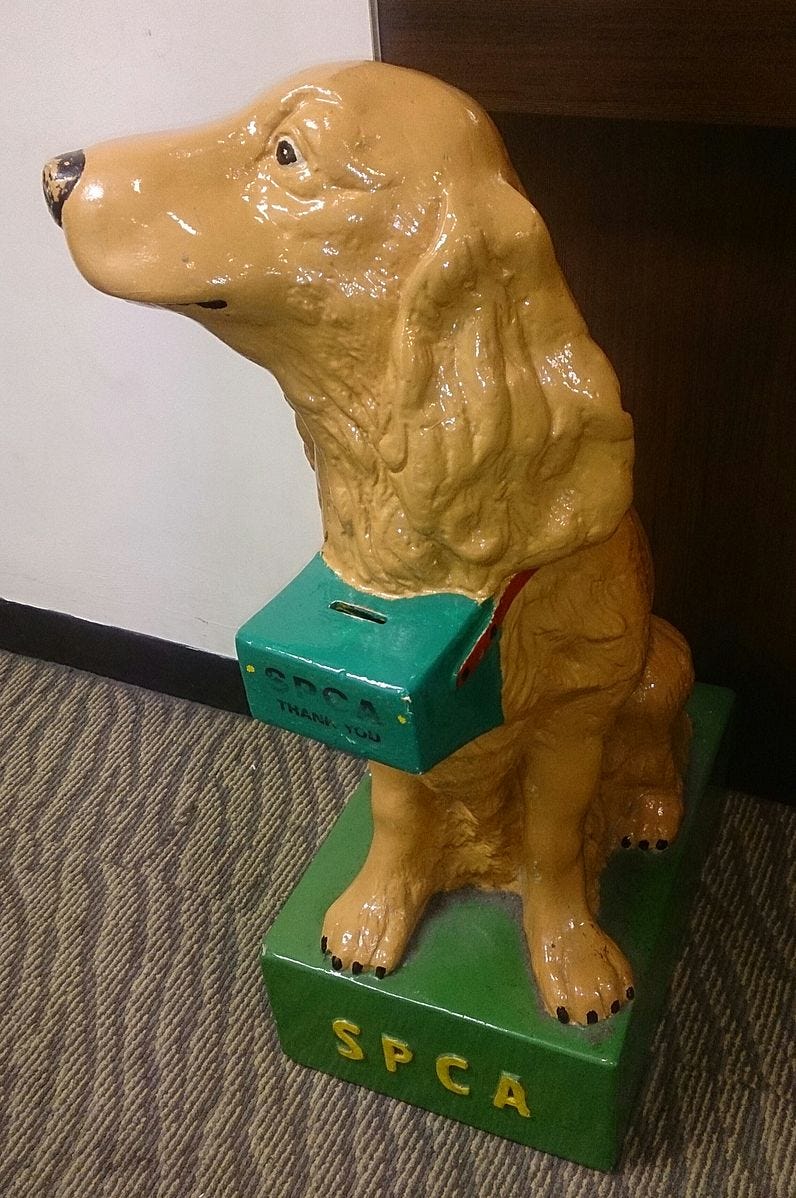
As a child, I developed a habit of asking for spare change every time I saw one of these unmistakable donation boxes from the SPCA. My mom was allergic to pet dander, but I would still attend animal adoption drives. On my 12th birthday, my parents brought me to a local animal shelter for the first time, and in the midst of my elation, I remember my mom telling me, “though we can’t get a pet, we can bring you here every weekend!” By age 16, when my parents trusted me to dictate our travel itineraries, I always made it a point to include the city’s local zoo.

To say the least, I was utterly fascinated by animals, and through the years, I inevitably found myself deeply concerned about animal rights issues.
However, during college, my understanding of animal ethics were slowly being challenged by newfound knowledge and more well-rounded perspectives. Along the way, I was forced to shed my rosy views of these non-human creatures, and develop a more informed understanding of this cause which I have always so fervently championed. And so, here I am, to share with you some complexities I have discovered behind the deceivingly simple matter of animal rights.
Animal ethics should be an interrogation of human-animal relationships — one that does not only morally question how animals are being treated by humans, but also looks into the human motivations present in these relationships. When we truly explore the different nuances of animal ethics, we may be able to reveal some misguided motivations and misled appreciation of the animal rights movement.
Some people champion animal rights for the wrong reasons — a lot of which are due to the deeply human-centric lens we use to view and interpret animals. This is also known as anthropomorphism, which is the attribution of human characteristics to animals. This can extend to attempting to apply concepts that help us understand human society to the animal world.
The right to life for animals is distinct from that of our own. Unlike animals, we humans share a social system whose values we largely agree to uphold — a social system which allows us to hold each individual accountable for their actions. We have agreed to abide by a certain code of conduct and accept the consequences for violating them. In the Animals’ Lawsuit Against Humanity, a 10th century ecological fable from Iraq, it is proposed that humans alone hold the ability to perceive morality. Because they can be said to be ungoverned by rationality, we must be careful not to accord such human capacities to animals.
Hence, much of the popular opinion about “animal rights” come not so much from a vying for “rights” per se, because we have misapplied the concept of a “right” in order to express what we feel about animal maltreatment. Animals do not have “rights” like we, as individuals of a coherent society, have.
Rather, these sentiments come from a need to express the discomfort we experience when we know of the cruelties that humans impose onto them. And while it is wonderful that we are extending our sympathetic imagination to animals, our righteousness is often less for their welfare but more for placating our own uneasiness. What harms them only matters if it begins to make us feel unsettled.
If we were to truly scrutinize the root of an ethical problem, we would not be isolating our attention on matters that are of a greater degree of “moral unjust”. We’d look at all that is not right and treat it so.
This is problematic, because it often causes us to gravitate towards matters that merely skim the surface of the main issue. For instance, as Tom Regan, author of The Case for Animal Rights, explains, we are concerned when animals are used for unethical testing in frivolous cosmetics, but turn a blind eye to problematic testing for medicinal purposes.
Whether either could be morally justifiable is an issue for another day — we first cannot ignore that these are both practices that include maltreatment on a largely unregulated, industrial scale. They should both be similarly interrogated. If we were to truly scrutinize the root of an ethical problem, we would not be isolating our attention on matters that are of a greater degree of “moral unjust.” We’d look at all that is not right and treat it so.
In the same view, our skewed righteousness is also the reason for a particular bias towards animals that resemble us physically, behaviorally, or are more conventionally alluring to us. This is called speciesism, where some species are favored over others. Speciesism poses as a challenge in wildlife conservation, where public sentiment is unevenly geared towards the protection of more majestic and/or more useful species. After all, most people visit the zoo not for the insects or obscure reptilia, but for the polar bears and lions. These different hierarchies of value are human constructs.
When it comes to animals, we systematically reduce the value of their lives into their usefulness as resources for humans to exploit and use.
When animals seem to have more human attributes, we empathize with them as if they were people — not as they truly are. A non-human creature’s intentions and motivations are different from ours, and we need to recognize that.
Despite our evident differences, what is similar about us and non-human creatures at the core is that we are both, undeniably, experiencing life. We take in the stimuli of our environment and respond accordingly, we need certain things to live, we have certain mannerisms, and we undergo various processes and seasons.
As human beings, we understand the inherent value of each person’s life. Each individual — ideally, regardless of social standing, race, religion, or physical and mental ability — is accorded a right to live, because we are conscious creatures in this journey called life.
When it comes to animals, we systematically reduce the value of their lives into their usefulness as resources for humans to exploit and use. By doing so, we are denying animals of a right that we have given ourselves. We accord a pricelessness to our own lives that we have decided we can take away from other living creatures.
There are still some simple truths about animal life that we often don’t fully grasp. Firstly, every kind of wild animal has a great value to the natural world. Removing a species of cricket from its ecosystem does terrible damage, as does the removal of an apex predator. Various relationships of parasitism, symbiosis, and commensalism, amongst other relationships, have been so intricately woven into the world around us, that even science is sometimes unable to anticipate what kind of destruction an ecosystem will suffer if a particular species is removed. In a world of natural disasters, climate change, and crippling pandemics, it’s important to recognize that we are very much part of the natural world as well, and that the planet’s maladies will inevitably affect us all.
Recent science has expanded our view of the self-awareness and emotionality of other animal species, and this information is becoming increasingly accessible to the general public. Recent developments in technology have enabled closer study of animal behavior, from observing the sociality of whales in frigid climates, to monitoring mating calls in frequencies that cannot be detected by the human ear.
We built our relationship with animals on the idea that they are unfeeling automations of inferior capacity to humans — we must move away from this. But we can no longer deny that they too are sentient inhabitants of this earth.
We have completely normalized the absurd notion that animals and animal products are two discrete categories.
Speciesism still permeates so many aspects of society, and many people who profit from continued exploitation of animals help to propagate it. Zoos and marine parks flaunt charismatic species, using party tricks like dolphins that can “talk” on command and elephants that shake visitors’ hands with their trunks. They give names to some of their animals, produce stuffed toys of them and even build an entire brand for visitors to delight in. From Disney movies to childhood storybooks, we romanticize certain creatures, while developing a repulsion for others. It’s how snakes and vultures have come to be associated with evil, while lions have often been idealized as esteemed and royal creatures. We have attributed to them wholly human-made traits that may slant our understanding of them.
Of course, the factory farm industry and all those who profit from meat consumption have long attempted to break any association between the “products” they sell and the animals that are actually being consumed. Through clever marketing, humans are constantly subconsciously distanced from the source of the products we’re consuming. We have completely normalized the absurd notion that animals and animal products are two discrete categories.
Not all hope is lost. We need to consistently reassess our idea of living ethically with our fellow creatures. As research ceaselessly provides us with more information about animals and their nature, we need to remain critical about the myriad of viewpoints the world continues to feed us, and discern opinions from facts. A well-rounded, informed and realistic perspective of animal ethics cannot be achieved without us examining animals for what they truly are, not what we have to been led to believe they are.
And while we lose this hazy, sometimes romantic, and at other times reductive view of animals, this does not mean that they lose their awe-inspiring nature. If anything, the more we clearly perceive them, the more we will grow captivated by these intriguing beings that are, like us, a finely tailored cog in the intricate complexities of the planet.