
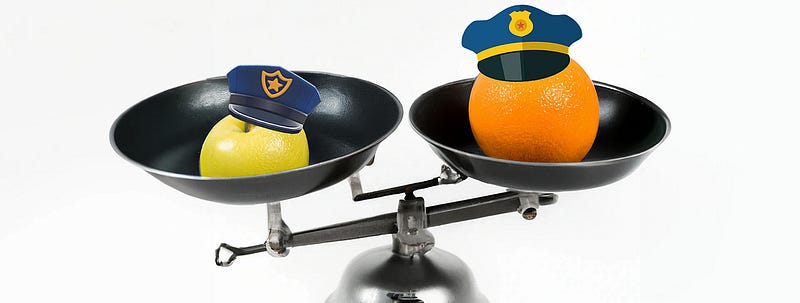
Apples and oranges — part III: Bookkeepers and enforcers
Despite the criticism it attracts (which is mostly aimed at a caricature or at inappropriate application), utilitarian thinking is a valid guide to decision making. But while it can certainly handle pleasure and pain, it does have its limits and, perhaps surprisingly, cannot really be used on its own.
(This is the final part of 3 linked articles — here are the first and the second.)
Here is a simple question: what would you enjoy more, discovering in your jeans, as they come clean out of the washing machine, the unusable remains of a £20 (or equivalent) banknote that you forgot to remove, or spotting the note and removing it from the pocket before it gets mangled? My guess is that you would prefer the latter. That makes perfect sense: having less money is objectively the worse condition to be in.
Yet, every time you go to the shop to buy something, you walk out with less money than you had when you walked in. Are you daft or what? Of course not: you get something in return, and at that precise moment, you value what you are buying more than the money it costs you. You weigh up the pleasure of acquiring and the pain of having to pay.
And that is something we, and our entire lineage of ancestors, have been doing all the time. Evolution has been relentlessly favouring organisms that are able to distinguish what is better for them from what is worse, and that act accordingly. Those that were good at this were able to obtain enough nutritious food, avoid being eaten or get killed prematurely, and successfully procreate to pass on the very genes that made them good to the next generation. The rest, literally, is history.
This mechanism serves us, highly sophisticated evolved beings we have become, quite well in making all our choices and deciding what (not) to do. When there are certain countable or measurable characteristics (like monetary value) that we can map onto pleasure or pain, choosing may be reduced to simple arithmetic without much cognitive effort, but quantifiability is not essential. We don’t have (and don’t need) a measure to determine whether or not, say, spending the afternoon with mates is more pleasurable than washing the car, or going to visit the in-laws.

And we are capable of much more. We may reasonably choose to visit the dentist for a root canal treatment — not usually in itself a pleasurable experience — because, in the longer term, it is likely to lead to less pain overall. We can also incorporate the pleasure and pain of others in our choices, and make deliberate sacrifices to reduce their suffering or to increase their joy. This gives us pleasure too, which outweighs the pain of the sacrifice, just like when we buy some good or service we enjoy, or like when we exercise until our muscles hurt, because we know this ultimately improves our physical condition.
It seems as if, without giving it much thought, we can make the most convoluted trade-offs between multiple sources of pleasure and pain — effortlessly comparing apples and oranges. We have the wherewithal to be natural utilitarians. Why would we opt for rule-based decision-making?
No utility without rules
Well, here is the thing. We can establish how much pain losing money causes from the amount that is lost — an obliterated banknote is more painful if it is a £50 note than if it is a fiver. But the actual , the intensity of pleasure and pain we experience with many other things that we like and dislike is not so easily determined. Not only do different people value the same things in different ways — the same people can value the same things differently at different times. (That first ice cream was heavenly, but now you’ve had three, will the fourth one give you as much pleasure?)
Even the most ardent utilitarian will need rules to establish the utility of something. While his elder brother received a single 50-euro note, my four-year-old nephew used to receive his Christmas money as ten 5-euro notes, because he did not yet realize that the rule for valuing banknotes was not counting them, but adding the numbers they display. His simple, implied rule was, just like for sweets or cookies, more notes is better. (He is now 21 and knows better.)
Utilitarians use rules all over the place. The utility of an ice cream reduces with the number already consumed in the last couple of hours. No Chardonnay. I will not watch Mrs Brown’s boys. A red Ferrari (or a red Fiat 500) is better than a dark blue one. The house we will buy or rent must have a decent-sized garden — or its garden should not be too large. Some of these rules help determine the relative utility of an option in a trade-off situation, others preclude even the possibility of a trade-off. But they are unavoidable.
Rules as a scarce resource
Is it possible to systematically adopt a rule-based decision approach, and eschew the apparent cold-hearted, clinical methods of the utilitarians, to whom even human lives are accounting quantities? Not really, either. All but the die-hardest deontologists, the people who would opt to leave the switch in the trolley problem unchanged because otherwise they would violate an important rule ( “thou shalt not kill”) will eventually intervene as the number of deaths on the track goes up, and reluctantly sacrifice the one life to save, say, 10,000.
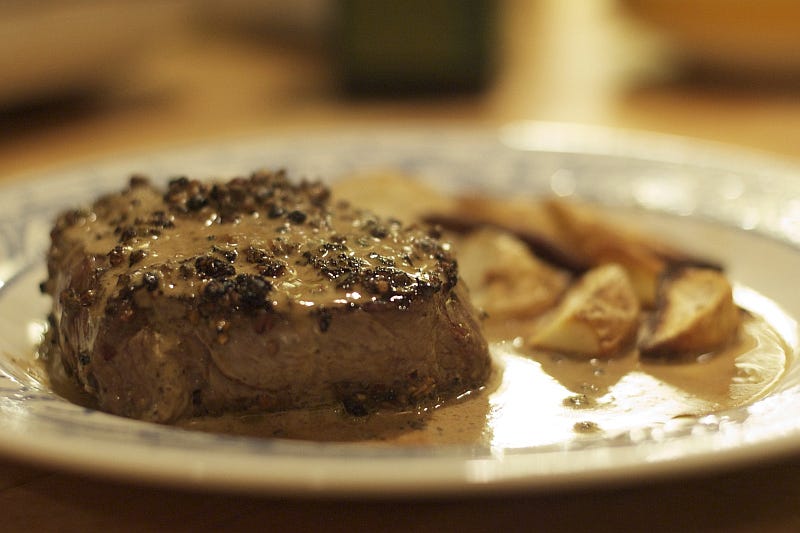
But we don’t even need to go that far into hypotheticals and thought experiments. Rules will, eventually, conflict with each other: we cannot have our cake and eat it. Family may be the most important thing for us, but when work calls for a 10-day business trip to a different continent which will make us miss our youngest’s birthday, what will we choose? (And, let’s be honest, bringing back gifts from far flung countries is very meagre compensation, isn’t it?) We may have become a fervent vegetarian, but if our beloved’s favourite meal is a juicy, medium rare steak with green pepper and cream sauce, would we refuse to cook that meal on his or her birthday, or would our rule that we have an imperative to please those whom we love trump the rule of our conviction?
We cannot possibly navigate life without compromising our rules. The question is not whether, but when would we choose loyalty to our family over loyalty to our employer, our well-being over honesty, or sincerity over politeness. Rules are like scarce resources: if we want more of one thing, we end up with less of another, and if we want all of one, we may get none of the other. Deontologists cannot escape the need for making trade-offs, the stock in trade of the utilitarians, between rules that potentially even embody sacred values, any more than utilitarians can avoid having to use rules to make meaningful comparisons between apples and oranges.
Not the best, but better decisions
Any significant decision involves both weighing up pleasure and pain, and heeding norms, laws and rules.So, we end up having to be part bookkeepers, keeping track as best we can of the consequences of our actions — the pleasure we gain for ourselves and others and the pain we inflict — and part enforcers, watchers over the appropriate application of rules. Together, both approaches can keep us sharp, challenge us to establish whether we have indeed considered all the implications of our actions, and at the same time test whether we live up to the values that are rooted in the rules we adopt.
We should not be under any illusions that this will ensure we make the best possible decisions — at best we can hope to make better decisions by letting these mechanisms inform our judgement. Even then, some decisions are beyond either the pleasure/pain balance or any set of rules. How could they have helped the mother in the novel (and movie) Sophie’s Choice, who was forced, by a camp doctor in Auschwitz, to choose which of her two children would be gassed?
However, we can also pretend that no judgement is necessary when we can abdicate responsibility to the “obvious” arithmetic of pleasure and pain, or to the rules we hold sacred that “speak for themselves”. If we use them to hide behind, we will surely make the worst possible decisions.
The judgement is ours.
Originally published at http://koenfucius.wordpress.com on September 8, 2022.
Thanks for reading this article — I hope you enjoyed it. Feel free to share it (the ‘share’ button below or at the top has direct options for Twitter, Facebook and LinkedIn) or simply copy and paste this link. See all my other articles featuring observations of odd human behaviour (I have been publishing one every Friday since 2016) here. Thank you!