Like it or Not, You Are a Diplomat for Something
Learn how to listen, and how to represent
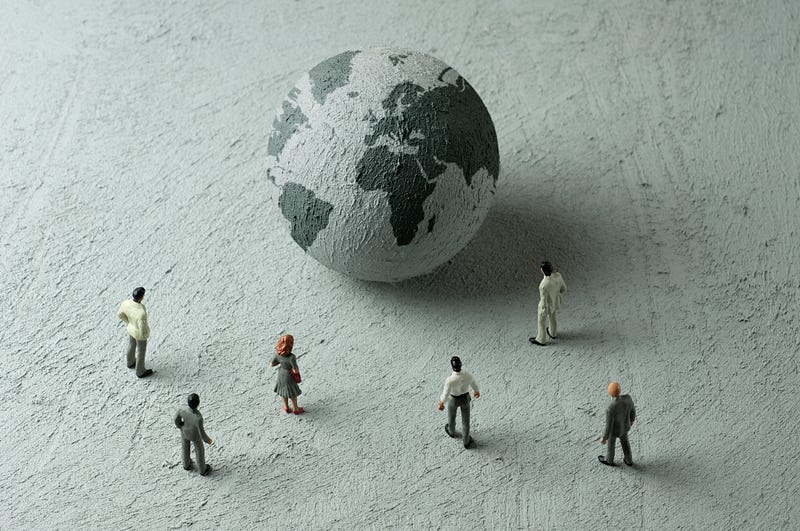
Global relations are forged locally, as well. The most important part of any diplomatic journey is the last foot — the one that brings the two parties face to face. For it is there in the live encounter that potential adversaries are forced to recognize each other’s humanity.
This is the theory of diplomacy that led to the famous Oslo Accords between the warring parties of the Middle East — an agreement that failed only because one of the signatories was assassinated by an extremist among his own people. Such sociopathic behavior is not limited to religious fanatics. Anyone who has become so distanced from other people that they see humans as less important than their ideology will act in anti-human ways.
Citizen diplomacy — just tourism, really, where a nation’s people represent its values abroad — has long been recognized as the most productive tool for improving international relations. Propaganda is manipulative. It begets competition between those who seek to dominate public opinion. Citizen diplomacy, on the other hand, is behavioral: showing by example, live and in person. Instead of leading to confrontation, it engenders interdependence.
Whether between allies or adversaries, voters or townspeople, face-to-face engagement leverages our evolved capacity to establish rapport. While our minds may be determined to win our agenda, our hearts just want to win over the other person. If we’re capable of engaging in a genuine conversation, our common agenda as humans far outweighs the political platforms we’ve signed onto. This is not weakness, but strength.
Each of us can’t do everything. Representative democracy gives us the chance to choose other people to speak on our behalf — ideally, in face-to-face interactions with representatives of other stakeholders.
By relegating the democratic process to behemoth media and internet companies, we dispense with both the power of rapport and the connection to place. This makes us more likely to see one another as less than human, and act or vote inhumanely ourselves.
In repeated experiments, social media platforms have demonstrated their ability to induce people to vote or not vote by placing particular messages in their news feeds. Combine this with the same companies’ ability to predict how someone is likely to vote and we get a powerful tool for undermining democracy by manipulating voters’ behaviors. No fake news required.
We have no way of knowing when this is being done to us, or what other techniques are being used. Social media platforms have no facial expressions through which we can detect their duplicity. They see us, but we can’t see them. In these virtual spaces, we can’t even truly engage with the faces of other people. Our impulse for mutual aid and human connection remains dormant. Denied this contact, we start to feel alone and angry, making us easy targets for any demagogue who wants to stoke our rage and trigger our most sociopathic tendencies. The other side becomes an inferior species. Losers.
There’s nothing wrong with opposing someone. But our encounters with our adversaries must be grounded in the greater context of our shared humanity. This means that in every encounter, the human-to-human, I-and-you engagement itself becomes the main event.
The other person’s position — even a heinous one — still derives from some human sensibility, however distorted by time, greed, war, or oppression. To find that core humanity, resonate with it, and retrieve its essential truth, we have to be willing to listen to our adversaries as if they were human.
They are human — at least for now.
This was section 87 + 88 of the new book Team Human by Douglas Rushkoff, which is being serialized weekly on Medium. Read the previous section here and the following section here.