
How ‘Twilight’ Ruined Google Image Search Forever
Temporary popularity may permanently fool an otherwise intelligent algorithm
Join me in an experiment. We’re going to search for various times of day using Google’s Image Search. We’ll use a fresh Google Chrome Incognito window to ensure our results aren’t skewed. This is scientific, after all, and we want the most accurate results possible.
First, let’s try “sunrise.”
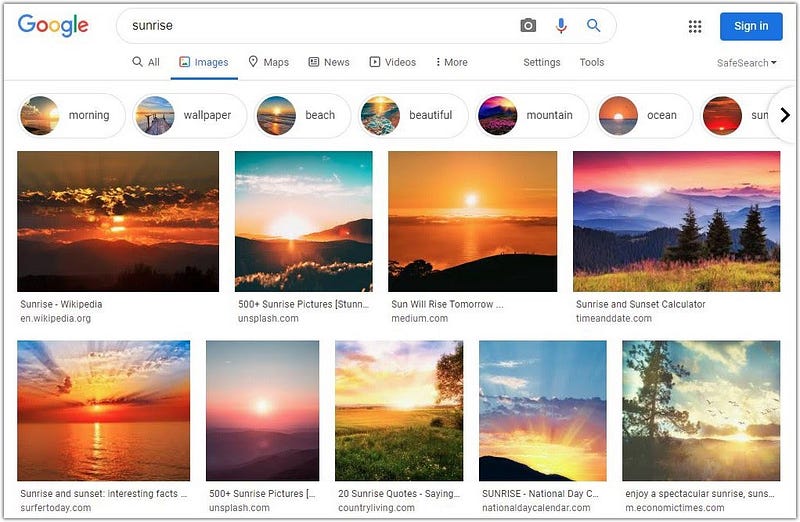
Well done, Google! I’m proud of you. Those are definitely photos of the sunrise. Now let’s try “midday.”
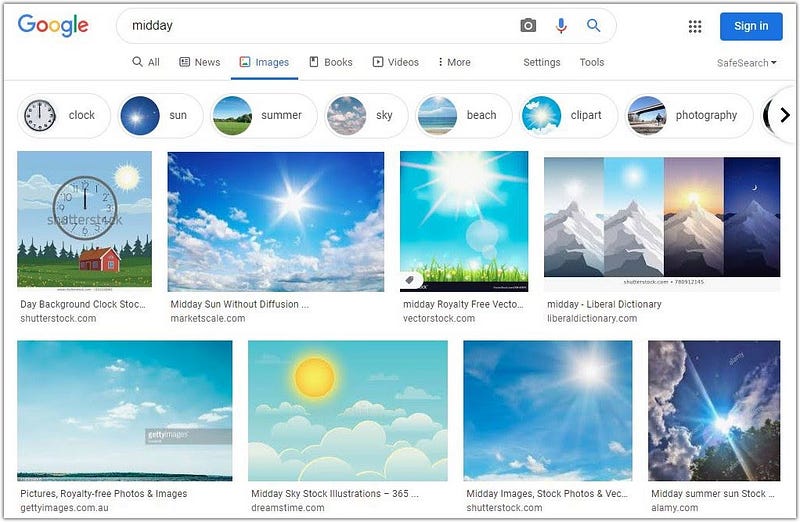
A bit more variety in these results but still totally fine. Google, you’re doing quite well. I’m impressed. How about “dusk?”
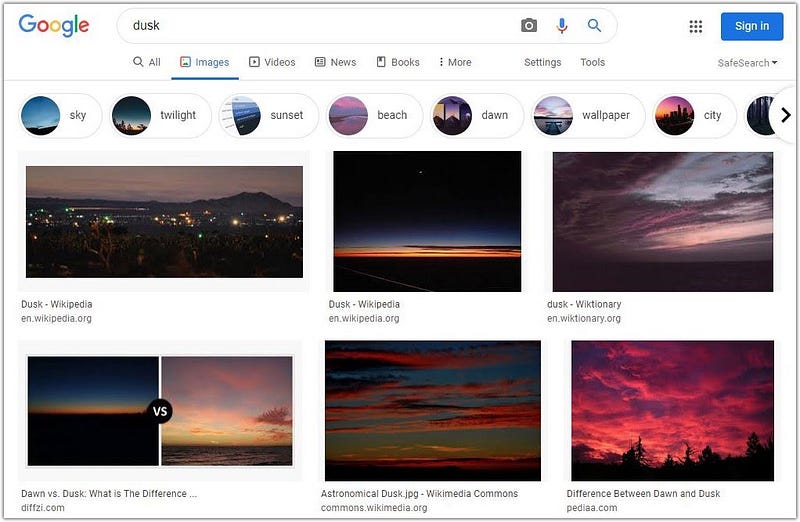
Perfect. Maybe Google’s all-knowing algorithms really do surface exactly what you’re looking for every single time. It’s an incredible engine, and it’s responsible for catapulting a late 1990s startup to a $1 trillion market value in 2020. Search is still vital to Google, so it’s important that it gets things right.
Just for kicks, and because I know this is going to return the exact result I want, let’s try one more: “twilight.”
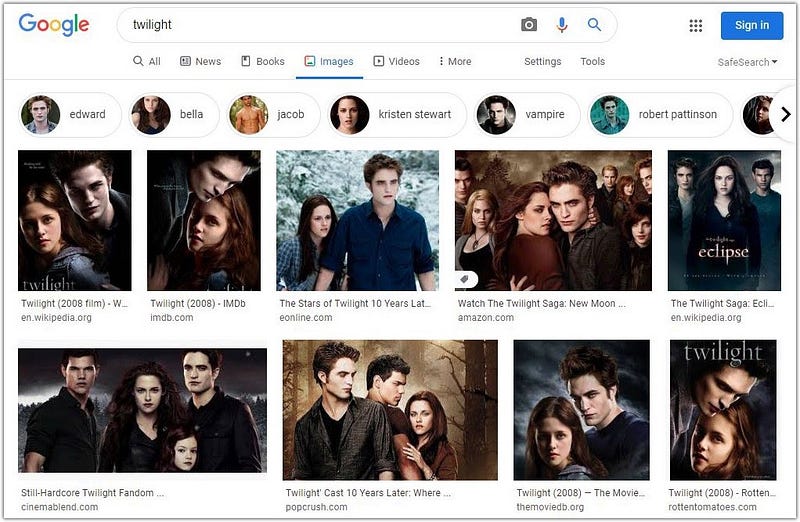
Oh… nevermind.
The (surprisingly human) algorithm
To understand how pasty vampires and buff werewolves invaded Google Images, you have to first understand how Google’s algorithms work. That’s a challenge, as it’s a notoriously opaque machine and Google itself is often vague in its descriptions of how and why its engine returns the results it does. Offering a detailed description of exactly how your world-ruling search engine functions isn’t good for business, so it’s no surprise Google doesn’t reveal much.
Via Google, emphasis mine:
To give you the most useful information, Search algorithms look at many factors, including the words of your query, relevance and usability of pages, expertise of sources, and your location and settings. The weight applied to each factor varies depending on the nature of your query — for example, the freshness of the content plays a bigger role in answering queries about current news topics than it does about dictionary definitions.
The machine doesn’t care that “twilight” is a time of day. Instead, it delivers what it thinks is most relevant. Fair enough, but the algorithm is just one piece of the puzzle, and there’s a human element here that can’t be overlooked. Google hires external contractors to verify that the results of various searches meet the criteria it sets forth, including the aforementioned “freshness” metric.
To help ensure Search algorithms meet high standards of relevance and quality, we have a rigorous process that involves both live tests and thousands of trained external Search Quality Raters from around the world. These Quality Raters follow strict guidelines that define our goals for Search algorithms and are publicly available for anyone to see.
Want to get a better idea of how these human Google search raters decide what results are good, okay, or poor? Grab a cup of coffee. The company’s “General Guidelines” that these unseen search soothsayers are supposed to follow is available for everyone to read. It’s 168 pages long and incredibly complex, but ultimately there’s no escaping the fact that it all comes down to a judgment call.
What’s fresh?
As for Google’s “freshness” concept, the company’s most recent explanation of what freshness means is from 2011. Not exactly what one would consider fresh, but it does offer us some insight into why Robert Pattinson shows up when you search for an atmospheric phenomenon.
Google’s blog post explaining freshness highlights “recent events or hot topics” as being one measure of freshness. Twilight (the book) came out in 2005, followed by the first Twilight film in 2008. They’re old, but the book anthology and film series were so incredibly popular at the time that they’ve seemingly permanently skewed how Google’s algorithm and perhaps even its human testers decide what someone searching for “twilight” is actually looking for.
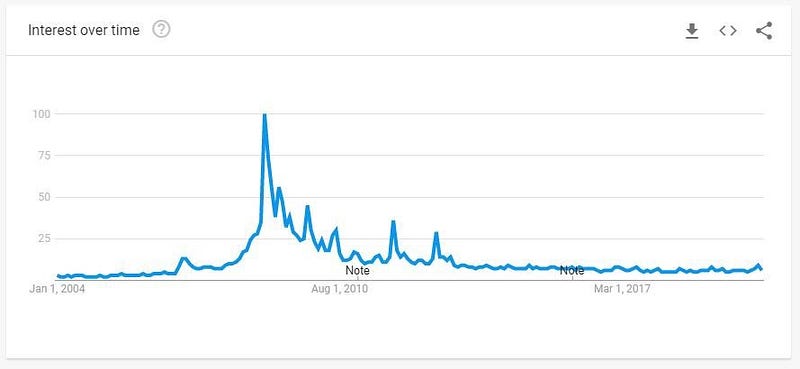
Searches for “twilight” before the launch of the books and movies were quite low, but even years after these vampire stories fell off in popularity and started to collect digital dust, “twilight” is still a slightly more popular search term than it was in the years prior. But Google also allows us to separate regular search from image search, and that’s where things get really interesting.
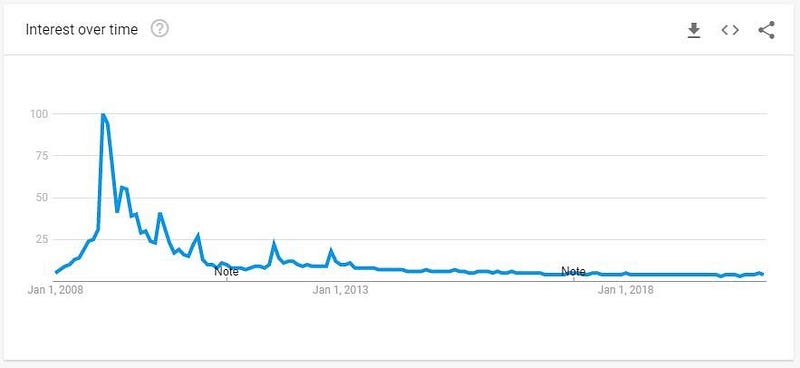
Unfortunately, the records only go back to 2008 for images instead of 2004 as with regular search, but we can still see the big Twilight spike and the taper. The difference here is that the taper is more dramatic, and the popularity has reached near zero in recent years.
Very few people are searching for the term “twilight” in images these days, and because the term was never strongly linked to images of actual twilight, Google believes that Stephanie Meyer’s fantasy world is the most accurate representation of what twilight is. This is further supported by the image search trends for “twilight movie,” which should give us a hint as to how many people are really hoping to see vampires when they type “twilight” into the search bar.
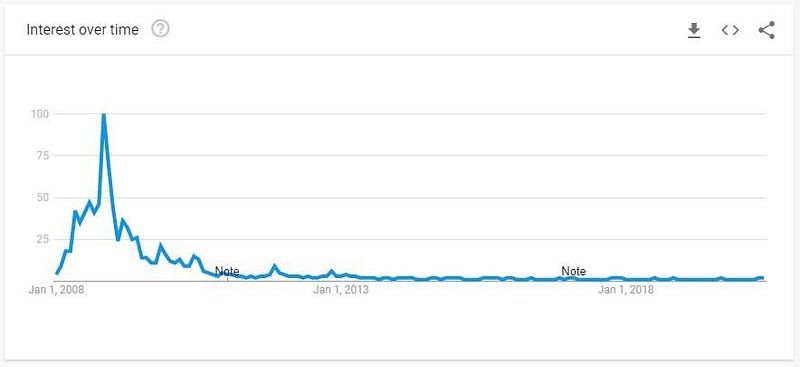
Virtually nobody is actually trying to find “Twilight movie” images anymore. In fact, it might not be a stretch to assume that when any given person types “twilight” into the image search field, the odds of what they’re actually looking for comes down to a coin flip. We can’t know for certain, but the fact remains that the popularity of the movie appears to have permanently altered what the search engine believes twilight is.
A total eclipse of the search
We can use a different movie from the same fantasy series to further examine how Google prioritizes image search results. This time, we’ll look at the 2010 movie Eclipse, the third film in the franchise. It was even more popular than the first film, nearly doubling Twilight’s box office gross, but if you search for “eclipse” in Google Images, you’d never know it existed.
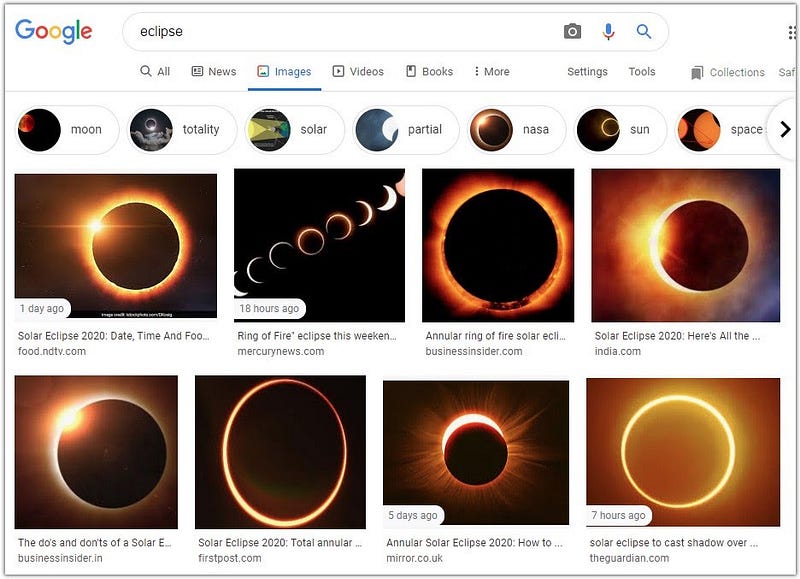
Where are all the vampires? Their fate can be explained by examining the Google image search trends.
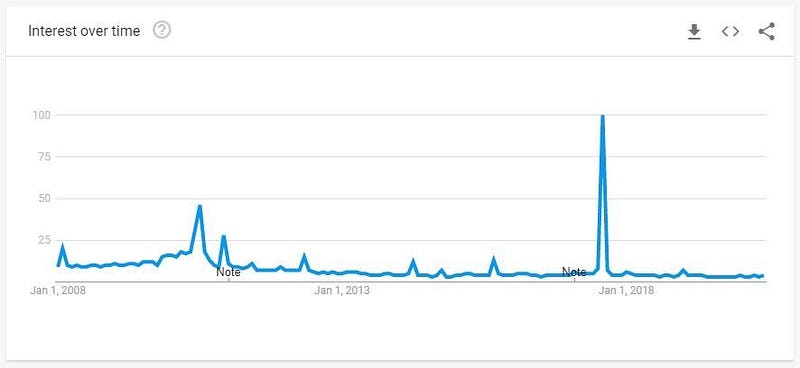
The spike you see about one-quarter of the way into the graph is the 2010 release of the Eclipse movie. That massive dagger of a spike toward the end is the total solar eclipse of August 21, 2017. A huge swath of the United States was treated to a once-in-a-lifetime skywatching event on that date, and even if you weren’t in the path of the eclipse, you definitely heard and probably read about it.
The celestial event generated a lot more interest than the movie that shared its name. In fact, every time an eclipse happens in the United States or abroad it tends to generate news stories and interest on Google. In this case, the “real” eclipse wins the search war. Images of actual eclipses were clearly deemed more fresh and of higher quality, and Google now assumes that someone searching for “eclipse” wants to see the astronomical phenomenon rather than movie promo photos and posters.
The same is true for the second Twilight film, New Moon. In this case, despite the movie seemingly winning the search war with a huge spike of interest when it debuted, followed by a dramatic taper, people still regularly search for “new moon” for a variety of reasons not related to the decade-old movie. Keeping track of moon cycles is important to a lot of people, and the vampires were no match for that regular flow of fresh search traffic and news stories over years and years.
“Twilight,” on the other hand, doesn’t benefit from the same interest. The movie was more popular than searches for actual twilight will likely ever be, and there’s no slow burn of interest in the scientific phenomenon (as is the case with “new moon”) to save it from its unfortunate fate. On top of that, people searching for information on any of the Twilight sequels will likely include the term “Twilight” in their query, adding strength to the connection between the word itself and the franchise. You could argue that actual twilight is fresher than the movies, since twilight happens twice a day, every day, as opposed to the film and book releases which are now practically antiques, but that doesn’t matter to Google’s electronic mind.
Nevertheless, Google doesn’t know any better, so it surfaces what it thinks is best. In this case, it happens to be a movie that hasn’t been fresh in years, rather than the “dictionary definition” that Google admits its algorithm sometimes ignores.
A pale future
Is twilight doomed? It may be too early to say, but things don’t look promising. It’s been 15 years since the book came out and 12 years since the movie debuted, and it’s still the default image search result.
One major reason for this may be due to the fact that nobody searching for “twilight” has an obviously related search to lean on if they’re looking for photos of scenery instead of blindingly white vampires. If you wanted pictures from the movie but saw only sunsets when searching for “twilight” you’d simply try “twilight movie” instead.
On the other hand, if you wanted photos of actual twilight but saw only brooding stares and sharp teeth in the search results, you might just throw your hands up and try a completely different search term, like “dawn,” for example. Google’s typically witty algorithm may have trouble connecting these dots, and its human testers — if they’ve ever been tasked with grading the results of twilight in image search — clearly aren’t helping matters.
Google’s engine does get things right most of the time. But, like any machine, it’s not perfect. Sometimes the input doesn’t result in the expected output, and instead of a serene, relaxing photo of sunlight beaming over the horizon, you get Kristen Stewart with blood-red eyes.