avatarFarshid Wahdat

Free AI web copilot to create summaries, insights and extended knowledge, download it at here

2777

Abstract

ves from oppression and extortion by enemies. It was destroyed during the fourth century BC following Alexander the Great’s invasion but was rebuilt by his command afterward. The citadel was again ruined during the invasion of Genghis Khan, but later, during the era of Fakhr al-Din (687–706 AH), it was rebuilt by his minister, Ikhtiyar al-Din, and named after him.</p><h1 id="74fb">Specifications</h1><p id="33ad">The citadel is located in the northern part of the city, between the Pol-e Khwajeh and Bardaranya neighborhoods, situated on a high hill. The Citadel of Ikhtiyar al-Din covers an area of approximately 5000 square meters, with its highest point reaching 20 meters. Currently, it has 13 towers and is constructed from raw bricks.</p><figure id="a3ae"><img src="https://cdn-images-1.readmedium.com/v2/resize:fit:800/1*nqrHzQqFriC0Jmb9h3c4xg.jpeg"><figcaption><b>Herat Citadel</b></figcaption></figure><p id="dc6a">In recent years, the Citadel of Ikhtiyar al-Din has been used as the location for the Herat City Museum. Recently, efforts have been made to evacuate the citadel of military equipment and convert it into a museum.</p><h1 id="b27e">The Citadel of Ikhtiyar al-Din, in more detail:</h1><p id="8747">The Citadel of Ikhtiyar al-Din features several galleries, distributed across different parts of the citadel: three galleries in the northern part, one gallery in the southern part, one in the southwest, two in the west, and another in the east. Currently, the National Museum of Afghanistan is housed within these galleries.</p><figure id="ecca"><img src="https://cdn-images-1.readmedium.com/v2/resize:fit:800/1*Jh7bLLGQrdJusxgeUapevw.jpeg"><figcaption>The Citadel of Herat on a snowy day</figcaption></figure><p id="0d44">The great Citadel of Ikhtiyar al-Din has 21 towers:

  • Seven towers are located in the northern part, three of which are semi-built.
  • Three towers are situated in the eastern part of the citadel.
  • Six towers are found in the southern part.
  • One tower is positioned in the southwest.
  • Two towers are located in the western part, one of which is known as the Timurid Tower, often remembered by historians as a legacy of the illustrious Timurid era.
  • Two additional towers are situated around the main entrance gate of the citadel.</p><figure id="a7fb"><img src="https://cdn-images-1.readmedium.com/v2/resize:fit:800/1*RfW3LX-3hkrThWoEMwEewA.jpeg"><figcaption></figcaption></figure><p id="158a">The lower citadel, which is more populated than the upper citadel, has 105 water wells, all of which are made of sturdy and essential pottery. The length of the Citadel of Ikhtiyar al-Din is 250 meters, and its width reaches up to 70 meters in some parts. Another beauty of this historical citadel is the presence of a mosque, with a l

Options

ength of 12 meters from the inside, a width of 2.5 meters, and a wall thickness of 1.5 meters.</p><figure id="d3ae"><img src="https://cdn-images-1.readmedium.com/v2/resize:fit:800/1*eeQofK9oJ_zgPIzDu4UCpw.jpeg"><figcaption></figcaption></figure><h1 id="b4d1">The National Museum</h1><p id="25e5">Inside this historical building lies the Herat National Museum, one of Afghanistan’s four provincial museums, which is open to the public. The Museum of Islamic Art in Berlin, working with the German Archaeological Institute, has collaborated in the creation and exhibition of artificial artifacts. More than 3,000 ancient artifacts with a history dating back over 5,000 years before Christ are housed in the Herat Museum. Most of these artifacts belong to the 10th and 13th centuries AD, a period when Herat was a political and cultural center.</p><figure id="ba2c"><img src="https://cdn-images-1.readmedium.com/v2/resize:fit:800/1*TWffpB4osVCu3EapBdxosA.jpeg"><figcaption>Historical artifacts in the Citadel</figcaption></figure><p id="a0b3">The artifacts preserved in this museum include works from the Ghaznavid, Ghurid, Mamluk, Safavid, and Timurid periods.</p><figure id="f334"><img src="https://cdn-images-1.readmedium.com/v2/resize:fit:800/1*qmVAW6bKP6GyFBPQIX1Okg.jpeg"><figcaption></figcaption></figure><p id="d166">Most of these artifacts come in various forms, such as household vessels, animal sculptures, coins, weapons of war, and jewelry.</p><figure id="973d"><img src="https://cdn-images-1.readmedium.com/v2/resize:fit:800/1*fSBFKVdmW4nFsm1_nmvIVw.jpeg"><figcaption>Inside the Herat Citadel</figcaption></figure><blockquote id="4353"><p>For interesting historical facts about Herat, please read the next part:</p></blockquote><div id="c4f9" class="link-block"> <a href="https://readmedium.com/800-historical-treasures-the-mysterious-city-part-iv-e3e1d08d17b8"> <div> <div> <h2>800+ Historical Treasures: The Mysterious City! part(IV)</h2> <div><h3>The historical Minarets, which were built thousands of years ago from brick and clay along with lapis lazuli stone…</h3></div> <div><p>medium.com</p></div> </div> <div> <div style="background-image: url(https://miro.readmedium.com/v2/resize:fit:320/1*rZ39KVWf0f9EZHarjzJmIw.jpeg)"></div> </div> </div> </a> </div><figure id="7294"><img src="https://cdn-images-1.readmedium.com/v2/resize:fit:800/1*5IFHTGA4jqGftTDDjeWVnQ.jpeg"><figcaption></figcaption></figure><p id="8bde" type="7">For supporting me through my investigations please buy me a book📖 and also For more interesting and engaging facts, subscribe and follow now.</p></article></body>

800+ Historical Treasures: The Mysterious City! part(III)

A city (Herat, Afghanistan) that has more than 800 historical sites and monuments, and for this reason, the entire city is going to be registered as a cultural heritage by UNESCO.
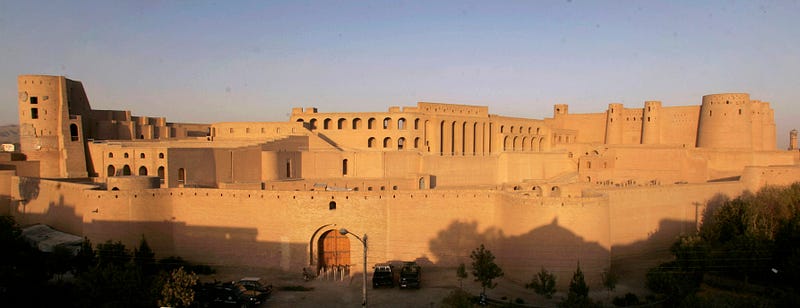
Herat Citadel has a historical antiquity of 1500 to 2000 years and has been used in the past as a military stronghold.

For a better understanding of the subject, please refer to the previous part:

In this part, we want to discuss the Herat Citadel. How was it constructed? When was it built, and for what purpose was it built?

Herat Citadel (The Citadel of Ikhtiyar al-Din)

In 330 BC, after capturing the city of Artacoana (possibly Herat), the center of the satrapy of Aria, Alexander the Great destroyed it. He or his survivors then built a new city nearby, naming it “Alexandria in Ariana,” and constructed this citadel for their soldiers, the remains of which still exist. The purpose of building this citadel was to protect the soldiers from potential uprisings of the city’s inhabitants against Macedonian rule. This massive structure is still present in the center of Herat. In the late period of Mohammed Zaher Shah and during the reign of Sardar Daoud Khan, a budget was allocated for its reconstruction, and by the end of Daoud Khan’s period, it was revived and reconstructed. The tower and large structures of this citadel are visible from afar.
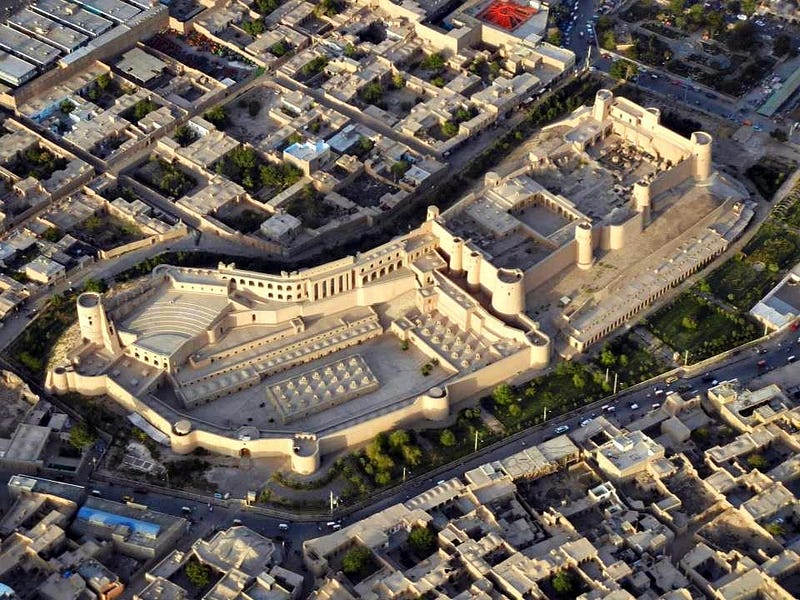
The Citadel of Herat

The Citadel of Ikhtiyar al-Din is the first fortified citadel in the Herat region of Afghanistan, built by its inhabitants under the guidance of Shamirah, the daughter of Faridon, to free themselves from oppression and extortion by enemies. It was destroyed during the fourth century BC following Alexander the Great’s invasion but was rebuilt by his command afterward. The citadel was again ruined during the invasion of Genghis Khan, but later, during the era of Fakhr al-Din (687–706 AH), it was rebuilt by his minister, Ikhtiyar al-Din, and named after him.

Specifications

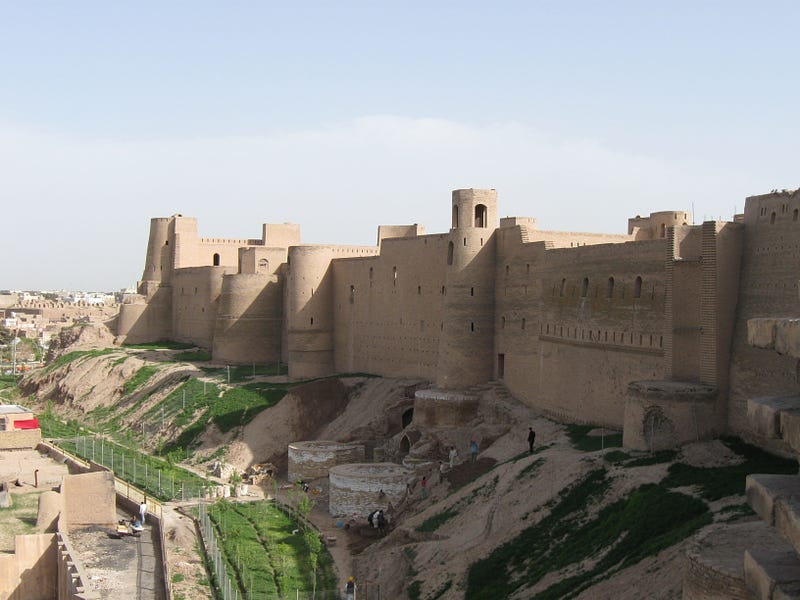
The citadel is located in the northern part of the city, between the Pol-e Khwajeh and Bardaranya neighborhoods, situated on a high hill. The Citadel of Ikhtiyar al-Din covers an area of approximately 5000 square meters, with its highest point reaching 20 meters. Currently, it has 13 towers and is constructed from raw bricks.
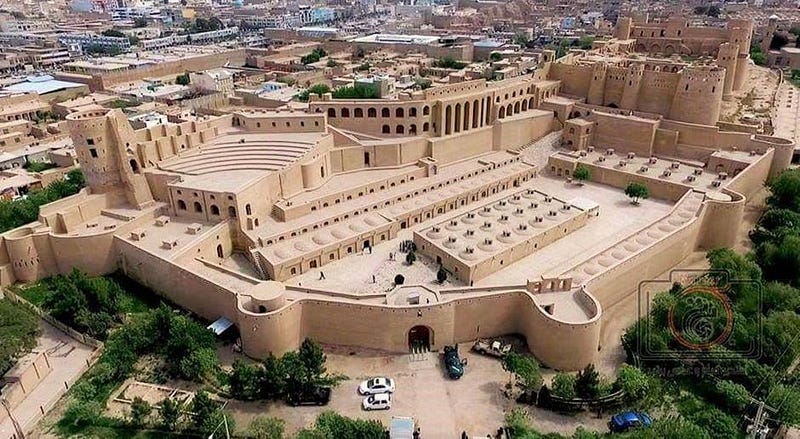
Herat Citadel

In recent years, the Citadel of Ikhtiyar al-Din has been used as the location for the Herat City Museum. Recently, efforts have been made to evacuate the citadel of military equipment and convert it into a museum.

The Citadel of Ikhtiyar al-Din, in more detail:

The Citadel of Ikhtiyar al-Din features several galleries, distributed across different parts of the citadel: three galleries in the northern part, one gallery in the southern part, one in the southwest, two in the west, and another in the east. Currently, the National Museum of Afghanistan is housed within these galleries.
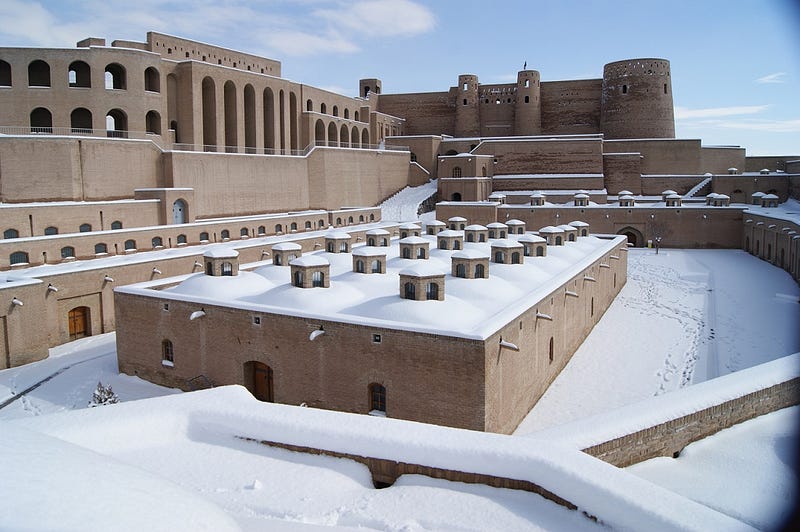
The Citadel of Herat on a snowy day

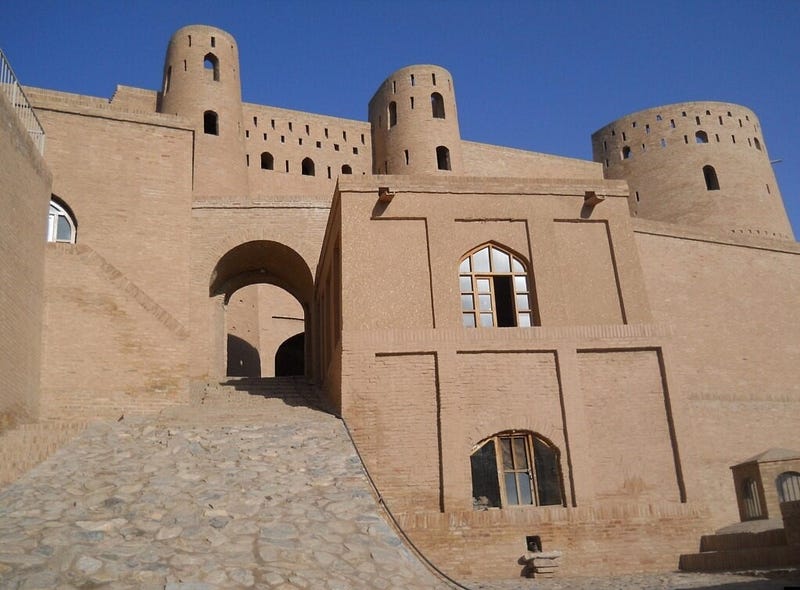
The great Citadel of Ikhtiyar al-Din has 21 towers: - Seven towers are located in the northern part, three of which are semi-built. - Three towers are situated in the eastern part of the citadel. - Six towers are found in the southern part. - One tower is positioned in the southwest. - Two towers are located in the western part, one of which is known as the Timurid Tower, often remembered by historians as a legacy of the illustrious Timurid era. - Two additional towers are situated around the main entrance gate of the citadel.
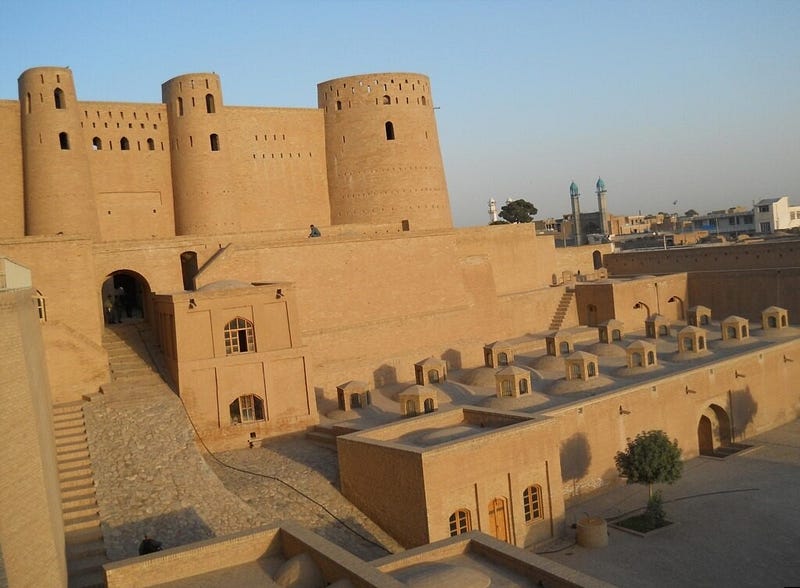
The lower citadel, which is more populated than the upper citadel, has 105 water wells, all of which are made of sturdy and essential pottery. The length of the Citadel of Ikhtiyar al-Din is 250 meters, and its width reaches up to 70 meters in some parts. Another beauty of this historical citadel is the presence of a mosque, with a length of 12 meters from the inside, a width of 2.5 meters, and a wall thickness of 1.5 meters.
The National Museum

Inside this historical building lies the Herat National Museum, one of Afghanistan’s four provincial museums, which is open to the public. The Museum of Islamic Art in Berlin, working with the German Archaeological Institute, has collaborated in the creation and exhibition of artificial artifacts. More than 3,000 ancient artifacts with a history dating back over 5,000 years before Christ are housed in the Herat Museum. Most of these artifacts belong to the 10th and 13th centuries AD, a period when Herat was a political and cultural center.
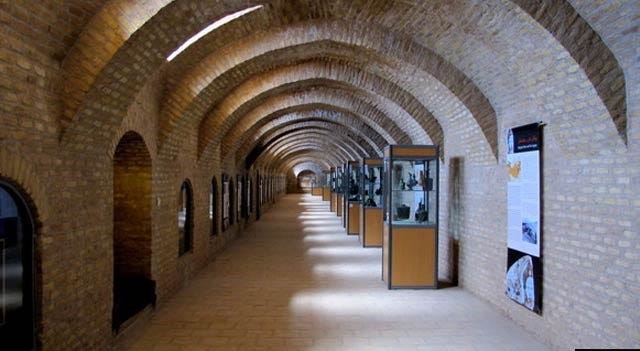
Historical artifacts in the Citadel

The artifacts preserved in this museum include works from the Ghaznavid, Ghurid, Mamluk, Safavid, and Timurid periods.
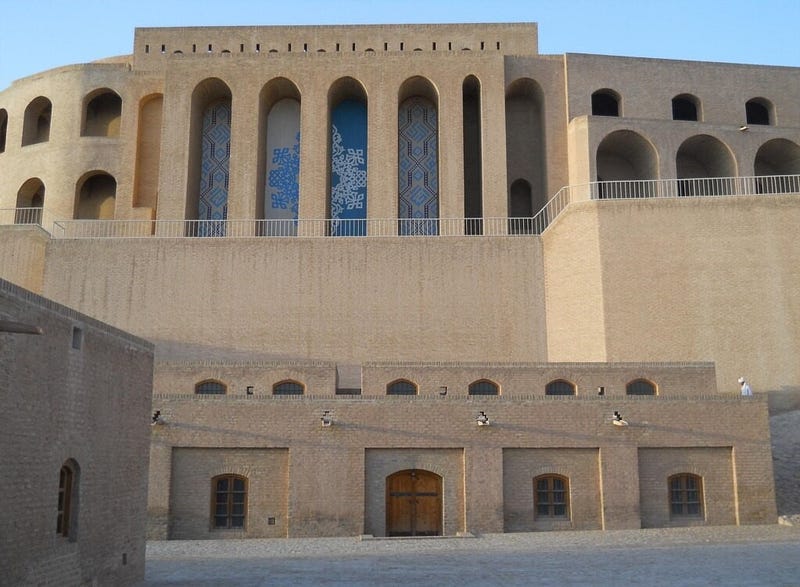
Most of these artifacts come in various forms, such as household vessels, animal sculptures, coins, weapons of war, and jewelry.
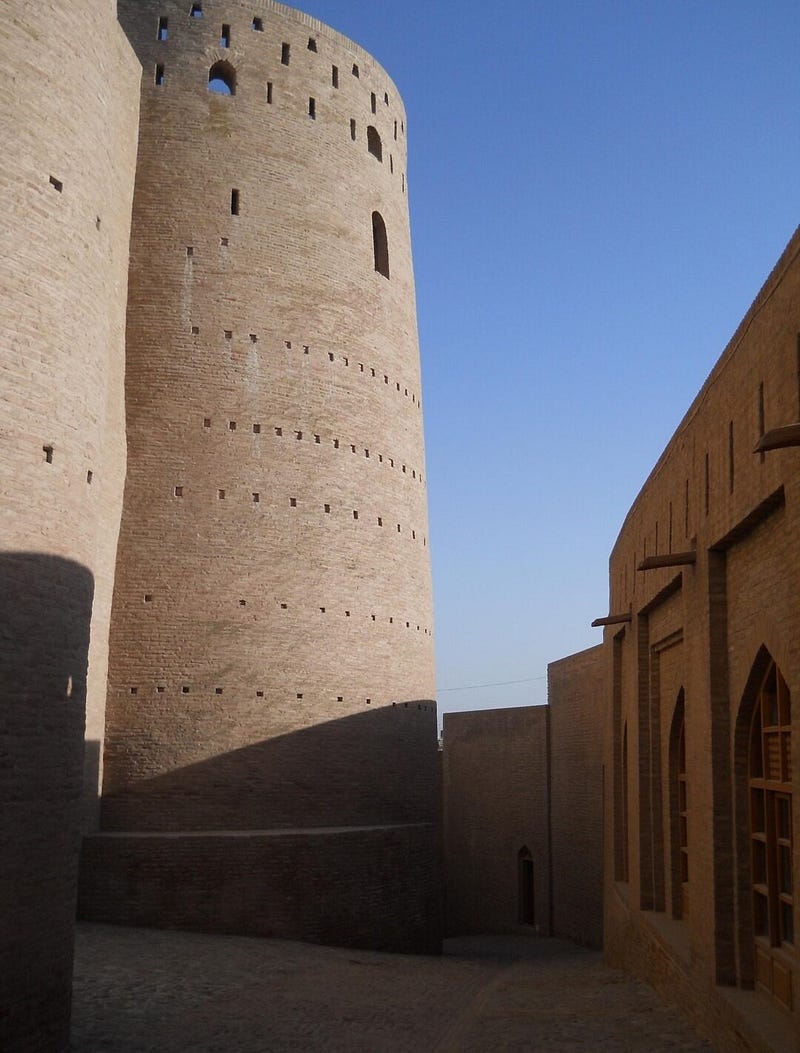
Inside the Herat Citadel

For interesting historical facts about Herat, please read the next part:
For supporting me through my investigations please buy me a book📖 and also For more interesting and engaging facts, subscribe and follow now.

Historical Fiction
Afghanistan
Sightseeing
History
Mysterious
Recommended from ReadMedium