
8 Times to Consider Contact Lenses for Children?
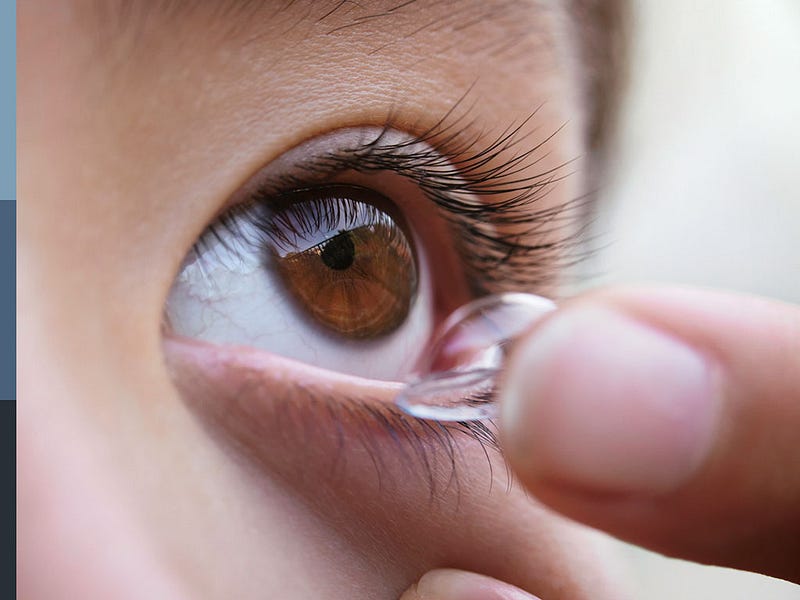

I bet you didn’t know that children, even as young as 1-month-old, are capable of wearing contact lenses! Don’t worry. I didn’t either until optometry school.
Here are 8 times that contact lenses may be indicated for children:
- Aphakia
- Aphakia is a condition where a person is missing the refractive lens of one or both of his/her eyes. As one can imagine, aphakia may make it hard for the individual to see clearly or comfortably through the affected eye.
- The most common cause of aphakia is surgery for cataracts; however, in some cases, genetics or injury play a role in its cause.
- SilSoft is a specially designed soft contact lens for adults who have had cataract surgery without a replacement (intraocular) lens; For children, SilSoft Super Plus contact lenses may be utilized for those who are aphakic. This kind of contact lens is made of material that allows oxygen to easily pass through it and is approved for overnight wear (if recommended by the child’s eye care provider)
2. Nystagmus
- Nystagmus, or “dancing eyes”, is a vision condition where the eyes make repetitive and uncontrolled movements. The nystagmus may be present when the individual is looking straight ahead or worse in a different field of gaze (up, down, left, right). There a several forms though where the exact etiology is currently unknown.
- According to Biousse et al, contact lenses wear did have a positive effect on patients with congenital nystagmus. Their study concluded that the largest effect from contact lens wear wasn’t actually from a reduced magnitude of nystagmus but rather from an important placebo effect of the lenses. Meaning, subjects suffering from nystagmus actually had an increase in confidence and quality of life with their contacts when compared to glasses.
3. Keratoconus or Corneal Irregularities
- Keratoconus is a condition that is characterized by progressive corneal thinning, irregular corneal astigmatism and visual impairment.
- In the early stages of this condition, patients may be correctable with glasses or even soft contact lenses. As this condition progresses, they may need to be fitted into hard gas permeable contact lenses in order to provide sharp, clear vision. In the advanced stages, corneal transplant surgery may be needed.
4. Iris Colobomas/Pupil Abnormalities
- An iris coloboma is typically present at birth (congenital) and caused by an incomplete closure or development of the iris (colored portion of our eyes).
- Due to this incomplete closure of the iris, a “keyhole-shaped” pupil will result. This hole allows excess light into the eye and may cause light sensitivity. Not only that, this irregular-shaped pupil may cause cosmetic concern for the patient.
- Although there isn’t a current cure for colobomas, contact lenses may be a good option to reduce light sensitivity and improve the overall cosmesis of the iris appearance in patients.
5. Amblyopia
- Amblyopia is defined as a reduction in best-corrected visual acuity (worse than 20/20, typically 20/30) which is NOT caused by a structural abnormality. The most common causes of amblyopia include strabismus (an eye turn inward or outward), a high prescription (more information about amblyogenic factors here), and/or a structural abnormality blocking normal development of vision (i.e. cataracts, ptosis, etc).
- Amblyopia is the most common visual disability in children and develops during the critical period of visual development.
- Typically, the first-line treatment for amblyopia is best-correcting patients with the use of glasses. A lot of times, these glasses may be bulky and/or difficult for children to adapt to, especially those who have never worn glasses. One non-traditional solution to this is the use of contact lenses. Contact lenses may improve overall compliance, help with adaptation, and improve cosmesis.
6. High Refractive Error
- As eluded to in the amblyopia section, a high refractive error may pose issues with bulkiness, cosmetics, and overall compliance in full-time glasses wear in amblyopic children. Why? It’s because of physical optics.
- As the amount of myopia (near-sightedness) increases in glasses, the edges of the glasses become progressively thicker and the image perceived becomes smaller. In contrast, as the amount of hyperopia (far-sightedness) increases in glasses, the center of the glasses becomes progressively thicker and the image perceived becomes bigger. In both cases, the glasses will become heavier.
- As you can imagine, this change in weight and image size may become overbearing for children who need to wear glasses. To combat poor glasses wear compliance, contacts may be a good option. The use of contacts will counteract and avoid all the optical problems that glasses may cause as the prescription increases.
7. An Active Child
- An active child in sports, outside, or in general may benefit from the utilization of contacts. These children are more prone to either breaking their glasses or not wearing them altogether.
- From personal experience, I’ve seen the utilization of orthokeratology (hard contact lenses that change the shape of the cornea overnight) being very helpful for swimmers. Not only that, children engaging in contact sports (i.e football, soccer, etc) that require glasses in order to see may benefit from contacts as well.
8. Myopia Control
- Myopia (near-sightedness)is a condition that is becoming increasingly prevalent with an estimated prevalence of 41.6% in persons aged 12 to 54 years old. Projections predict that by 2050, 50% of the US population will be myopic (near-sighted).
- Why should we care? As the degree of myopia becomes greater and degenerative, individuals develop a higher risk for retinal conditions such as retinal detachments, staphylomas, ocular bleeds, retinal tears/holes, maculopathy, and even glaucoma.
- One way to combat the progression of myopia is a therapy called myopia control. Myopia can be “controlled” via specialty contact lenses or pharmacologic interventions.
- Specialty contact lenses include orthokeratology and soft multifocal contact lenses. The proposed mechanism of myopia control is complex; however, the leading theory is that these lenses correct for peripheral retinal blur, which has been shown to stimulate eye growth in monkeys (myopia).
WHAT AGE IS APPROPRIATE?
- If medically necessary: ANY age you just need the right parent. Remember, medically necessary contact lens requirements include anisometropia (difference in prescription between the eyes) of greater than or equal to 3.00 diopters on the spectacle prescription and/OR high ametropia (power of the eyes) or greater than or equal to +/- 10.00 diopters on the spectacle prescription.
- If NOT medically necessary: you can factor in the patient’s maturity but ultimately it is the parent’s decision.
FACTORS TO CONSIDER
- Age/maturity of the child (obviously)
- Hygiene
- Parental involvement
- Backup glasses?
- Cost/insurance
- Type of lenses being used
- Time commitment/training
TYPE OF LENSES TO BE USED
- Soft options (usually Biofinity XR, proclear XR, daily lenses or monthly)
- Hard options (Rigid-gas-permeable lenses, scleral lenses, or silsoft for aphakic children)
MY TIPS
- Introduce the idea of contact lenses as SOON as possible
- Have the parent and/or child practice beforehand
- Check insurance BEFORE you start any fitting and have a dedicated person who is in charge of this
- Have the parents keep old frames/backup glasses
- REMEMBER: starting young with contacts is a practice builder!!!