
8 Reasons Why You Should Breathe Through Your Nose
An in-depth look into the science of breathing and how your life can be enhanced (or hindered) by the way you breathe

When it comes to breathing, our input is rather limited.
We can speed the breath up, slow it down, or even pause it altogether. We can make it deeper or shallower or more or less intense, but that’s about it.
Of the few decisions we can make, however, one of the most important is whether we breathe in through the nose or mouth as this sets off a chain of events that affects our nervous system, heart, and brain, as well as our hormonal levels and digestion.
Remarkably, it’s estimated that about 30 to 50 percent of adults breathe through their mouth, especially earlier in the day.
This carries potential health risks that vary from bad breath and dry mouth all the way up to chronic fatigue and autoimmune diseases.
Luckily, the nose is there to help. Here are eight reasons why.
1. Nose breathing filters and warms the incoming air
Nose breathing is the body’s first line of defense against sickness, illness, disease, and inflammation and it has two ways of operating:
Firstly, tiny capillaries in the nose begin to warm the incoming cool air before mucus in the throat warms it further. This combination helps to keep the breath at an optimal temperature for the lungs to receive.
Then secondly, little hairs in the nose and throat called cilia (Latin for eyelashes) help to trap any small airborne particles that are present in the atmosphere such as dust and bacteria, and prevent them from entering the lungs.
As a brilliant scientific paper pointed out: “The nose is a vital and much underrated organ.” And “to realize its importance we only need to reflect on when we last suffered from a bad cold. Nasal congestion and a runny nose have a noticeable effect on our ability to breathe, our energy levels, our ability to sleep, and our general ability to function.”
2. Nose breathing boosts nasal nitric oxide
Nose breathing releases an important gas called nitric oxide.
Nitric oxide helps to maintain the health of our blood vessels through a process called vasodilation. Vasodilation is the art of relaxing the inner muscles of the cells which encourages them to open. This helps to improve blood circulation and blood flow, reduce inflammation and tension, improve heart health, lower blood pressure, enhance memory and cognitive function, improve endurance and performance, increase nutrient uptake, reverse ageing, and enhance the flow of oxygen.
Nitric oxide is a bronchodilator too. Bronchodilation is the art of relaxing the inner muscles of the lungs which in turn help the airways (bronchi) widen. This continues to improve blood circulation and blood flow whilst boosting oxygen levels and overall lung health.
It also has antiviral, antibacterial, anti-inflammatory, antioxidant, and antimicrobial properties which help to kill viruses and bacteria in the nose and throat before they go any further.
Cool fact: No nitric oxide is released through mouth breathing.
3. Nose breathing balances both hemispheres of the brain
A few thousand years ago, ancient yogis in the East developed a series of breathing exercises called pranayama (prana means life force energy in Sanskrit; yama means control).
As they were experimenting with the different ways to breathe, they discovered that the body has a natural rhythm that alternates from side to side every 90 minutes or so.
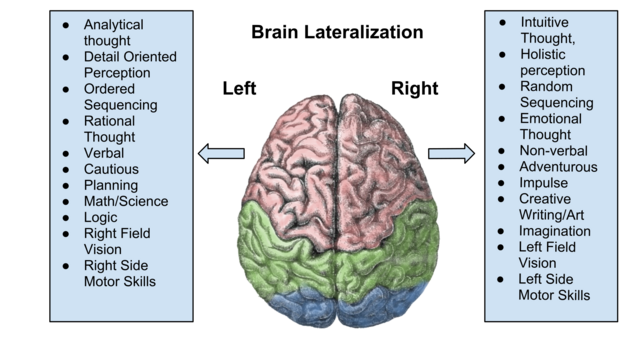
During these 90-minute cycles, one nostril is more open than the other. This opening and closing is mostly due to the flow of mucus and other liquids inside the brain exerting pressure on brain tissue. It’s a perfectly normal and necessary process for removing toxins. However, because each side of the nose connects to each hemisphere of the brain and each hemisphere of the brain has different qualities associated with it (see image below), we can trace the breath through each nostril to better understand what is going on inside the brain.
When the left nostril is more open, for example, the right side of the brain will be more active so we’re more likely to feel creative and/or imaginative. When the right nostril is more open, the left side of the brain will be more active so we’re more likely to feel detail-oriented and/or logical.
It can work the other way around too and that’s where breathing exercises really come into their own.
For example, if I’m struggling to focus, I might be operating more from my creative right brain so breathing in through my right nostril to activate my left brain could help balance things out. Similarly, if I’m wanting to enhance my creativity, I can breathe through my left nostril to activate my right brain a little more.
Take a moment to connect to your breath — Which side of your nose is more open right now? Is there any correlation with how you’re feeling?
A great exercise to balance both hemispheres of the brain is alternate nostril breathing or nadi shodhana pranayama.
Here is a short video if you’re curious to try:
4. Nose breathing engages the diaphragm
This is important because there are billions and billions of nerves that run from the brain to the diaphragm via the lungs and heart. So, as the diaphragm moves up and down like a pump, the heart, brain, nervous system, and digestive system move in accordance with its rhythm because they follow the same movement.
If it’s fast and erratic each organ and its corresponding functions will speed up. If it’s calm and relaxed, they will all slow down. It’s pretty intuitive stuff but the cascade of emotions that happens “downstream” impacts the majority of our lives.
Posture is also important. Slouching restricts the diaphragm’s full range of movement, for example, so even though the breath will breathe automatically, its effectiveness changes from breath to breath depending on how easily it flows in and out.
Nose breathing is a great way to engage the diaphragm and support critical functions in the body and help them run optimally.
To know if you’re diaphragmatically breathing, notice if your belly expands out in front of you when you breathe in. If it fills up like a balloon, you’re diaphragmatically breathing. If it doesn’t, you’re more likely breathing into the upper chest/throat area.
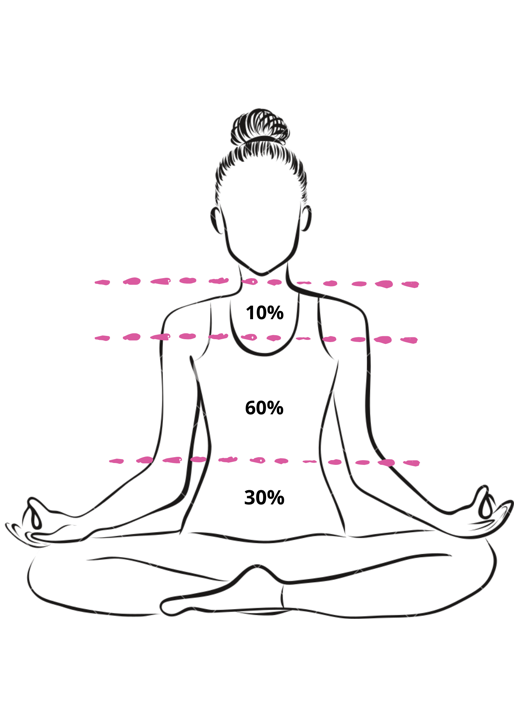
Which area of the body do you breathe into most?
5. Nose breathing increases oxygen uptake in the blood
“It has been estimated that approximately one third of people don’t breathe well enough to sustain normal health. These people do not get enough oxygenation of their cells, tissues and organs.” — Lenus
To understand this properly, it’s important to look at the relationship that oxygen and carbon dioxide have with a sticky protein called haemoglobin.
As oxygen enters the bloodstream it attaches to haemoglobin and they both get pumped around the body by the heart. Without the presence of carbon dioxide, however, oxygen will stay bound to haemoglobin and it won’t be able to reach the tissue cells in the body that need it to function. So people a balanced breath is important to keeping these two gases balanced.
“Over 95% of oxygen carried in the blood is attached to haemoglobin. When capillary PCO2 (carbon dioxide partial pressure) rises, there is increased unloading of oxygen in the tissues (the Bohr Effect). However, a reduction in carbon dioxide partial pressure strengthens the bond between oxygen and haemoglobin, resulting in less oxygen being released in to the tissues and organs.
Furthermore:
When an individual over breathes (typically through the mouth), too much carbon dioxide is lost from the blood and this results in reduced oxygenation of tissues and organs. In contrast, when breathing volume is reduced towards normal, through nose breathing, higher carbon dioxide in the blood decreases the affinity between oxygen and haemoglobin, resulting in greater oxygenation of tissues and organs.” — Lenus
Again, there are two options to choose from when it comes to breathing — to breathe in through the nose or breathe in through the mouth.
If you choose the nose, you’ll increase the amount of oxygen that reaches the tissues in your body and your cells will love you for it.
6. Nose breathing balances the body’s pH levels
Oxygen is a neutral gas on the pH scale while carbon dioxide is acidic. (Carbon dioxide dissolves in water to form carbonic acid.) So, when the breath becomes unbalanced so do our pH levels.
Whenever this happens, the body experiences two opposing states: respiratory alkalosis and respiratory acidosis.
Respiratory alkalosis is caused by breathing too deeply and/or too often and it can be brought on by things like diet, stress, breathing in through the mouth, and/or poor health.
This begins to over-oxygenate the cells inside the body while depleting its carbon dioxide supply. Over time this can lead to things such as anxiety, depression, dizziness, nausea, numbness in the hands and feet, and muscle spasms.
Respiratory acidosis is its counterpart, and it happens for the opposite reasons. When not enough carbon dioxide is removed from the body it becomes “stale” or acidic. This typically occurs from weaker or shallower breathing caused by pulmonary diseases such as emphysema and pulmonary fibrosis. It can also be brought on by obesity, asthma, and smoking.
Luckily, the general rule of thumb for maintaining a healthy pH balance with the breath is simple: Breathe smooth, calm, consistent breaths in through the nose and breathe less.
7. Nose breathing engages the vagus nerve
The vagus nerve makes up three-quarters of the parasympathetic nervous system which is better known for helping us rest and digest. It does this by slowing down the heart, steadying the breath, smoothing digestion, improving recovery and healing times, producing saliva, releasing endorphins and hormones such as dopamine, oxytocin, and serotonin, and boosting the immune and cardiovascular systems.
The vagus nerve travels from the brainstem to the gut, passing through the tongue, throat, neck, heart, lungs, diaphragm, and abdomen. Along the way, it delivers vital information to most of our essential organs and sends anti-inflammatory signals around the body to make us feel calm, relaxed, and at ease.
Because we each breathe close to 20,000 breaths a day, breathing in through the nose is a great way to consistently activate the vagus nerve and boost health.
8. Nose breathing supports proper bone structure and facial growth
Some scientists, medical professionals, and dentists have linked sustained mouth breathing to intergenerational conditions such as overcrowded mouths, shallower mouth palates, deviated septums, receding jaw lines and gums, restricted airways, and overbites/underbites.
To understand their reasoning behind this, think about how wind direction can influence a growing tree or how water can shape and mould something as hard as rock. It doesn’t matter how rigid something appears to be in nature, repetitive action reigns supreme in the end. The way the breath shapes the body is no different.
If the areas in and around the nose and nasal cavity don’t have enough air flowing over them because a person is mouth breathing, for example, the soft tissues that develop there will eventually close up. If more time passes, cartilage and bone structure will also change. The mouth palate will drop too and the airways will become tighter as a result. This is just how evolution works and it shows how sinuses can become blocked, how snoring and sleep apnea can develop, and even how deviated septums can form over time.
The good news is that because the breath can create these developmental changes, it can also reverse them. It will take time, of course, but just like how water will erode a rock drip by drip, each passing breath has the opportunity to shape the body in new and exciting ways.
The first decision you have to make is whether you want to breathe in through your nose or mouth and that all starts on your next inhale. And the next...
And the next.
“Children whose mouth breathing is untreated may develop long, narrow faces, narrow mouths, high palatal vaults, dental malocclusion, gummy smiles, and many other unattractive facial features… These children do not sleep well at night due to obstructed airways; this lack of sleep can adversely affect their growth and academic performance. Many of these children are misdiagnosed with attention deficit disorder (ADD) and hyperactivity.” — Lenus
Closing Thought
Let’s end on a simple yet fulfilling high.
Here is a nugget of wisdom that originates from the ancient Sanskrit language that birthed all breathing exercises:
“For breath is life, and if you breathe well you will live long on earth”


