avatarJohn Teehan

Free AI web copilot to create summaries, insights and extended knowledge, download it at here

3245

Abstract

resenters dress. Check out the speakers giving TED talks.</p><p id="a661">How would you describe their manner of dress?</p><p id="179d">You’ll probably find that it’s a mix between business casual and casual — but even those speakers wearing t-shirts are at least wearing <i>nice</i> t-shirts.</p><p id="53fa">Like it or not, appearance matters. The better, more put together a speaker looks, the more receptive an audience will be. Of course, it’s possible to overdo it. Unless you’re sure that it’s appropriate (such as speaking at a black-tie gala) or you’re being tongue-in-cheek, skip the formal wear. Dress for comfort, but dress neatly.</p><p id="c135">Dress for the audience, and err on the side of dressing like an adult.</p><h1 id="9892">Be Somewhat Animated</h1><p id="6499">Move your arms and hands. Fill the area. If speaking on a stage, move on occasion. There’s nothing so dull as a speaker who stands stock still while making a presentation. Even if you’re speaking from notes at a podium, it’s okay to look up every now and then. You can wave a hand to highlight a phrase or make a pointing gesture to emphasize a point.</p><figure id="56a7"><img src="https://cdn-images-1.readmedium.com/v2/resize:fit:800/0*4Q-cxuTZ5Q9KuJ3C"><figcaption>Photo by <a href="https://unsplash.com/@productschool?utm_source=medium&amp;utm_medium=referral">Product School</a> on <a href="https://unsplash.com?utm_source=medium&amp;utm_medium=referral">Unsplash</a></figcaption></figure><p id="0285">At the same time, don’t wave your arms around like a windmill or run around the stage like a show pony. It can end up becoming distracting to the audience, and you’ll end up losing them. Remember, you’re presenting a talk, not an aerobics class.</p><h1 id="827c">Avoid Ad-libs</h1><p id="17bf">We tend to think we’re more clever than we are — especially with off-the-cuff remarks. The danger is that you run the risk of derailing attention to your original topic. A classic example of this is Donald Trump.</p><p id="8076">As a television performer, he did a pretty good job — especially with video editors cleaning up his work. As a live speaker, Trump left a lot to be desired — in large part because we would frequently go off script, and the takeaways from his speech would end up not being about the original topic but about whatever hare-brained nonsense he ended up ad-libbing.</p><p id="e4c7">Stick to your talking points. Avoid going off on another topic, no matter how briefly. If you have a funny comment you want to share, save it for the Q&A period.</p><h1 id="5d8c">Use the Damn Microphone!</h1><p id="7234">If you have the option of speaking with a microphone, do it.</p><p id="305c">People with hearing issues tend not to get noticed and may feel uncomfortable drawing attention to their needs. Many will try to sit up front where they can hear more easily, but if the room you’re speaking in has first-come, first-serve seating, people with hearing issues might still end up in the back and unable to make out what’s being said without the aid of a microphone.</p><p id="4021">Don’t assume everyone can hear you — even if you promise to speak up.</p><h1 id="beaf">Practice and Rehearse</h1><p id="085d">These aren’t necessarily the

Options

same. By practice, I mean spend some time alone running through your speech. If you have a tendency to speak fast, use a timer and see if you can’t slow down a bit on your next try.</p><p id="ad09">Record yourself. Are you interrupting yourself with uhh’s and ahs? Try it again with fewer of those.</p><figure id="442f"><img src="https://cdn-images-1.readmedium.com/v2/resize:fit:800/0*Sevm6sSf41OuhfQZ"><figcaption>Photo by <a href="https://unsplash.com/@melynavv?utm_source=medium&amp;utm_medium=referral">Melyna Valle</a> on <a href="https://unsplash.com?utm_source=medium&amp;utm_medium=referral">Unsplash</a></figcaption></figure><p id="bec1">Once you’ve practiced your speech a few times, invite some trusted friends or relatives to sit through a practice run. Get their reactions and consider any criticisms or advice they have.</p><p id="e4ca">An added benefit to these practice and rehearsal sessions is that the more you run through your speech, the more comfortable you should be when the time comes to present it to your target audience.</p><h1 id="c773">Public Speaking Is Probably the Finest Skill One Can Nurture</h1><p id="d9a8">All right, that may be a bit overboard, but I do think it’s a skill worth learning and honing.</p><p id="4589">Public speaking not only gives you more significant network opportunities and the ability to get your thoughts and ideas out into the world, but it also helps you learn to provide information in a more precise and presentable manner. A lot of this translates well into writing.</p><p id="059c">So, if you’re a writer, learn to be a speaker as well.</p><p id="1e8c">And who knows? Maybe you’ll get your very own TED talk someday.</p><p id="ea9c">Wouldn’t <i>that</i> be neat?</p><p id="4a15"><i>Cheers!</i></p><div id="7c4c" class="link-block"> <a href="https://readmedium.com/why-your-freelance-writing-pitches-fail-2efcada52363"> <div> <div> <h2>Why Your Freelance Writing Pitches Fail</h2> <div><h3>Want more freelance writing success? Avoid these mistakes.</h3></div> <div><p>medium.com</p></div> </div> <div> <div style="background-image: url(https://miro.readmedium.com/v2/resize:fit:320/0*qcFRivF8YkWj3bgQ)"></div> </div> </div> </a> </div><div id="cd50" class="link-block"> <a href="https://readmedium.com/so-you-want-to-be-a-writer-9570190a9829"> <div> <div> <h2>So You Want To Be a Writer</h2> <div><h3>I have good news for you.</h3></div> <div><p>medium.com</p></div> </div> <div> <div style="background-image: url(https://miro.readmedium.com/v2/resize:fit:320/0*Sn3X6OW9676FP752)"></div> </div> </div> </a> </div><h2 id="1aa9">About John Teehan</h2><p id="8520"><i>John lives in Rhode Island with his wife, son, and dog. He specializes in tech, health, business, parenting, pop culture, and gaming. Visit<a href="http://www.wordsbyjohn.net"> wordsbyjohn.net</a> for more info and rates. Twitter: @WordsByJohn2</i></p></article></body>

8 Practical Tips For Improving Your Public Speaking

There is power in a well-presented speech. Harness that!

Photo by Priscilla Du Preez on Unsplash

Whether you’re a teacher, preacher, activist, or artist of any kind, it’s to your benefit to become a more effective public speaker.

Speaking to groups of people often signifies you as a thought leader and influencer (old school style).

Becoming an effective public speaker can boost your confidence, help you organize your ideas better, and allow you to build a better relationship with your audience.

Here are some ways you can become a better public speaker.

Murder the Uhh’s

I’m starting out with one of the biggest challenges to effective public speaking. It’s a hard habit to break. Even the best of speakers have issues with it. President Obama is known for his erudition and skill at public speaking — but the amount of “uhh’s” in the middle of or between sentences can be hugely distracting.

The tricks to getting past this are awareness and practice. What also helps is recording yourself giving a talk — a few paragraphs at first, then a longer talk later — and work on gradually cutting down on the frequency of your voice pauses.

Slow Your Roll

Public speaking can be a bit nerve-wracking, and because of that, people naturally respond by speeding up their speech.

It’s perfectly understandable.

Try to be aware of how fast you are speaking and then slow down.

You don’t have to slow to a crawl, but make sure that you give yourself time to pronounce every word clearly. Rushing words together makes it harder for your audience to catch everything you say.

Pause While Using Visual Aids

If your presentation includes visual aids such as slides, charts, or graphs, stop talking and give your audience a chance to briefly look at the graphic before moving on. This provides the audience with an opportunity to place your words in context and allows you a moment to prepare mentally before discussing the visual aid.
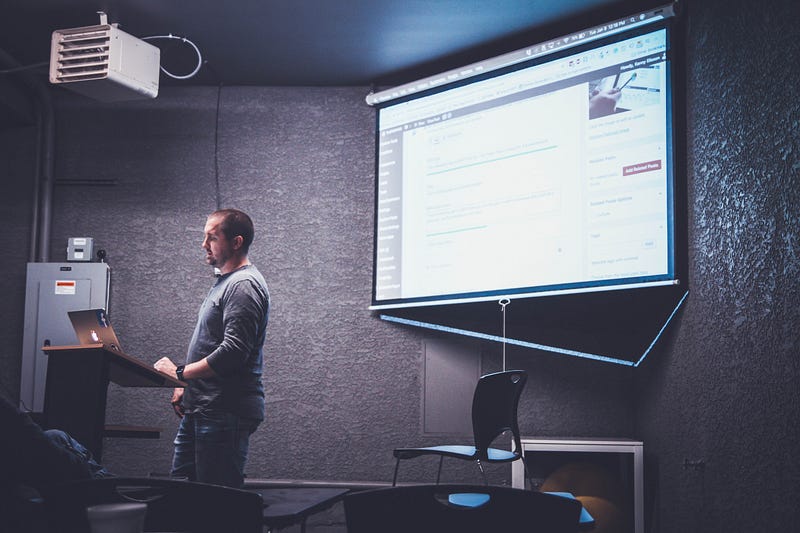
Photo by NeONBRAND on Unsplash

It doesn’t have to be (and probably shouldn’t be) a long pause. You’re mainly providing a breathing space for you and the audience. Look at your use of visual aids as part of your talk’s overall rhythm and adjust appropriately.

Dress Like You Belong There

Take a look on YouTube at the way some presenters dress. Check out the speakers giving TED talks.

How would you describe their manner of dress?

You’ll probably find that it’s a mix between business casual and casual — but even those speakers wearing t-shirts are at least wearing nice t-shirts.

Like it or not, appearance matters. The better, more put together a speaker looks, the more receptive an audience will be. Of course, it’s possible to overdo it. Unless you’re sure that it’s appropriate (such as speaking at a black-tie gala) or you’re being tongue-in-cheek, skip the formal wear. Dress for comfort, but dress neatly.

Dress for the audience, and err on the side of dressing like an adult.

Be Somewhat Animated

Move your arms and hands. Fill the area. If speaking on a stage, move on occasion. There’s nothing so dull as a speaker who stands stock still while making a presentation. Even if you’re speaking from notes at a podium, it’s okay to look up every now and then. You can wave a hand to highlight a phrase or make a pointing gesture to emphasize a point.
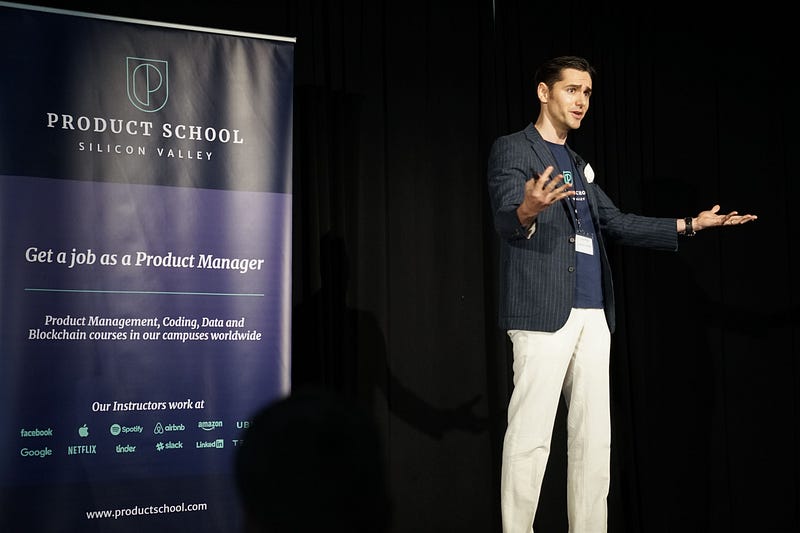
Photo by Product School on Unsplash

At the same time, don’t wave your arms around like a windmill or run around the stage like a show pony. It can end up becoming distracting to the audience, and you’ll end up losing them. Remember, you’re presenting a talk, not an aerobics class.

Avoid Ad-libs

We tend to think we’re more clever than we are — especially with off-the-cuff remarks. The danger is that you run the risk of derailing attention to your original topic. A classic example of this is Donald Trump.

As a television performer, he did a pretty good job — especially with video editors cleaning up his work. As a live speaker, Trump left a lot to be desired — in large part because we would frequently go off script, and the takeaways from his speech would end up not being about the original topic but about whatever hare-brained nonsense he ended up ad-libbing.

Stick to your talking points. Avoid going off on another topic, no matter how briefly. If you have a funny comment you want to share, save it for the Q&A period.

Use the Damn Microphone!

If you have the option of speaking with a microphone, do it.

People with hearing issues tend not to get noticed and may feel uncomfortable drawing attention to their needs. Many will try to sit up front where they can hear more easily, but if the room you’re speaking in has first-come, first-serve seating, people with hearing issues might still end up in the back and unable to make out what’s being said without the aid of a microphone.

Don’t assume everyone can hear you — even if you promise to speak up.

Practice and Rehearse

These aren’t necessarily the same. By practice, I mean spend some time alone running through your speech. If you have a tendency to speak fast, use a timer and see if you can’t slow down a bit on your next try.

Record yourself. Are you interrupting yourself with uhh’s and ahs? Try it again with fewer of those.
Photo by Melyna Valle on Unsplash

Once you’ve practiced your speech a few times, invite some trusted friends or relatives to sit through a practice run. Get their reactions and consider any criticisms or advice they have.

An added benefit to these practice and rehearsal sessions is that the more you run through your speech, the more comfortable you should be when the time comes to present it to your target audience.

Public Speaking Is Probably the Finest Skill One Can Nurture

All right, that may be a bit overboard, but I do think it’s a skill worth learning and honing.

Public speaking not only gives you more significant network opportunities and the ability to get your thoughts and ideas out into the world, but it also helps you learn to provide information in a more precise and presentable manner. A lot of this translates well into writing.

So, if you’re a writer, learn to be a speaker as well.

And who knows? Maybe you’ll get your very own TED talk someday.

Wouldn’t that be neat?

Cheers!

About John Teehan

John lives in Rhode Island with his wife, son, and dog. He specializes in tech, health, business, parenting, pop culture, and gaming. Visit wordsbyjohn.net for more info and rates. Twitter: @WordsByJohn2

Public Speaking
Presentations
Tips
Advice
Writing
Recommended from ReadMedium