
8 Inventions That Once Freaked People Out Way More Than A.I.
Sewing machines once turned women into sex-craved she-devils, and toilets were shit-exploding nightmares.

In 1939, leading physicists persuaded Albert Einstein to send President Roosevelt a letter warning him of the impending dangers regarding atomic energy. Although Einsten’s E = mc2 equation made atomic energy theoretically possible, he never worked on an atomic bomb project. Still, Einstein feared a large mass of uranium in the wrong hands could cause a destructive nuclear chain reaction.
Some of his fears were unfounded. In an interview with Newsweek, Einstein later said that he would have never signed that letter if he had “known that the Germans would not succeed in producing an atomic bomb.”
Of course, we all know how this tale of new tech ends. On Aug. 6, 1945, the U.S. dropped a nuclear weapon on Hiroshima, Japan, while Oppenheimer opined, “Now I am become Death, the destroyer of worlds.”
Today, we have a new destroyer of worlds — Artificial Intelligence. Recently, over 3000 Artificial Intelligence leaders, including Elon Musk, nailed their fears to the walls of the internet. The letter asked for a six-month moratorium on A.I. until safeguards were in place. The letter further states that if “such a pause cannot be enacted quickly, governments should step in and institute a moratorium.”
So far, no one has found the pause button.
Yet although A.I. conjures up imaginative Brave New World nightmares, fears surrounding new technologies are nothing new. The following are the everyday items that once caused their share of drama.
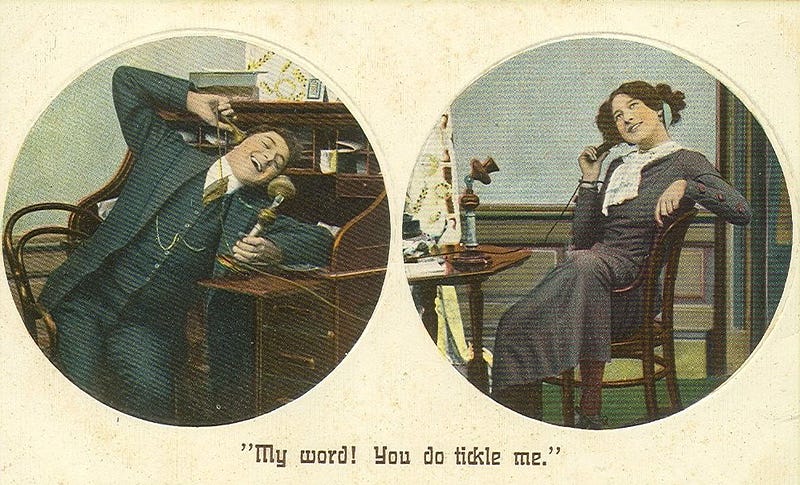
Telephones And Those Twaddling Women
When Alexander Graham Bell unleashed his revolutionary telephone in 1876, the world was not quite ready for it.
Social critics scoffed at the idea of using this newfangled speaking device in everyday conversation, particularly regarding…women. One critic even warned that it should not be used for "the exchange of twaddle between foolish women." Because, you know, women couldn't possibly have anything important to say.
Businessmen were also quick to see the downside of the phone. They feared wives would monopolize the line, preventing important business calls from getting through.
Parents worried that it would make their teens rude and unable to communicate in person. And local phone companies lobbied for and won city laws prohibiting profanity during phone conversations. Somehow, that one didn’t stick.
The phone was most feared because it was seen as the death of social decorum. Even the simple act of inviting someone to a dinner party via phone was viewed as positively barbaric. The reason will resonate with texting addicts. Voice-to-voice invitations put the invitee on the spot, making it hard to decline without feeling like a cad.
I mean, rejecting someone over the phone? Scandalous! Nowadays, we just ghost people or pretend we never got their text.
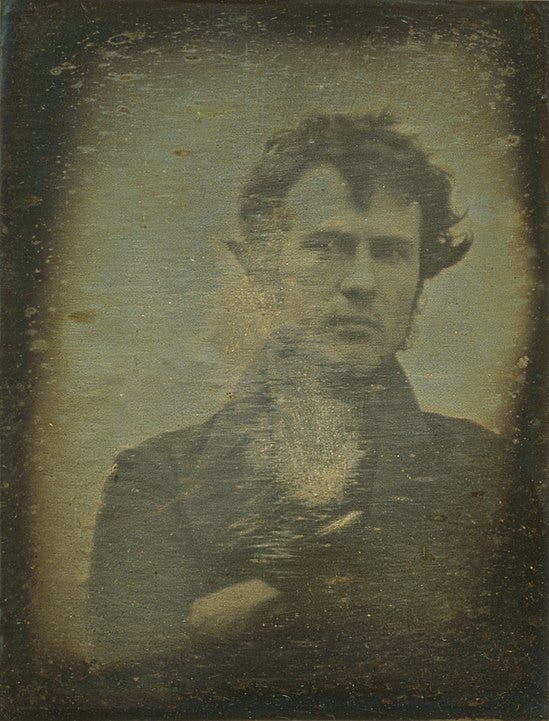
Photography — The Not Real Art That Stole Souls
Over a century ago, the art debates would have sounded similar to today's debates on A.I. generated art. In his 1859 essay "The Salon of 1859, Charles Baudelaire described photography as "the refuge of every would-be painter, every painter too ill-endowed or too lazy to complete his studies…." In other words, photography wasn't real art because a machine captured the image instead of a starving artist.
Baudelaire was making a classic early adoption mistake — he assumed snobbish obedience to aesthetics would win over convenience. It rarely does. In this case, why sit for hours for an artist to capture your likeness in hyperrealistic brushstrokes when a camera could do it quicker, cheaper, and more accurately?
Artists naturally panicked. Of course, photography didn't unemploy all artists, only realistic portrait artists. Technology always replaces someone.
But while today we think nothing of clicking selfies all night, some cultures believed photography could steal your soul. It makes sense when you think about it. Before photography, we only had mirrors to self-conceptualize. Photography allowed us to mass produce and share our mirror image for the first time. That must have felt like witchcraft to many.
Today, most people will view a photo of someone more frequently than the actual person. So, in a way, photography did steal some souls.
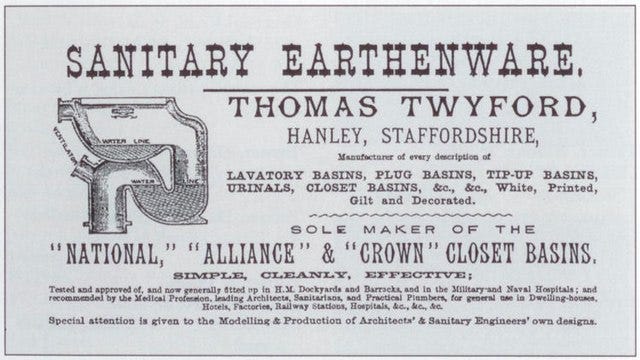
Flushing Toilets: Scaring the Shit Out of Victorians
It's a riddle much of humanity has tried to solve — how far must one jettison a turd to be considered safe? For much of history, not far enough.
Humanity started off in the right direction. Four thousand five hundred years ago, in Bronze Age Pakistan, affluent homes contained toilets connected through a network of pipes that pushed waste into cesspits far from homes. And then we went downhill from there, preferring to shit in chamber pots, kitchen corners, and shrubbery.
Developing a safe sewage system was the real problem. For most of the eighteenth century, feces were collected in a giant cesspit beneath or near the house. Of course, no one knew the dangers of methane gas. Thankfully, the Victorians learned that lesson the hardwon way — shit exploding in their faces.
Tales of exploding toilets might seem apocryphal, but they did happen (and still do today). Flammable gasses rose back up into homes, and with a simple candle flame…boom. You were having a truly shitty day.
Meanwhile, what the Victorians should have been fearing was cholera. Once waste was channeled into rivers and streams, the public's drinking water became a veritable Petri dish of disease.
The innocuous toilet wasn't the only dirty fear. In 1936, sexologist Norman Haire called the bidet "a symbol of sin." He wasn't alone in that assumption. During WWII, American soldiers stationed in Europe only saw bidets in brothels, so they began associating a more hygienic toilet with sex work.
Today, the bidet is ubiquitous in most of Europe and Asia, while Americans still remain squeamish about butt washing.
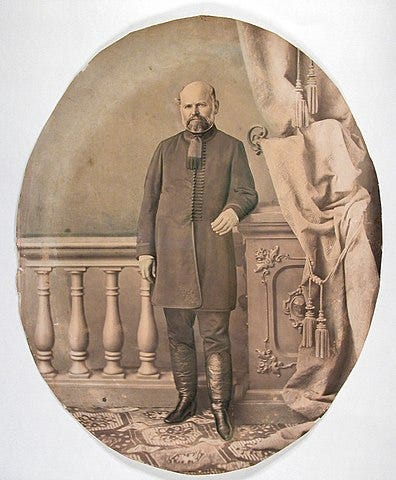
That Unmanly Soap
In 1850 when Dr. Semmelweis studied maternal mortality rates, he found deaths were 10 to 20 times higher at physician-run hospitals vs. at home with midwives. Dr. Ignaz Semmelweis discovered the reason. Physicians were not doing what every mom nags their ten-year-old to do — washing their hands. (Most midwives knew better and passed down basic hygienic practices for centuries.)
Before the discovery of germ theory, hygiene was viewed as emasculating. Doctors with blood and gore smeared on their chests were heroic. Clean doctors were cowards. So many surgeons went from dissecting cadavers to delivering babies without washing the corpse bits off their hands. Consequently, many pregnant women died of agonizing puerperal fever and sepsis at the hands of some very manly doctors.
But when Semmelweis confronted his colleagues, his theories were derided, and he was eventually laughed out of the medical community. It’s a lesson in hubris. For Semmelweis to be correct, physicians had to admit that they failed to “do no harm.”
It wasn’t until Joseph Lister pioneered his antisepsis system in 1865 that the medical community finally accepted germ theory, and handwashing became expected and not feared.
Electricity Fries Brains
When electricity was first discovered, it was called "entertainment for angels" because it was mainly advertised as a cheap parlor trick to amuse the masses. But statically charged boys and electrified kisses from women were all fun and games until inventors tried to harness this angel.
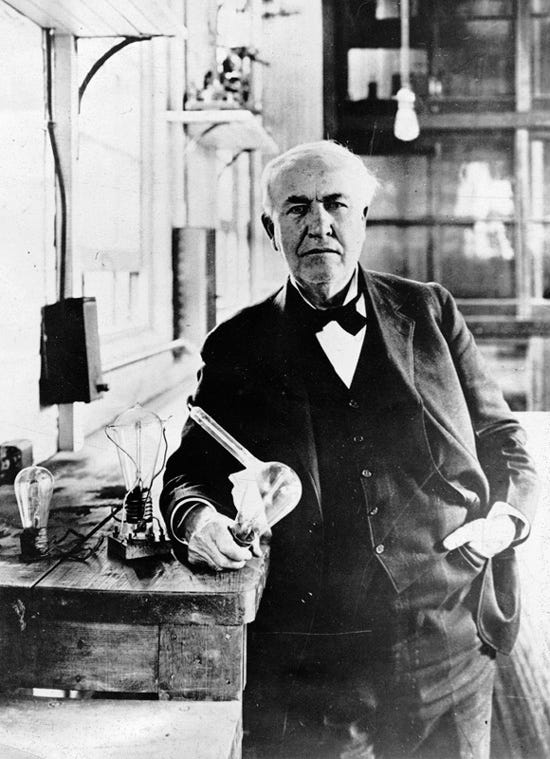
In 1879, Thomas Edison developed the first incandescent lightbulb and saw the potential to revolutionize homes…if only he could get the public to stop fearing it. It didn't help matters that Edison's company publically electrocuted dogs and cats as some twisted publicity stunt to showcase the superiority of Direct Current. Yeah, there’s that to discuss.
So by the time electricity entered homes, most people were not exactly eager to give up their peaceful non-murderous candles and dirty gas lighting.
Even when light switches were installed in the White House, President Benjamin Harrison so feared electricity that he made his staff turn the light switches on and off for him. Imagine having the job of light-switch-lackey. And we thought Trump's fast food delivery people had it rough.
In Harrison's defense, he did have a reason to fear electricity. When electricity was first brought into homes, no one knew what they were doing. Wires were not grounded, so fires happened frequently. Most homes needed their own generator, so it was prohibitively expensive. And many precocious children couldn't resist sticking their fingers in the unprotected screw socket outlets. That's a lesson you learn only once.
However, electrocution wasn't the only fear. In 1911, Dr. James Metcalfe warned the medical community that electricity was causing neurasthenia — a medical condition (unrecognized today) marked by fatigue, anxiety, antisocial tendencies, headaches, irritability, and general wackiness. In other words, electricity was just too darn stimulating for the human brain.
It's an argument that should sound familiar in our fast-paced world.
The Sewing Machine — The First Sex Toy?
The humble sewing machine had many inventors, but French tailor Barthelemy Thimonnier was the first to patent a functional sewing machine that created a basic chain stitch. In 1830, Thimonnier opened the first garment factory with the plum commission to sew uniforms for the French army.
But when French tailors discovered they were about to be replaced by a machine, they burnt Thimonnier's factory to the ground…while he was in it. Thimonnier survived the carnage and rebuilt another factory, but an angry mob attacked again and destroyed his second factory. Thimonnier died penniless in a poor house.
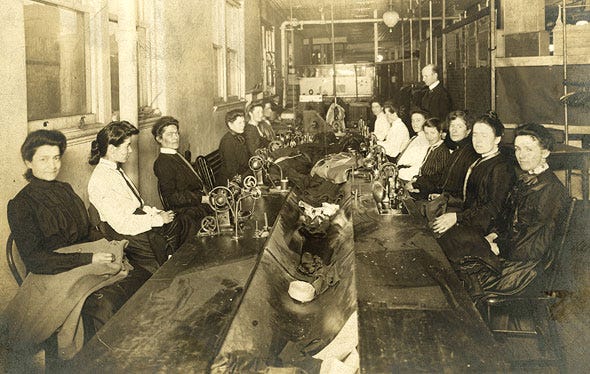
By the 1850s, sewing machines had replaced laborious hand stitching, but efficiency came with an unhealthy price — sewing machines were sexually arousing seamstresses.
Now stay with me because this will entail some kinky syllogistic logic. Supposedly, the rhythmic pumping of the treadle (foot pedal) caused seamstresses to become sexually unraveled. (One can imagine all that sweaty pumping really got men's bobbins in a twist…)
In 1866, French physician Eugène Guibout reported to the Paris medical society that sewing machines caused leucorrhoea — white vaginal discharge. Modern underwear wasn't even invented yet, and women were ruining their panties with those diabolical sewing machines.
By 1895, Krafft-Ebing, in his breathtakingly erroneous Psychopathia Sexualis claimed that sewing machines turned women into (gasp!) lesbians. According to Krafft-Ebing, sewing machines caused 'Erregung der Genitalen' — excitement of the genitalia. Pair all that stimulation with being stuck in a room with other women, and bam…one minute you were sewing seams, and the next minute feeling a different kind of a prick. (That was my last bad sewing pun. Promise.)
But no wonder they burned down Thimonnier's factory (twice). They must have been jealous of all the fun those horny seamstresses were having.

The Written Word
Socrates would not have liked my kind. And not just because I am a woman and, by his logic, have the I.Q. of a chihuahua. He would have shunned my kind because I dared to put my thoughts on paper.
Socrates believed writing was inferior to speaking because writing caused our memories to weaken. According to Socrates, writing also lacked the ability to respond in real time. In other words, a book is not an open dialogue that allows someone to ask questions or clarify meaning. Can you imagine if Socrates had access to Twitter? The man would have lost his quizzical mind.
Fast forward a few centuries to the Middle Ages, and the church was less than thrilled with books for a different reason. They believed that reading too much could lead to…thinking. And sheep must follow, not question.
And then the printing press really threw a humanist’s monkey wrench into the church's unquestionable dominion. If books were mass-produced in English and easily accessible, any old slob could become an autodidactic philosopher. Whenever power is kept in the hands of a few, technology can disrupt that hierarchy.
But it was the rise of the novel In the eighteenth and nineteenth centuries that society most feared. People believed that novels would corrupt women's delicate minds and turn them into "hysterical" sex-craved nymphs. Doctors claimed that women who read novels would become so absorbed in the stories that they would lose touch with reality and become unable to perform their domestic duties. Shudders.
Today, politicians can no longer tell women what to read, but they can control children's literature. Book banning is a lizard-brain fear as old as humanity — that technology has the potential to subvert authority and disrupt the status quo.
Televisions — Safe…At a Distance
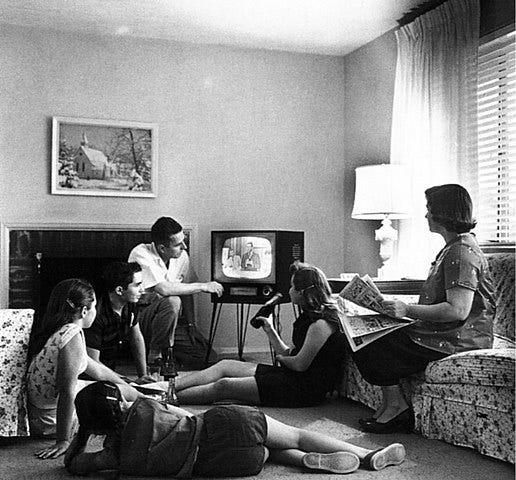
If you are of a certain age range, you might remember your nagging grandmother telling you to stop sitting so close to the T.V. But our grandmothers were not overreactive Luddites fearing a harmless technology. They had reason to fear TVs.
The brouhaha began in 1967 with the release of the first color sets. Routine testing revealed that approximately 112,000 large-screen models were emitting dangerous radiation. Scientists reassured the public that the amount of radiation would not pose a problem if users kept a distance of “at least six feet” from the front of the screen and avoided prolonged exposure at the sides, rear, or underneath a set. Well, that’s reassuring.
Today, most scientists believe that older televisions were not frying brains as badly as they once thought. (This was before Fox News). But radiation was not the only fear surrounding televisions.
In a 1961 speech to the National Association of Broadcasters, the Federal Communications Commission chairman, Newton N. Minow, described television as a “vast wasteland” that would negatively impact human consciousness. Even author Ray Bradbury condemned the “idiot tv.”
In his 1985 book Amusing Ourselves To Death, Neil Postman mused how television could lead to disinformation. He writes, “Ignorance is always correctable. But what shall we do if we take ignorance to be knowledge?”
In the Internet age, that is a question we may never stop asking.
From the first shit-exploding toilet to the shit-talk of Chatbots, technology has always been met with suspicion, skepticism, and disgust.
By now, you have probably heard the same trite arguments, but it bears repeating. Technology is not inherently good or bad. It's simply a tool. And like any tool, it can be used for progress or greed. The real fear should not be of technology itself but of the intentions of those who wield it.
*Additional sources are available on request in the comment section.


