
8 Inevitable Social Trends the Pandemic Put into Hyperdrive (Part II)
In Part I, we looked at four social trends — work from home, home entertainment/fitness, online learning and the exodus to suburbia — that the pandemic has accelerated. In Part II, we’ll examine four more.
Trend #5: Retail Stock Trading
Then there was the revolution on Wall Street that occurred during the Pandemic and is still sorting itself out. Those newly working from home, or off work/out of work cast about for something useful, productive and fun to do. Many decided that getting into the stock market was the thing. These relatively untutored “retail” traders decided not only to make some money while they were hunkered down but to make some noise doing it. Online, anyway. Enter stage left, the Robin Hoodies… Oh, the meme stocks! Oh, GameStop Mania! Oh, the Reddit short squeezes costing unsuspecting hairy old hedge fund managers millions overnight. How fun! Unfortunately, lots of the new dabblers also lost money (and they could afford it a lot less than could the fat hedge funds).
But, the evolution of gamified trading apps like Robin Hood have made trading stock more accessible to the average Joe and Jane. And that’s here to stay. Will it be good for the stock market? Only the future will tell…
Trend #6: Online Shopping & Contactless Delivery/Pickup
The United Nations Conference on Trade and Development reported in October 2020 that “The pandemic has accelerated the shift towards a more digital world and triggered changes in online shopping behaviours that are likely to have lasting effects.”
Mega-wholesalers like Amazon and Walmart already had a firm grip on online sales, but forced closure of retail outlets caused major department stores to either create or improve their online stores and delivery systems rapidly to keep from going bankrupt. Some successfully up-shifted their online operations (Best Buy, Wayfair; Home Depot and Lowes were some winners); others (most notably legacy department stores Nieman-Marcus, J.C. Penney and Sears) didn’t.
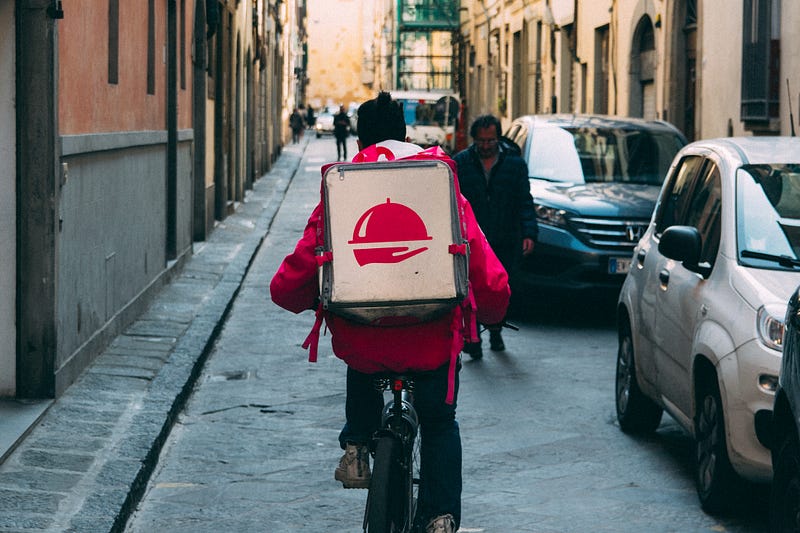
Perhaps two of the greatest areas of online shopping to grow were restaurants and grocery stores, many of whom rapidly pivoted to contactless forms of grocery ordering, pickup and delivery.
Panic-buying and fear of contagion are driving many consumers to download apps for groceries and meals during the coronavirus crisis, and food delivery companies such as Hungry Root and Blue Apron experienced soaring sales, according to a US Chamber of Commerce blog post.
“Far and away, the biggest change to grocery has been the boom in online ordering,” wrote consumer futurist Blake Morgan in Forbes in December 2020. “ Many stores were already building out their order pickup and delivery capabilities, but the services have exploded during the pandemic. A year ago, 81% of consumers had never bought groceries online, but during the pandemic nearly 79% of shoppers have ordered online. In August 2019, U.S. online grocery sales totaled $1.2 billion; in June 2020, that total was $7.2 billion.”
Trend #7: The Gig Economy
As a freelance writer and editor, I’ve worked from home on contract for more than 20 years, so the term “gig economy,” while new to me, perfectly described me and my colleagues who regularly have to find new clients or extend work with existing clients to keep the income rolling in. Gig work fluctuates wildly between periods of too much work, not enough work, no work, and very rarely, just enough work. It’s not for the faint of heart.
But it does have its benefits. Investopedia defines the gig economy as being “based on flexible, temporary, or freelance jobs, often involving connecting with clients or customers through an online platform. The gig economy can benefit workers, businesses, and consumers by making work more adaptable to the needs of the moment and demand for flexible lifestyles.”
It represents independent contractors such as doctors, dentists, lawyers, accountants, and other professionals, as well as many culture industry professionals (writers, editors, artists, musicians, and other performers such as dancers, actors, and production crew members). But it also includes cottage industry manufacturers and artisans who sell on platforms such as Etsy, and drivers for ride-sharing and delivery services such as Lyft, Uber, UberEats, and Postmates.
Trend #8: Virtual Health Care/Home Health
The telehealth industry had been evolving for decades, especially to provide health care services to remote and/or home-bound patients, but the Pandemic forced it to evolve rapidly into something existing health care providers, like Kaiser Permanente, could integrate and implement as soon as possible.
“Suddenly, in-person care was only available to people with urgent or critical care needs,” says a Kaiser post on this subject. “But telehealth made it possible for countless others to access care while dramatically minimizing exposure to the coronavirus. As awareness and adoption have grown, attitudes and perceptions have changed — and telehealth is finally having its moment.” Telehealth services also protect essential health care workers from exposure to Covid through patients who are unaware they have the virus.
Now just about anyone can get help via their computer, phone or an app. If you don’t have insurance, includes video- or phone-based visits with health care providers through their original HCP, or by using Teladoc, Betterhelp or other app-based services. GoodRX provides an app that shops for the best prices on pharmaceuticals and provides its own telehealth services and a telehealth marketplace. It had been around since 2011, but during the Pandemic, it experienced meteoric growth — from $388.2 million for 2019 to $550.7 million in 2020, according to its Annual Report.
And this is no Pandemic-specific trend; it’s here to stay. In The Future of Health Care research report, Hero Digital executives urge health care providers to “harness the moment” to reshape their offerings to the new consumer who is post-COVID 19% more likely to visit a provider’s website; 34% more likely to use digital health monitors; 80% more frequently using telehealthcare services and 103% more ready to share their health data.
In sum, the report says, many consumers “are no longer where, how, or who they were pre-pandemic. For many, ‘success’ in their healthcare experience has been redefined. They have new priorities, new preferences, and a palpable sense of urgency around health and wellness.”