
8 Easy Ways to Improve Your Writing Immediately
What I learned from coaching with top writer Ayodeji Awosika

You don’t know what else to do. You want to become a better writer, but you don’t have actionable steps. You want the numbers to rise, but you’re at a loss. The idea of quitting is brewing in the back of your head because you don’t know what else to do.
I had the honor of having three coaching calls with Ayodeji Awosika, a top writer. After five years, Ayodeji has over 60,000 followers, makes thousands of dollars a month, and more importantly, has a huge impact on people’s lives, including my own.
After the calls, my numbers rose from 6,000 views a month to 11,000 and my reading rate has increased by more than 3,000 readers per month.
Here are some of the tips Ayodeji offered so you can start using them too.
1. Make Headings as Good as Titles
Most people split their articles into sections that are titled with headings. We usually summarize the point of each section with those headings, just as I have right now.
However, Ayodeji recommends writing your headings the way you’d write a headline, in which you don’t give the information away but rather draw the reader in and persuade them to read.
In this case, writing the heading, “Make Headings as Good as Titles,” is a good fit. However, if we were doing it Ayo’s way, I might write, “How to Get Your Reader to Read Your Entire Article.” Since you’d want to know how to do that, you’d keep scrolling.
Take time writing your headings rather than writing what pops to mind.
2. Start By Getting Into People’s Heads
I knew when I started this article that the people who’ll read it want to become better writers and be successful on this platform. That’s why I started by pointing out their struggles and getting them to relate, which isn’t difficult because I’ve been (well, I still am) in the same position:
You don’t know what else to do. You want to become a better writer, but you don’t have actionable steps. You want the numbers to rise, but you’re at a loss. The idea of quitting is brewing in the back of your head because you don’t know what else to do.
Whatever you’ve struggled with, someone else has struggled with it, too. No matter how different the situation, they’re thinking and feeling the same things as you. So talk about them. Reel your reader in until they say, “This is exactly what I feel.” Since they relate, they’ll keep reading. Only then do you start offering a solution to their problem.
3. When Do You Get Bored?
People read to get something from you. If you waste their time, they’ll leave. You might be writing for yourself, but you’re not your audience, so you need to know what they’ll like and dislike.
When you write, you’re free to put down whatever comes to mind. Editing is a different story. This is when you put yourself in the position of the reader and ask, “When am I getting bored? When do I lose interest?”
Erase everything that doesn’t matter or make it fit. One of the biggest mistakes I see is an overload of personal anecdotes that don’t relate to the topic. You’re supposed to share personal stories, but you can’t go off on a tangent. Every point must relate to your subject.
4. Find Ideas in Your Old Pieces
Eventually, you’re going to reach a point where you have no new ideas. That happens to everyone. In our last session, I told Ayo I was in a bit of an idea rut. He suggested that I go back to old articles I’ve written and rewrite them. This doesn’t count as duplicate content because you’re not writing word for word what you’ve said before.
You likely know more about the topic, your point of view may have changed a little, and you’re more skilled than before. It’s a brand new article on the same topic — which is okay, by the way.
Every story has been told before. What makes a piece look original is your unique voice and point of view. Be yourself, and you’ll automatically stand out.
5. Submit to Good Publications
While the other pieces of advice help you improve your writing, this one will help you increase your numbers and reach more people.
I used to self-publish and submit to publications that were too big or too general. Once I started submitting to Publishous, Post-Grad Survival Guide, and Mind Cafe — all publications that fit my niches — my numbers rose.
Ayo recommends picking three or four publications and sticking with them only. Do your research and find the publications that will fit you and your writing.
No, publications won’t publish when you want, but ultimately, you’ll reach more people. Always have content submitted to them, and focus on writing more stories.
6. Dial-Up the Clickbait
People can hate on clickbait all they want, but it works. It’s what people, well, click. You don’t want to sensationalize and promise something you won’t give your reader, but you do want to make sure your title grabs attention.
Last month, I wrote an article called “Are You Living Up to Your Full Potential?” I thought it was good, but Ayodeji disagreed. “It’s a title,” he said, “that anyone can say yes or no to.” They’ll answer in their heads and then move on. I don’t promise them anything. I don’t talk about why you should live up to your full potential or how to do it.
You want your title to make a promise (and then deliver on said promise).
This was a good title: “5 Things to Remember When You Feel Frustrated With Medium.” Writing is a long game, and I know people feel frustrated with it all of the time. We also love motivational pieces, so I said, “I know what’s getting you angry. Here’s how to make it better.”
7. Be Vulnerable
What readers want from you the most is to be able to relate to you. They want to be reminded that you’re just as flawed and human as they are. You have to be brave enough to tell your story and to say what you really feel and mean. This is how readers will connect to you.
Readers are smarter than we give them credit for — they know when you’re holding back and lying. Don’t pretend or put on a mask.
Jane Harkness said it perfectly, “Everyone is just waiting for someone to tell them that they’re hurting the same way.” When you write, ask how you can be more open and honest. It makes all the difference.
8. Don’t Worry About What Others Write
One of the things I loved about the coaching calls is that we didn’t just talk about writing skills but the writing process and mindset. I told Ayo about how doubtful I was of the content I was creating because I didn’t feel it was unique enough.
He told me: If you believe in what you’re talking about, it’s OK to write about it. Everyone’s writing the same things anyway. You can’t give a crap what people will think or pay attention to what they say. If you want to write, if you need to write even though it’s been said before, then write it.
This is one of the most important lessons in this article. You’re a creator, and you’ll doubt your art a lot. But remember, if you believe in it, write it.
Final Words
One thing I did right after my first coaching call with Ayodeji was to make a 30-day plan. I wrote down the steps I would take to improve my writing (which would, in turn, improve the numbers).
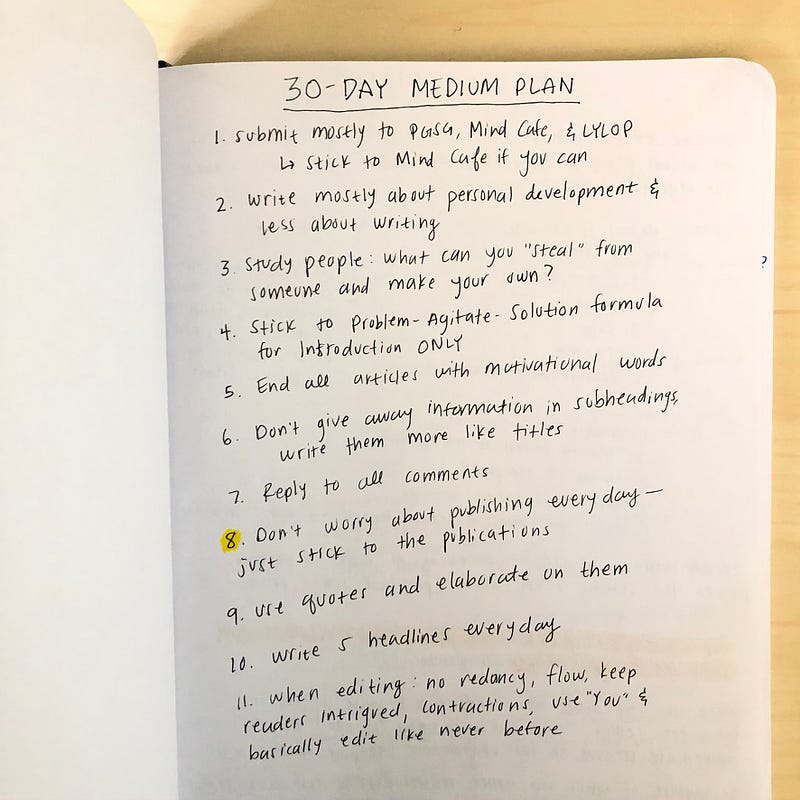
I recommend doing the same with these tips and other writing tips you’ve read and liked. Make a 30-day plan to keep up with. It’ll clear things up and give you a game plan to follow.
Start with planning a simple writing routine, then editing plans, and so on. If you want to be better, you have to put in the work. There’s no other way around it.