
8 Demands From Black Organizations
The demands that led to Black Studies at a liberal arts college, and those of activists today.
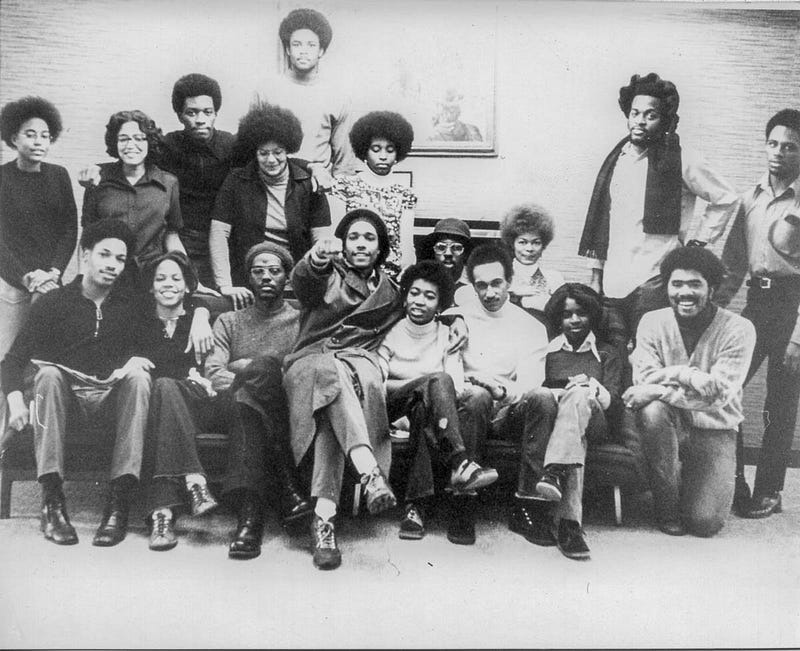
In the wake of the recent deaths of George Floyd, Breonna Taylor, and countless others at the hands of police brutality and systemic racism, I wanted to revisit and update this essay, which I wrote in college. After digging for hours in the humidity-controlled archives, I was surprised to uncover the systemic racism in my alma mater and it brought me face-to-face with my own white privilege.
I want to amplify the story of how after 20 years of protesting, the Black student organization, Allied Blacks for Liberty and Equality (ABLE), was finally able to push Knox College to add a Black Studies Department and major.
In this essay is how Black leaders made it happen, the ABLE students’ list of demands, and how their demands parallel those of Black organizations today.
History is still repeating.
The Black Student Movement at Knox College
Black Studies emerged as an academic discipline in colleges across the country following decades of growing awareness of the institutional and cultural oppression of African Americans in the United States. At many institutions, change came from student protest.
Knox College has a long history of anti-slavery and anti-racism which began in 1837 when it was founded by abolitionists. Knox was one of the first schools in the country to admit Black students and in 1870 granted one of the first degrees in Illinois to a Black man, Barnabus Root (Black Student Recruitment Fact Sheet, Jan. 1986). One might have expected Knox College to follow the Black Studies trend, but change did not come quickly.
1960s
In 1964, Black students organized a political conference at Fisk University calling for a national push to incorporate Black Studies into higher education across the country (Joseph, 2003, p.190). Black power advocates, such as the Organization Us, called for students to protest in the classrooms, on campus, and in society to improve the quality of education.
In 1968, spurred by the assassination of Dr. Martin Luther King Jr., the Black Student Union launched a successful strike to make San Francisco State the first college to implement a Black studies program. Swiftly following this, student protesters at Howard and Cornell pushed administrations, through takeovers of administrative buildings, to establish Black studies departments (Joseph, p.191). Black students went on to force most major colleges and universities to implement Black Studies programs by 1969.
Inspired by the actions at other schools, in 1968 Black students at Knox formed the group Allied Blacks for Liberty and Equality (ABLE).
ABLE felt that Knox had “failed through the years to provide adequate academic and social accommodations for Black students in an overwhelmingly white environment” -ABLE, letter to president Umbeck, 1969
On February 11, 1969, fifteen ABLE members marched into the president’s office, all wearing black, to read a list of demands. They hoped these demands would improve the relevance of education for Black students at Knox despite, “the opposing views of our white colleagues.”
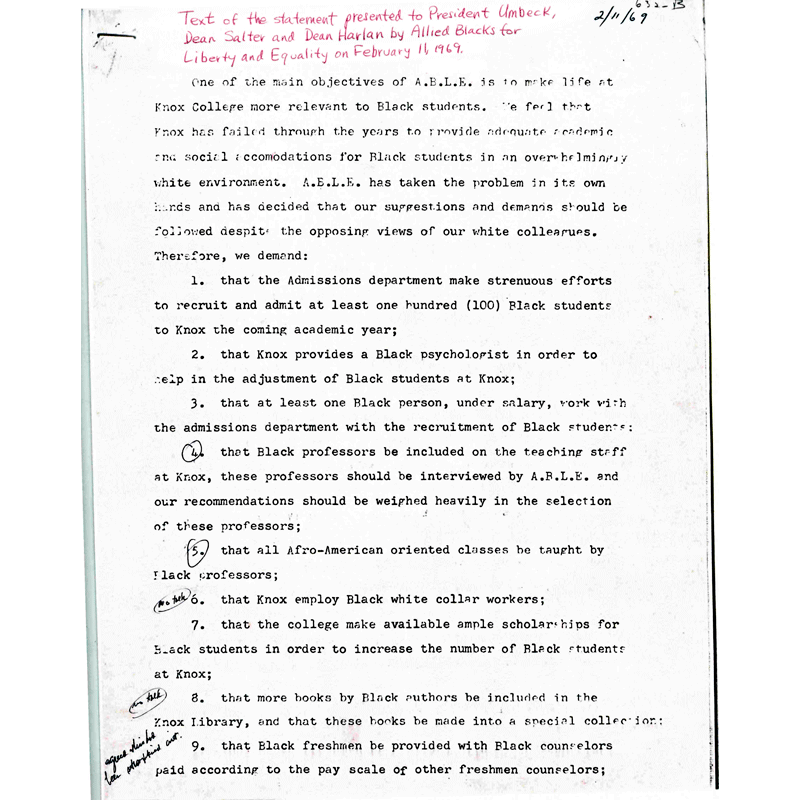
Their list of demands were tangible goals to accomplish, such as the recruitment of at least 100 Black students.
Dean of the College Lewis Salter initially commended Black students for their thoughtfulness and lack of threats of violence, which were occurring at universities elsewhere.
However, later Salter overtly dismissed ABLE, stating, “We have treated the proposal as a list of ‘suggestions’ while granting the members of ABLE the right to regard them as ‘demands’.”
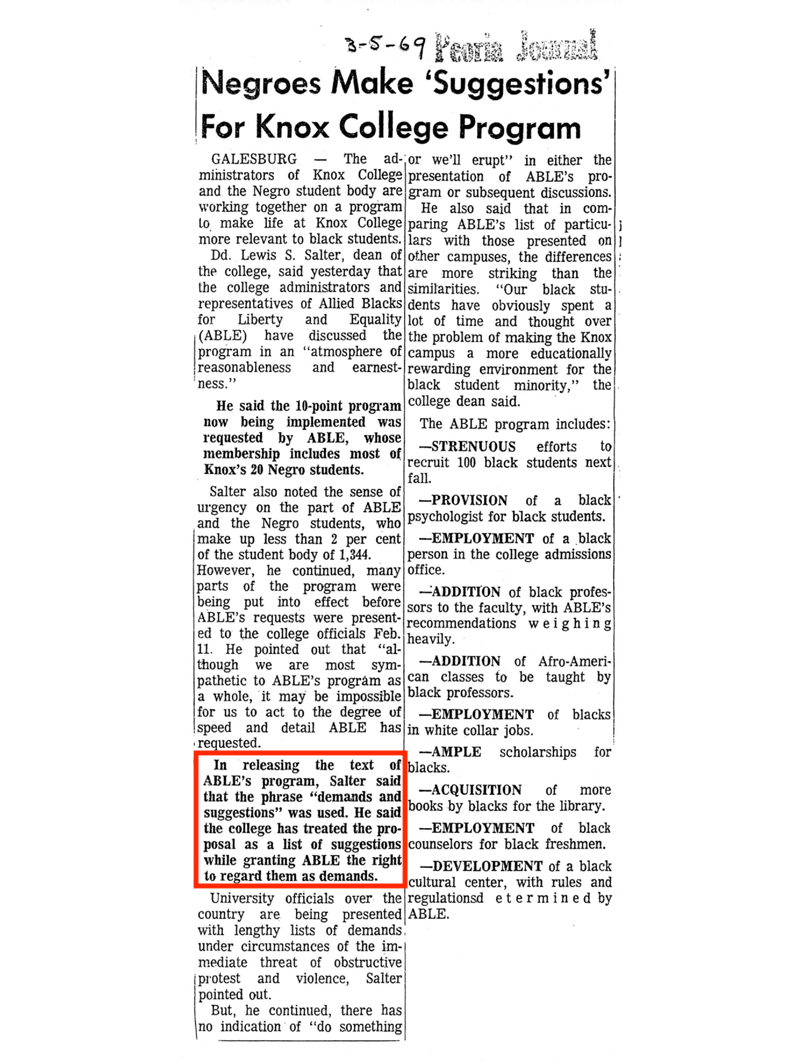
During a faculty meeting on the issue, there were several racist comments voiced, and it is unknown how many of the faculty shared these sentiments. One professor was concerned that, “If a freshman class is made up of 25% colored students, it will be very difficult to raise money from our normal sources” (letter to Lewis Salter, 1969).
Another racist concern that was brought up was “inevitably reducing the quality of education by injecting a substantial number of below-standard students” (letter to executive committee, 1969).
Despite these maledictions, there was support from most of the faculty and the board of trustees. On March 4, 1969, the executive committee adopted a resolution to “take all possible steps in order to implement [the Black students’] objectives” (Harlan, 1969).
Knox began a five-year plan to recruit more Black students and offer scholarships to those in need. It hired two Black professors, Phyllis and Karl Helms. However, many goals were not accomplished, such as the recruitment of 100 Black students at Knox, a Black student counselor, or further employment of Black faculty and staff (The Knox Student, 2001). Although many demands were not met, the Black student unrest was quelled for another fifteen years.
1980s
In 1985, Knox students again requested Black faculty and curriculum. Jessie Dixon-Montgomery, a current Knox professor and ABLE member at the time recounts the students’ sentiments:
“We had mentioned to the faculty and administrators that in our view, they would have to work harder to attract Black faculty hires to Knox and Galesburg. We were sure there were excellent Black faculty out there ready and willing. Additionally, curricula changes should be made to better reflect the diversity of America, including but not limited to the Black Studies program. It was evident that Black Studies was viewed as an important discipline on other campuses so it was time for Knox to make greater efforts to broaden the curriculum.”
ABLE students were successful in getting Knox to initiate a Black studies program (not yet a department). The college hired Greg Phitzer, a white professor specializing in American History, to chair the program. This was a rocky start, and it would take more action for Knox to expand the program into a department with a major.
In 1987, Black students at Knox were still dealing with overt and systemic racism. The college failed to recognize Martin Luther King Jr.’s birthday in the sesquicentennial calendar (Mary Crawford, letter to R. Nirenberg, 1987). In 1988, a Black woman was accosted by a white male, and the dean of students denied her request for a grievance panel presentation. ABLE students were frustrated. They felt they had no faculty support. To make matters worse, the college revoked the ABLE house, turning it into office space.
Ignorance, racism, and passive acceptance had perpetuated the problem for many years. The racist sentiments of the Dean of Students at the time can be inferred in the way he handled the sexual harassment case. Professor Mary Crawford, then ABLE President, also recounted the dean deciding that ABLE did not need a house. The house, Mary remembers, was the one place Black students could go to feel supported. The director of minority affairs also told Mary that Knox was not a place for Black students. With these kinds of actions and sentiments persisting in the faculty, it is no surprise that Black students at Knox felt that they were living in a racist environment.
In 1988, when the situation had reached a boiling point and after years of protest, ABLE made a stand. Twenty ABLE members marched into a faculty meeting and President Mary Crawford (now professor) made a second list of demands to follow the list from 1968. She accused the faculty of condoning racism through their resistance to deal with it openly. The Vice President of ABLE followed her speech by stating that if the demands were not met, there would be “swift and immediate retaliation”.
Their 8 demands were:
1. The faculty condones racism through tolerance. Faculty must be reprimanded for expression or tolerance of derogatory racist comments.
2. The faculty must educate themselves to be more sensitive to the needs of Black students.
3. The judicial system of the school must be changed so that appeals are not brought before the same group of people.
4. The director of the office of minority affairs must have his own staff and budget to better help minority students.
5. There must be the recruitment of Black tenured professors, and advertisement of these professors in Black and White periodicals.
6. The ABLE house must be made permanent.
7. There must be a public declaration by the college of a posture against racism and sexism.
8. There must be an acknowledgment of Black students and alumni, including renaming the Executive Arms Apartments after Adolf Hamblin.
After these demands were presented the faculty began to take the Black students at Knox more seriously. Professor Fred Hord was interviewed the week after the demands were presented and brought on as chair of the Black studies program a few months later. Over the next few years, the Black studies program was developed into a major.
The ABLE house was made permanent and was established as a cultural center that same year (R. Niremberg, Knox College News, 1988). President McCall drafted an official statement on non-discrimination in the Knoxletter less than a month after the protest (Knoxletter, May 4, 1988). The residence hall was renamed after Adolf Hamblin.
Efforts for sensitivity training were initialized but fizzled out after a few years. There is still progress to be made. Black students at Knox College still only make up 8% of the student population, but great leaps were taken by ABLE in 1988, built on the foundation of years of protest.
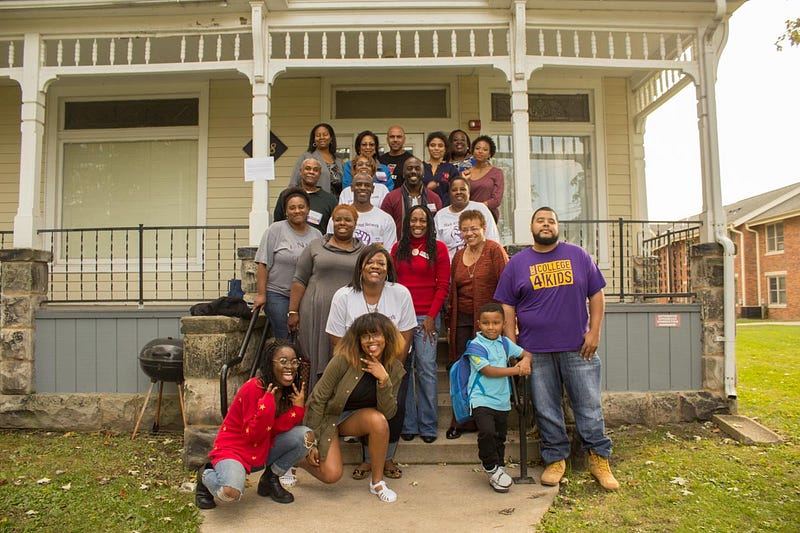
You can learn more about ABLE here:
The 8 Demands of Civil Rights Organizations Today
Parallel to the demands by ABLE students, below is The Movement for Black Lives’ 8 political demands. Click any link for more information and a list of more specifics details:
1. We Demand an End to the War Against Black People
“We call for not just individual accountability of officers after a murder, but entire police departments. State actors like police, immigration agents, local officials, institutions who have caused harm to Black communities must acknowledge the harm they have caused Black families, make an official apology and commit resources to families and communities who have been forced to suffer.”
2. We Demand a Divestment from the Police and Investment in Black Communities
“We call on localities and elected officials across the country to divest resources away from policing in local budgets and reallocate those resources to the healthcare, housing and education our people deserve. More officers, guns, jails and prisons are not a solution to longstanding problems of racial disparities, injustice and police violence.”
3. We Demand Local Schools, Colleges, Universities, and All Public Institutions Cut Ties with the Police
“We demand police free schools across the country and an end to the use of police officers in public universities. All public Institutions designed to serve the people, must cut ties with the police in the interest of public safety.”
4. We Demand Repair for Post and Continuing Harms
“State actors like the police, immigration agents and corporations who have caused harm to Black communities must repair the harm done. Police department must acknowledge the harm their institution have caused Black families, make an official apology and commit resources to families and communities who have been forced to suffer.”
5. We Demand Relief for Our Communities
“We demand the federal government provide direct cash payments, rent cancellation, mortgage cancellation, a moratorium on utility and water shutoffs and a cancellation of student, medical and other forms of debt. We demand long-term economic solutions like a Universal Basic Income, in order to address the immediate crisis and pave the way for a just recovery that doesn’t prioritize corporations and leave our communities behind.”
6. We Demand Economic Justice for All Our People
“From Minneapolis to Louisville our people continue to be exploited by this economy from generation to generation. At this moment of economic crisis we need to seize the opportunity to rethink the economy and move it towards one that serves the needs of people and the planet, not corporations and the wealthy.”
7. We Demand The Rights of Protestors Be Respected
“We demand that no harm come to protestors. Violations of property should never be equated with the violation of human life. We demand that local and state officials ensure that there are no abuse of powers, no use of lethal force on protestors.”
8. We Demand Community Control
“The most impacted in our communities need to control the laws, institutions, and policies that are meant to serve us — from our schools to our local budgets, economies, and police departments.”
Knox College Professor Steve Cohn left me with some humblingly relevant words:
“Over time there is a tendency for the struggle over injustices in race, gender, and other relations of inequality to be forgotten, eroded by the illusion of quiet, congenial, uncontested progress”.
Let’s make sure we don’t forget.
Related reading:
References
Crawford, M. (April 18, 1988). The ABLE demands. The Knox Student. p. 5. Retrieved from Knox College Archives.
Mary Crawford. (1987). Letter to Richard Nirenberg. Re: The Sesquicentennial Calendar. Retrieved from Knox College Archives.
John McCall. (May 4, 1988). Proposed Statement on Non-discrimination. Knoxletter. Retrieved from Knox College Archives.
Richard Nirenberg. (November 21, 1988). College’s Black Studies Director Makes Inaugural Contribution to Center’s Library. Knox College News. Retrieved from Knox College Archives.
Knox College Faculty Meeting Minutes. (April 11, 1988). Retrieved from Knox College Archives.
(May 11, 2001). Knox College Enrollment Trends by Race and Ethnicity: Degree Seeking Students. The Knox Student. Retrieved from Knox College Archives.
Ivan C. Harlan. (March 4, 1969). Executive Committee Resolution on ABLE Demands. Retrieved from Knox College Archives.
Lewis Salter. (June 9, 1969). Letter to members of the Executive Committee and Steering Committee. Retrieved from Knox College Archives.
Chuck Wetherbee. (Feb. 25, 1969). Letter to Lewis Salter. Retrieved from Knox College Archives.
Bill Kilkenny. (March 4, 1969). Knox College Working for Black ‘Relevance’. Knox College News. Retrieved from Knox College Archives.
ABLE. (Feb. 11, 1969). Demands and Suggestions to the College. Retrieved from Knox College Archives.
Joseph, P. (2003) Dashikis and democracy: Black studies, student activism, and the Black Power movement. Journal of African American History. 182–203.


