
8 Covert Red Flags A Lot of Men Fail to Notice With Women and Dating
Can you guess what they might be?

Everyone is full of red flags. You’re full of them; I am… no one is exempt from being perfect and free of behaviors that make other people reconsider a relationship.
I see red flags as a “Stop, let’s re-evaluate this situation”.
To me, they’re not the same as deal breakers — behaviors or circumstances where I will immediately end a relationship.
Some of these include cheating, kids, physical abuse, and bad hygiene.
While this article is an examination of the red flags women have, I need readers to understand that both genders deserve love, respect, and dignity.
Just to note: these aren’t gender-specific.
Men and women can and do often display any or all 8 of these red flags, I believe men will settle for women out of necessity rather than what’s best for their lives.
Therefore, it becomes important for men to choose a girlfriend or wife who will not threaten their lifestyle, peace, or sanity.
However, we do have to remember that women have just as much, if not more imperative to pick the “right” mate, as she carries the responsibility of potentially raising his children. If she overlooks or ignores red flags in him, the risk can be greater as his only biological risk is passing along his genes or a possible STD.
This is a 27-minute article.
If you wish to jump around or skim I’ve listed the main points below in order. I recommend at least reading #1, #3, and #8 as these are the most unhealthy behaviors.
However, I do hope that you read through the entire story as there is plenty of valuable content here.
- Indecisiveness
- Unaddressed trauma and mental health
- Enmeshment and codependency
- Emotional invalidation
- Narcissism and toxicity
- Daddy issues
- Priorities out of sync (health)
- Living the single life
While some of these red flags may seem blunt at first glance, I feel that I’ve provided good evidence and valid arguments for why these behaviors and mindsets represent reasons to say “Wait, hold on!”.
I believe that regardless of gender, no one is obligated to settle for any relationship in the face of overwhelming signs of dysfunction.
Here are 8 red flags.
1. Still figuring it out
How this is covert: Indecisiveness doesn’t seem “too bad” until you realize the greater implications and underlying issues with not knowing simple things like why he or she is dating or what their preferences are.
When/how to spot it: A person’s indecisiveness can be spelled out for you immediately on their dating profile or when you ask them why they’re dating in the first place. It could present itself later on in the relationship when important choices have to be made.
If you’ve ever done online dating, people have the option to set their profile to denote what they are looking for. Some people are very clear on what they want, and others are a bit… unsure.
The unsure or undecided type are the people who go through the trouble of setting up a dating profile, swiping on people, and even spending time texting back and forth, only to tell you they aren’t sure of what they want or why they are dating.
Women (and I’m sure some men do this) are known to use dating apps as a means to boost their confidence and ego from compliments and matches.
It makes sense that they may just be on there for an empty ego boost and thus they’ll set their profile to “still figuring it out” to avoid people who are serious about what they want.
My impression of these types of people is they are trying to escape boredom or they need validation to feel good about themselves.
When I date I have an intention and it does not include entertaining, validating, or wasting time with people who don’t know what it is they want.
From my perspective, the “still figuring it out” type of women may have trouble making decisions, which is a red flag when it comes to dating and relationships.
I understand the difficulty with decision-making because I struggle with it as well. We need to be compassionate, but it doesn’t mean that we need to invest time with people who don’t know what it is they want.
Indecisiveness can look like anything from small simple choices like what clothes to wear when going out or choosing to end a friendship.
Some signs of indecisiveness:
- Taking way too long to decide
- Avoiding decisions
- Endless debating choices in your head
I am notorious for allowing romantic relationships to continue far longer than they should have. The idea to leave comes early on when I notice things I am unhappy with and I know won’t change.
I’ll grapple with the choice to stay or leave for weeks or months until things deteriorate to the point where we have no choice but to end the relationship.
Despite my gut instincts telling me to leave, my fear of being alone will override this decision. I become stuck in a shitty situation, and as a result, I’ll convince myself that I am happy.
I should be content that I even have a girlfriend because many guys out there would do almost anything to even have the chance at having sex and a relationship.
To note: Most of the women I’ve dated have been just as indecisive as I have and we’ve strung each other along. The issue I have with decision-making is something I am addressing, at the core of it is a fear of being alone.
If you have trouble making decisions this will:
- Erode your self-confidence
- Waste your time dealing with anxiety and needless suffering
- Cause others around you to become frustrated, annoyed, and uninterested
The origins of indecisiveness
Usually, indecisiveness comes from early childhood trauma.
For myself, I had to put up with demeaning, nasty, and spiteful comments from my grandmother.
She would constantly criticize my brother and me for being unable to complete or do adult-oriented tasks such as landscaping and house repairs that weren’t up to her “standard”.
The typical theme growing up was “Why can’t you do anything right?”.
As an adult, this makes me hesitant to make decisions when it comes to things like relationships. There’s a lot of shame mixed in with an unhealthy sense of identity, which translates into a fear of upsetting other people for my choices.
There’s also a fear of getting things wrong, which makes me have to overthink a relationship or other life situation to the point where I may need to know everything before I can execute a decision.
Last year I made the tough choice of ending a relationship after a girl expressed feelings of love toward me after only 3 weeks.
I was already leaning towards ending this relationship because she was not compatible with me, and this sealed it. After about a week after her “I love you”, I finally chose to let her go.
It was hard, and I was deathly afraid of being alone, but ironically I found a better relationship two weeks after that with someone more interesting and attractive.
Decisions aren’t always as life-altering as you might think. You can modify your plans after making a decision.
In some cases, you can change your mind, though in relationships, it’s more difficult to reverse a decision like a breakup once you’ve made it.
Making informed, thoughtful, and mindful decisions with detachment from the outcome increases the natural flow in your life.
Lesson: Invest your time with women who know what they want. Have a plan but be willing to course correct along the way because things don’t always go according to plan.
2. Unresolved mental health problems or trauma
How this is covert: Trauma and mental health problems can be difficult to overcome, but not entirely immutable. Some people have come to believe that these setbacks are ingrained or normal and there’s nothing to do about it, therefore, people create identities out of their illnesses.
When/how to spot it: A need for too many personal details before a first date (there’s being careful, and then there’s being overprotective). She may appear distracted or forgetful, maybe even “lost”. She might exhibit weird habits like nail biting/picking or hair pulling (my ex suffered from anxiety and she was constantly picking at her fingertips all the time).
We have to be considerate and understanding of how mental illness can affect people’s lives. On occasion, I suffer from bouts of anxiety, and years ago I went through long stretches of depression.
Mental health problems can affect a relationship anywhere from mild to severe. It’s not fair to paint everyone with mental health problems as undatable or not worthy of love as millions of people in the United States suffer from anxiety, depression, BPD (Borderline personality disorder), and other conditions.
However, special attention is needed for people with these conditions.
You need to keep in mind if the effort to navigate a relationship with someone who has some kind of issue is worth it.
It’s possible to be in a relationship with someone for years who struggles with anxiety. Usually, things are okay and the relationship functions normally.
However, as we’ll learn below, anxiety isn’t a benign disorder.
Unaddressed mental health problems may cause:
- Communication issues: Individuals with depression typically withdraw or disassociate from themselves and their feelings, which makes them reluctant or unable to discuss their thoughts and feelings with a partner. Anxiety can be even worse, anxious people typically overthink and concoct outlandish or exaggerated stories of their partner’s actions or words to the detriment of the relationship itself.
- Toxic, unhealthy relationship dynamics: Codependency, enmeshment, or disconnection are likely to occur when you’re dealing with a woman who is carrying emotional baggage from her childhood or a past relationship. An anxious person who fears abandonment may become overly dependent on her husband or boyfriend, thus straining the relationship.
- Breakup/divorce: Unaddressed mental health issues or trauma don’t just go away. If you don’t get your inner demons under control, they’ll continue to steer your life in whatever way they wish, which could inevitably result in a lost relationship.
The importance of stability in a relationship is critical. Unfortunately, mental health problems can diminish the longevity of a relationship or affect the overall health of it.
The key is to look for people who are working on their trauma and mental health problems.
Lesson: Unresolved trauma and mental health will have an impact on a relationship in a variety of ways. Even if you leave out mental health problems, anything concerning her personally will now be yours to share.

3. Enmeshment & Codependency
How this is covert: Enmeshment and codependency are difficult to notice and they may appear as close relationships with other people. As such, people tend to avoid rocking the boat when it comes to pointing out strange or uncomfortable dynamics that other people share with their relatives and friends. Nonetheless, codependency and enmeshment are not the kinds of relationships you should be participating in or being around.
When/how to spot it: As you spend more time with her and her other relationships, a clearer picture of these dynamics will be revealed. You have to use your best judgment and follow your gut.
Enmeshment
I’ll admit that enmeshment is a difficult thing to describe.
Enmeshment can happen in platonic and romantic relationships.
At first glance, an enmeshed relationship will look like a normal one, the difference is that healthy relationships have boundaries and respect.
There are a few key things to look for, and if you are attentive, if enmeshment is there, it will show up early on.
To start, suppose you’ve met a girl you like, and she seems pretty “normal” at first. She has a good career or job, and she functions like a typical adult in her daily life.
But you’ll start to notice things here and there. For example, her mom might call her 3 or 4 times a day when you’re together.
For a few days or weeks it might not be something you think much of, but it starts to get annoying, and unless it’s an emergency, these phone calls will be an unnecessary interruption.
In this case, there don’t seem to be any clear boundaries regarding when and how often they communicate.
Perhaps the two of them even live together and engage in a lot of mother-daughter activities, and weirdly, you get the feeling that you’re dating her mom as well.
It’s like they’re a package deal.
In healthy parent-child relationships, there is a balance between having a supportive connection and encouraging the child’s autonomy. There is also a healthy separation between parents’ relationship with each other and their relationship with their children.
With enmeshed relationships, parents rely on their children for emotional support. They also foster an environment where their children excessively depend on them.
In enmeshment, on the other hand, two emotionally immature people seek their identity and self-completion through an intense, dependent relationship (Bowen 1978). Through this enmeshed relationship, they create a sense of certainty, predictability, and security that relies on the reassuring familiarity of each person playing a comfortable role for the other.
Lindsay C. Gibson, Adult Children of Emotionally Immature Parents: How to Heal from Distant, Rejecting, or Self-Involved Parents
Another trait of enmeshed family members is the existence of a golden child or favorite child. This idealization of a particular child is another giveaway to this type of dynamic.
A few other examples of enmeshment:
- Her dad confides in you that he wouldn’t know what to do if it weren’t for his daughter
- She has to ask her parents if it’s okay for you to marry her
- Everything between you and her is shared with her mother
Codependency
Codependency was first coined in substance abuse rehabilitation programs that aimed to denote the dynamic between abuser and substance as a lopsided relationship.
There’s usually someone who is needy and takes, and the other person acts as a savior and gives all of his or her time to the other person at the expense of their own wants and needs.
Just like enmeshment, codependency can happen in any relationship dynamic.
From what I have experienced with an ex, a codependent relationship looks like two individual people who live their lives separately, but are dependent on each other.
As a mother and daughter fall into their natural roles, they both use the relationship to fulfill their own selfish needs.
The hallmark of a codependent relationship is the inability to say no to the taker, but weirdly, the needy one is just as incapable of denying the gifts from the one sacrificing for him or her.
An example of codependency would be a daughter who feels an overwhelming sense of obligation to visit her mom and extended family two weekends out of each month.
Her family may live several hours away, but she is always the one putting in the emotional and physical effort to drive there to help. The lopsided part of this relationship is revealed when you realize her mom is a capable adult but refuses to learn basic tasks such as using a computer to order items online, paying bills electronically, or doing housework.
The codependency may even extend to her siblings; being a nanny for her older sibling’s child while the sibling goes out partying.
To suffice, your wife or girlfriend is at the mercy of everyone she knows because she lacks the capability of saying no. In her endless search for love and acceptance, she sacrifices her well-being for others.
Why is enmeshment and codependency a red flag? Why not let people engage in whatever relationships they want?
The trouble with dealing with an enmeshed or codependent girlfriend or wife is her preoccupation with relationships other than the one you’re in with her.
This doesn’t mean that she belongs to you or anyone else. Her other relationships are important too, but there are healthy, and then there are unhealthy ones.
You wouldn’t appreciate anyone trying to enforce how you maintain your relationships either, but while she may not be able to enact boundaries in hers, you are within your right to set limits on what’s okay for you.
If you’re not okay with how she operates some of these intertwined, dependent relationships you have a few options:
- Voice your concerns and attempt some type of compromise
- Tolerate it for the sake of the relationship and let resentment build up
- Stop dating her and/or leave the relationship
Preoccupation with these relationships will likely limit her ability to foster a healthy relationship with you, and perhaps she may even end up forming an enmeshed or codependent relationship with you as well without realizing it.
Other people she is involved with may try to foist their judgments into your relationship with her.
Lesson: If your significant other is practicing enmeshment and codependency with other people outside of the relationship, this will likely lead to unnecessary drama and conflict in both of your lives with people outside of the relationship.
4. Emotional invalidation
How this is covert: Couples invalidate each other by accident all of the time. Most people don’t know any better and they don’t even know what invalidation is and what it looks like.
When/how to spot it: During important discussions or it could be at any random time. Look for things such as “Don’t be XYZ” or “You’re overreacting.”
Emotional invalidation isn’t a red flag on its own, but how your girlfriend or wife responds to accusations of invalidation is crucial.
Here’s what to look for when you are invalidated emotionally, how this may feel, and what the consequences are when it happens.
Emotional invalidation is the act of saying or doing certain things that influence feelings of disconnection, loneliness, anger, shame, or inferiority.
It’s the constant rejections from invalidation that cause arguments and break relationships.
Invalidation usually isn’t something people do on purpose. It’s a normal, accidental thing that happens but it still hurts to be on the receiving end of it.
In essence, emotional invalidation happens in two different ways:
- You don’t feel like she understands you
- Even worse, she does, but she doesn’t care how you feel
When this happens, a normal conversation can escalate into an argument, or the other person will shut down.
As a real-life example, I tend to shut down or withdraw in response to emotional invalidation. However, I do occasionally get angry and lash out, but only when I’ve reached my breaking point.
The worst part of emotional invalidation is the fact that most people are not aware that they are doing anything wrong, and they don’t learn how not to do it to their partner.
A lot of people weren’t taught how to communicate and have healthy disagreements, and even worse, half of our society has been repeatedly told not to show emotion or express their feelings, otherwise, they’re seen as “weak”.
Therefore, when it comes to conversations that require emotional intelligence, we’re mostly clueless and inept.
This is how a lot of people churn through relationships and make the same mistakes.
If you want more examples of emotional invalidation you can click here: Growing Self.
If invalidation is a frequent issue in your relationship, it’s important that you get help from a good couples counselor. Chronic emotional invalidation is bad for you psychologically, and if left unchecked, it can destroy a relationship that’s otherwise loving.
A real quick, dirty example of invalidation looks like this:
- “I have 7 or 8 different things going on and worrying about your feelings is not my concern.”
- “You’re overreacting”
Me: “I feel sad”
Her: “There’s nothing to be sad about.”
Don’t be [insert any feeling here you want] directly translates to: it’s not okay you feel that way.
You begin to question reality when you’re told not to feel a certain way; you’re unknowingly being trained to question your feelings and invalidate yourself without anyone else doing it for you.
The real issue isn’t the invalidation itself, the red flag lies in how she responds to how you bring it up, which may look like this:
“When I express my feelings and you don’t listen, I feel let down and disappointed. All I need from you is to truly listen to me.”
If this statement is met with some form of defensiveness, explanation, justification, or further argument, she isn’t interested in practicing empathy or understanding.
Imagine what the situation might look like when the stakes are far higher when you’re dealing with this kind of attitude during minor arguments.
Lesson: Emotional invalidation on its own isn’t a red flag, but dismissive, judgmental comments are an indication that she lacks enough empathy to successfully maintain and develop healthy relationships.

5. Every ex is narcissistic and abusive
How this is covert: Society as a whole lacks accountability and it’s become acceptable to peg every ex as a “narcissist” or abuser.
When/how to spot it: Could happen on the first date. Some women can’t help but complain about their “toxic, narcissistic” ex the first time you meet her.
All people have narcissistic traits to some degree. In healthy individuals, a normal amount of narcissism helps them take pride in their accomplishments and find joy in their personal life. Even a high degree of narcissism is sometimes a common occurrence for certain individuals and age groups. Most teenagers display narcissistic qualities as a normal and healthy part of their development and personal growth. So, the answer to the question “how many people are narcissists?” is relatively ambiguous in nature, and instead, we need to look at rates of narcissistic personality disorder.
Narcissistic personality disorder, on the other hand, is much less common. Approximately 0.5% of the United States population, or 1 in 200 people, has the disorder. There are significant gender differences when it comes to the prevalence of the disorder; about 75% of people with narcissistic personality disorder are men.”
I should note, that while she may be speaking of or about her ex and his or her narcissism, there is always some truth to every story.
She was likely mistreated and you shouldn’t immediately conclude that she is only trying to garner sympathy.
I’ve even dealt with girlfriends in the past that I could claim to be narcissists. Some of them have been self-absorbed, disrespectful, and toxic, and sometimes I felt like I was being used to soothe her ego.
I refrain from labeling them as narcissists because I find it’s unfair to reduce them down to such simple terms for me to feel self-righteous, and it also diminishes real narcissistic abuse when it does happen in other relationships.
Often, most people are playing out the roles that they have adopted as children to survive an unpredictable and abusive childhood. Unfortunately, we often carry these patterns into our adult lives and we automatically play out destructive habits that may appear as narcissism with the ones we love the most.
Her ex probably was a selfish jerk, but I wouldn’t go as far as to say he was a full-blown narcissist.
However, many people in our modern culture are quick to jump on “my ex was a narcissist”, as a means to avoid accountability for their contribution to a failed relationship.
If I sit down with a girl and she tells me her ex was a selfish jerk without explaining her role in the relationship I will be concerned about how she deals with conflict.
· Does she shut down and complain about it later with friends?
· Does she argue back and escalate a situation?
· Does she suffer in silence and let resentment grow over time?
Most relationships don’t end with one person being completely at fault for their breakdown.
If she doesn’t mention her contributions to the problem, skirts around it, or is vague about what happened, there’s a possibility she could be what is called in psychology — an externalizer.
Externalizers blame others for their emotions and circumstances. They can be a bit reactive and impulsive and infrequently fail to see how their mistakes are opportunities for personal growth and learning.
In the long term, dealing with someone like this will likely be a chaotic, messy, and unhappy relationship. Any problems that come up in the relationship will first be your fault, resulting in the loss of your self-esteem and confidence.
Lesson: If she excitedly tells you how bad, narcissistic, toxic, or abusive her previous ex(s) were without accountability on her end, be mindful that this is a clue how she handles conflict and relationship difficulties later on with you.
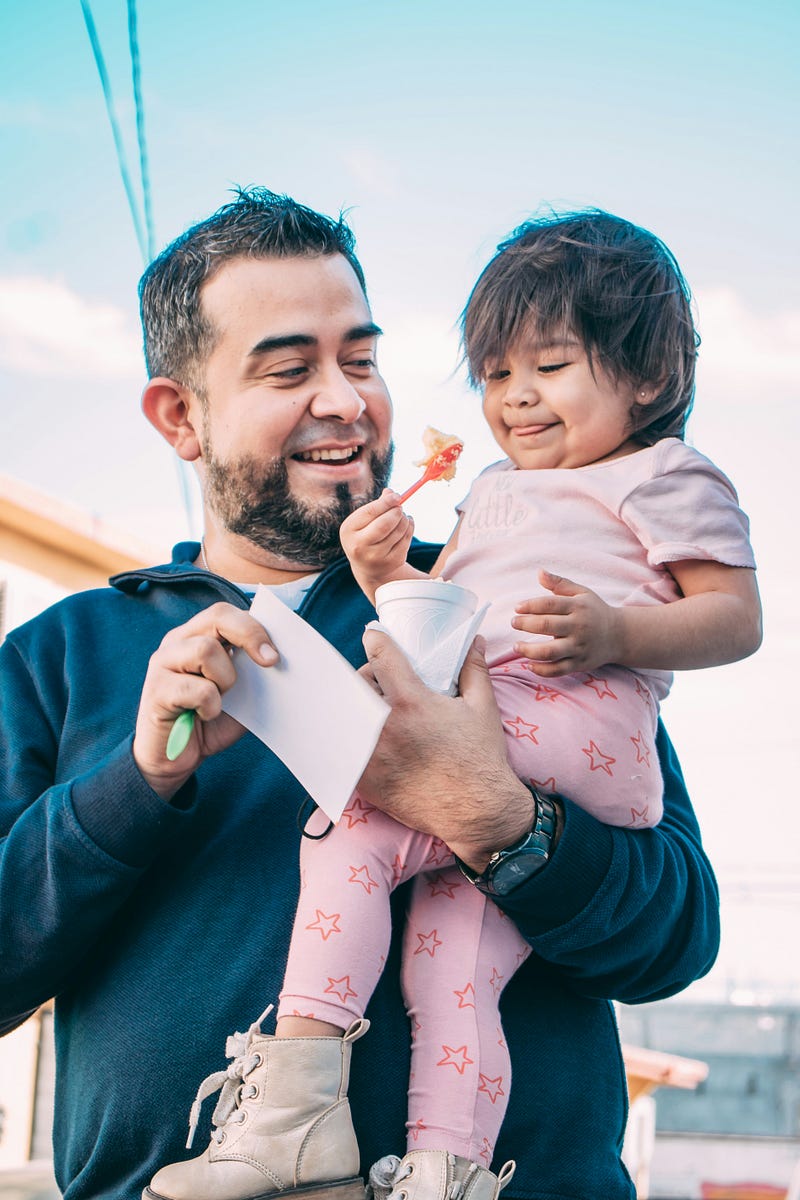
6. Daddy issues
How this is covert: Unhealthy personality traits are common in people who have childhood trauma. In short, what gets confused with authentic personality traits are merely maladaptive coping strategies.
When/how to spot it: “Tell me about your family. What was it like growing up? What kind of relationship did you have with your father, and what was he like?” While it’s not entirely necessary to ask her directly, you may get glimpses of how she interacts with her family if you hang around long enough.
Daddy issues can be hard to spot and easily overlooked at first glance.
In the past, I’ve assumed that if she had a caring, two-parent household, then she had a good upbringing.
This doesn’t automatically mean her parents raised her well or to what she needed as a child.
She might tell you that she grew up in a good household where her father worked hard to provide for the family while her mother stayed home and took care of her and or any of her siblings.
While he may have worked hard and been away from home for the majority of her life, she will be missing a crucial component of her development — a loving father who is available emotionally and physically.
To a child’s young mind, a parent’s long hours working doesn’t fulfill their emotional needs.
Raising them goes beyond simply taking care of their physical needs.
Many parents think that providing food, shelter, clothing, and education is enough to raise healthy children who become capable adults who can build and maintain strong relationships, rewarding careers, or happy personal lives.
She very well could have all of the ‘physical needs’ boxes checked off, but without the proper emotional support, deep down she’s lacking what she needs.
Daddy issues become more apparent if she describes her childhood as any of the following:
- Being unpredictable
- Abusive
- Filled with neglect and abandonment
- Witnessing substance abuse and/or domestic violence
If her father left the family when she was young, she may likely have some form of abandonment trauma.
To her, any romantic (and platonic) relationships she forms with a man could be filled with anxiety and fear of being abandoned by him like her father.
While it’s unlikely that her boyfriend or husband would wish to do such a thing, she may fear this to the point that she manifests such an outcome through excessive neediness, over-protection, and any other behaviors that will push him away.
Since her primary male role model acted this way to her in the past, she is trying to stay congruent with the belief that she is unworthy and undeserving of love and affection.
On the other end, she may be hostile or disrespectful to her partner.
Disrespect could take the form of being inattentive to his needs, being critical, demeaning, and perhaps “abandoning” him on occasion.
If you’re still not sure if she has unresolved issues with her father, this can manifest as:
- For her, the relationship is centered around sex — which is just an unmet need for intimacy
- She expects you to be emotionally available but is unconcerned with your needs
- She purposefully triggers feelings of jealousy in you in various ways
Her relationship with him doesn’t have to be filled with emotional neglect, abuse, or abandonment.
He could potentially be the kind of father or husband who bends the knee to every demand from his wife or his children. In this case, she may not see him as someone worthy of respect, and expect him to give her everything she wants.
This will no doubt create the perception in her mind that men serve to give her anything she wants, and will expect you to do the same with her if you get into a relationship with her.
Without boundaries, or the ability to say no confidently without push-back or argument, this kind of relationship is doomed to fail.
Lesson: Ask her about her family, her father specifically. His behavior toward her and his family will have molded her impressionable mind as a child, and she will view all other relationships through this lens.
7. Health isn’t a priority
How this is covert: Most of our culture doesn’t see or think about the direct relationship mental health has on physical health, and vice versa.
When/how to spot it: It could show up as a chronic illness or injury. In most cases, you have to look at what a person’s typical habits are to see whether or not they’re prioritizing their health.
It’s important to approach the topic of mental, emotional, and physical health with compassion.
For some people, a discussion about weight loss, exercise, reproductive health, habits, and addictions can be triggering or overwhelming.
Health is still a crucial thing to consider in relationships.
Most people’s external circumstances are a result of their inner world. If her health isn’t important to her, I find it unlikely that she’ll view her other relationships with the same priority.
She doesn’t have to be some kind of fitness junkie or have orthorexia nervosa — an obsession with healthy eating. Balance in life and mindfulness are more effective than obsessive behaviors.
When you notice imbalance this is the time you should be concerned.
If you notice your partner will justify why he or she can’t take a day off during the work week to see a doctor or dentist, but will gladly take time off for concerts and social outings, this raises a red flag.
Preventative care is a better choice for people instead of waiting until a major illness or injury happens.
Chronic diseases can profoundly reduce quality of life for patients and for their families, affecting enjoyment of life, family relationships, and finances. Working can be difficult for people with chronic diseases: rates of absenteeism are higher and income is often lower among people who have a chronic disease compared with people who do not have one. Functional limitations can be distressing, and depression, which can reduce a patient’s ability to cope with pain and worsen the clinical course of disease, is a common complication.
This isn’t specific to women, but people who don’t prioritize their physical health, and as mentioned earlier, their mental health, may not be considering the impact their decisions have on the future of the relationship.
Not prioritizing your health will affect your ability to be present mentally and physically.
Low energy levels due to physical ailments will understandably limit her ability to engage in any strenuous outdoor activities or sex, but will also affect less arduous ones like normal tasks.
As you can imagine, chronic health issues will impact your relationship with her in some way. As far as red flags go, this one is probably the least concerning of most of them.
To some degree, we cannot directly control our health and wellness since many factors can contribute to poor health.
Lesson: Bad health isn’t the red flag, it’s the lack of concern for one’s health that is a problem.
8. Living the single life
How this is covert: In today’s hyper-individualistic society, we’ve come to value independence and personal achievement above love and commitment. A lot of people don’t see the tragedy in how people are living: independent but lonely.
When/how to spot it: Actions speak louder than words. If the actions of one person’s commitment aren’t aligned with what they have agreed upon, then it’ll be easy to notice.
Yet self-absorbed people often attempt to live as a single person within marriage [the relationship], thinking they can get what is important to them and still pull off the relationship. The result is that the [partner] feels like an object, or feels that [his or her] own thoughts and feelings aren’t valued.
— Henry Cloud, John Townsend, Boundaries in Marriage: Understanding the Choices That Make or Break Loving Relationships
Long-distance, closed-off, or casual relationships are not conducive to long-term, healthy connections.
I’ve dated a few women who “wanted” a relationship, but they never truly opened up about themselves.
This behavior is confusing, but also quite common. On one hand, they want intimacy, but at the same time, they will unconsciously keep themselves at arm’s length to avoid the risk associated with vulnerability.
When you and a girl get to the point where you decide to date exclusively or enter a relationship, the first thing you must do is set expectations and standards from the beginning.
Otherwise, you’ll end up with both people doing whatever they want without proper boundaries.
A serious relationship is not something you should treat as an afterthought.
If you’re too busy to support a relationship, it might be time to reconsider dating as a means to finding love.
If you are someone who can’t or is incapable of accepting this, then focus on yourself, get a pet, or date casually. We can sometimes get it in our heads that we have a right to “have our cake and eat it too”.
The longer you wait, the harder it will be to say “I’m not okay with this” when she does something you don’t like.
“High School” Relationships
Relationships demand sacrifice and compromise for the greater benefit of both parties.
I’ve seen and experienced adult relationships that made me feel like I was back in high school. They’re full of emotional immaturity, childish behavior, and little to no emotional intimacy.
Some people aren’t able to move past the high school level mentally and they continue to date the same way they were when they were teenagers or young adults.
This can look something like:
- Posting relationship problems on social media instead of communicating with your partner
- She puts more effort into the wedding ceremony — a one-day event — than she does into making sure she is contributing emotionally to the relationship
- You’re given a cute nickname but other times she is disrespectful to you
She’ll avoid the parts of the relationship that require vulnerability, respect, or real effort. To make the relationship feel like a ‘real thing’, she’ll default to focusing on good emotions and easy behaviors.
Meanwhile, you’re left wondering if this is a real relationship.
Excessive partying and socializing
Other examples of “living the single life” include excessive partying, socializing, or vacationing while you’re left out of it.
For example, I had to convince myself that being alone on holidays and vacations without my fiancé was normal. For nearly a year after the end of the relationship, I was still gaslighting my feelings about this.
But I don’t find it okay for people who make a commitment to me and then act like they’re not obligated to help maintain it.
Before I met my fiancé, she partied and socialized often in college. She realized she must give up this lifestyle for her new career and relationship.
I could feel the resentment from her because she couldn’t just go out and party like a college freshman anymore.
When we broke up we lived together for about another month and she reverted to her old lifestyle without the limitations of a relationship.
Even though I’ve never worried about a girlfriend practicing infidelity, excessive partying or socializing late in the morning is not something I’m particularly fond of.
You can argue the facts, but the concern with late-night clubbing is not necessarily her but with other men. As a man, I know what men want, and not all of them are as kind or considerate of whether or not she is single.
Which situation is cheating more likely to happen to you at the moment?
- You and her decide to have a romantic evening together including dinner, a movie, and sex
- She’s dressed provocatively and she is drinking and partying with her “girlfriends” at 1 in the morning in the presence of other men
You’re not a controlling spouse or boyfriend for not being okay with her getting dressed up, constantly going out, drinking, and coming back in the morning.
According to the evolutionary psychology explanation, men’s jealousy is an emotional reaction to signs of sexual infidelity. The jealousy serves to reduce the chances that his partner is cheating, since he then monitors her more closely.
The cultural gender role perspective believes that jealousy is learned, but we feel confident that these reactions are mechanisms that are part of an evolved human mind, given comparable findings across several nations,” Bendixen says.
You might be thinking: Why are you not okay with her often being on vacation or out and about at night?
If there are hints or signs of sexual infidelity from his partner, on a subconscious level, he’ll be unsure of whether or not she is carrying his children if she happens to get pregnant.
The question is: Should he invest his time, effort, and resources into a woman and her children if there are doubts about the legitimacy of his paternity?
I would argue that excessive jealousy or mistrust will damage love, but if you know from the start that she’s a “party girl”, why do what I did and invite that sort of drama into your life?
Given the choice between a party girl and a responsible woman, which would you choose for a long-term relationship?
Besides the potential signs of cheating, clubbing and excessive socializing may be her way of coping with her poor emotional health and/or her life circumstances.
These kinds of activities may seem like she is “just trying to have a good time”, but in reality, she’s hoping to escape her problems with short-term highs that ultimately don’t help her process her pain.
Lesson: If your goal is to find a long-term girlfriend or even get married, avoid women who won’t compromise for the relationship. Partying, clubbing, socializing, or lots of vacationing without you is a troubling sign. What you need to be concerned about is if this is the right person to be with, and whether a relationship will work in the long term.

Next Steps,
You’ve now learned 8 red flags you should be mindful of. Whether you’re in a relationship or single, take a moment to see if you’ve ever spotted any of these in your current or past relationships.
While these aren’t instant deal breakers, red flags provide a much-needed pause and reflection on your current relationship or dating habits.
If you find yourself often ignoring, glossing over, or simply not noticing strange and unhealthy behaviors in yourself or your partner, you’re not allowing yourself to grow.
Remember, everyone has red flags. You’re not exempt from potential habits and behaviors that other people may find off-putting and unacceptable.
Before we stop and judge others, we need to look at what we’re doing first, and then change.
If you liked this article, follow me here on Medium.
I post new articles 2 to 3 times per week.