
8 Communication Hacks I Use To Be More Assertive As a Young Employee
Become more influential by learning the language of these subtle cues
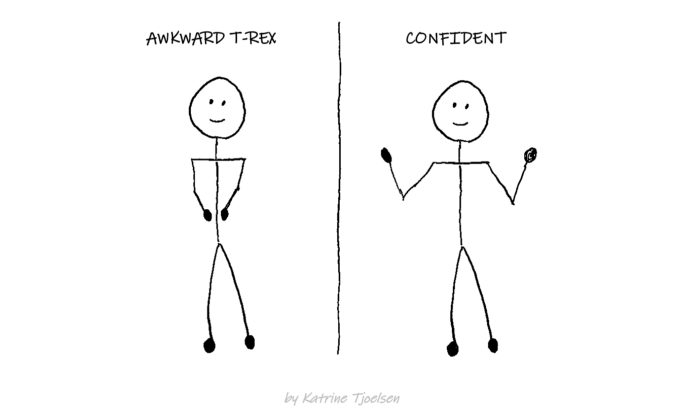
Hate it when you are not taken seriously?
When I started working as a 24-year-old woman, I struggled. How to command attention? How not to be dismissed for my size, gender, and lack of wrinkles or gray hair?
I’ve learned hacks to be more assertive. To be more influential. Within two years as a product manager, I was promoted to lead a team of product managers. And I’m now an MBA student at the Stanford Graduate School of Business.
These communication hacks can also help you be more assertive and more influential.
1. Speak slower than what feels natural
When we speak fast, it’s as if we’re worried we’ll get interrupted otherwise.
I rush when I worry my thoughts aren’t worth listening to. But how do we slow down… in practice? Speech coach Jamie Chapman says that telling ourselves to speak slowly zaps the energy out of our speech.
Instead, Chapman suggests: (a) emphasizing select words, and (b) deliberately pausing.
2. Interrupted? Then interrupt the interrupter
Did someone jump in and take the word from you, while you were talking?
Don’t just let it happen. Reclaim the word: “May I finish?” No need to wait for a pause. Interrupt the interrupter. I first tried this in a role play in the Stanford MBA class Leadership Laboratory. It blew my mind how quickly it established my influence.
Next time, try “May I finish?” If that’s not enough, try these other tips from Wendy R.S. O’Connor.
3. Explain the bigger picture
What’s obvious to you, often isn’t to others.
By explaining the bigger picture, you help others see it too. And if you’re speaking to someone senior who already knows it, you help them see where your work fit in.
4. Avoid making statements sound like questions
“Your statement lost its effect when you ended it on a high pitch,” a group member told me. Upspeak, it’s called. I do it when I feel uncertain.
But upspeak loses credibility and influence. And it’s unnecessary. If it’s important to convey our uncertainty, we can use words like “I think.” We can even pose a question formulated grammatically as a question should be.
Caveat: Someone else’s upspeak is no excuse to be dismissive. As leaders and colleagues, we should strive to hear what our colleagues have to say even if they use this speech pattern.
Give your statements the punch they deserve.
5. Provide structure with signposts
Using signposts — that is, terms that provide structure and transitions — is a hack that instantly improves clarity.
Communication coach Alexander Lyon describes how to use “first,” “second,” and “third” to indicate shifts between our main points. He also explains classic transitions and what he calls summary transitions, to help the listener when you shift from one topic to the next.
Signposts give clarity. And clarity is influential.
6. Cut the generic fluff in emails
“Sounds good! When will the report be ready? — Jeff. PS: Did you watch the world soccer cup?”
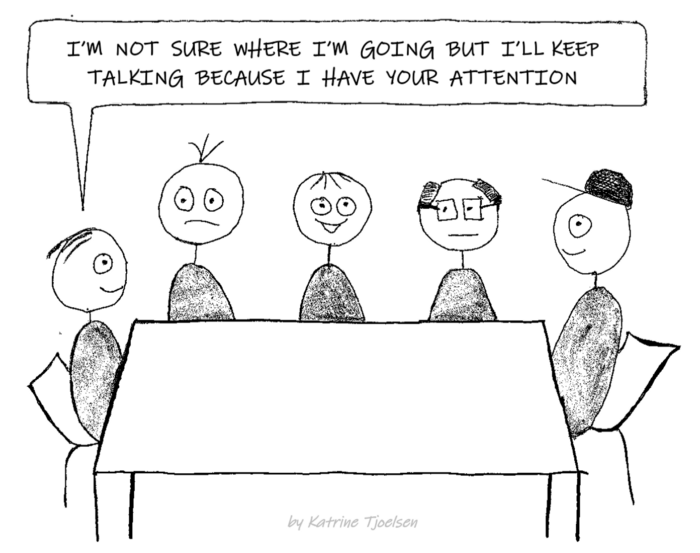
Ever noticed how senior leaders can write such short, direct emails? I tend to embellish my message with “dear,” “hope you’re well,” “kind regards,” and other generic formalities.
The generic phrases can be replaced with genuine warmth.
7. Replace exclamation marks with periods
See how junior an email saturated with exclamation marks looks:
Hi, all! Hope you’re as excited as I am for tomorrow! We’re celebrating our accomplishments with cake! Join us tomorrow at 2 pm! See you soon!
And why so many exclamation marks? Why not just one?
Hi, all. Hope you’re as excited as I am for tomorrow. We’re celebrating our accomplishments with cake. Join us tomorrow at 2 pm! See you soon.
8. Take physical space
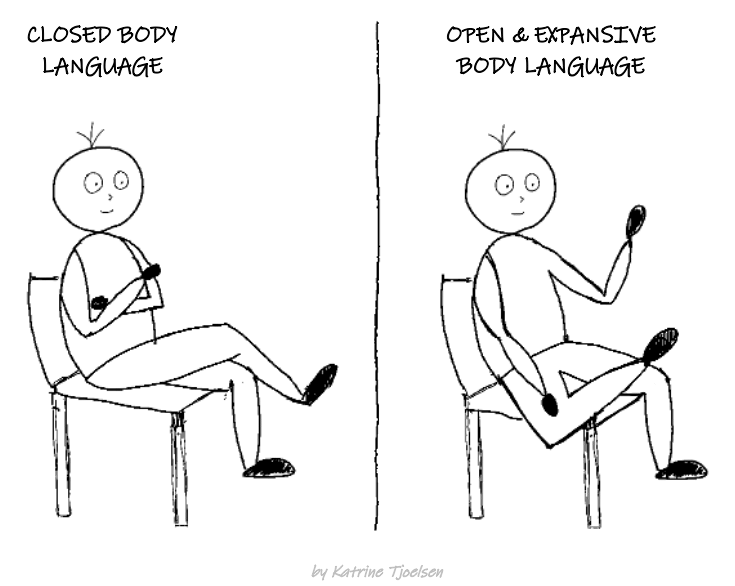
“Playing high (…) will look like a very open, expansive, relaxed body,” says Deborah Gruenfield, a Stanford professor and author of Acting with Power.
Often find yourself with crossed legs, or bent over looking small? Open up your posture. Take up more physical space.
If you enjoyed this, join 800+ subscribers in my free weekly newsletter for actionable tips to speak, listen, and write in ways that get noticed.


