
Author reflections
Why People Are Freaking Out About Elon Musk Buying Twitter
And what it means for writers
So far, in my time on Medium, I have resisted the temptation to write anything about Elon Musk. As far as I know, he hasn’t written about me, either. So we’re equal (sort of…).
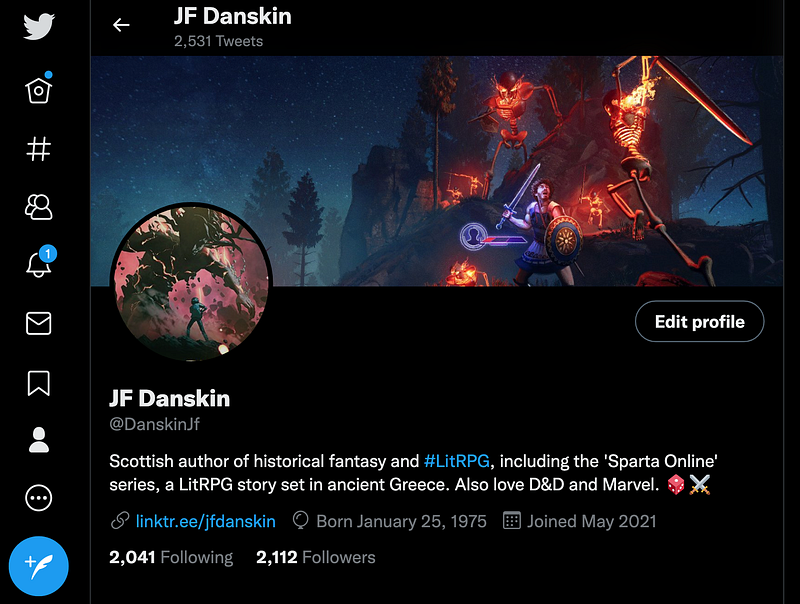
Now, however, Elon’s on my turf. I’ve been using Twitter for a long time. Much longer than it might appear from my profile (see below). The thing is, I started a new ‘author’ account only last year.
But in fact, I’ve been tweeting from the start.
The purchase and its aftermath
I’m sure you’ve heard of it, so I won’t go into every last detail. In short: rich dude said he would buy Twitter. He went ahead and did it — for $44 Billion dollars.
I don’t really care too much what Elon Musk does with his money.
I mean, sure, he could have spent it on something more positive, but just because he’s extremely famous, I don’t really see why his choices should be held to a higher standard than anyone else’s.
What’s got people worked up, though, is what Musk says he’s planning to change on Twitter. So what exactly does he intend to do? According to Business Insider, he has explained:
“I just think it’s important to the function of democracy.”
Okay… so far, that doesn’t sound too bad. Musk also said he wants to create:
“a public platform that is maximally trusted and broadly inclusive.”
Again, assuming he really means it, most people wouldn’t argue too much with that on principle.
At the heart of the anger and upset are Elon Musk’s comments on freedom of speech. Now, we all know that freedom of expression is important, a fundamental right, etc, etc.
The trouble is, what exactly do we mean by that? For some, unfortunately, it appears to mean thinking they have a right to say things which are hateful, abusive, misogynist, racist, homophobic, etc… and to do so without any consequences.
And it’s not as if it wasn’t already bad enough.
According to 2018 research by Amnesty International:
Twitter is a platform where violence and abuse against women flourish, often with little accountability. Instead of the platform being a place where women can express themselves freely and where their voices are strengthened, Twitter leads women to self-censor what they post and limit their interactions.
So when Musk says that he will toss out the platform’s moderation guidelines, along with comments such as:
Truth Social (terrible name) exists because Twitter censored free speech.
Then people who have already been victims of sexism, racism or other forms of abuse may understandably feel concerned and threatened.
Elon Must arguably tried to address concerns by later saying:
“By ‘free speech’, I simply mean that which matches the law.”
That is to say, things that are illegal would continue to be outlawed on the platform.
Given that the law varies from place to place, though, has Musk actually thought this through? What if a form of hate speech is illegal in one country and not another, or even in one US state and not another?
And given that Twitter discourse is already problematic, leading to woman and minorities sometimes being afraid to speak out on the platform, how is loosening its moderation going to help matters.
I’m not sure the guy has really thought this through.
For authors
I said this would be an author’s take on the issue, and I’ll finish by saying three things on how all of this affects writers and bloggers.
One: For all its flaws, Twitter has been a really good platform for authors over many years. A quick visit is enough to see how commonly hashtags like #WritingCommunity, #Writerslift, #BloggersTribe and #AuthorsofTwitter are used, indicating that many writers have found a virtual home there.
And consider the massive following of authors like Stephen King (over 6 million). In many ways it’s the best site out there for authors to connect directly with fans and the public.
Authors can connect with each other, too. I myself have got to know other authors much better through Twitter than through the larger communities on Facebook.
It’s personal and direct.
There are also a lot of smart people with good ideas to share, including those from minority groups. It would be a real shame if they reduced their Twitter or left altogether from feeling unwelcome and threatened, even if the changes are more perceived than (as yet) a reality.
Two: democracy is better than dictatorship, and while Elon Musk might mean well, at the end of the day he is just one man with an opinion. Right about some things, no doubt, but wrong on others.
For some, Musk surely sounds great. He is evidently against being ‘woke’. For others, of course, this is a nightmare (the definition of ‘woke’ is “well-informed; alert to racial or social discrimination and injustice”. Is that so bad?).
But all of this should just remind us that a single person is now wielding far too much power over all of us Twitter users. It’s the polar opposite of a site like Mastadon which is open source and community operated.
Elon Musk says that Twitter is the digital town square and needs protected, but how can it be a safe place to interact when one rich man acts as judge, jury and executioner over your online lives?
As TNW put it:
If Twitter is a digital town square, it shouldn’t be controlled by a libertarian billionaire.
Three: A more pragmatic point is that authors need some control over their digital presence.
It takes time and effort to build up a following on sites like Twitter, as well as learning how they work. All of that can come to nothing overnight if someone whose views you can’t stand takes over.
Twitter is not just a social media site, either — it is tied to the free newsletter platform Revue, a rival to Substack.
Of course, a similar principle applies to Amazon, Facebook, and the rest. How much control do you have over your digital life?
I have seen authors react to this issue in two main ways:
- Diversifying, for example by publishing ‘wide’ rather than just with Amazon, and using multiple social platforms.
- Taking things in-house, by focusing on their own website/blog/shop rather than relying overly much on the big tech companies.
And perhaps we should also consider what we really value in our social media hangouts.
Privacy?
Fairness?
Technical specs?
There are many competing priorities, but surely ‘being more like what Elon Musk wants’ was never on any Twitter user’s wish-list.
Check out my Medium profile to find out more about my writing, and follow me on Twitter here!. Also, you can get my posts direct to your inbox here! And if you’re not yet a Medium member, consider supporting me and thousands of other writers by signing up for a membership with this link, Doing so will support me directly with a portion of your fee, and won’t cost you extra. If you do, thank you so very much!


