
Two Poems about Palestine
“Stolen Limestone” and “Roman Ruins in Occupied Palestinian Territory”
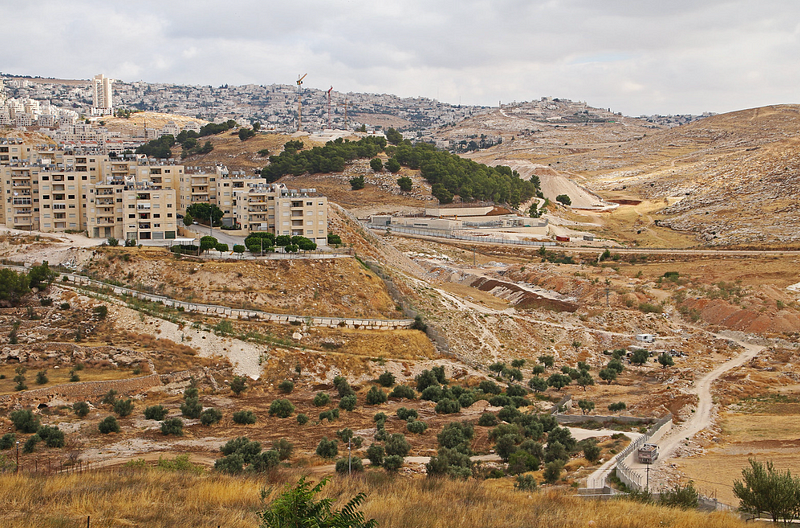
About the poems: I wrote the two poems below during 2011 and 2012, while I was living in Bethlehem in the occupied West Bank. The first poem, “Stolen Limestone” describes the scene whenever I gazed on towards Jerusalem from the hills of Bethlehem.
Israeli settlements surround the town of Bethlehem and the neighboring Palestinian village Beit Sahour. The construction materials used by these settlements are always the same: alabaster-colored limestone. The same white alabaster color dominates the landscape of Jerusalem and its suburbs, particularly newly built settlements like Gilo.
Andrew Ross describes the process through which limestone buildings built by Palestinian workers came to dominate the landscape of the region in his book, Stone Men:The Palestinians Who Built Israel (Verso, 2019).
STOLEN LIMESTONE
Jerusalem limestone spreads like an occupation over the ancient city of Bethlehem.
Cats congregate along dangerous intersections where concrete walls break into homes.
Workers pass the dawn behind the bars of checkpoint 300, waiting to build settlers’ homes
with stolen limestone. Children must be fed. Their hands press against the bars.
Neither Palestinian nor Israeli, I dwell in the complicity of routine hypocrisies.
Limestone shimmers beneath the sun’s glare, wrapping the occupation
in artificial purity. Limestone bricks accumulate. Settlement become homes.
Concrete slabs surround Bethlehem as its inhabitants live in the shadow of another’s people’s atrocity
& Palestinians build bridges of broken memories on captive territory.
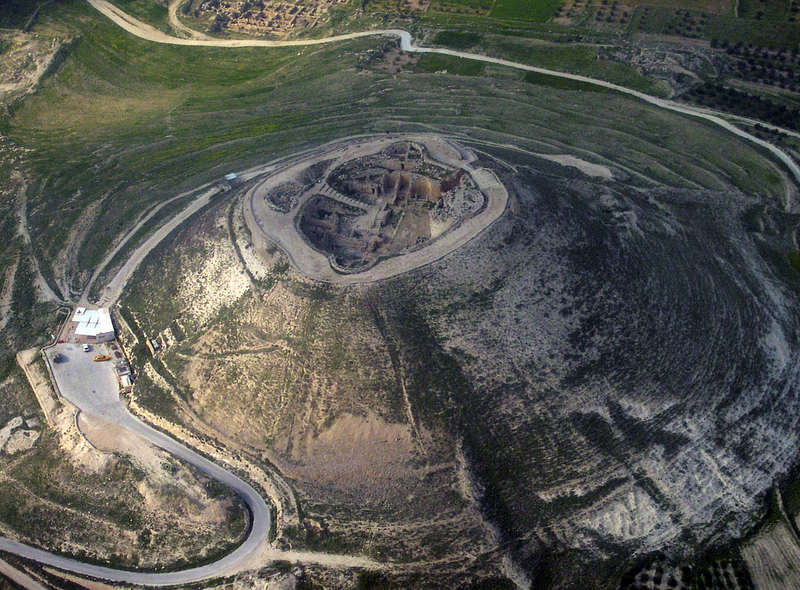

“Roman Ruins in Area C” was written after I had taken a ride with a Palestinian driver whom I met at Checkpoint 300, the largest checkpoint in the area which blocks access to Bethlehem. The driver had taken me to visit the ancient Roman ruins of Herodium, located 12 kilometres south of Jerusalem and 5 kilometres southeast of Bethlehem. He wanted to show me the area, and the ruins of Herodium, built between 23 and 15 BCE, was according to him the most magnificent site in the vicinity. The Arabic name of the site expresses the admiration which the local Palestinian population has had for these ruins across the centuries, Jabal al-Fureidis ( جبل فريديس) meaning “Mountain of the Little Paradise.”
The driver and I were both surprised when he was refused entry to the Herodium complex by the Israeli guard simply because he was Palestinian. The guard stated the reason directly to his face: “No Arabs allowed.” It was a shocking scene of overt discrimination that I will never forgot, and which stirred childhood memories of learning about Jim Crow America in the country of my birth.
ROMAN RUINS IN OCCUPIED PALESTINIAN TERRITORY
My Arab taxi driver is unfazed. Racism has long tainted these Roman ruins. Politeness takes over.
We head for the car. The road bears silent witness to atrocity. Barren valleys cascade, one after another.
God is a strange creature, I think to myself. What idiot would choose this sterile land for launching his sojourn on Earth?
We reach Bethlehem: Checkpoint 300. I disembark. Arabs are not allowed to cross like white women
with American passports. I journey by foot to the two-storied white limestone building I’ve been calling home.
I pass tourists in t-shirts, Banksy portraits, & soldiers armed with kalashnikovs.
Like the racist at the counter — like every well-heeled politician — like every international law —
armed soldiers avert their gaze, revealing the glare of the sun.
I have gathered my poems set in the Middle East and the Caucasus here:
For my writings on Palestine, see this list: