Is Humanity’s Fate to Die on Earth or Can Space Colonization Save Us?
A look into the technologies that will make space colonization possible
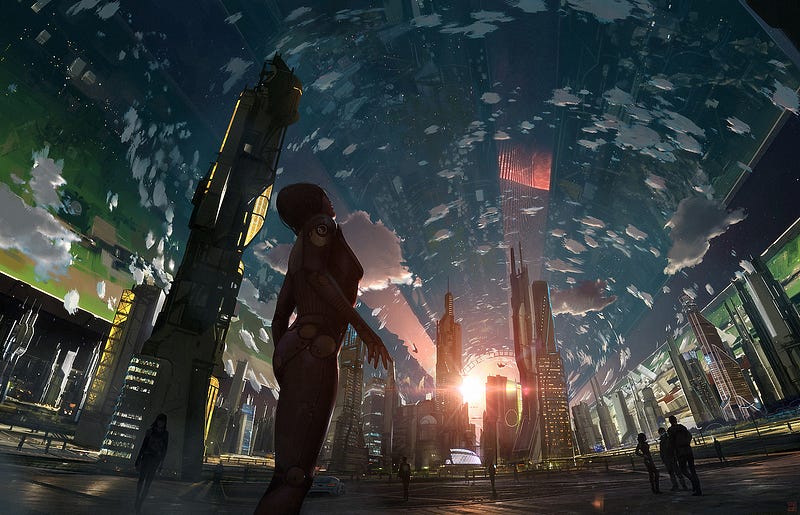
Stephen Hawking once warned, “We must become an interplanetary species within 100 years or we’ll all die.”
Indeed, life on Earth poses its share of challenges. If human civilization isn’t wiped out by a global pandemic or war, climate change lurks on the horizon, posing a threat to our ability to survive long-term on this planet.
“I’m beginning to find life on Earth…burdensome. Pandemics, air pollution, groundwater contamination…Did you know that caffeine, antibiotics, and even birth-control hormones are finding their way into our drinking water? And now there’s circumstantial evidence that CO2 could be making our food less nutritious! As our numbers continue to approach carrying capacity, life will become less safe. Finally, either a solar flare will fry the electric grid sending civilization back to the 19th century, or the Kessler syndrome will strand humanity on a dying planet for millennia. I’ll gladly leave Earth if presented with the opportunity.” — Excerpt from my book K3+
We know that space offers virtually unlimited resources for humanity to break free from our home planet. But we’re limited to the visions of different space race tycoons like Elon Musk and Jeff Bezos, who completely suck the air out of the debate, and whose ultimate goals seem to be control, power, and self-interest.
Settling planets and moons align with some of those visions, while offering a high level of comfort to our deeply ingrained planetary bias. Nevertheless, scientists assert that trying to colonize other celestial bodies will require severe adaptations to the human body, possibly causing the settlers to branch into a different species within generations.
“We must become an interplanetary species within 100 years or we’ll all die.” -Stephen Hawking
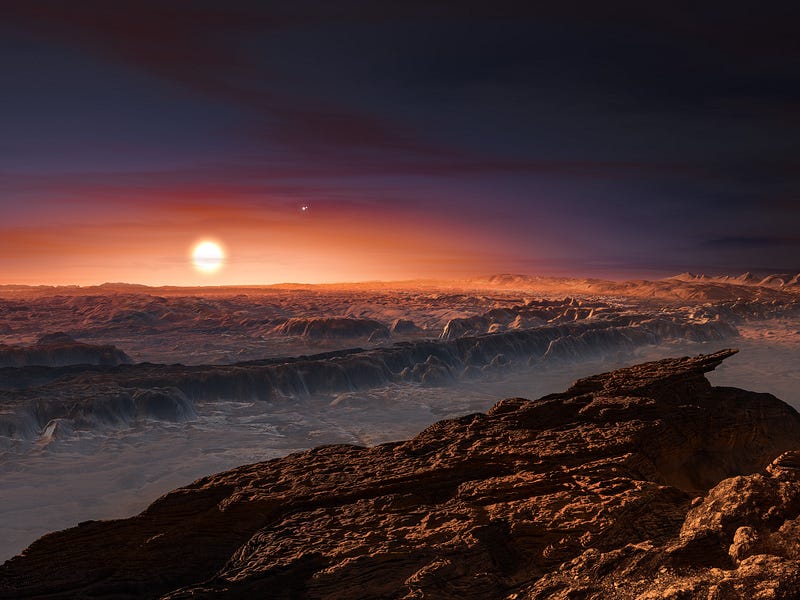
However, there’s no way we can put humans on the closest interstellar planet, 4.2 light-years away, within 100 years. And if we do colonize a planet like Proxima b, it’s likely to be a hellish world, maybe even harder to settle than Mars. Furthermore, over 600 million years of evolution have conditioned multicellular life to Earth’s environment, which isn’t found anywhere else in the solar system — perhaps in the entire Milky Way galaxy. But because we were born on Earth, we cannot imagine a different form of colonization than settling other planets and moons.
It won’t be anything like when the Europeans arrived in the new world, bringing crops and livestock. They were able to breathe the air and their bodies were already accustomed to the conditions. However, when humans try to colonize another planet, our biology won’t be compatible with the gravity, atmospheric pressure, and surroundings. Seeding a new planet with our own chemistry and the microorganisms we need to survive will likely spell doom for the native life of that planet.
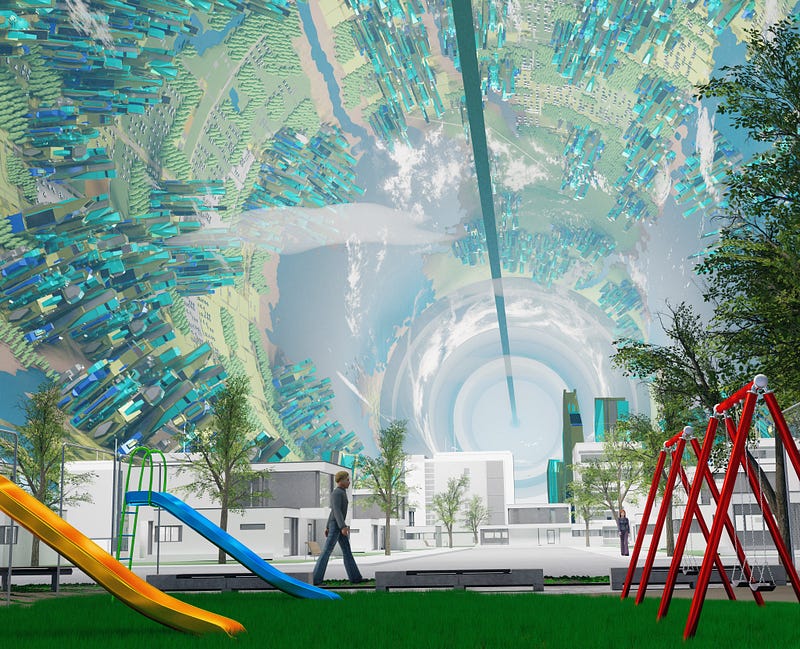
Our fast-paced civilization would need hundreds of planets to continue growing. But with no other worlds in sight that can support billions of people, we must create room from scratch. In the time it would take to surround Mars or the moon with an atmosphere, we can build entire colonies in space, capable of housing billions. These will be safely hosted inside cylindrical megastructures, called rotating habitats, that perfectly replicate Earth’s gravity and atmospheric conditions, requiring no adaptations of the human body.
The great enabler: Closed-loop technologies
On Earth, plants inhale CO2 and exhale oxygen. We can replicate this cycle through closed-loop life support systems to recycle air, like we do in the International Space Station. Vertical farming combined with aeroponic irrigation will allow each of these colonies to be completely autonomous. Every single aspect of agriculture can be automated, leaving humans free to oversee the process and use their creativity to continue innovating and developing new varietals that will satisfy the branching tastes of the growing population.
We’ll be able to reuse water, similar to what the city of Cape Town, South Africa, has begun piloting. By recycling wastewater and making it safe for human consumption, they’ve demonstrated this closed-loop technology to be effective in delivering water to high-scarcity environments. This process also separates precious phosphorus, which is a key essential component of agriculture.
Where is the meat?
Although a plant-based diet is healthier, human beings are innate, voracious carnivores. The evolutionary big bang of our brains began right when our distant ancestors switched from eating plants to eating meat. One could argue that we’ve been conditioned to eat meat through millions of years of evolution, so humans likely won’t give it up without a fight.
Cultured meat can be produced in-vitro from animal cells, without the need for raising and slaughtering them. Although this technology is currently in its infancy, it has the potential within just decades to produce better steaks and countless other animal products, without the need to introduce these living beings to space colonies and sacrifice them. Genetic enhancements will push the genome to the limit, producing spectacular flavors and textures, while leaving the cruelty of our current farming system far behind.

So how do we bring these technologies to space?
We know how to recycle air and water, and to grow food using closed-loop systems that produce zero waste. But a multi-million-person colony would consume tremendous amounts of power. Fortunately for us, the sun produces plenty. Imagine the amount of energy consumed by all homes, industries, hospitals, farms, schools — and every other single human activity on Earth you can think of — for one year. The sun produces close to 500,000 times that amount, in just one second! It almost hurts to see all that power gone to waste, irradiated as heat to space.
Solar panels in space deliver up to 40 times the annual amount of reliable 24/7 energy than on Earth, and upcoming technologies will give them a tremendous efficiency boost. Furthermore, direct current (DC) will provide a far more efficient electric system than alternating current (AC) — no need for a bloated and wasteful electric grid, plagued by vulnerabilities. All these technologies can be adapted to work inside rotating habitats.
However, before we can start building these megastructures, entire industries will need to be created in space. Building them will require tens of thousands of rocket launches to deliver the base components for developing the initial infrastructure. Technologies like 3D printing will allow us to make great strides in this effort, but we’ll need to source the materials to be fed to these 3D printers — and to other construction devices — from space.
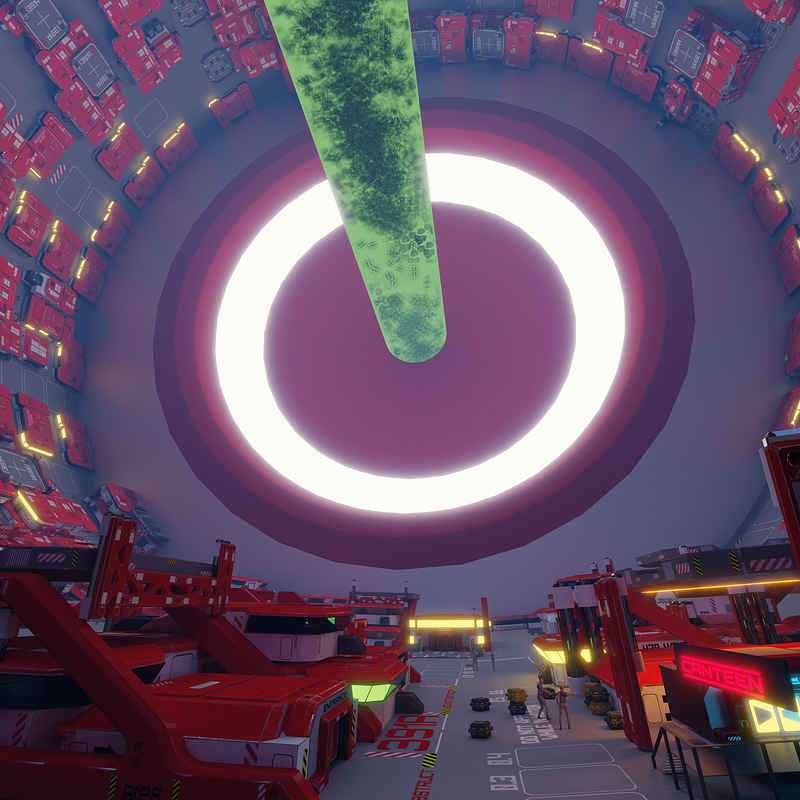
Mining asteroids and the moon will provide the first hunks of raw materials to put together factories and engineering facilities. After a few decades, it will be possible to construct the first rotating colony — a tiny community of a thousand scientists and engineers to test and improve these technologies in space. But, in order to build island-sized dwellings that can house tens of millions, we’ll need a much larger source of raw materials.
Being the leftover core of a past planetary collision, the planet Mercury is made of 70 percent metals and 30 percent silicates. Mercury contains a much higher abundance of metals than Earth, and it will be easier to extract them due to its low gravity. Most of the mining operation will be dedicated to refining the ores, making them ready for construction applications.
Our current population of 7.8 billion people can be comfortably housed inside fewer than 400 of these island-sized rotating megastructures.
The Future looks bright . . . if we don’t mess it up
Our current population of 7.8 billion people can be comfortably housed inside fewer than 400 of these island-sized rotating megastructures. Mining Mercury will provide an influx of construction materials, enough to build thousands of megastructures but, in the end, Mercury’s resources are still limited.
The total mass of planet Earth is estimated at roughly 5,842 quintillion tons. Imagine thousands of times that weight in metals and other valuable elements, such as carbon, silicon, nitrogen, and many others. The great news is, we don’t have to look far. Being a high metallicity star, the sun is the answer to all our future resource needs.
True, it’ll take a century — and then some — to develop the infrastructure to mine the sun’s raw materials. But with plenty of available energy to power the process, and no need to invent new physics, the process is feasible. Human beings are no strangers to such long projects. The Great Wall of China was built in 2,000 years, Stonehenge in 1,600 years, and Petra in the Jordan Desert in 850 years.
Life might evolve on planets, but these celestial bodies are not the best long-term option to sustain growing civilizations due to their limited availability of resources. We can begin building a true post-scarcity utopia in space-bound megastructures today. Many of the technologies already exist, and space has the available resources.
Hawking was right that we need to leave Earth within 100 years, but he, like the rest of us, was born and raised on Earth. We need to put our planetary bias aside and think outside the box. Our true savior lies in rotating habitats—floating oases that can comfortably house tens of millions and allow humankind to spread throughout the cosmos.
Space colonization can save humanity from the harsh threats that plague us on Earth.
Want to know more about rotating habitats?
My new dystopian novel K3+ is the story of Earth’s demise and humanity’s rise to become an intergalactic empire. From colonizing space to saving humanity, the science-grounded story interweaves cutting-edge technologies and spellbinding fiction.


