
In the World of Locomotive Companies — SAL Made Fortune
Fascinating Focus and Fearless Leadership Made Railroad Successful Article 5 of 6

Dear Reader,
In the last article, we looked at Solomon Warfield, Great Depression, and World War II, later in the 20th century, steamship operations, and passenger trains. Here is a link to article 4 https://readmedium.com/8dd134f3e8cf?source=friends_link&sk=6465a8fc64ff0537dd9d50877a70f5fe
Please stay aboard so that you don’t miss this interesting information. Many thanks for your time and willingness to read this article.
Dear Reader,
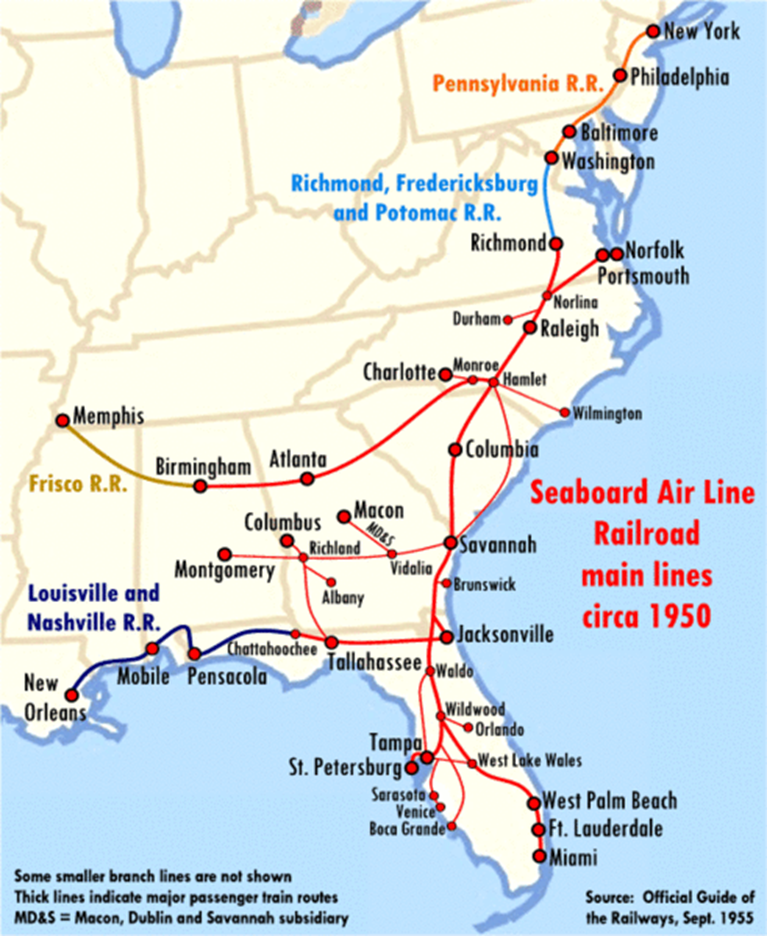
In this article, (article 5 of 6) we will look at the trains and routes that the railroad used. We look at heavy-weight trains, streamliners, significant firsts, and freight trains. This is intended to give you more of an idea about the important business that this railroad was involved in.
Introduction
Before the completion of Seaboard’s Cross-Florida extension from Coleman to West Palm Beach (1925) and on to Miami (1926), the Florida East Coast Railway handled SAL trains from Jacksonville to Miami.
Seaboard split most major southbound trains at Wildwood, just north of Coleman, with one section going to Tampa and west coast points, and the other going to Miami. Northbound, the process was reversed, with west and east coast sections joining at Wildwood to continue their journey.
Heavyweight trains
The term heavyweight refers to trains consisting of passenger cars with all-steel construction, considered a great improvement in safety over the all-wooden or wood-and-steel cars of the 19th century. By 1910, all major railroads were replacing their wooden passenger fleets with cars of heavyweight construction.
Seaboard trains for cities on the Atlantic side of Florida were handled by the Florida East Coast Railway south of Jacksonville. This changed when the Cross-Florida Extension from Coleman to West Palm Beach was completed in 1925 (and extended to Miami in 1927).
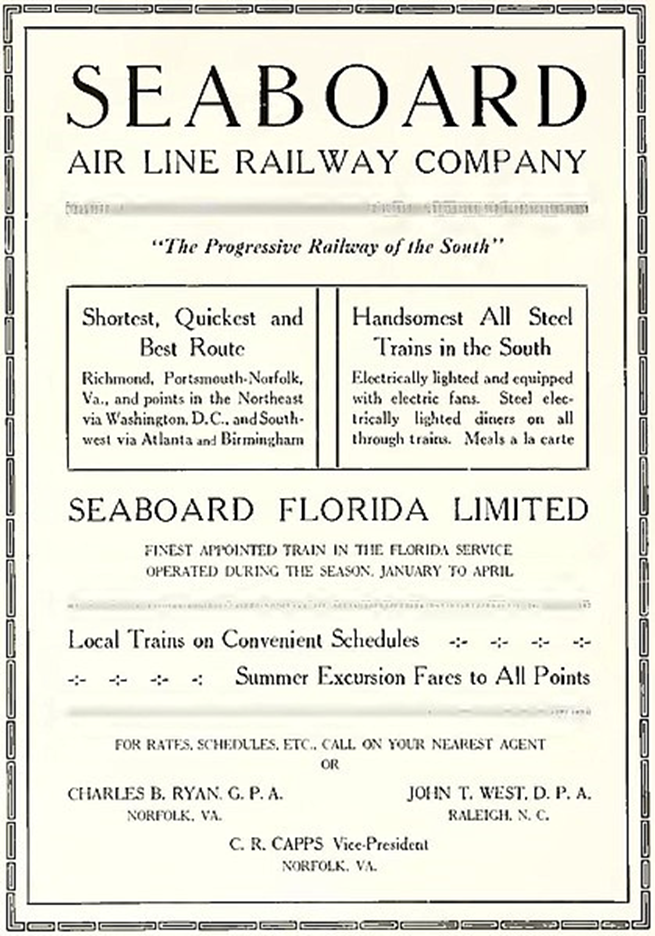
- Florida and Metropolitan Limited, inaugurated January 14, 1901
Heavyweight winter season (December — April), all-Pullman, New York to both coasts of Florida
Renamed Seaboard Florida Limited (first class service) on January 1, 1903,\
Renamed Seaboard Florida Express in summer.
Replaced by the New York-Florida Limited in 1930, carrying coaches and Pullmans.
Renamed Palmland on December 12, 1941.
Reduced to New York — Columbia, S.C., in May 1968.
Discontinued April 30, 1971.
_(page_230_crop).jpg)
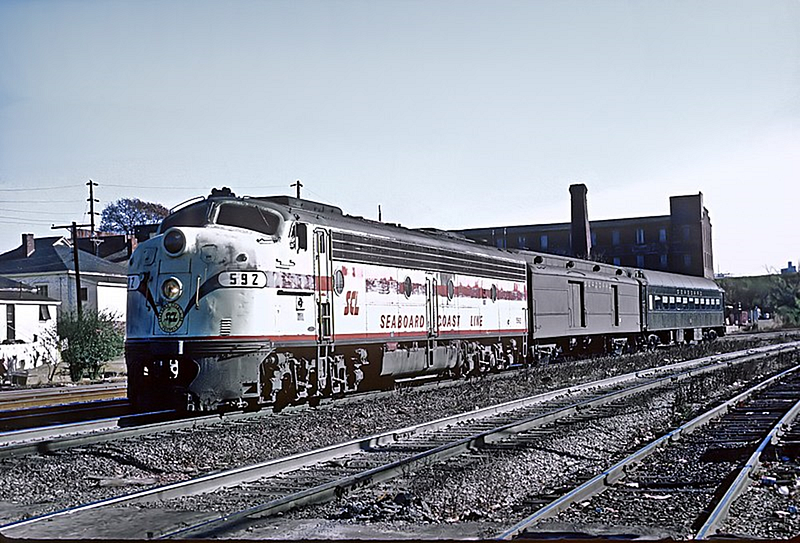
- Atlanta Special, inaugurated in 1901, Heavyweight coaches and Pullmans
A connecting train from the main-line junction of Hamlet, North Carolina, to Atlanta
In the 1920s, it began operating as a thorough service from Washington to Birmingham.
Renamed Seaboard Express on April 12, 1903
Renamed Atlanta-Birmingham Special in 1911.
Renamed Robert E. Lee with the addition of air-conditioned cars on April 28, 1935
Renamed Cotton Blossom on April 24, 1955
The name was dropped and it continued as a mail and express train until discontinued in 1968.
.jpg)
- Suwanee River Special, inaugurated November 8, 1921, Heavyweight coaches and Pullmans
Carried passengers from Cincinnati and other Midwest points to the Gulf Coast resort cities of Tampa, St. Petersburg, Venice, and Naples.
Handled by Southern Railway (U.S.) from Cincinnati via Atlanta to a connection with the Seaboard at Hampton, Florida.
North of Cincinnati, Pullmans handled by other railroads provided through sleeping-car service to and from Chicago, Detroit, and Cleveland.
- New Orleans-Florida Limited, November 1924 — July 1949, Heavyweight coaches and Pullmans
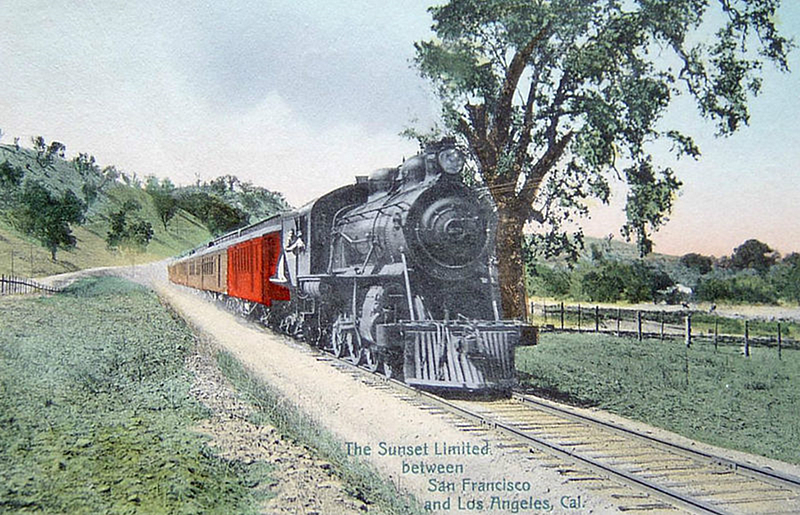
Carried the first transcontinental sleeping car in the United States, a Pullman from Jacksonville to Los Angeles via a connection with the Southern Pacific Railroad’s Sunset Limited at New Orleans from 1924 to 1929.
Superseded by the streamlined Gulf Wind.

- Cross Florida Day Service, Cross Florida Night Service, 1925–the 1960s, coaches, and sleepers
1925 predecessor Cross Florida Night Limited 1930 to 1960s St. Petersburg — Miami
Day service: bus: St. Petersburg — West Lake Wales, train: West Lake Wales — Miami
Night service: coaches: St. Petersburg-Tampa, Tampa-West Lake Wales, West Lake Wales-Miami, sleepers: Tampa-Miami.
- Orange Blossom Special, November 21, 1925 — April 26, 1953; due to wartime restrictions, did not run in the years 1942–1945. Heavyweight, Pullman winter season.
New York to Tampa/St. Petersburg, West Palm Beach, and later Miami as well.
The most luxurious SAL train of its time was introduced to entice wealthy tourists and businessmen to Florida during the land-boom era.
Deluxe features included fresh flowers and fresh fish for the dining car, a library car and observation car, and a club car with a barber and shower bath.
The OBS was later immortalized in a fiddle tune and sung by johnny cash orange blossom special. To hear a rendition of this song please go to: https://music.youtube.com/playlist?list=OLAK5uy_l2fI2RkXXiUVqMXrKjyM9eIWAgx-pBz8o&feature=share
- Southern States Special, inaugurated May 5, 1929, Heavyweight coaches and Pullmans
New York to Florida.
Renamed the Sun Queen on December 12, 1941.
Renamed the Camellia on May 18, 1947.
Renamed Sunland on August 1, 1948.
Discontinued in 1968.
Streamliners
Because of the enormous capital investment costs associated with streamlining passenger car fleets, many railroads were reluctant to do so. Seaboard led the way in 1939. The other railroads followed.
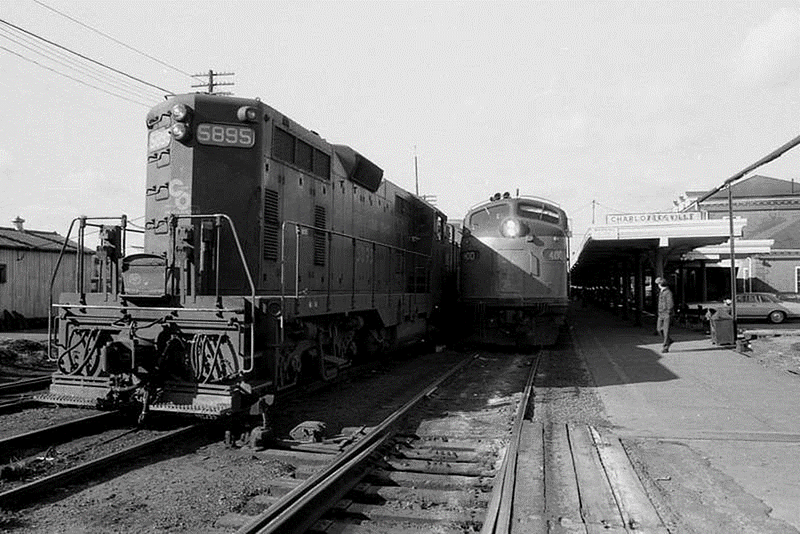
The Silver Meteor and the Silver Star are still operating today. These trains are the sole survivors of the once-vast market for long-distance Florida trains. The following trains constituted Seaboard’s advertised, very popular “Silver Fleet” of streamliners, with lightweight fluted-side stainless steel cars pulled by colorful EMD diesel locomotives.
.jpg)
- Cotton Blossom, 1947–1955, Streamliner, all coach
New York to Birmingham via Athens and Atlanta.
- Palmland, 1941–1971, Streamliner, coach, and Pullman cars
New York to Tampa, connecting service available to Port Boca Grande and Miami
Shortened in 1968 to Columbia, SC as the southern terminus.
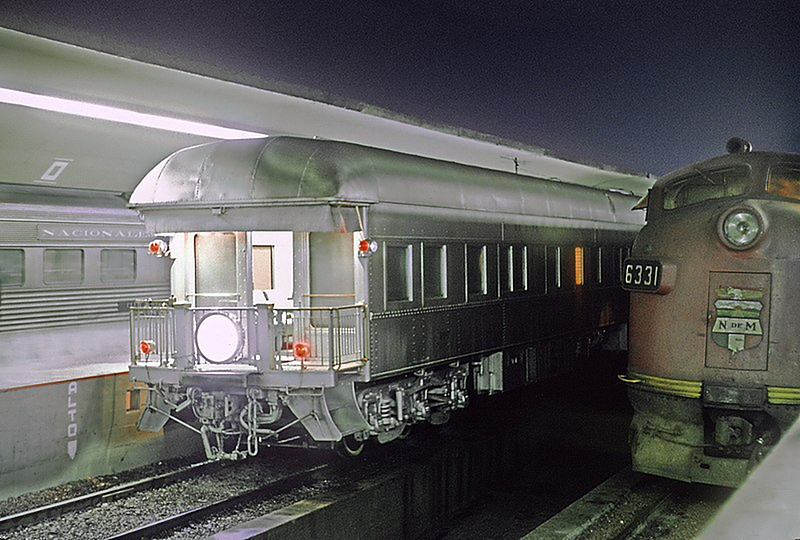
- Silver Meteor, inaugurated February 2, 1939, all-coach train (Pullman sleepers added in 1941)
First streamliner to serve Florida, New York to Tampa/St. Petersburg and Miami.
Trains continued beyond Tampa to Sarasota and Venice.
“One of the finest [trains] in the country,”
Retained its round-ended observation cars until Amtrak took over the operation in 1971. Still in Amtrak service today with updated equipment.
.jpg)
- Silver Comet, May 18, 1947 — June 1969, Streamliner, coach, and Pullman cars
New York to Birmingham via Athens and Atlanta.
- Silver Star, inaugurated December 12, 1947, Streamliner, coach, and Pullman cars
New York to Tampa/St. Petersburg and Miami.
Still in Amtrak service, with updated equipment.
- Sunland, 1941–1968, Streamliner, coach, and Pullman cars
Washington to Venice, via Tampa.
Connections in Washington to New York and Boston.
Their former Name was Sun Queen From 1941 to 1958.
- Tidewater, 1953 — February 1968, Streamliner, coach, and Pullman cars
Portsmouth, VA to Hamlet, NC, splitting to Birmingham and Jacksonville.
Ferries at Norfolk would transport passengers to Portsmouth, VA.
Seaboard also provided some streamlined cars for this new postwar train, with other cars provided by partner L&N.
- Gulf Wind, July 31, 1949 — April 30, 1971, Streamliner, coach, and Pullman cars
Jacksonville to New Orleans via Tallahassee, Pensacola, and Mobile.
Handled by SAL and the L&N, with motive power changed at Chattahoochee.
Significant firsts
Seaboard was the first Florida railroad to:
- Operate air-conditioned Pullmans (1933)
- Install reclining seats in coaches (1936)
- Dieselize its passenger trains (1938)
- Offer streamlined trains between New York and Florida (1939).
Freight trains
In the mid-20th century, Seaboard was one of a few railroads that gave names to its main freight trains. Among these were:
- Merchandiser, Richmond to Miami
- Marketer, Miami to Richmond and Tampa to Richmond (joined into one train at Baldwin, Florida)
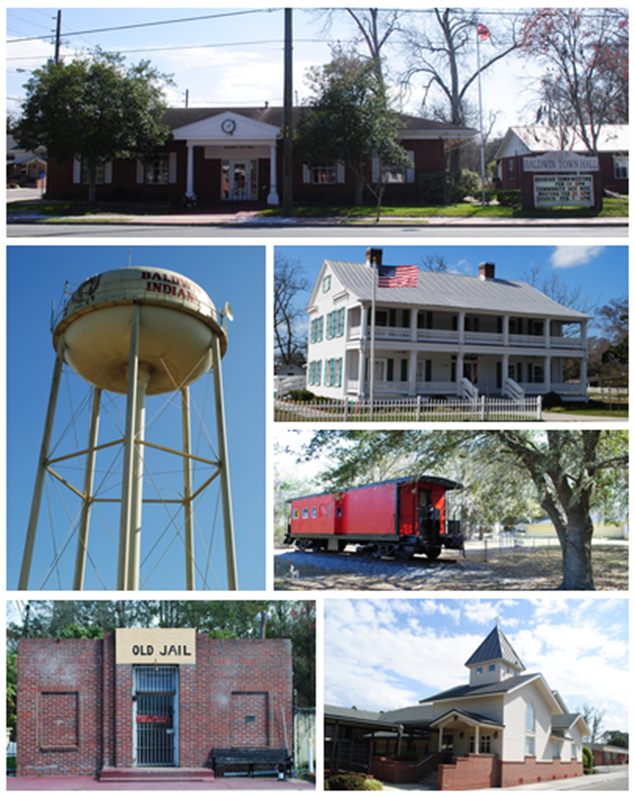

- Tar Heel, train #89, Richmond to Bostic, North Carolina
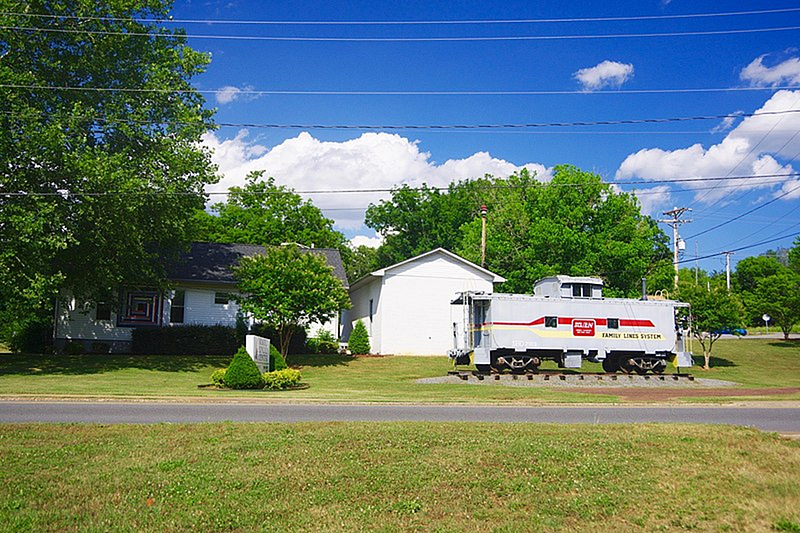

- The Capital, train #27, Richmond to Birmingham
- Iron Master, Birmingham to Atlanta
- Alaga, Montgomery to Savannah

- Pioneer, Montgomery to Jacksonville
- Razorback, train # 96 & # 95, Charlotte, N.C. to Monroe, N.C., and return.
Seaboard also had several fast, high-priority freight trains called Red Ball freights between various points on its system.
Well, we are almost there. One more article and you will have a broad knowledge of SAL. Please continue to read so that you have the rest of the story. Thanks so much for reading these articles and for any comments you may want to provide. On to article 6 and the rest of the SAL story. All Aboard!
If you liked this article, please clap for it, mark yourself as a follower of mine, and join me on my journey in writing as I contribute to various publications on medium.com.
The more time people spend reading my articles, the more it encourages me to continue writing. Many thanks for taking the time to read what I have written. Get access to unlimited articles here on Medium!
Your small membership fee supports Terry Day and other writers you read. You’ll also get full access to every story on Medium. What a bargain!
Where else can you read articles written by artistic and creative authors on so many different topics for $5 a month?
If you are not yet a medium member, please consider membership ($5 is a steal), and please mark yourself as one of my followers. My account on Medium is @tday597706. Many thanks in advance for your support!
Please join my email list, this allows you to be notified as soon as I post something new. My success in writing is dependent on readers like you who appreciate and support my writing. Thanks so much for taking the time to read and support me.