
What ‘The Three Little Pigs’ is Really About: Human Nature vs Human Civilization
Who are these pigs, and who is this big, bad wolf? Could their dynamic reveal human nature and human civilization superimposed?
The Wolf
Wolves are the creatures farmers learned to dread for their ability to kill livestock. And yet, the domesticated wolf is a dog: the farmer’s companion, protector of his animals, herder of his flock. Wolves and dogs are the same species, and can breed. Farmers know this. Hence there is a spectrum:
Wolf [Nature] <— —— — — > Dog [Civilization]
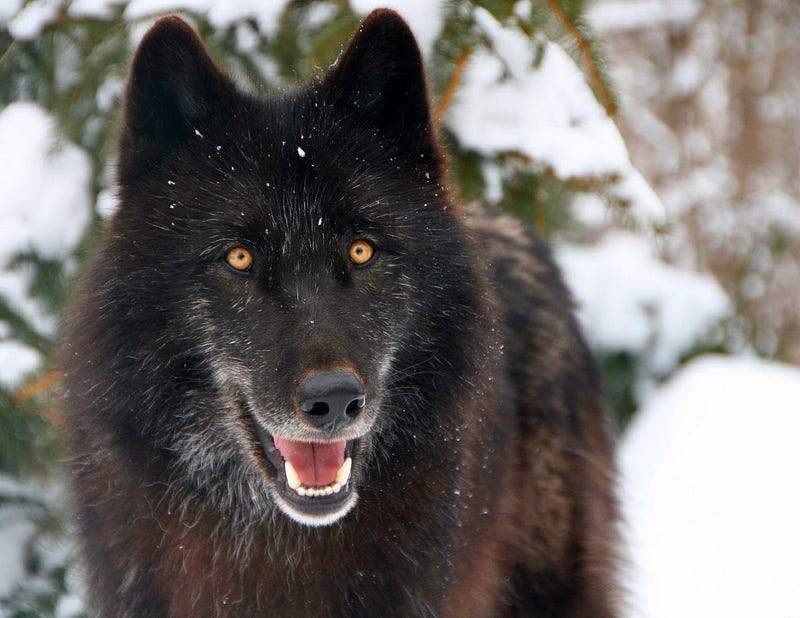
The wolf represents the wild version of a civilized animal used for agriculture, protection, war, hunting, rescue, transportation and companionship. Dogs have facilitated civilization and are the only creatures to have been bred for love. They combine pragmatic as well as emotional elements of humanity.
Dogs represent civilized humans in this motif. Wolves therefore represent those civilized humans’ roots: tribal humans from which civilization sprang, and whose feral origins it shudders to deny.
The Pigs
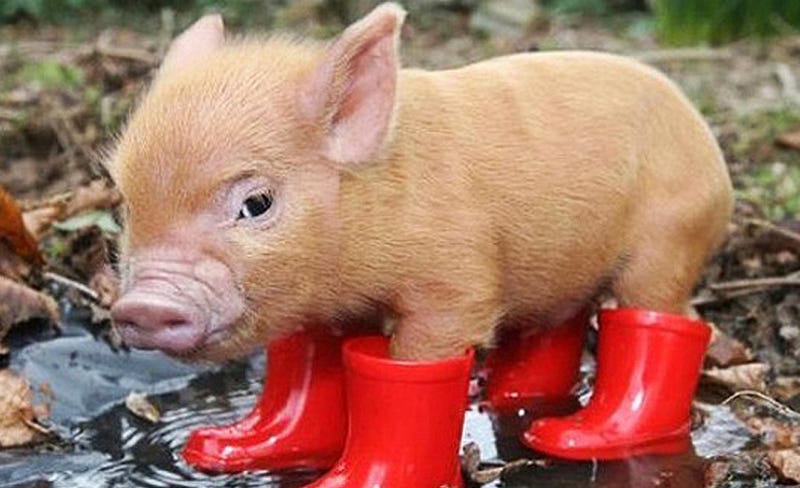
I have lived on a farm. The sheep are cute but truly mass-minded. The chickens are automatons rooted in instinct. The goats are more fun and rambunctious. The cows have the loveliest eyes but appear sedate so often, literally chewing nothing while staring into space. It is the pigs who are the most intelligent of the domesticated animals. Their screams sound nearly human and their teeth are the most similar to ours of any non-primate. They are also the most likely to be fed our food.
The Contrast
In the wolf you have the reminder of wild human nature. In the pig you have civilized humans. In the wolf attacking the pigs, you have human nature attacking human civilization. His destruction of homes is human nature’s attempt at destroying the progress of civilization through its wildness.
The Progression
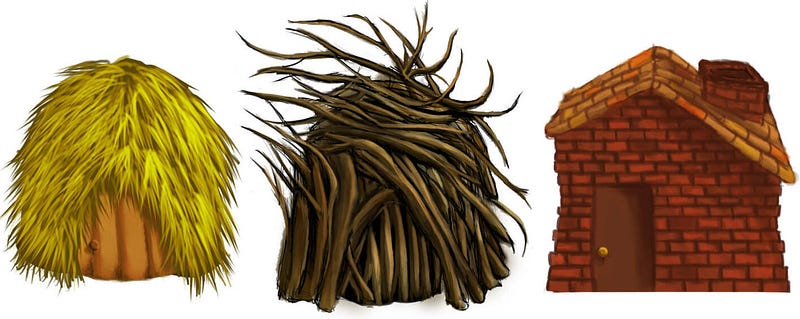
The pigs construct homes in progressively more developed materials: straw, wood, brick. This is a microcosm for the progress of civilization: from straw huts to wooden homes to brick buildings.
Appropriately, humans began building homes when we stopped being nomadic hunter-gatherers and started…agriculture. Hence the farmer protecting his domesticated pigs from the wild wolf is a key element to the fairy tale’s theme.
The Conflict
Human nature (the wolf) remains a more powerful element of the psyche than human civilization until the brick house. Consider that, unlike most fairy tales, The Three Little Pigs is not centuries old but actually was published in 1886 in England, just after the Industrial Revolution and in the very nation where it started.
This triptych imagery suggests epochs:
Straw Huts [Ancient]—Wooden Homes [Middle Ages]— Brick Homes [Industrial Revolution]
The Wolf is then not an animal, but the final phase of humans to consider:
No Home [Prehistorical Hunter-Gatherers]
The Wolf evinces no understanding of what a home even is. Rather than breaking in through a window, he physically climbs to the top of the house, which is how an animal might approach dominance. He then climbs down a chimney, showing no sense of the danger of fire, which is the very technology that separated humans from other animals.
You can request an article in the comments. You never know.
To follow me: https://medium.com/@myartman
To subscribe: https://medium.com/@myartman/membership