
Lyft Is Selling — But Not Providing — Masks and Sanitizer to Drivers
The company can’t easily give away materials without conceding that its drivers are employees
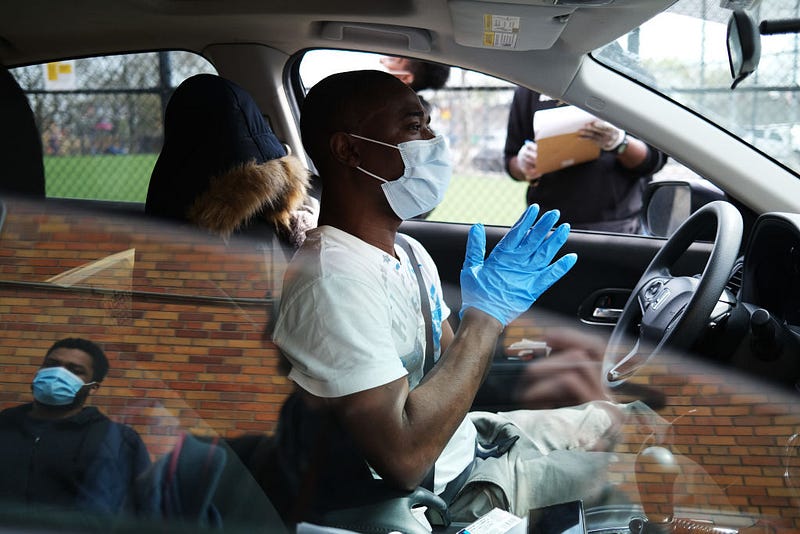
Lyft has launched a marketplace where drivers on the front lines of the pandemic can buy personal protective equipment (PPE) such as hand sanitizer spray and face masks. The shopping hub, known as the Lyft Store, has been live since June, according to the company.
Throughout the health crisis, Lyft has been criticized by gig labor advocates for failing to support drivers with little to no safety net. The CDC strongly recommends everyone over two years old wear face masks in public settings, as Covid-19 mainly spreads from person to person through respiratory droplets. In states like California, masks are required in public and high-risk settings.
Edan Alva, an Alameda-based Lyft driver, tweeted about the marketplace on Thursday, saying the company has “opened an online store to sell its workers the equipment that it should have provided them for free long time ago to protect them from COVID-19.”
The website isn’t accessible to all drivers right now, according to Alva.
“All cleaning supplies and safety products are provided to drivers either for free or at cost — Lyft does not make a profit on PPE,” a Lyft spokesperson told OneZero in an email. “The Lyft Store is a resource to provide millions of drivers across the U.S. easy access to cleaning supplies and face masks that have consistently been difficult to find.”
The website isn’t accessible to all drivers right now, according to Alva. “My understanding is that they only sent it to very few drivers so far,” Alva told OneZero.
Gig Workers Rising, an advocacy group of app and platform workers, tweeted a screenshot of aerosolized hand sanitizer reportedly being sold by Lyft for $5.99. By comparison, the same product is sold by CVS for $7.99, and Target for $8.99.
“To date, we have distributed over 150,000 sanitizing products and masks to drivers at no cost to them,” Lyft’s spokesperson said. “Our most active drivers will now receive a free safety kit, consisting of a reusable cloth face covering, sanitizer, and disinfectant.”
Ride-share drivers have been calling on the company to provide these products for free, given the nature of their work which exposes them to strangers. While Lyft and Uber have provided some PPE to drivers at no charge, they’re likely unwilling to distribute these products regularly at least in part to maintain they are not employers. Other gig economy companies, such as the home cleaning service Handy, have similarly refused to supply necessary goods like cleaning products for free — instead selling them to workers — to avoid being seen as providing workers with supplies, which can be used as evidence in a lawsuit alleging that the workers are employees.
“They distributed ridiculously low amounts of PPE items to few drivers for PR purposes, and created this makeshift online store which only very few drivers got access to.”
In March, an Uber driver in Queens died from Covid-19 after transporting a sick passenger from New York’s JFK airport. Both Lyft and Uber now require face coverings to be worn by drivers and riders.
Since the pandemic’s spread in March, Lyft and Uber drivers have struggled to obtain protective gear like masks, hand sanitizer, and antibacterial spray — necessities that safeguard drivers and riders from the coronavirus. These companies expect drivers to regularly clean their vehicles, but offer little flexibility to actually stop and sanitize their cars. After consistent pressure from drivers to provide PPE, Lyft announced in early March that it would distribute free hand sanitizer and face masks at its hubs (or service centers) around the country. But by the end of March, Lyft had closed many of its hubs due to the virus, leaving drivers unable to access these items.
“They distributed ridiculously low amounts of PPE items to few drivers for PR purposes, and created this makeshift online store which only very few drivers got access to,” Alva said.
Gig economy workers are technically contractors and, because of their employment status, lack benefits such as paid breaks and unemployment insurance. Lyft and Uber have spent millions of dollars fighting to keep their drivers classified as contractors, even amid the pandemic. In March, when drivers began getting sick, Lyft, Amazon, and Uber launched funds for workers diagnosed with Covid-19 as a stopgap measure. However, OneZero reported that many drivers were denied funding, even when sick, and told their situations did meet the qualifications for compensation. Gig workers eventually won the right to apply for unemployment through the $2 trillion federal stimulus bill, which has allowed companies like Lyft to continue denying benefits to drivers.
Both Lyft and Uber currently face a California lawsuit under the landmark labor bill known as AB5, which aims to reclassify gig economy contractors as employees.


