
Consumer Activism Is Screwing Up Society and Society Needs to Fight Back
Three things you can do that will help make consumer activism start working for society rather than against it
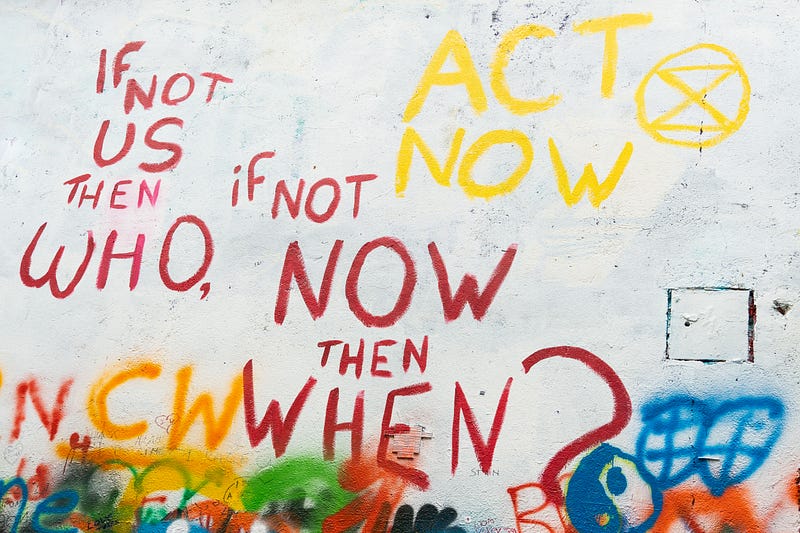
One of the biggest problems facing the modern world, a problem which has been greatly exacerbated by the creation of the Internet, is the fact that it pays far more to divide people than it does to unite them.
This is why the activist scene is so blighted with the scourge of the consumer activist. A consumer activist is a person who does not aim to promote change, they just aim to make money off being an activist.
For example, a consumer men’s rights activist does not aim to promote equality and bridge the divide between men and women, they aim to increase it for the simple reason that it is easier to make money by creating content along the lines of, women are cruel and men should rule, than it is to make money bridging the divide between men and women and bringing them together.
The same is true for consumer feminist activists, it is simply easier to make money creating content along the lines of, men are cruel and women should rule, than it is to make money bridging the divide between men and women and bringing them together.
The same goes for everywhere, in politics, the world of dating, the world of climate change; everywhere there is activism, it pays more to divide rather than bring people together.
It doesn’t have to be this way
The Internet is what we make it, that means through our actions we make the Internet what it is, no one else. That means we, through our actions, decide what those who wish to make money from the Internet do to make that money.
That means the consumer activist does not have to be a force for division, which they presently are, they could be a force for good. But that will only happen if we make it profitable to be a force for good.
It might seem self-defeating to argue that making doing good profitable is the best way forwards. But the reality is, it is human nature to seek profit and if there is profit to be found somewhere, lots of people will go there in search of it. And as the saying goes, if you cannot fight them, join them.
How to join them
We cannot blame people per se for selling division in the sheer enormity that it is now sold, the reason being the fault is not them per se but those who have created a world where division is so profitable.
That, unfortunately, is all of us. We all have created this world. It is easy to blame social media companies et cetera, but their aim is profit, how they get that profit I doubt really bothers them. Which puts the blame on us. All of us.
Self-learning algorithms have created this world, and they have created this world because they give us the content we most interact with, and the content we most interact with are the ones selling hate and division.
So rather crazily, it is self-learning algorithms that are teaching large numbers of people that selling hate and division will earn them the most money, and we are all teaching those algorithms to teach people that.
Not on purpose, but because of an unfortunate human trait of being more drawn to things that anger us than appease us. So, if something angers us, we interact with it, if something appeases us, it calms us down and so we typically ignore it.
That’s why the defining question of the 21st century is point-blank how to make the Internet a place where promoting hate, anger, provocation, and division are not the most profitable ways of making money. Because that is the sole reason why so many people are selling such things. Not because they wish to spread hate and the like, but because they have been lulled in by profit.
So the problem is not people, but the environment created by self-learning algorithms. That’s why we need to start working together to combat these algorithms and make hate and partisanship less profitable than unity and understanding.
That means we need to start teaching the algorithms to start working for us rather than against us. To do that, we need to change the way we interact with the Internet.
Here are three ways we can do this and start teaching the Internet to work for us rather than against us.
1. Start calling out those who deliberately try to provoke us — for deliberately trying to provoke us
Typically, when a consumer activist has succeeded in provoking us, we get furious with what they have said, but not in a productive way. For example, a consumer feminist writer will typically leave men feeling furious at women, and women feeling furious at men, and this will be seen in the comments feed.
Instead of engaging in this debate, call out the writer for writing a piece that rather than helping bridge the divide between men and women, has instead helped to fuel it.
The same goes with a consumer men’s writer, who will typically leave women feeling furious at men and men feeling furious at women, call out the writer not for what they have said, but for what they have done, fuelled the divide rather than attempting to bridge it.
And the same goes for political writers of any side, climate change activists both for and against, everything. Change comes by bringing people together, not dividing them. A true activist who wants change wants to get the people on the opposing side on their side, that does not happen by infuriating them. So call out those who deliberately through their rhetoric do this.
2. Never just listen to one side of the argument — doing so is what is fuelling the partisan activist
Any time you read or watch something that tells just one side of the argument, make it your personal endeavour to read the other side of that argument. When you do that, it is amazing how the picture can completely change.
Not always, for example, the Russian side of the argument makes clear that the Ukrainian side is true. But that’s the point, when you read both sides you have a good chance of finding the truth, when you read one side, all that is going to happen is that you are going to be indoctrinated against the other side, regardless of whether that is the right side.
When that happens you increasingly read ever more extreme partisan information, which makes commentators want to sell you ever more extreme partisan information, creating a perpetual cycle that traps you in a world of extreme division.
So if a person has attempted to sell you a partisan side of the argument, make it your personal endeavour to read the other side. It’s amazing how when you start doing this, you find yourself being on the side of right more times than wrong.
3. Never cancel people just because they think differently than you — doing so promotes partisanship
Having an opinion should never be a crime, and sharing an opinion should never be a crime, that is unless that opinion calls for violence or suppression.
As a society, once we start accepting again that people are welcome to have their own opinion, and that differences of opinion are no reason to not be friends, the world starts becoming a better place again.
This is why calling out the people who tell us to cancel people for their opinion, no matter what it is, are the people who need to be cancelled, not those with a difference of opinion to us.
Again, the only exception is those who call for violence and promote violence.
But for those not calling for that, even if we think very differently from them, we must endeavour to let them have their voice. We don’t have to listen to that voice, but let them have it and don’t cancel them from society just because they do have it.
Some people may take exception to this, and argue that some voices should be silenced; however, one of the most powerful voices for female equality is the argument against it i.e. if you listen to the argument for female equality, and then you listen to the argument against it, you hear two arguments for it.
But, if you try to cancel people for promoting one side, you will make certain that those people never listen to both sides, and thus double down on their own side. In this case, that would mean the people promoting the argument against female equality would never change sides.
That’s why cancelling people for their opinions can be so self-defeating and so must be fought against, it doesn’t stop people from having the opinion, it just makes them less likely to change it.
Final words
All in all, learn to engage in critical thinking. All of the previous three points are key elements of critical thinking, something that is so imperative to navigating the modern world, and all the many agendas that exist within it, that it should be taught as one of the main subjects in schools.
But as it is not, endeavouring to learn how to become a critical thinker is hands down one of the best ways to stop people from manipulating you and flooding you with hateful and divisive rhetoric.
That means it is one of the best ways to start taking the fight to the algorithms and making them start to give people beneficial content, rather than divisive and negative content — which even ignoring the division it creates, ruins everybody’s mental health.
The reason for why is that it makes you ask these questions:
- How do I feel having read this article or having watched or listened to this commentator?
- Why does the commentator/writer want me to feel this way?
- What is the benefit of me feeling this way, will it help promote change or will it simply help promote division?
The more you ask these questions, the better you get at identifying who is worth listening to and who is not. The better you get at doing this, the more you help to create a world where the most profitable content is the content that best serves humanity rather than divides it.
That’s all from me, thanks for reading! If you enjoyed this post, you may also enjoy the following:
How to Make Your Social Media a Positive Place
How to Stop People Taking Advantage of You
How To Stop People From Manipulating You
To learn more about me see this link, to support me click the link below:



