
Blood from Stone
Stones and bones hide memories: July’s Prose Poem Prompt
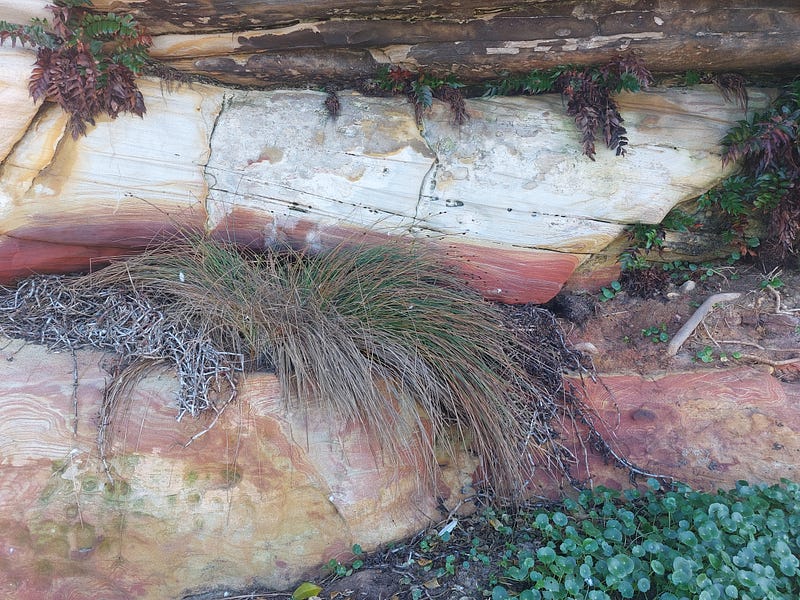
Stalwart we stand, keeping watch over this ancient land. For millennia, we have endured — our forms, shaped and shifted by wind and water — or by the earth’s deeper chaos. We are the weary witnesses to time’s incessant passing.
Our lives are hewn out of these rocks. Hewn into these rocks. We cling to them like oysters. Our forefathers and mothers — horded into the bellies of lurching ships, sailed across treacherous seas to this place. Deposited onto these shores, like flotsam and jetsam — we carved our streets, steps, hearths to warm our hands by — from barren rock.
Daughter of a quarryman — yet I was not born on solid ground. I walk — like I’m treading water — like I could slip down — slip away.
Like oysters, we’re a tenacious creed. Chiselling this town out of stone — this strange and foreign continent — where we’re tipped upside down like the bottles of rum we seek solace from — yet preferable to hanging in our homeland — death sentences narrowly escaped for crimes petty, monstrous and ill-blamed. The sweat and blood of us all has mingled; the petty with the monstrous, the monstrous with the ill-blamed. Mingled together on these rocks, as we hammered and pick-axed and blasted our way to a new life.
Like flotsam and jetsam, we’ve not shifted far from the shores we washed up on. Follow our streets — trickling and winding their way inland from Sydney Cove, like salty rivulets on a low-tide beach. Yet who are we to tenuously try to assert order on the wildness of this interminable country —
Sometimes, I think I hear the stones speak. When we are all asleep. Speaking stories in the dark — as they have since the beginning of time — time upon a once —
Stalwart, we stand. We have seen the passing aeons of beasts who shook the skies with their cries. And one day, the sky screamed back at them — silencing them forever. Yet, still, we endure.
In this rough crack of existence we’ve carved out for ourselves, a tireless mutiny of salty waves assaults the stony shore. The memory of all those months at sea — tossed about in all that undrinkable water — passed down from father to son; afflicting the men of this town with an unquenchable thirst. A thirst, coursing in the blood — begetting a relentless fever. Many a body has died from this thirst. Or been consumed by its fever.
Between rock and salt water, the tongue has little place to slake its thirst.
We became a town of pubs, a town of drinking dens — for the work was thirsty and the men thirstier still. Need is a hasty instigator. Their thirst for liquor, bottomless — like the quarry of my childhood nightmares.
Daughter of a quarryman — yet I was not born on solid ground. Born in a house built over the old quarry — and I dream of a dark craggy pit, yawning beneath the floorboards. The tap-tap-tapping, waking me. Kneeling down in my nightgown, my eye to a knothole in the floorboard. The horror. Dozens of pale miners in ragged clothes, clinging to the sides of the quarry. Their skin glowing in the dark, like poisonous fungi, as they inch their way up, clinging to rocks, hauling themselves up with their ropes, trying to rise from their mass grave. Closer and closer. Gasping for air — and I wake, screaming — choking, too, on my bedcovers.
Other nights, I dream of our house — shuddering and falling like a boulder into the gaping maw of the quarry. Falling and falling, and us inside it.
So I walk — like I’m treading water. No matter where I stand, the quarry is just beneath me. This thin crust of mud and cobblestones can crumble — slip away underfoot, and down I’ll tumble — down into the waiting darkness.
For I was not born on solid ground.
We made a home from what first resisted us, what shut us out. Walls, steps and houses built of sandstone. Stones, whorled with colours of cream, ochre and rose. Has the rose always been so deeply hued, or did we add our blood to the blocks as we made them?
To get blood out of a stone, perhaps you have first to bleed on it.
Our lives are hewn out of, and into these rocks. We cling to them like oysters. Or something more fragile — something more like seaweed. One day, while we’re about the business of convincing ourselves we belong in this land — that we have earned our place — the waves will rise, and wash us all away.
Back out to the sea where we came from.
Stalwart, we stand. We were shelter and sacred to the dark-skinned ones, who lived in harmony with the land. We let them paint their stories on our skins — for they know how to listen when we speak.
© Melissa Coffey July 2022
The history and story of Sydney Cove (known as The Rocks) has fascinated me since I visited there as a teenager with my father. Entranced by the old buildings, narrow cobbled laneways and remnants of early cottages, hewn into natural stone walls, I always spend time there when in Sydney. My British father’s family came by ship in the fifties from England and lived in Sydney for a time, so it’s no stretch to imagine that further back, I may have colonial ancestors. And of course, a place of such beauty and natural resources had great significance to our indigenous people — their buried history continues to emerge.
This month’s Prompt: Stones and Bones Hide Memories
For this prompt, let a place you know well — or one that has left an impression on you — speak its history/story. You can either do this through: characters (imagined/ real), animals, or by animating an inanimate element of your place or landscape— allowing it to speak. Here, I’ve used two voices— an imagined first-generation settler, growing up in The Rocks, and the stones themselves. Go magical realism, poetic, mythic, or any other style you choose! You could use a little dialogue in the prose, or make the whole piece a monologue.
As is the tradition in Scrittura, please tag me in your post. We had so many fantastic prompts last month. I can’t wait to see what you all come up with!
J.D. Harms Jane Smallwood Ilaria Mangiardi Jeff Langley Samantha Lazar Joe Luca Joseph Lieungh Barry Dawson Jr. IV Ann Marie Steele Andrea Juillerat-Olvera Annine Massaro Rowen Veratome Lori Lamothe Laurie Perez Sally A Mortemore Kristie Darling Suzanne V. Tanner Mimi Bordeaux Alice Armour A.X. Bates Paroma Sen Era Garg Josie Elbiry Jenine Bsharah Baines Wry Welwood Danielle Loewen Eleanore Christine Lennie Varvarides Caitlin Rebecca Pablo Pereyra Sydney Duke Richey Sydney J. Shipp Caroline Mellor Erika Burkhalter Rachel K. Gause Amy L. Bernstein Zuri Pommerenk Breathe & Be Still Patrick Metzger Georgiana Petec Connie Song Michelle Berry Lane Betsy Denson Niki Madore Mark Tulin I am not a Robot Viraji Ogodapola Marilyn J Wolf Rhonda Marrone Enne Baker
Follow Melissa Coffey for thoughtful essays and provocative poetry & fiction. Not a Medium member? Join with my referral link to access all my stories & so much more. Find your voice & others you’ll want to hear.
Last Month’s Prompt:


