
How ‘Funny or Die’ Changed Hollywood’s Relationship to the Internet
15 years ago, the web video channel showed TV stars the potential of YouTube
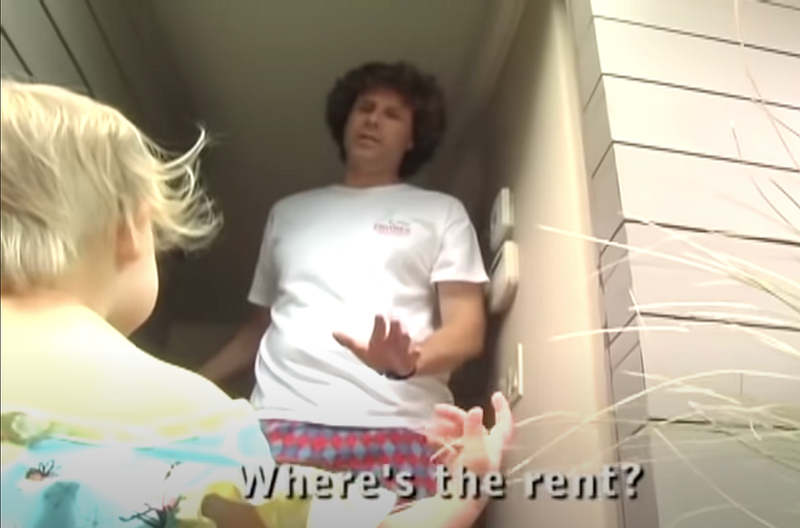
When the landlord knocked on the door, Will Ferrell became nervous and his friend Adam McKay threatened to leave. Ferrell’s rent was late and he knew the landlord would be pissed. Reluctantly, he goes to the door and opens it. The camera, pointing nearly vertically downward, reveals Pearl, Adam McKay’s two-year-old daughter playing the role of the angry and drunk (in the way babies always seem drunk) landlord.
“The Landlord,” directed by Adam McKay, was the first short uploaded to Funny or Die in April 2007. 15 years ago, Ferrell, along with co-founders McKay, Mark Kvamme and Chris Henchy, had seen the growing success of web video across the internet and decided to enter the wild world of web television.
Before influencers, Vine stars, and TikTokers, there was a brief period of time where episodic and serial web video was all the rage. Web television and web series, defined by non-traditional storytelling and short-form plots that eschewed formulaic traditional media, gained popularity after celebrities and major producers realized the web’s possibilities.
Web television actually began in the 1990s with websites like Pseudo.com and AtomFilms.com and episodic Flash animated series like Homestar Runner, but 2007 was a completely new era. With growing broadband access, corporatization of platforms, server growth and a growing creator space, everyone wanted to play with online video. Funny Or Die ushered in a new model of production, one that incorporated celebrities and then later, native sponsored content.
Ferrell and McKay weren’t the first to enter the web video space. Years earlier, Dan Harmon’s Channel 101 fostered new programming and encouraged new creators to push boundaries with a film festival style site. Channel 101's strict time limit of five minutes forced creators to think outside the box.
One of the most famous success stories from Channel 101 is Andy Samberg, Jorma Taccone and Akiva Shaffer’s Lonely Island. The trio made sketches and songs so successful, Lorne Michaels hired the team to produce “digital shorts” on Saturday Night Live in season 31. In December 2005, before YouTube was even a year old, Lonely Island’s “Lazy Sunday” was uploaded to YouTube and received millions of views, resulting in showing YouTube’s power was by comparison to other video hosts. Web video had extended from digital spaces to mainstream entertainment and back again.
YouTube grew with such speed and intensity that thousands of similar web video sites could no longer compete. The big players of web video were all becoming consolidated or shut down, and creators were funneling into stable and recognizable platforms. At the time, users mostly competed for attention on the big outlets: YouTube, blip.tv, Daily Motion and MySpace (really).
It was only a matter of time before celebrities saw online video as a space to create content away from advertisers and pesky executives telling them how to produce their content.
Adopting some of Channel 101 and AtomFilm’s methods, Funny Or Die accepted submissions of comedic content and let users vote on what’s funniest and should stay on the platform. Unlike Funny Or Die’s predecessors, Ferrell and McKay used their connections to get more celebrities into the space.
Some early Funny or Die series continued on for years. Shows like Drunk History became a place for celebrities to try on some historical costumes and Zach Galifinakis’ Between Two Ferns would let celebrities practice their improv through unhinged interviews. Funny Or Die was making television that, at the time, couldn’t be seen on the television set. Short form, odd adult content, could only succeed online. (Adult Swim would later change this paradigm.)
However, Funny Or Die wasn’t that good of a sign for early web video creators. Celebrities have an obvious and distinct advantage in the attention economy, and using the web to flex their new styles only helped funnel viewers into watching traditional media stars in new media environments. By moving into the web space, celebrities could occupy all the media environments.
Also in 2007, former CBS executive Rob Barnett would found MyDamnChannel, creating another outlet for higher end web video aggregated on one site with celebrity stars. The content on Funny Or Die and MyDamnChannel were creating online studio verticals like the old days. The downside is that the traditional structures were already exclusive and rebuilding them online doesn’t help independent creators, especially those marginalized by traditional media, to have a voice.
This isn’t to poo-poo Funny Or Die, as a lot of the channel’s content was exceptional and fun. Before Hamilton was all the rage, Michael Cera played the doomed politician in the first episode of Drunk History, acting out an extraordinarily drunk Mike Gagliardi’s tale of Hamilton’s duel. When President Obama had a choice of what web channel to promote the Affordable Care Act, he chose Zach Galifinakis’ Between Two Ferns.
For a year or two, it was exciting to see celebrities and independent creators share the same space as equals. It kind of leveled the playing field and helped launch the web television industry which inspired thousands of young creators to make web television, vlogging, and influencing a career.
It’s important to note that it wasn’t just Funny Or Die and MyDamnChannel that introduced celebrities to the landscape of web television. In November 2007, the Writers’ Guild of America would strike for over three months. During that period, celebrities appeared all over internet where they couldn’t be accused of being a scab — they were merely having fun.
We may love quirky television in 2022 and television channels like Adult Swim have leaned into hybrid entertainment content that works on both the web and on television, but there was a point when it all began. From a screeching toddler demanding rent from Will Ferrell, to Jack Black playing Benjamin Franklin, to Zach Galifinakis making fun of Justin Bieber, Funny Or Die helped make our new media environment.


