avatarAli

Free AI web copilot to create summaries, insights and extended knowledge, download it at here

5160

Abstract

s through an incredibly entertaining method. Think about it, isn’t it scary how most students first hear the words derivative and integral at the ages of 16 or 17?</p><div id="4d48"><pre>To summarize, when <span class="hljs-keyword">a</span> child who has <span class="hljs-built_in">read</span> this book <span class="hljs-keyword">first</span> takes <span class="hljs-keyword">a</span> Calculus class, <span class="hljs-keyword">it</span> will feel like meeting <span class="hljs-keyword">an</span> old friend rather than <span class="hljs-keyword">a</span> <span class="hljs-built_in">new</span> enemy. This will surely make many <span class="hljs-keyword">of</span> <span class="hljs-keyword">the</span> ideas far easier <span class="hljs-built_in">to</span> grasp.</pre></div><h2 id="84a9">ABCs of Mathematics by Chris Ferrie</h2><figure id="f81b"><img src="https://cdn-images-1.readmedium.com/v2/resize:fit:800/1*LIaCu8V_2XM-mX4ZtT7FnA.png"><figcaption><a href="https://amzn.to/39KBLnu">ABCs of Mathematics by Chris Ferrie</a> | Read the reviews on <a href="https://amzn.to/39KBLnu"><b>Amazon.</b></a></figcaption></figure><p id="1633">As per the title, <a href="https://amzn.to/39KBLnu"><b>ABC’s of Mathematics</b></a> teaches children the alphabet while, similar to Calculus for Infants, introducing them to fundamental mathematics concepts cutely and enjoyably.</p><p id="9c4c">The book is even more special because it is aimed at three different age groups simultaneously. The letter and the mathematical term are in big, bold letters at the top of the page. Underneath that is a visual explanation of the term, and finally, at the bottom is a more detailed definition and explanation for older children.</p><div id="313e"><pre>If we consider <span class="hljs-keyword">that</span> children ask <span class="hljs-keyword">some</span> <span class="hljs-keyword">of</span> <span class="hljs-keyword">the</span> most interesting questions, you should be prepared <span class="hljs-keyword">to</span> hear <span class="hljs-keyword">some</span> incredibly wild <span class="hljs-keyword">and</span> unpredictable questions <span class="hljs-keyword">from</span> your child. For example, <span class="hljs-keyword">if</span> you <span class="hljs-built_in">say</span> “Golden Ratio” <span class="hljs-keyword">for</span> <span class="hljs-keyword">the</span> letter “G,” you are going <span class="hljs-keyword">to</span> have <span class="hljs-keyword">to</span> explain <span class="hljs-keyword">it</span> <span class="hljs-keyword">to</span> them, <span class="hljs-keyword">or</span> <span class="hljs-keyword">if</span> you introduce them <span class="hljs-keyword">to</span> “infinity” <span class="hljs-keyword">for</span> “I,” you should be prepared <span class="hljs-keyword">to</span> have a fun chat <span class="hljs-keyword">about</span> endlessness <span class="hljs-keyword">with</span> your child.</pre></div><h2 id="aa88">Here We Are: Book of Numbers by Oliver Jeffers</h2><figure id="190c"><img src="https://cdn-images-1.readmedium.com/v2/resize:fit:800/1*-AT1RzFvPlvQg1J6vvQ65A.png"><figcaption><a href="https://amzn.to/39IVuE0">Here We Are: Book of Numbers by Oliver Jeffers</a> | Read the reviews on <a href="https://amzn.to/39IVuE0"><b>Amazon.</b></a></figcaption></figure><p id="9ad2">We first met Oliver Jeffers through his book <a href="https://amzn.to/39IVuE0"><b>“Here We Are”</b></a> and instantly became obsessed. My little girl would ask me to read it to her countless times a day. <a href="https://amzn.to/39IVuE0">Here We Are: Book of Numbers</a> is equally incredible, especially its cute illustrations.</p><p id="d65d">In this book, Oliver Jeffers attempts to teach children the numbers one to eleven through various concepts. Number “one” is shown as “one” Earth, and number “two” is that Earth is made up of two separate things, land and water. It not only teaches children about mathematics but also introduces them to our world, which is a genius approach.</p><div id="8685"><pre>Oliver Jeffers’ books are <span class="hljs-keyword">a</span> must-have <span class="hljs-keyword">for</span> <span class="hljs-keyword">any</span> child’s library. When kids <span class="hljs-built_in">read</span> his books, <span class="hljs-keyword">it</span> is almost <span class="hljs-keyword">as</span> <span class="hljs-keyword">if</span> they journey <span class="hljs-keyword">into</span> them rather than simply <span class="hljs-built_in">read</span> them.</pre></div><h2 id="665d">A Hundred Billion Trillion Stars by Seth Fishman</h2><figure id="a7e9"><img src="https://cdn-images-1.readmedium.com/v2/resize:fit:800/1*997P2Xt7DkqBa0fuECPu2A.png"><figcaption><a href="https://amzn.to/3tT7slo">A Hundred Billion Trillion Stars by Seth Fishman</a> | Read the reviews on <a href="https://amzn.to/3tT7slo"><b>Amazon.</b></a></figcaption></figure><p id="5565"><a href="https://amzn.to/3tT7slo">A Hundred Billion Trillion Stars</a> was written to help kids understand massive numbers using their imagination. It even says in the book, “The whole world is filled with big, enormous, gigantic, humongous, incredible numbers.”</p><p

Options

id="9434">Seth Fishman even found a brilliant way for children to use their imagination. For example, he says, “the Sun is just one star, and there are 10000000000000000000000 stars just like it in space.” At this, a child will imagine of space filled with thousands of giant Suns.</p><div id="a133"><pre>I find <span class="hljs-keyword">it</span> incredibly important <span class="hljs-built_in">to</span> teach kids about minuscule <span class="hljs-keyword">and</span> massive numbers because <span class="hljs-keyword">in</span> college when students are learning about limits <span class="hljs-keyword">using</span> <span class="hljs-keyword">the</span> epsilon-delta formula, they have <span class="hljs-keyword">a</span> very hard <span class="hljs-built_in">time</span> grasping such topics. However, finding <span class="hljs-keyword">a</span> <span class="hljs-built_in">number</span> smaller than epsilon isn’t nearly <span class="hljs-keyword">as</span> hard <span class="hljs-keyword">as</span> <span class="hljs-keyword">it</span> looks. Anyways, back <span class="hljs-built_in">to</span> <span class="hljs-keyword">the</span> books.</pre></div><h2 id="fae1">Swirl by Swirl: Spirals in Nature</h2><figure id="f8a3"><img src="https://cdn-images-1.readmedium.com/v2/resize:fit:800/1*j8HBzG23y1aTt2uPvff2mQ.png"><figcaption><a href="https://amzn.to/3OeAaFw">Swirl by Swirl: Spirals in Nature</a> | Read the reviews on <a href="https://amzn.to/3OeAaFw"><b>Amazon.</b></a></figcaption></figure><p id="d3c5">The Golden Ratio is one of the most popular mathematics topics, and the nautilus shell is the most famous example. That is why Swirl by Swirl: Spirals in Nature is a brilliant introduction to the subject of spirals.</p><p id="4265">I am certain that as soon as children finish reading this book, they will run outside and look for spirals themselves. To top it off, the illustrations in the book are incredibly mesmerizing.</p><h2 id="06fd">The Boy Who Loved Math: The Improbable Life of Paul Erdos by Deborah Heiligman</h2><figure id="0db9"><img src="https://cdn-images-1.readmedium.com/v2/resize:fit:800/1*p07YVbTcmSG62tDQ736kjg.png"><figcaption><a href="https://amzn.to/3xKeTwr">The Boy Who Loved Math: The Improbable Life of Paul Erdos by Deborah Heiligman</a> | Read the reviews on <a href="https://amzn.to/3xKeTwr"><b>Amazon.</b></a></figcaption></figure><p id="09cb">Paul Erdos is a genius who has dedicated his entire wealth and life to mathematics. He is someone who deserves more recognition than Justin Bieber and all of those rappers who curse every minute of each of their songs.</p><p id="bd8b">The Boy Who Loved Math is a children’s book about the childhood of a mathematical genius and how his love more math came to be so strong. I especially like this book because instead of portraying mathematics as something to be afraid of, it shows a child who became friends with math and used it to achieve his dreams.</p><div id="2866"><pre>This book truly <span class="hljs-keyword">is</span> a hidden treasure.</pre></div><h2 id="00e0">On a Beam of Light: A Story of Albert Einstein by Jennifer Berne</h2><figure id="244e"><img src="https://cdn-images-1.readmedium.com/v2/resize:fit:800/1*V-KIoc7qAMxIjnhkM3Nivw.png"><figcaption><a href="https://amzn.to/3y6OytM">On a Beam of Light: A Story of Albert Einstein by Jennifer Berne</a> | Read the reviews on <a href="https://amzn.to/3y6OytM"><b>Amazon.</b></a></figcaption></figure><p id="7171"><a href="https://amzn.to/3y6OytM">On a Beam of Light</a> is a book about the childhood of Albert Einstein that should be in every child’s library. I read this book to my daughter when she was just two years old, and she was completely mesmerized by it.</p><p id="adb1">This book is even more valuable because it explains a kid’s curiosity. While quiet, little Einstein’s ability to question everything around him is a common trait in children. However, this book might influence children to move toward different worlds they would normally not question. You never know; maybe they will start questioning space at the simplest.</p><div id="8c25"><pre>Note <span class="hljs-number">1</span>: <span class="hljs-keyword">Beyond </span>Euclid! is my weekly newsletter that <span class="hljs-keyword">brings </span>you only high-quality math <span class="hljs-keyword">and </span><span class="hljs-keyword">science </span>stuff to ensure you are having a good week. Please do yourself a favor <span class="hljs-keyword">by </span><span class="hljs-keyword">subscribing </span>to <span class="hljs-keyword">Beyond </span>Euclid <span class="hljs-keyword">and </span>enjoy it! <span class="hljs-keyword">And </span>if you can <span class="hljs-keyword">be </span>a member <span class="hljs-keyword">and </span>support my work, that would <span class="hljs-keyword">be </span>awesome! Thank you!</pre></div><div id="98b9"><pre>Note <span class="hljs-number">2</span>: I <span class="hljs-keyword">get</span> commissions <span class="hljs-keyword">for</span> purchases made through links <span class="hljs-keyword">in</span> <span class="hljs-keyword">this</span> post.</pre></div></article></body>

7 Wonderful Math Books I’ll Read to My Children This Summer

Photo by Annie Spratt on Unsplash

Math is a science founded on definitions. So is there a definition that encompasses all kids in the world? I think there is. Children are the only people in the world who want only one thing out of others, love.

We want everyone in the world to learn math, even putting every person through a learning system with a dense math curriculum at a young age. I believe this is the right thing to do, but don’t misunderstand; I do not think our education system is flawless, and I only believe in the theory of teaching children math from a young age.

As the father of two children, I set out to help my kids love math this summer. I decided that the best way to do this was to use the colorful world present in the books they are already in love with. That is why I have worked on coming up with a list of books I will read to my children again and again.

Again, my reasoning for this is not to teach my kids mathematics but to show them how much fun the idea and theory of math can be and, naturally, to help them love it. Most challenging, however, is to do this with books that do not depend on farm animals to teach.

Most of the books below do not teach mathematics but rather show that math is not a ghost to be afraid of, that it is something anyone can learn, and that through it, one can discover incredible things. It uses mathematics to introduce the children to some of the most famous mathematicians.

I hope that I can be of help to parents with similar worries.

Before I get started, I would like to suggest Audible for those of us who are not the best at reading. Whether you are commuting to work, driving, or simply doing dishes at home, you can listen to these books at any time through Audible.
Introductory Calculus For Infants by Omi M. Inouye
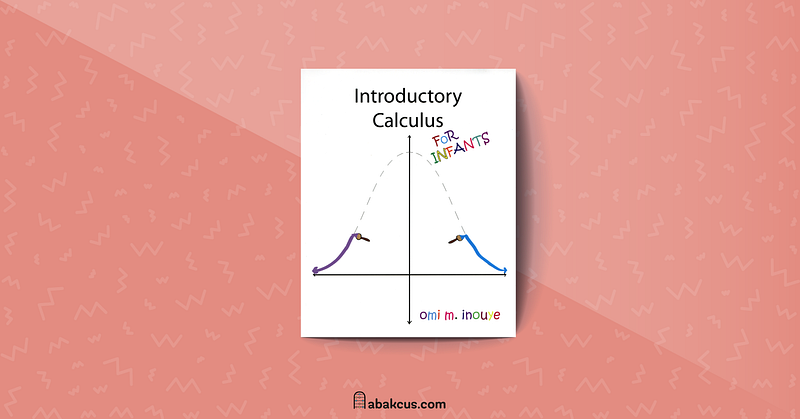
Introductory Calculus For Infants by Omi M. Inouye | Read the reviews on Amazon.

While Calculus is centered around a fundamentally simple idea, you can’t teach it to 3–5 year-olds. However, you can introduce them to integrals using the gamification model. I think it would be incredibly fun for an infant to see that a pizza cut into eight slices and rearranged can turn into a shape that resembles a rectangle or that you can almost fill the inside of a circle with infinitely smaller triangles. I especially think that once you mention how Pixar characters are drawn using similar methods, you will truly pique their interest and curiosity.

Back to the book, however. Yes, Introductory Calculus For Infants doesn’t teach kids much Calculus, but it does teach them the alphabet. Even better, though, is instead of using “dog” for “D,” it uses “derivative.” In short, it familiarizes children with mathematics through an incredibly entertaining method. Think about it, isn’t it scary how most students first hear the words derivative and integral at the ages of 16 or 17?

To summarize, when a child who has read this book first takes a Calculus class, it will feel like meeting an old friend rather than a new enemy. This will surely make many of the ideas far easier to grasp.

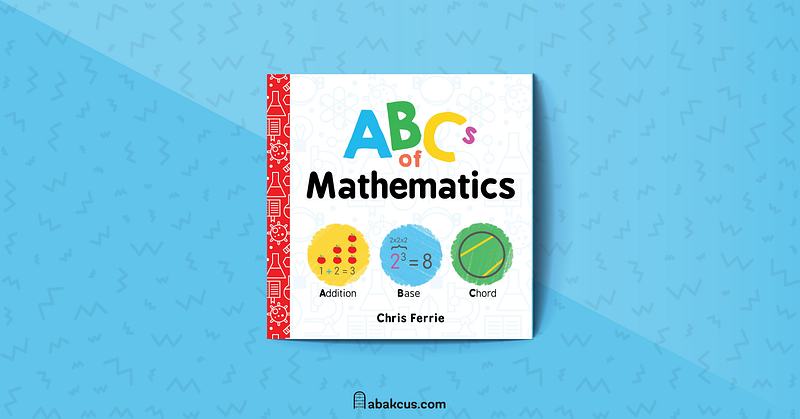
ABCs of Mathematics by Chris Ferrie

ABCs of Mathematics by Chris Ferrie | Read the reviews on Amazon.

As per the title, ABC’s of Mathematics teaches children the alphabet while, similar to Calculus for Infants, introducing them to fundamental mathematics concepts cutely and enjoyably.

The book is even more special because it is aimed at three different age groups simultaneously. The letter and the mathematical term are in big, bold letters at the top of the page. Underneath that is a visual explanation of the term, and finally, at the bottom is a more detailed definition and explanation for older children.

If we consider that children ask some of the most interesting questions, you should be prepared to hear some incredibly wild and unpredictable questions from your child. For example, if you say “Golden Ratio” for the letter “G,” you are going to have to explain it to them, or if you introduce them to “infinity” for “I,” you should be prepared to have a fun chat about endlessness with your child.

Here We Are: Book of Numbers by Oliver Jeffers
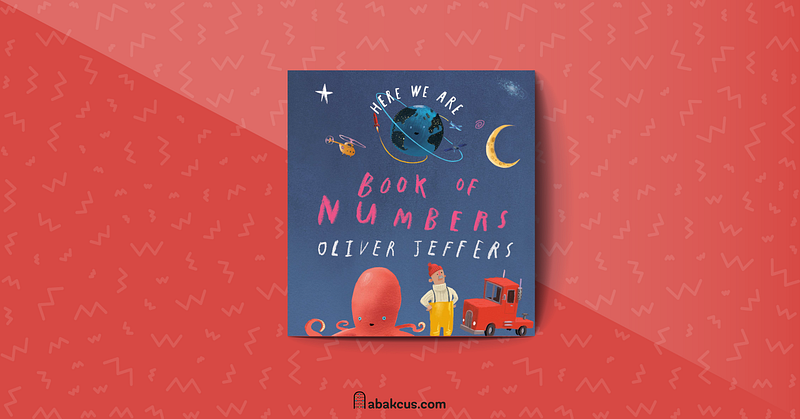
Here We Are: Book of Numbers by Oliver Jeffers | Read the reviews on Amazon.

We first met Oliver Jeffers through his book “Here We Are” and instantly became obsessed. My little girl would ask me to read it to her countless times a day. Here We Are: Book of Numbers is equally incredible, especially its cute illustrations.

In this book, Oliver Jeffers attempts to teach children the numbers one to eleven through various concepts. Number “one” is shown as “one” Earth, and number “two” is that Earth is made up of two separate things, land and water. It not only teaches children about mathematics but also introduces them to our world, which is a genius approach.

Oliver Jeffers’ books are a must-have for any child’s library. When kids read his books, it is almost as if they journey into them rather than simply read them.

A Hundred Billion Trillion Stars by Seth Fishman
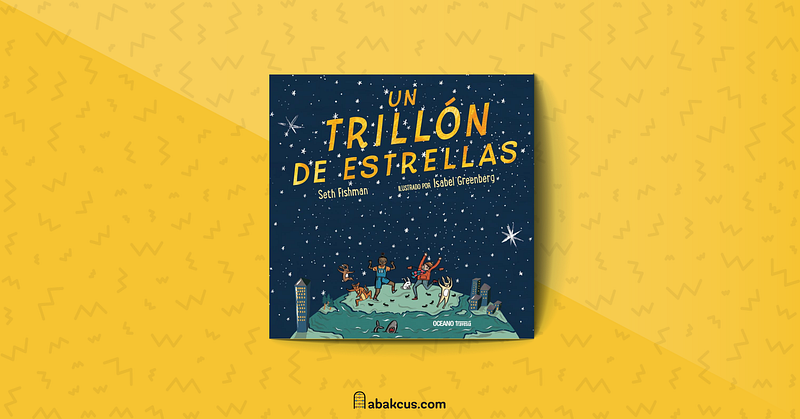
A Hundred Billion Trillion Stars by Seth Fishman | Read the reviews on Amazon.

A Hundred Billion Trillion Stars was written to help kids understand massive numbers using their imagination. It even says in the book, “The whole world is filled with big, enormous, gigantic, humongous, incredible numbers.”

Seth Fishman even found a brilliant way for children to use their imagination. For example, he says, “the Sun is just one star, and there are 10000000000000000000000 stars just like it in space.” At this, a child will imagine of space filled with thousands of giant Suns.

I find it incredibly important to teach kids about minuscule and massive numbers because in college when students are learning about limits using the epsilon-delta formula, they have a very hard time grasping such topics. However, finding a number smaller than epsilon isn’t nearly as hard as it looks. Anyways, back to the books.

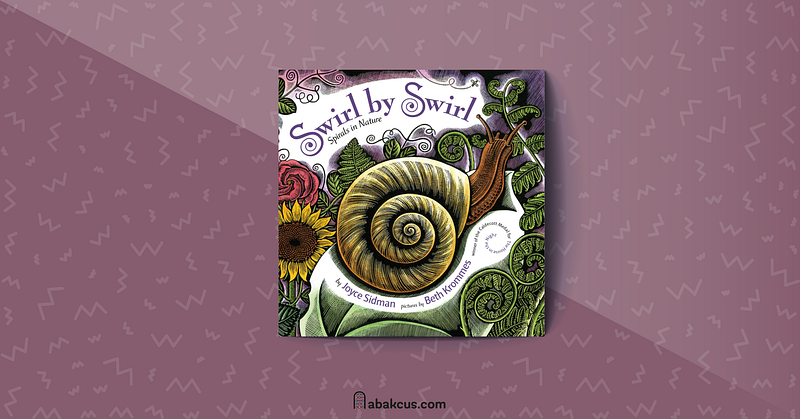
Swirl by Swirl: Spirals in Nature

Swirl by Swirl: Spirals in Nature | Read the reviews on Amazon.

The Golden Ratio is one of the most popular mathematics topics, and the nautilus shell is the most famous example. That is why Swirl by Swirl: Spirals in Nature is a brilliant introduction to the subject of spirals.

I am certain that as soon as children finish reading this book, they will run outside and look for spirals themselves. To top it off, the illustrations in the book are incredibly mesmerizing.

The Boy Who Loved Math: The Improbable Life of Paul Erdos by Deborah Heiligman
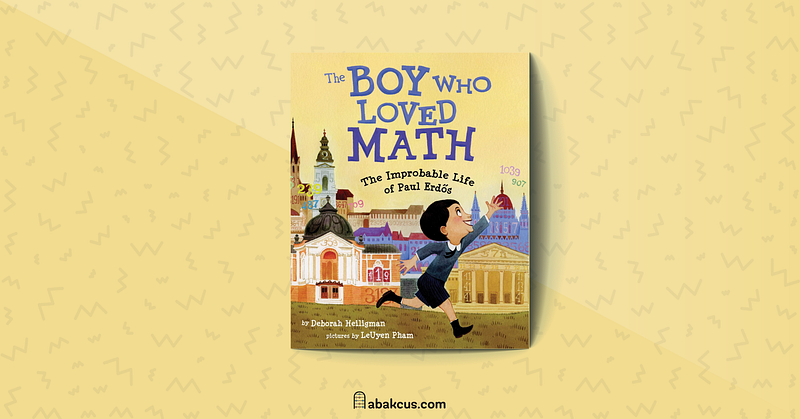
The Boy Who Loved Math: The Improbable Life of Paul Erdos by Deborah Heiligman | Read the reviews on Amazon.

Paul Erdos is a genius who has dedicated his entire wealth and life to mathematics. He is someone who deserves more recognition than Justin Bieber and all of those rappers who curse every minute of each of their songs.

The Boy Who Loved Math is a children’s book about the childhood of a mathematical genius and how his love more math came to be so strong. I especially like this book because instead of portraying mathematics as something to be afraid of, it shows a child who became friends with math and used it to achieve his dreams.

This book truly is a hidden treasure.

On a Beam of Light: A Story of Albert Einstein by Jennifer Berne
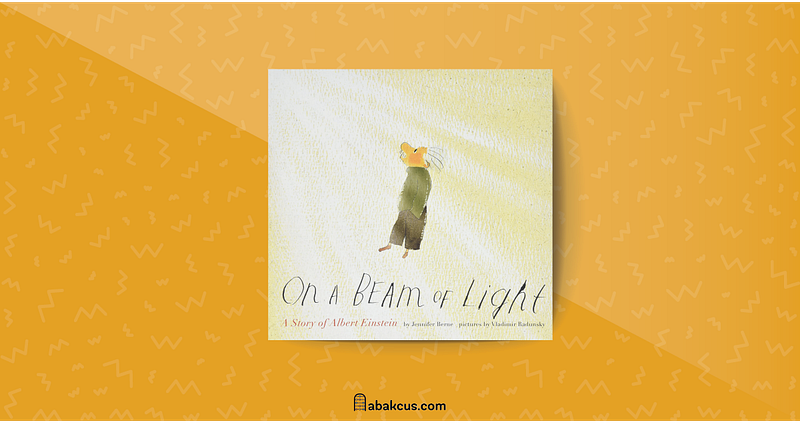
On a Beam of Light: A Story of Albert Einstein by Jennifer Berne | Read the reviews on Amazon.

On a Beam of Light is a book about the childhood of Albert Einstein that should be in every child’s library. I read this book to my daughter when she was just two years old, and she was completely mesmerized by it.

This book is even more valuable because it explains a kid’s curiosity. While quiet, little Einstein’s ability to question everything around him is a common trait in children. However, this book might influence children to move toward different worlds they would normally not question. You never know; maybe they will start questioning space at the simplest.

Note 1: Beyond Euclid! is my weekly newsletter that brings you only high-quality math and science stuff to ensure you are having a good week. Please do yourself a favor by subscribing to Beyond Euclid and enjoy it! And if you can be a member and support my work, that would be awesome! Thank you!
Note 2: I get commissions for purchases made through links in this post.
Mathematics
Education
Books
Parenting
Children
Recommended from ReadMedium