
7 Winning Strategies For Top-Notch Presentations
Give better talks, speeches, and presentations with these simple tips.
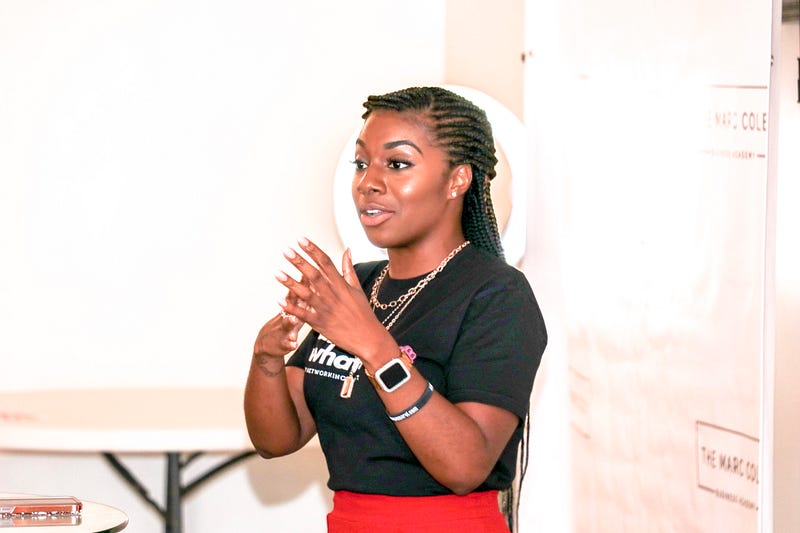
Whether you’re making a presentation for work, school, church, or elsewhere, it’s good to strengthen your skills as an effective public speaker.
Speaking to groups makes you a thought leader and influencer. Public speaking skills can carry over to speaking on camera, for podcasts, or elsewhere. It’s the sort of skill that makes you more marketable, helps you become a more organized person, and provides some great network opportunities.
Here are some simple methods you can use to become a better public speaker.
Slow Down
When people are nervous, they have a tendency to talk fast. If you’re worried about public speaking, it’s all too easy to start tripping over your own tongue in a rush to get words out.
That’s perfectly understandable.
When making a presentation, try to be aware of how fast you are speaking and then slow down.
You don’t have to slow your speaking to a crawl. Just slow down enough so that you are pronouncing your words clearly and separately. Before giving your talk or presentation, practice it a few times and time yourself. If you think you may be speaking too fast, note how long your current presentation is and see if you can’t stretch it out by a minute or two.
The more clearly you speak, the better chance your audience will catch everything you say.
Manage Verbal Tics
This could be one of the most significant challenges most public speakers face. Pauses, saying “umm” a lot, and other verbal tics can be distracting to many listeners — and a difficult habit to break. Even the best speakers have this issue. President Obama is known for his skill at public speaking — but the amount of “uhh’s” he utters in a typical speech can be maddeningly distracting.

The tricks to getting past these verbal tics are awareness and practice. I recommend recording yourself giving a talk — a few paragraphs at first, then a longer talk afterward. Work on gradually cutting down on the frequency of your voice pauses.
Visual Aids and Pacing
If your talk includes slides, charts, or graphs, remember to give your audience a chance to see your graphic before moving on. Give your audience a chance to connect your words and images. Pausing a bit for this also allows you to prepare mentally for the next part of your presentation.
Don’t make it too long of a pause. You’re mainly providing a breathing space for you and the audience. Look at your use of visual aids as part of your presentation’s overall rhythm and adjust as necessary.
Move Around, Take Up Space
There’s nothing so dull as a speaker who stands stock still while making a presentation. When giving a talk, be animated. Move your arms and hands. Fill the area. Even if you’re speaking from notes at a podium, remember to look up every now and then and make eye contact with your audience.
You can even wave a hand when highlighting specific phrases or make a pointing gesture to express emphasis.
But don’t go overboard. Don’t wave your arms around like a maniac or run around the stage like a caffeinated squirrel. That can quickly become more distracting to the audience than standing rock still.
Dress Like You Belong
Go online and look for some TED talks. You’ll find most of the speakers are dressed well. Not too formal, and definitely not too casual. Scan some presentations on YouTube as well and take note of how the better speakers dress.
You’ll note that even the few presenters wearing t-shirts are wearing really nice t-shirts.

Like it or not, appearance matters. The more presentable a speaker looks, the more receptive an audience will be. Just, as with so many other pieces of advice here, don’t overdo it. Top hat and tails wouldn’t be appropriate for a less formal sort of presentation.
Dress for the audience, and err on the side of looking like an adult.
Practice Makes Perfect
Or close to it.
Spend some time alone running through your speech. If possible, time or record yourself so you can review your performance. Once you’ve done this a few times, ask some trusted people to sit through a practice run. Get their reactions and consider any criticisms or advice they have.
Plus, the more you run through your speech, the more comfortable you will become with giving it. When it comes time to stand in front of your audience, you’ll have a much easier time.
Use the Microphone
When presented with a microphone, use it!
Don’t assume everyone will be able to hear you — especially those with hearing issues. In a situation where it’s first-come-first-served seating, someone with hearing issues may not be able to get a front-row seat.

Nothing says you appreciate your audience as making sure everyone can hear you clearly.
Public Speaking Is an Excellent Skill to Build
Becoming a practiced public speaker can allow you better network opportunities and the ability to present your thoughts and ideas to the world. It can also aid in developing improved skills in providing information in a more precise and presentable manner.
Who knows? Maybe you’ll get your very own TED talk someday.
Following these tips, you’ll be better prepared to give a great talk.
Break a leg!
About John Teehan
John lives in Rhode Island with his wife, son, and cat. He specializes in tech, health, business, parenting, pop culture, and gaming. Visit wordsbyjohn.net for more info and rates. Twitter: @WordsByJohn2.
Do you like poetry, short fiction, and general oddities? Check out my new book, Life Among Psychopaths: an unexpected potpourri, now available on Amazon.


