
7 Ways To Journal That Don’t Involve Writing Your Innermost Thoughts in Your Diary
For those who hate the “dear diary” journal life

There’s no hiding from it.
Journaling improves your mental health.
Ask anyone, even your therapist. They’ll tell you the same thing.
But that doesn’t mean journaling is fun or easy. While there are some people who love nothing more than lying on their bed, scribbling in their diary á la Lizzie McGuire, or cherish their morning of free-flow thought writing Mark Twain style, it’s not everyone’s cup of tea.
There’s a common misconception that the only useful form of journaling for mental health is to keep a record of your thoughts and emotions. To open the emotional tap and let it spill into your journal basin. It’s known as “stream of consciousness” or “free-flow” writing and it’s a staple of so many “how to be successful with this morning routine” articles online. It’s also the basis of countless self-help books.
The idea of free-flow thoughts has become the journaling method.
But what if I told you it’s not the only way to get your thoughts out of your head and reap the benefits of journaling?
You may be someone who hates writing about their feelings. Or you just have no time for it. Maybe you have no patience for sitting still for ten minutes as you work through that awkward feeling of being vulnerable outside your own mind.
Or maybe you just need an alternative for the days when you don’t feel like writing a free-flow journal entry.
Whatever your reasons are, here are seven ways you can reap the benefits of journaling without writing long stream of consciousness entries in your diary.
1. A picture a day
Take a photo that encapsulates your feelings from the day. Maybe it’s something you enjoyed doing. Or perhaps you want to document your frustration with a realistic pic.
It’s really not important what type of photo it is, as long as it resonates with you.

To make the process even more mindful, think about why you’re choosing this photo and what it means to you. You can do this by speaking aloud, discussing with a loved one (pets count too!), or just sit and think about it.
Feel free to add a few notes alongside your photo, but no pressure — the photo is enough!
2. Create your own custom checkbox journal
If you want to get a good snapshot of your day but don't want to write about it, using checkboxes and prompts to track your mood is a great alternative.
Think about the important questions that resonate with you and your mental health. It could be related to getting enough sleep, getting sunlight, socialising… whatever the key elements of your mental wellbeing are.
From there, you can create a checklist to monitor how you’re progressing.
I personally enjoy doing this in Notion, because I can create a customised template that automatically generates every day so all I have to do is open the app and check my boxes. It also means I can easily add extra notes without worrying about “messing up my flow.” (And believe me, as a perfectionist, having a messy, stagnant journal is one of the biggest barriers to consistent journaling).
You can use whatever you like to create your own checkbox journal. But remember, the less you have to set up every day, the more likely you are to repeat it, so make sure you create a system that’s easy to access daily.
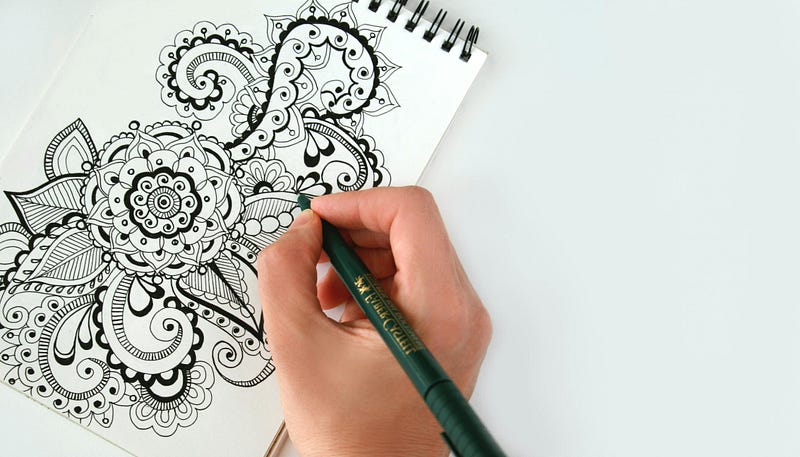
3. Doodles and art
Every person on this planet has a unique way of expressing themselves. And for some people, art speaks louder than words. If that’s you then creating drawings that express your thoughts and feelings can act as your entry point to the “wonderful world of journaling.”
If you’re not an artist, don’t worry. Journaling isn’t about creating museum-worthy portraits, it’s about finding outlets that take those uncomfortable thoughts and feelings out of your mind and into the real world.
So if you’re much more of a doodler (even a bad one), if it makes you feel lighter, embrace it!
4. Use Post-it notes liberally
Most people underestimate the power of the Post-it note. Sure, it's helpful to remind you of tasks you have to do, but you can use it for so much more.
A lot of people find journaling daunting. The idea of sitting in front of your journal, hands ready to write, can be stomach-churning for so many reasons. I already briefly touched on the fact that a lot of people suffer from journaling perfectionism where they worry about creating a messy journal that doesn't easily flow from one topic to the next and doesn't allow you to add notes within notes.
But there’s a whole laundry list of reasons why people find journaling scary, including:
- not knowing what to write
- worrying about expressing yourself the “right way”
- feeling embarrassed about saying your thoughts “out loud”
- getting stuck in a negative thought loop
- not feeling ready to sit in your feelings for long bouts of time
Post-it notes help address this because you can write or draw whatever you want quickly and add it to your journal at the end of the day and order it however you want. You can even annotate your page and explore links between your thoughts throughout the day. Your Post-it notes become quick snapshots of your day that build to a clearer view of what’s going on in your mind.
To get the most out of your notes, put the date and time in the top corner somewhere — it may be useful when you look back to help find patterns in your thoughts that you can address to improve your mental health.
5. Voice notes
Not everyone wants to sit down and ink their feelings.
The great thing about voice notes is you can document your thoughts and feelings whenever you want without needing to sit still. If you want, you can go for a walk and record yourself talking. It’s a great alternative for people who want to find mindful outlets but hate sitting still.

Plus, with the growing functionality of AI, there’s plenty of software and app options to transcribe your voice notes to text. Which means you can have your journal without ever writing a word.
Talk about having your cake and eating it!
6. Get creative with a quick song or poem
You don’t have to free-flow your thoughts to get them out of your mind. You may find it easier to mould them into a creative outlet. Just like for those who enjoy art or photography, you can use songs and poems to process your feelings.
Try writing a few key words, feelings, or thoughts you want to tackle and go from there. Really zone in on what’s troubling you. Or if you’re having a good day, focus on what’s got you in a good mood. It could be the people around you, something you’ve achieved, something funny that happened… everything is fair game.
Don’t worry too much about making it sound good or using the “right techniques.” As long as you’re allowing yourself to let your emotions and thoughts come through, you’re doing a great job.
If you do want to make it a bit more fun and you’re musical, feel free to add a guitar rift or piano melody.
I mean, if it works for Taylor Swift, it can work for you, right?
7. Pinterest board
I’ve saved the most “out-there” journaling method for last.
A lot of people enjoy creating collages as part of their journaling journey. And while sitting down, cutting out photos from old magazines, and sticking them into your journal is fun for some people, it’s not for everyone.
Plus, not many people buy physical magazines these days anyway…
I figure, since you’re looking for alternatives to writing long stream of consciousness journal entries, you may want a faster alternative to collaging, too.
That’s where Pinterest comes in.
If you’re anything like me, you've already got boards and boards of saved pins for inspiration (or in my case, recipes that look delicious that I really want to try.)
So why not use Pinterest to help you journal?

Whenever you want to journal without having to create, you could try curating a Pinterest board instead. You could create a new board daily, weekly or just keep updating a “Journal” board whenever you feel like it.
And not to toot Notion’s horn (but also, I love Notion so of course, I’m going to big it up) but you can embed your Pinterest boards to your Notion space, meaning you can incorporate them into a multi-approach Notion journal if you want.
Either way, it’s a great way to incorporate scrolling social media with journaling for your mental health (a balance that’s almost impossible to strike on any other platform than Pinterest).
Journaling only makes sense when it works for you
The benefits of consistent journaling are transformational. But if you can’t find a journaling method that feels right for you, then it’s going to be hard to feel those benefits. After all, what’s the likelihood you're going to consistently journal if the idea of writing fills you with dread?
This list represents just some of the alternative journaling styles out there for you to try. It’s up to you to find what works.
Use this as a starting point to experiment with different journaling styles and see what works for you. And if you find one of these tips helpful but it doesn’t fully resonate with you, why not experiment and tweak it to make it unique to you and the way your mind works?
The best journaling method is always the one that flows freely with your personality.
So whether it's photography, voice notes, or building a Pinterest journal while you’re on the sofa catching up on Taskmaster, keep experimenting until you find your journal personality.
And please, feel free to let me know in the comments if you’re planning on trying any of these or if you have any other journaling tips to share with everyone.
💛 Join a like-minded community of anti-perfectionists looking for slow growth and mental health inspiration. 💛
Subscribe to my Medium page and be the first to get notified each time a new story drops! Look forward to useful tips, tricks and slow growth psychology to help you start your journey of self-discovery and mental wellbeing!


