
7 Ways to Break Through a Weight Loss Plateau
Something you must know if your weight loss stalls
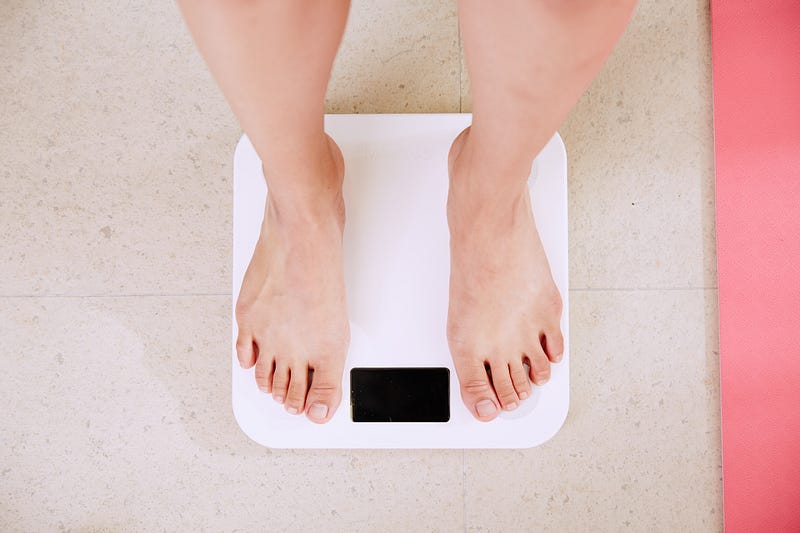
Before we break down 7 Ways to Break Through a Weight Loss Plateau, we first need to define what a weight loss plateau is.
Most people who think they are in a weight loss plateau, probably aren’t.
It’s usually that they need to stick with things a little longer and be more consistent.
Because a true weight loss or fat loss plateau (not always the same) should equal at least 4 weeks of no changes.
That’s having no changes in your body weight and body composition (measurements or body fat %) during this time. While keeping your diet and exercise habits dialed in where they need to be.
If you think you are hitting a plateau, you need to give it at least that much time of consistent effort to stay in a calorie deficit before you change anything.
This 4-week time frame is especially needed for women because of their monthly menstrual cycle and the bloating and temporary fluctuations in body weight this can cause.
In addition to the changes in energy and appetite that this hormonal shift can bring, which can affect calorie burn and calorie consumption.
As an experienced health and fitness coach, I see this so often when people say to me:
“I haven’t lost weight for two weeks, what’s going on? I must be hitting a plateau!”
My response:
“Relax! Not losing weight or inches for two weeks, is not a plateau.”
When you feel in doubt about your weight loss progress, you need to zoom out to gain perspective.
Because 2–4 weeks is nothing in terms of changing your body.
Think of your options for making progress and breaking through a plateau, like holding a handful of cards during a card game.

You have to be patient and play one card (or option) at a time.
Then give it enough time to work and see what happens.
Don’t give away your entire hand too fast.
Otherwise, if you go all in too early or go too hard too fast with your eating and exercise efforts, you will be soon left with your hands in the air with no cards to play!
And this is a common mistake I see when people embark on losing weight and this leads to the first of the 7 Ways to Break Through a Weight Loss Plateau.
1. Decrease energy intake
Being in a calorie deficit and consuming less energy than you burn, is the foundation of fat loss.
And the most effective way to control calories is by controlling the amount of food that you eat.
Because sadly, even a hard one-hour workout only burns up about a handful of food in terms of calories.
But how much you reduce your daily calorie intake, depends on how heavy and active you are when you start your weight loss journey. You only have so much wiggle room to reduce your calories through food.
The larger you are the more calories you need and therefore the more daily calories you can reduce.
People who are overweight and weigh over 200 pounds may be able to safely reduce their daily calories by 500–700 because they might need to consume close to 3000 calories a day just to maintain that weight.
The smaller you are in stature and weight when you start trying to lose weight, the more careful and conservative you need to be when reducing your daily calories.
For example, a woman only 5 feet tall and 175 pounds looking to lose 15 lbs, might only need to reduce her daily calories by 200–300 to achieve a calorie deficit.
Because her total daily calorie intake needed to maintain and lose weight is not as large as someone who is simply larger. So she might need to consume around 1500 calories a day to lose weight.
The common caveat with smaller stature people trying to lose weight is that this lower total calorie range comes with less margin of error.
As 200–300 extra calories can be easily consumed by eating slightly larger portions, a handful of nuts, or even two tablespoons of oil.
And why I like to have smaller framed people looking to lose weight, (along with some calorie control), really take advantage of option two below.
Of course, these are all just examples of estimated calorie ranges and highly depend on your age, activity level, and muscle mass.
But we all have to accept the law of thermodynamics and the deck of cards we are dealt in terms of our genetic structure and what our bodies need in order to change.
2. Increase energy output
If your diet is as low in calories as it can go for you to sustain it, then adding more movement or exercise is the next best option to keep progressing.

This is also a good card to play for people who have more time to exercise or simply enjoy working out more.
It can help you build muscle faster and more muscle burns more calories at rest. Plus, more movement simply burns more overall calories.
But there is a limit to how much time and effort you can put into exercise.
Too much high-intensity exercise can lead to burnout or even injury. And trying to out-train a bad diet is like trying to run to reach the horizon.
In many cases, all it usually takes to move the needle to break through a plateau, (especially if you are not moving much each day) can be adding in an extra workout during the week or getting in more steps each day.
Or by adding a 5–10 minute high-intensity interval training (H.I.IT) finisher to the end of your current workouts if you have a little extra time.
3. Decrease energy intake, while you increase energy output.
This is a powerful play and a go-to option used frequently by those looking to really push the limits of leanness.
Such as physique competitors or people with more ambitious fat loss goals for a specific deadline or an event like a wedding, vacation, or photoshoot.
But it comes with more sacrifice, in terms of time, effort, and hunger.
As you force your body to use more stored body fat for energy while you take in less food energy.

4. Focus on maintenance
This is the most underrated strategy when you find yourself stuck in a weight loss or progress plateau.
Maintaining where you are can still be a form of progress and is many times just as challenging as pushing for more change.
The fact that 85–90% of people who lose weight gain it back within a year or two, proves that maintenance is a worthwhile pursuit.
If you’ve been losing weight and body fat for many months and you suddenly stop seeing numeric changes, instead of pushing harder right away…hold the line!
Can you maintain your new weight and body composition for another 4–8 weeks?
Maintaining the progress that you have made is also a true test that you have built sustainable habits, which lead to sustainable results.
5. Increase energy intake AND increase energy output.
With this option, you get to eat more, but you also have to move more through direct or indirect activity.
Consuming more caloric energy through food naturally gives you more energy to move more, lift more, and burn more.
Increasing energy in and out is a also good option if you have been dieting for a long time and feel you need more energy and food enjoyment.
This combo increases what is referred to as “energy flux” by ramping up your energy burn and efficiency and maximizing your metabolic engine.
6. Increase sleep quality and quantity
If you are not getting at least 7–8 hours of good quality sleep each night, you are simply slowing down progress.
Your main metabolism hormone such as your thyroid, and hunger hormones such as ghrelin and leptin won’t operate optimally without enough sleep.
Low thyroid hormone can make you feel cold and sluggish both mentally and physically, leading to less energy burn.
High ghrelin hormone increases hunger and leptin is responsible for decreasing it and increasing the feeling of satiety.

Not getting enough sleep has been proven to push these hormones out of balance and make you eat more and move less.
And lack of sleep also makes you more insulin resistant.
Meaning the foods that you do eat, have a greater chance of being stored as body fat.
7. Focus on performance over progress
When numeric forms of progress stall, instead of focusing on the scale or how lean you look, focus more on exercise performance and how you feel.
Focus more on getting stronger in your workouts, or building better cardio endurance.
Or even improving the consistency of your current healthy habits.
Don’t forget about the importance of improving or maintaining healthy blood markers like blood pressure, blood sugar, and blood lipids to reduce the risk of disease and increase longevity.
Because it’s no good to look like a Ferrari but have an engine under the hood that’s about to redline.
So remember, the next time you think you are hitting a plateau, you probably aren’t.
And even if you are, progress comes in many ways besides just weight loss.
Sometimes even weight loss itself isn’t healthy progress. Especially if it comes in the form of losing muscle or just temporary water weight.
Or if you are simply following a plan you just can’t sustain long-term.
And when you do genuinely hit a progress plateau, you don’t have to panic. It’s actually a normal sign of making progress over the long term.
Because taking two steps forward and one step back, still keeps you moving further down the road.
Sean Barker is an award-winning fitness coach and best-selling author of the Easy Eating Diet and The Easy Eating Diet Cookbook on Amazon. Online he helps busy parents and professionals get fit in less time while still enjoying pizza and wine. You can apply for his Online Custom FIT Coaching here: https://bit.ly/3wzBhHH