
Distributed by Curators in Self
7 Ways to Be a Hero Without Doing Anything You Don’t Want to Do
You have to challenge the idea of a stereotypical hero
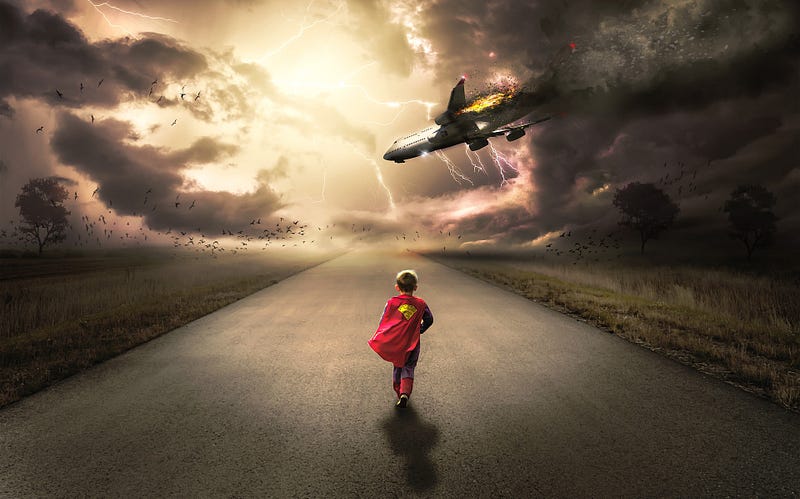
Whether it is Nietzsche’s superior human or Jerry Siegel’s Superman — who first appeared in American comic books published by DC Comics in 1938 — the idea of a super-human has been here for a long time now. To be a hero, you have to understand what it means to be a hero — and unlearn the popular meaning of the word.
Superhero movies, in our modern world, are a magical part of our childhood. A study suggests that even infants recognize heroic acts.
Do you remember how you felt about the superheroes when you were a child? At that age, the superhero stories are easy to believe. But when you accept that there are people who can do crazy things, you feel inspired to act like them.
Should you be like a superhero?
We assume that children learn moral lessons from these movies, like defending the weak. In 2017, Brigham Young University professor Sarah M. Coyne studied what it was — exactly — that preschool boys and girls learned from superheroes.
“Many preschoolers are into superheroes, and many parents think the superhero culture will help their kids to be nicer to their peers but our study shows the exact opposite. Kids pick up on the aggressive themes and not the defending ones.” ~ Professor Sarah M. Coyne
The stories of heroes are probably a product of the social and economic injustice or a society that values myths more than reality.
It is not necessary to fill your time with magical events. It is possible to have only a few quality experiences in life that may provide you with all the reasons to live a happy life.
But the unusual has been trending for centuries now. The public demand for heroes generates competition. To sell more comic books or movies, the creators have to make the hero sellable. They have to exaggerate natural human traits to an extreme to grab attention.
Is it necessary to do more?
The idea of a hero is evolving. But even today, the heroes are more of everything. They are smarter, more determined, more caring, and more loving — not to say that they can often lift cars or fly in the air.
The heroes can do more — implying that you cannot.
Every parent — and every person — has to find the middle ground where enjoying superhero movies doesn’t end up creating feelings of inadequacy or aggressive behavior.
Performing at the box office is such a priority for most of the moviemakers that they — without any intention of doing that — program a child’s mind with all kinds of lies.
Moderation is the key
What is the result of this programming? Professor Coyne and her team found that children living in the superhero culture are more likely to be ‘physically and relationally aggressive’ when they grow up. Coyne has also conducted a study on the damaging effects of Disney Princess culture on young girls.
“ I’d say to have moderation,” professor Coyne says, “Have your kids involved in all sorts of activities, and just have superheroes be one of many, many things that they like to do and engage with.”
Feelings of inadequacy
Not having hero-like qualities can start lifelong struggles and psychological problems that stem from feelings of inadequacy. These feelings may also lead to performance anxiety, self-criticism, reluctance to accept love, fear of rejection, and low self-esteem.
We are finite beings living a mortal life, though we are capable of choosing from an infinite number of possibilities. But our psychological conditioning plays a role in the process of decision making required to live a happy life.
If we subconsciously believed ourselves to be inadequate, we’d be willing to live a lesser life. I know that most of us understand the difference between movies and reality, but I also know that our inner child always remains a child.
For example, I wanted to fly all my life — not in an airplane and not with wings. I just wanted to float in the air when I was a child, and still, my most delightful dreams are when I am flying. When I am dreaming this dream — the feelings I have are sweeter than anything I have experienced while I am awake. I often wondered as a child if it was possible to float in reality. Sometimes when I am running, I feel that I am about to take off, and my body feels a bit lighter. Now, if I were a comic writer, I would take this feeling to an extreme — to grab the attention of a reader or a viewer.
Is it okay to be vulnerable?
Novels and movies, sometimes, show you a person who cannot exist in real life. Human beings are vulnerable creatures. We are often in some kind of danger — psychological, emotional, or physical. We have to face those problems and issues like real human beings — not like the stereotypical heroes.
The stories of heroes are to inspire us to rise to the challenges of our lives. The hardships many of us face in life do require something special — a strong sense of confidence that we can overcome our issues.
But excess of anything is bad, and this is especially true because our heroes are becoming excessive. For example, if we talk about comic heroes, the character of Captain Marvel in Marvel Studios’ 2019 movie is absurdly powerful. It is impossible to imagine such a powerful being — and I am not saying that Superman from Krypton is more believable.
What I am saying is that something lingers in your psyche long after you have seen a movie. Children have powerful imaginations, and they often believe that there is an element of truth in what they are watching.
Why you should accept yourself the way you are
Watching superhero movies does not prepare you for what life throws at you. Every being is so unique that it is almost a separate universe where we live our lives. What makes us better human beings is not the supernatural but our unique perspectives to see — and solve — a problem in life.
Most of us don’t know that we have to celebrate our differences of opinion and ability. Perhaps Justin Beiber never wanted to write the code for Facebook, and perhaps, Mark Zuckerberg never fancied singing songs. But they are masters of what they do — they are human beings, and any success is a bigger achievement if you are a human being.
If you are a Beethoven but you are trying to be a Tesla — and failing miserably — it doesn’t make you less capable than Tesla. It only means that you need to accept yourself the way you are.
We do not need to fly or shoot sparks from our hands. We do not need to flawlessly handle our emotional lives and our dreams to live a happy life. The very idea of perfect — or better than perfect — is a myth from a century when trying to be perfect was a thing.
“One of the basic rules of the universe is that nothing is perfect. Perfection simply doesn’t exist. Without imperfection, neither you nor I would exist.”~ Stephen Hawking
We must celebrate the abundance of imperfection. We must know that fear of failure disguises in our futile pursuit of perfection. We are living in an age of intellectual and emotional acceptance of who we are.
It does not matter if you are not feeling like a superhero. Are you feeling like your own self? Are you planning to become better than yesterday? Are you becoming aware of your unique personal tastes and preferences? Are you weaving your own dreams and trying to reach them?
Final Thoughts
You are a hero, and I am a hero — though we are not the heroes of the comics. We are who we are. We should not wish to be like imaginary beings who never existed anywhere.
You must realize that you are a hero just the way you are. You don’t have to do anything other than what you wish to do to be worthy of great things.
So, how can you be a hero without doing anything that you don’t want to do? You can be a hero if you:
- Realize that your uniqueness is an asset
- Accept yourself as you are
- Become aware of your innermost wishes, dreams, and desires
- Start doing what you like to do
- Never think that you were supposed to be like anybody else
- Learn from your mistakes and promise not to repeat them
- Know that it is okay to feel like a human being — vulnerable and afraid.
The most important thing is to do more of what you want to do. Understand why you want to do what you want to do. Explore the lives of other people who accomplished what you are aiming to do.
By doing more of what you like to do, you start becoming a master in your field of activity. There is always room at the top, as they say. When you are at the top of what you love to do — you’ll discover that you were already the hero you wanted to be without doing anything you didn’t want to do.


