
7 Valuable Tips that will Make You a Future Millionaire
Set your goal and make it happen

In 2013, I was interviewed by Money Magazine as a future millionaire. When this event was going on, I was thankful and blessed to be in that position. 16 years before, I was a broke college graduate with a lot of debt and knew nothing about money. Life changes when you when hard to make your dreams come true.
In 1997, I had just joined the Army and was stationed at my first assignment along the demilitarized zone in Korea. It was a great place to defend the United State and learn about investing. I had all the time I needed to study since we were placed on curfew from time to time.
I want to share seven tips to help you start or renew your investment journey. You don’t need a college degree or need to be a Warren Buffett to invest. Anyone can invest and be a millionaire if you have the right mentality and discipline.
My background
Growing up in Philadelphia and nearby areas, I didn’t come from a rich family. You could say lower middle class. When I was a kid, I wanted to make money. One day, I had my first business selling penny candy when I was about 6 years old. I figured I could buy the candy and then sell it for twice the amount, I would make a 100% gain.
This worked for a bit as I made a few sales but then I got greedy. I thought what if I sold the penny candy for $.03 cents. I would make a 200% return.
I went back to the store and bought some more candy. I laid the candy on a milk crate, sat at ‘my store’ on the corner of a street, and waited.
As a six-year-old, you don’t have a lot of patience. As soon as I started the business, that’s about how long it lasted. I closed shop and had a few penny candies that I eventually ate.
As the business ended, a few years later I saw my parents get separated and then divorced. In the process, I saw them lose their house through foreclosure.
My mom took my younger brother and me, and we moved to the outskirts of Philadelphia. At this point, I figured, I needed a job. I didn’t think my mom would have a lot of money to buy things for us since she was divorced and relying on one income supporting three people.
I worked two newspaper routes, one before school and another Wednesday afternoons for about two to three years. I liked this as I was finally getting money that I made.
After a few years of this, I worked a couple more jobs while still going to school. When I turned 16, I worked a few years at a video store until I was literally the unofficial store manager.
I put in at least 40 hours a week and went to school. I told my boss one day,
I want a raise.
He said no, and I gave him my two-week notice. For two years, I was working my butt off and felt I should be paid more. Sometimes, things have to come to an end.
I left and within a year or two, the store went out of business. Blockbuster was taking business and income away from the video store.
Fast forward a few more years, and I graduated college with a degree in Political Science and minors in English and History. I had college debt of $40,000. The job prospects weren’t high for someone with my degree and little experience in 1996.
So I did the next best thing, I joined the Army as they paid my school loan and gave me a monthly salary. Problem solved.
Set your money goal
How many millionaires do you know who have become wealthy by investing in savings accounts?
I rest my case.
Robert G. Allen
After a few months in the Army, my boss said to me,
You need to invest.
Like any 20 something, this sounds interesting, but you have no idea what that means.
I didn’t know what a stock was, the stock market, or the S & P 500 index. All I remember were people talked by a graph and put out some numbers.
Then a week later, he said the same thing,
You need to invest.
Now I was curious. I had to find out what this investing means.
This was in 1997 and the internet had barely taken off. So I did the next best thing. I read a lot.
I went to the nearby shoppette, which is the Army term for convenience store that is located on most bases. I looked at the magazine rack and found Money magazine. This eventually became my favorite magazine to read for years.
I bought the magazine and read it cover to cover. In the magazine were stories of people in their 60s who invested $1 million.
Thinking to myself I said, that’s going to be me.
Now I set a goal to have a $1 million by the time I was 60 years old. Retirement age at that point was around 65 years old.
This seemed like a great goal, so after months of reading Money magazine and investment brochures from Vanguard, T.Rowe Price, and Charles Schwab, I finally opened my first investment, an Individual Retirement Account (IRA).
The figures in the investment brochures looked a lot better than the returns in my bank account.
Invest monthly
Investing isn’t about beating others at their own game, it’s about controlling yourself at your game.
Benjamin Graham
Getting started was simple. I figured I need to invest $2000 a year or $166.66 a month. Back then, investing $2000 a year was the limit of investing in an IRA. I could afford that and still have some money left over every month.
The process was easy to set up working with investment companies. They withdrew money out of my account on the exact day I selected.
You pick an investment, then you set it and forget it. Basically, you let the company do the investing for you.
Dollar-cost average
Bear markets can make people a lot of money. They just don’t know it at the time.
Shelby Davis
Timing of the market can be dangerous if you don’t know what you’re doing. Whether a stock is $100 one day, or $110 the next day, when you invest using a dollar-cost average, you don’t pay much attention to the price of the stock. Over a period of time, your average amount invested becomes the dollar cost average.
For example:
September — $100
October — $125
November -$140
Dollar cost average over three months — $121.66
In this example, you averaged $121.66 over three months paying for investment.
As I invested, I wasn’t concerned about the rise or decline in the investment price, I was looking at the total amount of the investment.
Some months the investment would go up and other months the investment would go down.
Think of investing as a roller coaster. Some months your investment will go up and then other months your money will go down before it goes back up again.
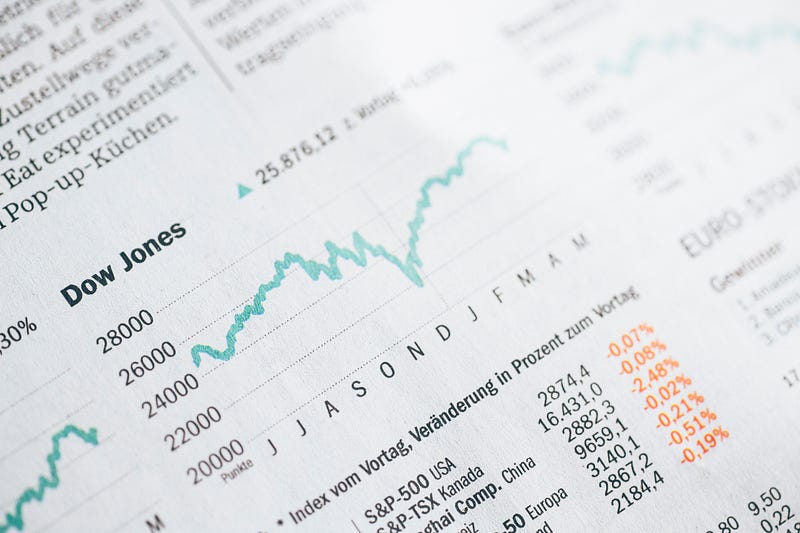
This “roller coaster” process will continue to repeat itself.
Over the long term, the stock market continues to go higher in spite of the recessions and corrections you’ll see.
Get an unofficial degree in investing
An investment in knowledge always pays the best interest. Benjamin Franklin
If you’re like me, you probably never had a formal class in investing.
This means you need to educate yourself. There are hundreds of books and magazines in your local bookstore, Amazon, and sometimes in your neighborhood grocery store.
You need to ignore the National Enquirer, National Examiner, Weekly Tabloids, Soap Opera Weekly, and other magazines that do nothing for your money except waste it.
Take the time to financially educate yourself. A little bit of time will pay off later in life.
- Watch a video on an investment you have never heard of.
- Read what Yahoo Finance is discussing today.
- Catch a show on CNBC.
- Buy a financial magazine such as Smart Money or Kiplingers.
Don’t make this a one-time event but make it a habit. This is your money and you need to know how to invest your money to increase it. You need to know how to build your own nest egg for retirement and emergencies as they happen.
Break out of your comfort zone
If you don’t find a way to make money while you sleep, you will work until you die.
Warren Buffett
You need to make investing one of your priorities. To change this, investing needs to be like one of the monthly bills you pay. Investing may not be common for you.
Statistics show about 50% of people have money invested in stocks according to a recent Gallup survey.
These numbers fluctuate a little over the years but in general, about one out of every two people invest in the stock market.
Some people may invest in precious metals or real estate, but some people do not have any investments.
If you have not invested, what is holding you back? You may have your monthly bills, student loans, and credit card bills, but you need to make investing one of your bills.
Investing later will make it harder to reach $1 million since you’ll have to invest more money for it to compound over time. The earlier you start, the less you’ll have to invest since the money compounds and grows. This leads on to the next topic.
Chase the high returns when young
The hardest part of investing is holding on through difficult periods and taking short term pain so you can have long-term gains.
Jim Cramer
When you’re young, go after the risky investments. You can take the chance and go through a few corrections. For some investments, they will grow a lot faster than others. This is what I did. I chased the high returning investments.
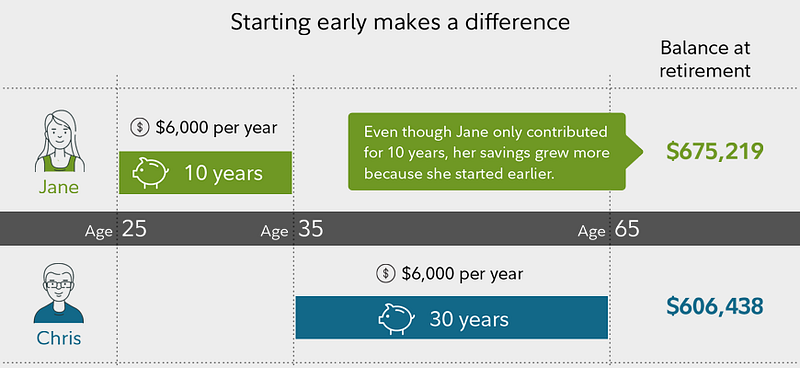
Then the earlier you invest, the more time your money will compound and grow. The later you invest, your money will have less time to grow.
A few of my investments are high risk but I chased the high risk investments such as technology and healthcare. These two areas are in high demand and will be for many years to come. Their growth rate is higher compared to investments that give you an average rate of return.
Always do your homework
Far more money has been lost by investors preparing for corrections, or trying to anticipate corrections, than has been lost in corrections themselves.
Peter Lynch
In any investment, you should have a general idea where the company invests the money. Some mutual funds and ETFs invest in several areas so you may have to do research on where the company invests.
Many of these investments can be searched online. Companies have to tell you what percentage of their money is invested in certain companies.
Always do your research since many scam investments come up from time to time. Even the most successful and wealthy people get scammed with their money. Bernie Madoff took money from some of the wealthiest investors and took tens of billions of dollars.
I have had my own taste of getting scammed and its not always pretty. Do the best research that you can on any investment that you make. You may have to seek professional advice occasionally.
Tom Handy is a top Writing, Finance, Investment, and Bitcoin writer on Medium, and the father of two kids. He retired from the Army and sits on several non-profit boards. You can find him on Twitter @tomhandy1.
This article is for informational purposes only. It should not be considered Financial or Legal Advice. Not all information will be accurate. Consult a financial professional before making any significant financial decisions.