
7 Unorthodox Truths About Self-Development
These non-intuitive understandings will assist your personal growth at any stage.
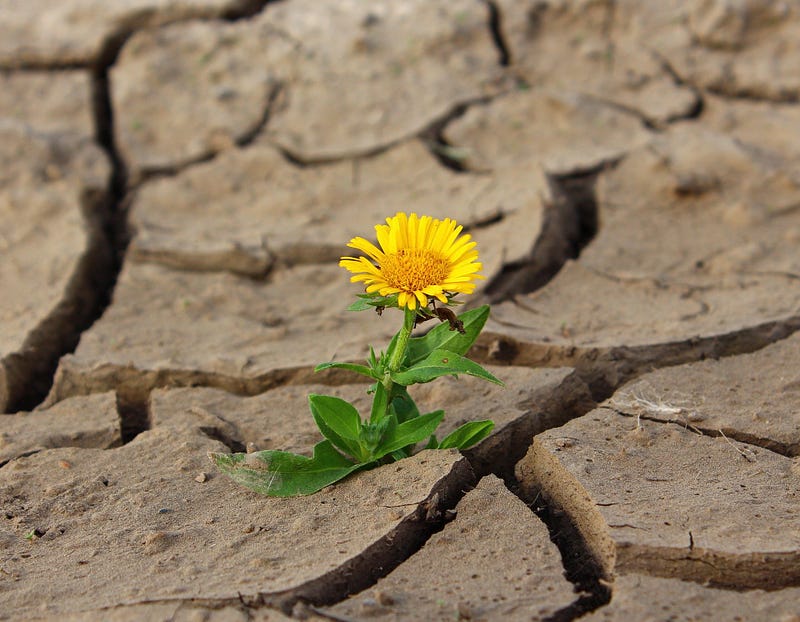
Self-development is a beautiful thing. Just like we may facilitate growth in a plant, a pet, or a child, we may stimulate growth in ourselves. This pursuit gives us a sense of strength in a world that can feel chaotic, and at times, overbearing. I intend for the truths I have discovered on my path to serve as guideposts for others on their intimate journeys.
Just remember, when all is said and done, self-development is highly personal; the best advice is to follow your gut and do what works for you. Use my experience for what it’s worth, but make sure to trust your instinct. Let’s jump in!
1. The point is not what we think it is.
The actual fruits of self-development are not in meeting an abstract standard or some goal. Sure, we might get the promotion, find more success romantically, or attract praise, but these things are peripheral benefits.
The true benefit of self-development is becoming someone who can face any challenge with confidence, wisdom, and insight — even challenges we can’t anticipate. Focusing on abstract standards or arbitrary benchmarks distracts from genuine development and puts the cart before the horse.
Remember, metrics of success are the results of growth, not the reverse.
2. Faith is a big part of self-development.
No, I am not saying you have to join a religion.
We tend to focus on external measurements and ideals in our journeys because progress doesn’t come immediately. Weeks and months may go by without a clear indicator that we are developing at all. This phenomenon leads us to become externally focused, trying to justify our efforts with means outside ourselves.
The truth is, with a reasonable effort, consistency, a solid plan, and faith, the development will come. We, as people, tend to favor quick validation. That leads us to become impatient when months go by with no apparent signs that our journey is paying off. This point is when the flame goes out for many of us.
This point is also where faith comes into play. Even if we feel like we are getting nowhere, we have to trust that we make gains daily. These gains may be small and show up in ways we are not used to looking at, but trust that they are accumulating.
If we keep faith and good practice, our gains will add until we eventually get the unmistakable sign we seek. We will flourish in a situation that we never envisioned ourselves succeeding in. We will feel a surprising level of confidence and groundedness when faced with challenges that would have otherwise intimidated us.
Often, we can’t see the fruits of our development clearly before life tests us on them — until then, have faith.
3. Introspection is a crucial piece of the puzzle.
Introspection is a skill. Like any other skill, we may start as more or less talented, but we can continuously improve. At its most basic, introspection is “seeing inside.” It is the act of creating a functional map of a previously unexplored frontier: our psyche. Self-development without introspection is like trying to navigate a new place with no known landmarks. The more we introspect, the richer and more complete our internal maps become, and the more these maps can guide our efforts.
As our existential map becomes more precise and robust, our ability to develop ourselves will reach new levels. It will help us notice those micro-gains more profoundly, identify areas for improvement sooner and with accuracy, and our solutions will be more effective. We will no longer rely on external achievements or faith to justify our efforts — our growth will become self-evident.
That is why meditation is so prevalent within the self-development community; it teaches us to be quiet and listen to ourselves. Journaling is also prolific as a powerful method to develop our inner voice and pull out our thoughts and feelings. Journaling is also great because it gives us a crystallized account of our journeys to look back at and track our progress.
To improve ourselves, we must know ourselves.
4. You must accept your mortality.
This statement isn’t as morbid as it sounds — bear with me.
To take our journey of self-development to the next level, we must accept our mortality. Not only must we acknowledge it, but we must contemplate it as well. Understand that no matter how much we achieve, how many resources we obtain, and how much praise we gather, that we will one day turn to dust nonetheless.
The purpose of this is not to depress us. Instead, it is the reverse. Paradoxically, contemplating our mortality gives us the context we need to live a fuller life. Accepting our mortality is not a prison but freedom. When we realize our time is limited, we put the value of it into perspective.
If you have entirely accepted that you have a finite amount of days left, you will be far less inclined to waste any of them. Making peace with our mortality is the freedom we need to pursue our full potential, giving us the space to live without regrets and take risks.
Imagine yourself, well-aged, on your deathbed. What do you regret when you look back on your life? Will you say, “I should have played it safer,” “I shouldn’t have pursued my dreams so fully,” “I shouldn’t have taken all those risks and experienced all those things?” I highly doubt it.
It is not death that a man should fear, but he should fear never beginning to live. — Marcus Aurelius
5. Self-development is painful.
Or at least, it can be.
We like to think of all the great things self-development can bring and how it will improve our everyday experience. What we don’t spend as much time considering is how self-development can be painful.
Any growth comes with pain, soreness, or discomfort. We first discover this truth when our baby teeth grow, and personal growth is no different. Proper self-development should involve the expansion of our capacity to feel, think, act, and exist. This expansion requires a metaphorical stretching of our abilities. Just like when we work out after a long break, there will be a soreness involved that begets the growth of our muscles. The soreness lessens in intensity as we exercise more frequently.
Similarly, expanding our minds involves grappling with ideas and truths that can be difficult. It includes reconciling conflicting views and possibly dismantling our worldview and rebuilding it from scratch. Increasing our emotional capacities consists of confronting feelings that we have pushed to the back of our conscious. It involves making sense of negative experiences in our lives and forgiving ourselves. The metaphysical soreness we feel in this case, and the subsequent growth are analogous to lifting physical weights.
Some of the growing pains involved with self-development are related to those around us. We as people have a natural desire to feel like we have the world figured out because this makes us feel comfortable. In this way, people in our lives want to feel as if they have us pinned down in their minds. When they see us growing, that may challenge their fixed idea of us, and thus, their sense of comfort. Maybe they see us growing and feel that it reflects poorly on them because they are clinging to their comfort zones.
They may try to dissuade or challenge our development. These people may make it seem like it is in our best interest to stay the same and that we are wasting our time. Take their reactions as a sign that something is working, that you are growing. Realize their suggestions and behaviors aren’t for our benefit; they are for their comfort. This fact doesn’t necessarily mean those people don’t love us or care about us. It just means that they could use some development themselves.
6. Self-development is a selfish pursuit.
It comes with the territory.
We generally consider self-development a positive thing at the surface level, yet we tend to associate selfishness with negativity. These conflicting ideas form a hurdle for us to overcome to reach a higher level of growth.
Self-development is a pursuit that requires a certain amount of selfishness. To achieve in life, we must imagine that we have the capacity for greatness — we must dare to believe that we can be something more than we are. We must actively visualize our growth and act on these visions. The bare minimum required to self-develop involves many waking hours thinking about, writing about, and working for the benefit of ourselves.
Yes, this is a form of selfishness, but it isn’t the vain, egotistical version that we usually associate with the term. It is positive selfishness. The kind of selfishness that the airline companies teach in the pre-flight safety videos. There is a good reason they tell us to secure our oxygen masks before helping others; we cannot help anyone else if we can’t help ourselves. I genuinely believe that the path to helping many people begins with a bit of selfishness.
So be selfish but in a positive way.
7. Self-development is not an activity, hobby, or pastime.
It is a way of existence. It is a state of being. No amount of individual actions, insights, or endeavors necessarily equals self-development. Self-development is greater than the sum of its parts. Conversely, if one enters the state of being in which they are open to development, the desired actions, thoughts, and feelings will come as a result.
Feel it with your soul.