
RUNNER’S CORNER — RUNNING 101
7 Tips for the Beginner Runner
From a regular guy who had no athletic background like most of us…

Note: I don’t claim to be a seasoned runner, but do have a bit of experience from starting from scratch to having run about six half marathons (PB of ~1h54m), three 100k walkathons (PB of ~22 hrs), and many 10k runs in addition to a crazy duathlon in the Himalayas in Nepal.
The first and likely the biggest hurdle for anyone looking to get into running is the initial inertia of taking that first step. Whether you’re looking to do this for a new hobby, fitness, building your social connections, giving yourself a new challenge, weight loss, or just because it is a cool thing to do, running is a great thing! I’ll admit it may not feel like the most exciting thing to push yourself into a state of constant panting, sweating, and sore muscles, but if you do it right — running can be a lot of fun, and quite easy. After all, running is one of the most natural things that the human body is quite designed to do. Here are a few simple steps from my own experience:
1) The First Step — When I started off giving “running” a shot, the first time I stepped on a treadmill, I was able to go only about 400 mts at a stretch at a pace of about 10 km/hr before I had to stop to catch my breath or rest my tiring legs. That sounds awful, but you’d be amazed to see how quickly our body develops if you follow a good routine — more on that later. So as a first step, just convince yourself to get onto a treadmill at the gym, or better still go for a jog outdoors and see what your base level stamina is. Take as many breaks as your body demands, but try to go a distance of at least 1–2 km mixing a jog / slow run with walk breaks.
2) Meet DOMS — If you are an absolute beginner to any form of workout, it is highly likely that the next morning when you wake up, you will have sore muscles in your legs and potentially your back — this is what is referred to as Delayed Onset Muscle Soreness or DOMS. Probably THE MOST important thing in building a routine is not letting this stop you. Continue to go for a similar short-run + walk routine every day for at least the first 5–7 days, and you will notice that the pain and soreness go away by Day 3–4. But the key is perseverance.
3) Congratulations! You now have a basic routine — Once you’ve battled your way through the first few days, you will settle into a routine and figure out what works best for you, and in many cases by your 2nd week, you may be running a whole kilometer or more at a stretch — practically more than doubling your stamina in such little time.
4) Find a Motivating Factor — The next challenge is to find a good enough motivation to push you to expand your body’s boundaries and build on your start. One of the best ways to do this is — sign up for your first 10k run. For me, a bit of a competitive spirit and a “goal” has always been a huge driver and so I signed up for a 10k run that was a bit further out, anywhere from 3 months to 6 months depending on what you think works best for you. You can find a whole host of runs of different lengths online in various runners' calendars. P.S. you may have to wait longer for one in the current COVID-19 scenario — but a watch/phone app and a date set for yourself is always an alternative.
5) Get to the 5k mark — The next milestone you should be gunning for is being able to run 5 km at a stretch, at a pace that works for you — it could be anything from 8km/hr to 12km/hr, and if you can run 5km at a pace faster than that, you probably don’t need to be reading this! As hard as it sounds moving from 400m stamina to 5km stamina, this shouldn’t take more than 3–5 months of a regular routine.
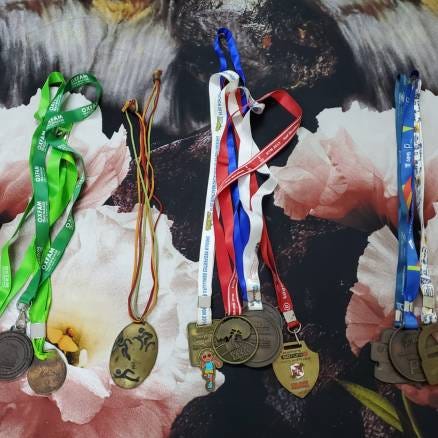
6) Go get that First Finisher’s Medal! — So I went straight from being able to run a 5k at a stretch, and never having tried a longer distance, to my first 10k. For anyone who plans to get half-serious about running, 10k is not a very daunting distance. And so, if your body is ready for a 5k without serious damage, you’re probably going to be fine in a 10k. And remember, we aren’t going after a podium position, but the finisher’s medal — and yes, most good well-organized running events have medals for every finisher which is one of the best things about running (at least for me)! The excitement and feeling of running with hundreds and thousands of others, that immediate incentive of overtaking the next person in front of you, and the adrenaline rush from being in your first competitive run will usually be enough to get you over the line, of course in addition to the hard work and practice you’ve put in over the past few months. Don’t worry too much about the clock, hopefully, this is only a first of many more to come (my first 10K took me about 1 hr and 15 mins and at my peak of consistency in running, I could do a 10k in about 52 mins)!
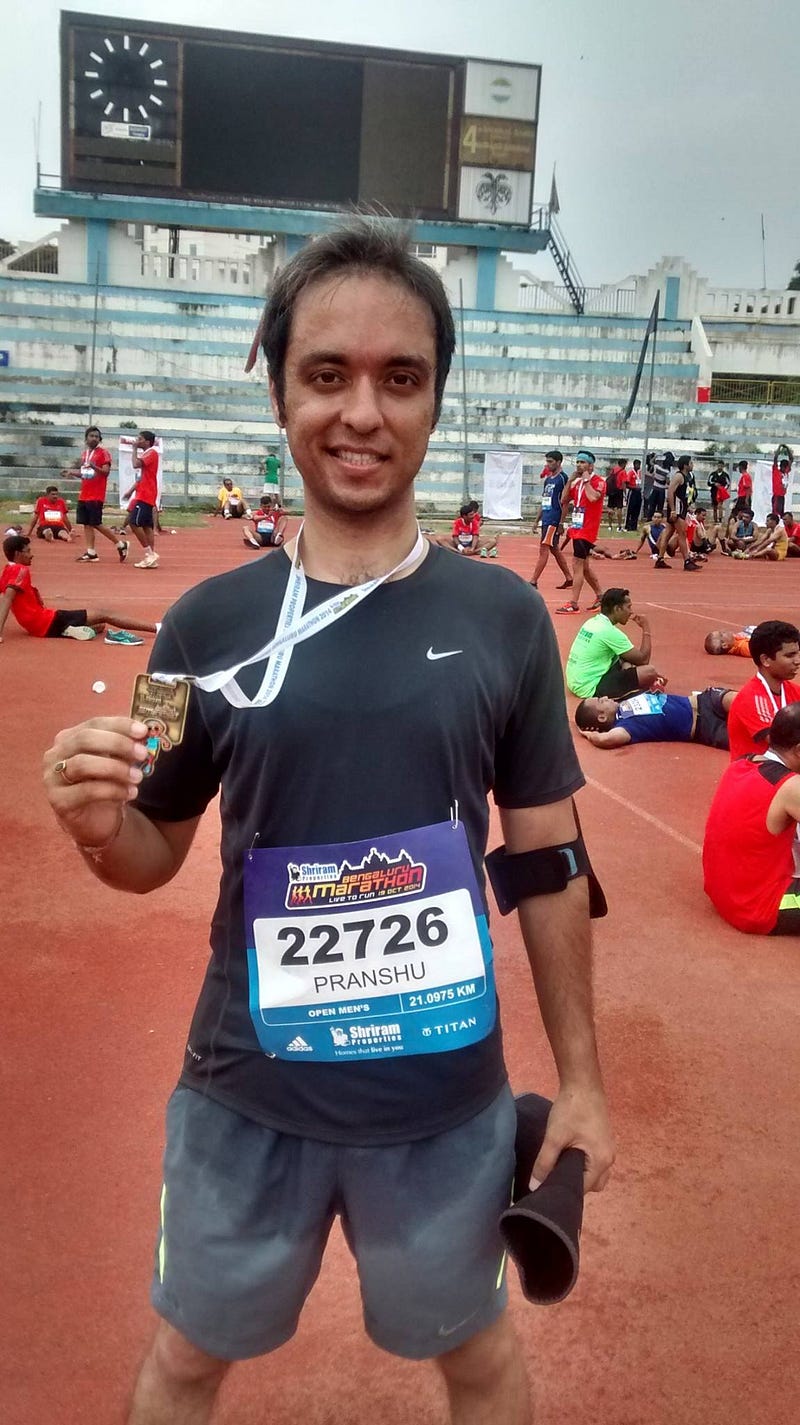
7) Other VERY Important Points — It would be very remiss of me to not mention some other very critical things to keep in mind as you embark on your journey of running. Warming up your muscles before every run with light stretches and cooling down with some stretches after is key to avoiding injuries and having a sustainable routine. Mixing up strength exercises for your whole body, especially your back, glutes, calves, and other muscle groups, is really important as well. While the casual runner doesn’t need a very strict diet, good and balanced nutrition as well as staying hydrated will go a long way in building your stamina. There is a ton of great reading available on the internet if you want more pro tips on each of these. And most importantly, don’t forget to ENJOY running even though it may not feel like the most enjoyable activity at the start because once a runner, forever a runner!

Procrastinator, thinker, fitness enthusiast, aspiring philanthropist, loving husband, doting dad, and finance professional View all posts by The M@ver!ck
Originally published at http://themaverickfiles.com on July 15, 2020.


