
7 Things I’d Tell My Younger Self To Ace A Job Interview
Attended a job interview recently? Did it go as planned? Could you have done better?
The thought of attending a job interview can fill one with a rush of excitement and a tinge of nervousness at the same time.
After all, a lot depends on how you perform and what the outcome is. Thus, it is not uncommon to feel butterflies in your tummy as the moment arrives.
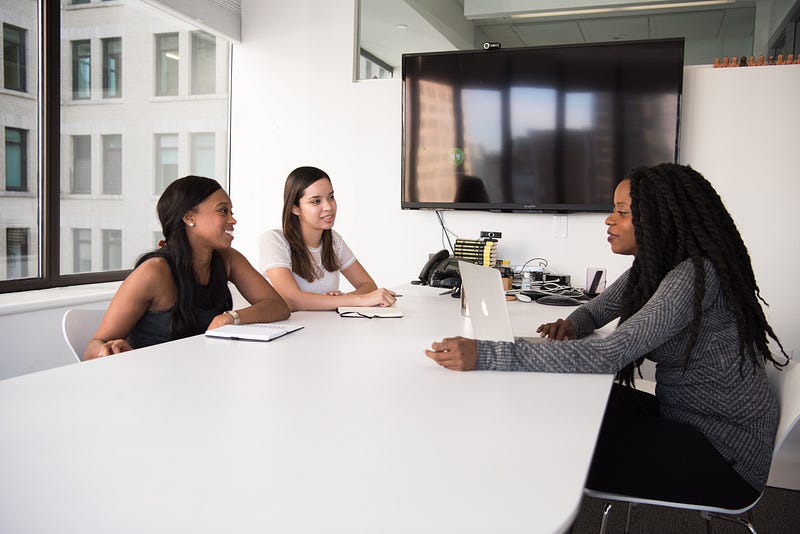
I ´ve been grateful for the opportunities to be on both sides of the table during an interview process — i.e. as an interviewee and more recently, as an interviewer.
Now that I´ve been more of an interviewer than an interviewee, there are certain things I´d love to tell my younger self to prepare well in order to ace an interview.
1. Research The Company You Will Be Interviewing For
As per the website legaljobs.io,
47% of the candidates failed the job interview because they didn’t have enough information about the company they applied to.
What a shame!
Imagine that you run a company and you want to hire someone to come work for you. You´re proud of your company.
What if the person has no clue what your company does! What if he/she doesn´t care to find out why you exist? Would you hire such a person who hasn´t bothered to research the basics of your company?
I know I wouldn´t!
So, prior to attending the interview, do yourself a favour and take sometime to learn about the company that you will be interviewing for. As an example, you could find out:
- What they do?
- What products/service do they sell?
- Why do they exist in the first place?
- What is their vision?
- What is their annual turnover?
- What are the different segments/businesses within the firm?
I´ve found out that the best place to obtain this information is from the company´s website. Now, many websites are so darn fancy that you´d be lost and distracted with their awesome website design that you´d forget why you entered the website in the first place!
Thus, I´ve found it super useful to download and peruse through the company´s annual report. For most of the publicly traded companies, annual reports are freely available on their website.
You don´t have to read the entire report. Just a few pages would do the trick. The initial few sections of the annual report tells you EXACTLY what they do. What are the businesses they deal in.
Let´s go through an example together, shall we?
Imagine you fell off the planet Venus and landed on Earth and you had no clue what the company “Coca Cola” does. What businesses are they in?
How´d you find out? What´s the best source of information? Simple answer: Check out their annual report.
I´ve pasted two screenshots from Coca Cola´s annual report below. Look at the table of contents. The section “Business” on Page 2 tells you much more details of the company than the interviewer himself might know!
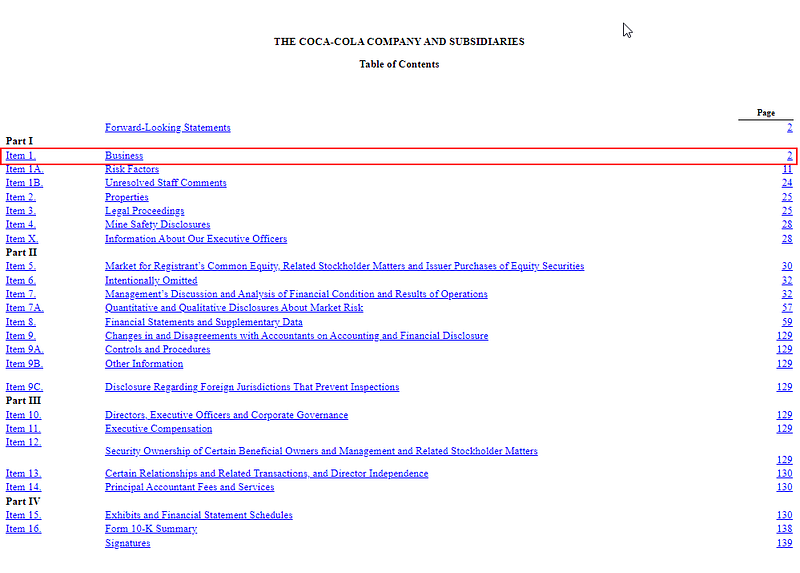
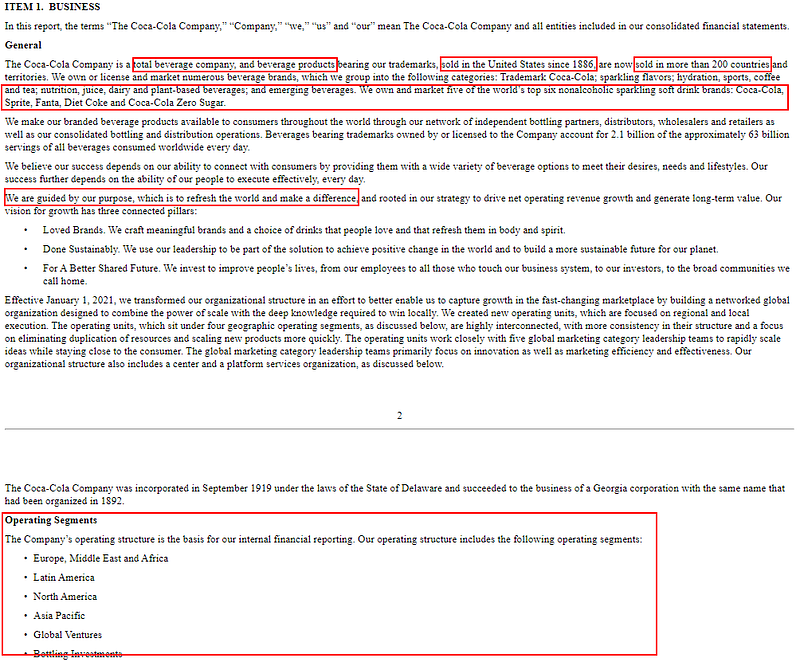
It tells you what kind of a company it is, since when do they exist, how many countries do they sell their products in, the groups under which they categorize all their beverages, their purpose or raison d´etre, their operating segments, and much more.
It would take you less than 15m to process this information. Knowing this, it would help you decide whether this is the company you want to be working for in the future.
More importantly, be ready to blow the interviewer´s mind with the knowledge that you possess about the company ;)
So, point# 1, Research the Company
2. Dress The Part, Groom Yourself Well
Be it Zoom or Face-To-Face interviews, do dress sharp and groom well. It conveys a lot about the person that is being interviewed.

A candidate who is dressed sharp and looks the part is much more likely to impress than another who doesn´t look the part & looks disheveled.
I am not talking about wearing fancy and expensive clothing. You can be a wearing a very reasonably priced dress from Walmart and yet look darn sharp.
By doing so, you not only create a good first impression (even before you open your mouth), but also feel a lot more confident than if you were not dressed appropriately. You increase the odds to crack the interview.
So, point#2, Look The Part!
3. Be Ready For Behavioral Questions
Behavioral questions, as the name suggests, aim to find out how you behaved in certain situations in your past roles.
No doubt technical knowledge is important (you´ll surely be quizzed on it and you´ll ace it), but I want to know how you reacted to different kind of work situations.
This is very important for the interviewer since it is almost certain that you´ll be facing similar situations in your new role.
For example, a tense situation pops up in your new role. How would you react? Chances are that you´d most likely react in the same way you reacted to similar situations in the past.

Chances are they´d prefer a candidate who did the latter.
Thus, behavioral questions are almost always a certainty in an interview. So, please do yourself a favor and prepare well.
How do you prepare for a behavioral interview? Time consuming but simple.
- For the actual behavioral questions, these are something you´ll have to research based on the role that you are applying to. Google “Behavioral Questions for XYZ role”.
- You´ll stumble upon hundreds of HR websites with thousands of questions. Peruse through multiple websites and jot down the often repeated questions on these websites. Choose around 8 to 10.
- Now comes the hard/boring part. Read what kind of situation is the question asking for? Think hard about similar situations in your past roles that answer the question. (not necessarily the immediate past role. It can be any of your previous roles)
- For e.g., “Tell me a situation where you had a disagreement on the marketing strategy for product XYZ with your colleague. How did you resolve it?”
- Think hard of an appropriate situation in your previous roles where you faced something like this.
- STAR Methodology: Once you´ve thought of the situation, use the STAR methodology to create the answer. STAR is an abbreviation for Situation, Task, Action, Result.
- Situation: Explain what was the situation that you faced. Set the background for the interviewer to understand what happened there. Narrate a short story.
- Task: In this situation, what was the task that you were trying to accomplish? What was your responsibility?
- Action: What action/steps did you take to achieve that task?
- Result: Based on your actions, what was the result? Was it in your favor or not?
Know that it is OK if the result was not in your favor. (It is not always possible that the result is in your favor) In such cases, you can explain what you learned from such a situation and how will you modify your actions in the future so that the results turn our favorably for you.
Remember that this kind of a detailed story telling is MUCH MORE effective that just answering in a cursory way. No one buys that kind of top-level fluff now-a-days.
So, point# 3, Prepare Thoroughly for Behavioral Questions
Having said the above, you should of course go well prepared for the technical round. I am assuming that you are good at what you do (if not, brush up/master your technical skills). Thus, I am not specifically covering that part as it is a no-brainer.
Now that we´ve covered some basics of what to do prior to attending an interview, let´s dive into some pointers to keep in mind during an interview.
4. Wear A Genuine Smile On Your Face
Not like the guy below!
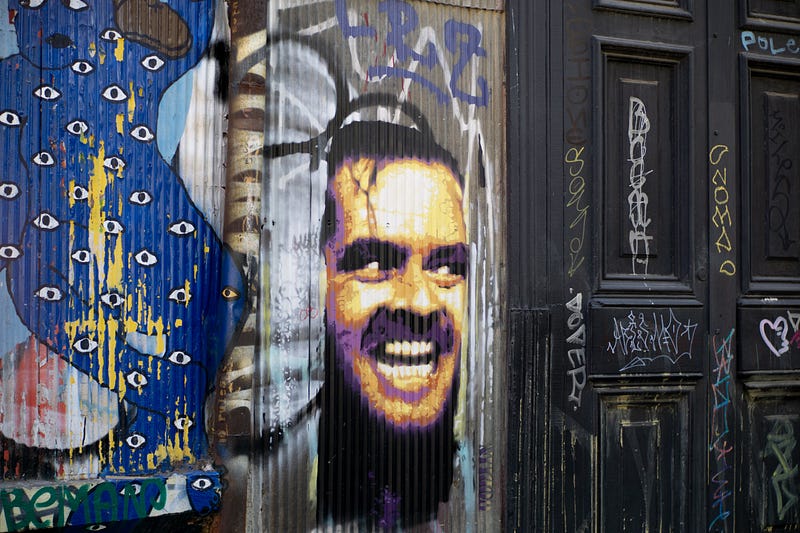
When I meet an interviewee, the first thing that impresses me is the demeanor of the person.
The initial few seconds/minutes spent with them gives you a faint hint about how that person might really be and whether you can see yourself working with that person or not.
A genuinely smiling and a cheerful person tends to get favorably looked at over a smart, intelligent yet grumpy natured person.
Unless the interviewer is a psychopath, it is highly likely that he/she would not mind the you (the candidate) coming across as friendly.
So, point# 4, Smile!
5. Focus on Achievements & Innovations
What can you bring to the table that the other Tom-Dick-and-Harry would not?
Of course a majority of the interviewees are good at what they do. They will easily fall into the 5 rating (9-box grading grid). Statistically, around 70% do. They are the core performers thanks to whom the business runs smoothly.
Then there are the outstanding performers who fall in the green band — above the 5-rating. These are the high potentials, the high performers and the stars.
What are you?

When you attend an interview, focus on the achievements in your previous role.
Explain to the interviewer what steps you took, apart from what was expected of you normally, and what did you achieve additionally? What role did you (specifically) play in that achievement?
Did you innovate? Did you analyze the existing process and challenge the status-quo to build something new, something more efficient that helped cut the process time in half (for example)?
Explaining these kinds of achievements assures the interviewer that the person sitting in front of them is someone they can count on to deliver, someone that will do the same if the new role were offered to them.
Businesses want people that go the extra-mile and over-deliver. I am not talking about sitting late nights, but working smart (and if required, long and hard) to achieve the results that others only dream of.
Are you one of them? If yes, showcase it during the interview.
So, point# 5, Showcase Your Achievements
6. Are You Result-Oriented?
“Dreaming Big” is in vogue of late.
There are posters that nudge you to do so. You hear your favorite stars, Instagrammers, say so.
And we do in fact dream big.

However, what did you do with that dream. Is it still only a dream? Or did you make something of it?
Dreams without action is like a Ferrari without an engine!
You´ll be super excited to have it. But that´s all it would do — just sit there. It won´t take you anywhere.
So, showcase that you are result-oriented. It´s great that you thought of a project and garnered support from people to fund it.
But what did you later? What was the outcome?
People are interested in the outcome. Show the results that you achieved. That´s what matters at the end of the day. (Goes without saying that achieving the results in an ethical/just manner is of prime importance)
So, point# 6, Focus On Results.
7. Prepare smart questions for the interviewers
It is most likely that the interviewers will allot a time during the interview where you can find out about them, the role, the company, etc. Don´t miss this.

I remember being polite and saying, “I don´t have any questions, thank you!”. Don´t be foolish. Of course you have questions.
Don´t you want to know:
- the kind of team you´d be working with,
- what´s the average age of the team,
- what´s the company culture like,
- what are the growth opportunities in the firm?
So, open your mouth and ask them questions that leave an impression that you are the right candidate for the role.
Most of the time, if you just say, “Nothing, thank you!”, it portrays that maybe you are not too interested or not wanting to find out more about the role that you are applying to.
I remember a high performing candidate, who´d impressed on me thoroughly during the interview process, ask me, “So, if I were selected for this role, what deliverables would be expected of me to be considered as an outstanding performer?”
This questions left a lasting impression on me. I knew she had not just asked the question for the sake of asking it as she had clearly demonstrated capabilities to over achieve in her previous roles.
With this question, she made me think on the spot as to what would I want myself or my team member to be doing in order to rate them as a high-performer.
So, point#7, Ask Smart Questions
Of course, there are many other ways to ace an interview. I´m sure even without most of the above points you´d have still aced your interviews.
However, with the plethora of interviews I´ve attended, the plethora that I´ve conducted, the people I´ve spoken to about who they´d consider hiring, what qualities/things they look for, the above compilation are some of the things that left an indelible mark on me.
If I´d known even a few of these points when I was younger, I´d have gone on to crack many more interviews than I did.
So, there you go. Hope this helps. Happy interviewing & All The Best!
Do leave your comments on what has been your experience and what points you´d share based on your experience. I´d love to hear and learn from you.