
7 Things Anyone Dealing With a Traumatic Loss Needs to Do
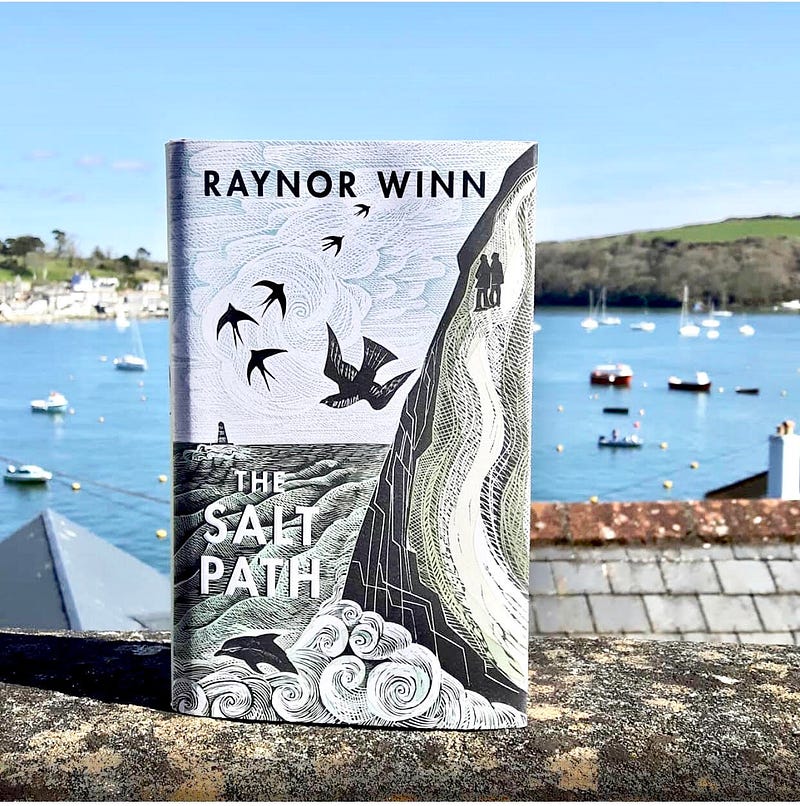
Actionable tips from Raynor Winn’s memoir The Salt Path
What would you do if you just lost your house and farm because a childhood friend sued you for the money you invested into his business that failed?
And it was your fault because you failed to follow court procedure in presenting evidence that would have helped you to save your home?
And then within the same week, a doctor diagnosed your husband with a degenerative brain disease that would gradually destroy his body and mind?
That’s what Raynor and Moth Winn must deal with in her memoir The Salt Path, a book I’m reading along with nine other writers of all ages across the globe. The book was a bestselling memoir in England for 80 weeks in 2019.
Here are seven ways I’ve noticed Raynor dealing with a life-changing event that is beneficial to anyone now going through or healing from trauma:
1. She lets out her immediate emotions:
About her home:
“What would I do with the hens, who would give the old sheep a slice of bread in the morning, how could we pack a farm in a week, how could we pay for a hire van, what about the families who had booked vacations, the cats, the kids? How could I tell the children we’d just lost their home?”
About her husband:
“No, not Moth, don’t take him, you can’t take him, he’s everything, he’s all of me. No. I tried to keep a calm face, but inside I was screaming, panicking, like a bee against a glass pane. The real world was there but suddenly out of reach.”
2. She grieves micro losses of everyday rituals in her life:
“I stood in the field behind the house, under the twisted ash tree, where the children built an igloo in the big now of ’ninety-six. I broke a slice of break into six pieces, a ritual that had marked the start of the day for the last nineteen years. The old ewe snuffled at my hand and her soft lips took the bread.”
3. She grieves the deepest parts of her feelings.
“What was he [the doctor] talking about? This wasn’t how we would die. It wasn’t Moth’s life; it was our life. We were one, fused, enmeshed, molecular. Not his life, not my life: our life. We had a plan for how we would die. When we were ninety-five, on top of a mountain, having watched the sun come up, we would simply go to sleep. Not choking to death in a hospital.”
4. She draws closer to a loved one to cope with trauma.
“We [she and Moth] clung together in the van in the hospital parking lot, as if the simple act of pressing our bodies together would make this stop. Just the two of us holding on to reality, to each other, in a hospital parking lot.”
5. She hides in the noise to avoid being overwhelmed.
“We drove home [from the doctor’s office] with the CD player at full volume, hiding in the noise. With the mountains falling away below and the sea crashing over my head, my world was upside down. By the time the van stopped, I was walking on my hands.”
6. She cries when unexpected events uncork her feelings.
Raynor follows her ritual to feed their ewe a couple of days before the bailiffs possess their home, and Smotgen is not there one morning to greet her.
Smotyn knew her home and family would soon be gone. She lay down and died in the grass. And Raynor knew she knew and let all her emotions out.
“All-consuming and uncontrollable. I curled up on the grass next to her and sobbed. Crying until my body stopped, spent, drained of tears, dried out by loss. The grass wrapped around my face and I lay under the beech trees and tried to die, to let go and be free with Smotyn, free to fly with the swallows and not have to face leaving this place or the desiccation of Moth.”
7. She does what needs to be done to get to the next day.
“I got the spade and started to dig, to bury Smotyn next to her sisters, in their field. Moth came out and we silently dug the hole together, refusing to speak, refusing to acknowledge the hole as it grew. I covered her head with a tea towel; we couldn’t look at her as the soil fell on her face. She was gone. It was all over. The dream that had been the farm was buried with her.”
Surprisingly, burying Smotyn helped Raynor and Moth to let go of the farm, and it helped them to take the next step in dealing with their loss.
Raynor says logic said she should look for a job, but by going through all her emotions of grieving she realized she had a more important focus in her life:
“I couldn’t leave Moth and go to work — I needed to spend every minute of this precious semi-health with him. I had to save every memory to carry with me into a lonely future.”
And what I liked is she kept grieving, hating the doctor for his diagnosis, and went through bargaining thinking ….I wished he could take it away … and I haven’t mentioned Moth’s grieving up to this point, but he grieves as well.
“I don’t think I can bear to stay around here. I need to put some space between Wales and us; it’s too painful to stay. I don’t know about the longer term, don’t know if I’ve got a longer term, but for now, I need to be somewhere else. Need to look for somewhere else to call home.”
And that’s when they confirmed to walk the Salt Path, a 630-mile walk along the coast of England equivalent to climbing Mount Everest four times.
“Let’s pack the rucksacks then, and make it up as we go along.”
“The South West Coast Path it is then.”
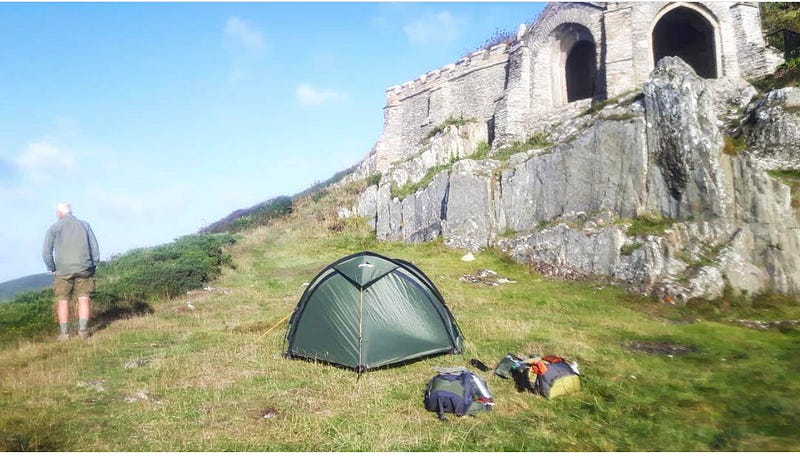
This couple in their 50s just lost their farm, and they’re dealing with their loss by walking — even with Moth’s illness — and wild camping on The Salt Path.
Read the book to find out what happens and learn to deal with trauma.
Thanks for reading my story.
I’m looking forward to sharing the collaborative journey with: Evon, Janice Macdonald, Klara Jane Holloway, C.A. Jaymes, Angie Mangino, Michael L Butler, The Sober Vegan Yogi, Belcairn, Jane Kelley, Mary DeVries.
Check out my YouTube video on building an audience on Medium …