avatarShamiha Said

Free AI web copilot to create summaries, insights and extended knowledge, download it at here

3408

Abstract

his can be incredibly irritating because it takes up so much energy that we rarely have any<i> ‘spoons’ </i>left for ourselves.</p><p id="3f68">Masking and daily living tasks regularly take it out of me, and I never have enough time to rest because I have too many conflicting responsibilities. Insomnia and sleep disorders are also common factors, and I can tell you that as someone who regularly struggles with sleep, this strongly affects how irritated I am the next day, and I find that without good sleep, I don’t have the spoons to cope.</p><figure id="04a8"><img src="https://cdn-images-1.readmedium.com/v2/resize:fit:800/0*mYhdGfAHMMVfVsl-"><figcaption>Photo by <a href="https://unsplash.com/@brucemars?utm_source=medium&amp;utm_medium=referral">bruce mars</a> on <a href="https://unsplash.com?utm_source=medium&amp;utm_medium=referral">Unsplash</a></figcaption></figure><p id="4fc7"><b>3. I feel frustrated that I have to choose between my dreams and my health.</b></p><p id="6cbd">There are SO many things I want to do, so many ideas I want to try- but they would demand more spoons than I have available. As well as being autistic, I have 10+ invisible illnesses, which means that I am limited in how much I can do. I find it so frustrating that everyone else who isn’t disabled doesn’t have to make this daily choice. I am so irritated and so angry that, as an autistic woman, productivity comes at the price of autistic burnout.</p><figure id="c306"><img src="https://cdn-images-1.readmedium.com/v2/resize:fit:800/0*kIxCXIrvqQw8xlAP"><figcaption>Photo by <a href="https://unsplash.com/@wzimmermann?utm_source=medium&amp;utm_medium=referral">Wolf Zimmermann</a> on <a href="https://unsplash.com?utm_source=medium&amp;utm_medium=referral">Unsplash</a></figcaption></figure><p id="df37"><b>4. Ableism: People assume I’m ‘able’ because my disabilities are invisible.</b></p><p id="fce0">Everyone around me assumes and regularly forgets that I’m disabled. This means that I am periodically compared to people who are 100% able, and it is not an equitable comparison. It’s irritating that when this happens, I either have to disclose I am disabled and explain why, or I have to pretend that I am able, and both choices are infuriating.</p><p id="9caa">This has left me burnt out, as for the last 15 years, I’ve been masking so hard just to feel accepted by others. I can’t help but feel if I looked more disabled, then people would give me more grace.</p><figure id="b828"><img src="https://cdn-images-1.readmedium.com/v2/resize:fit:800/0*7Lt2fEjAOVEdBh4J"><figcaption>Photo by <a href="https://unsplash.com/@golfarisa?utm_source=medium&amp;utm_medium=referral">Arisa Chattasa</a> on <a href="https://unsplash.com?utm_source=medium&amp;utm_medium=referral">Unsplash</a></figcaption></figure><p id="4b0b"><b>5. Communication issues</b></p><p id="b035">Unfortunately, neurotypical people love unnecessary politeness and ambiguity- and this is extremely difficult to cope with as an autistic person. This means that information is often misinterpreted and can lead to conflict. There have been so many times that I haven’t picked up on communication cues, or I haven’t done what was expected of me, or that I didn’t read between the lines and truly understand what someone wants from me. I find it so irritating when someone is upset or disappointed with me. I have no idea why, yet they provide me with n

Options

o clarity.</p><figure id="89e7"><img src="https://cdn-images-1.readmedium.com/v2/resize:fit:800/0*pqcFCL9EPFbpnes0"><figcaption>Photo by <a href="https://unsplash.com/@priscilladupreez?utm_source=medium&amp;utm_medium=referral">Priscilla Du Preez 🇨🇦</a> on <a href="https://unsplash.com?utm_source=medium&amp;utm_medium=referral">Unsplash</a></figcaption></figure><p id="2e3c"><b>6. Emotional regulation issues</b></p><p id="2b03">Most of the time, I don’t want to be snappy and irritated, but I find I can’t regulate my emotions enough to control this. Sometimes, I don’t even know why I’m so irritated, but I feel emotionally unbalanced. I can say that almost three years of therapy have helped me become calmer and have some form of control over my emotions, but every day, this is something I struggle with, and I tend to struggle with more around the time of my period.</p><figure id="5cc3"><img src="https://cdn-images-1.readmedium.com/v2/resize:fit:800/0*0mHE1eS2GOiOiONY"><figcaption>Photo by <a href="https://unsplash.com/@louiscesar?utm_source=medium&amp;utm_medium=referral">Louis Galvez</a> on <a href="https://unsplash.com?utm_source=medium&amp;utm_medium=referral">Unsplash</a></figcaption></figure><p id="cd4a"><b>7. Executive dysfunction</b></p><p id="a373">It is incredibly frustrating when I want to do something or finish a task, but my brain won’t cooperate. No matter how much I want to get things done, my brain refuses to take the next step — this can be as simple as putting the laundry away, even though it’s been on the floor in a bag for a week. This could be as simple as calling the doctor for a GP appointment for a rash on my leg, but I can’t, so the rash gets worse. This could be as simple as sending an email at work, but I forget and then get told off by my boss. In all fairness, ADHD medication does help me complete tasks, but I often find that by the end of the day, I am too burnt out because of the medication. I wish I were able to get things done without it impacting my mood and well-being, and this is the main reason why I’m constantly irritated as an autistic woman.</p><figure id="dbfe"><img src="https://cdn-images-1.readmedium.com/v2/resize:fit:800/0*wci48BiiNx0dYGc6"><figcaption>Photo by <a href="https://unsplash.com/@thisisengineering?utm_source=medium&amp;utm_medium=referral">ThisisEngineering RAEng</a> on <a href="https://unsplash.com?utm_source=medium&amp;utm_medium=referral">Unsplash</a></figcaption></figure><p id="3c61"><b><i>I hope you found this helpful. Is there anything you’d add? Please comment if you found this insightful or enjoyed reading it, as Medium writers are now paid for engagement, including comments, claps, and highlights!</i></b></p><p id="c2c7"><b><i>If you found my content relatable and insightful, please do all three. I love reading your comments; it keeps me going!</i></b></p><p id="1f75"><b><i>I frequently write about the Neurodivergent experience and write on Medium, so follow me for more content and subscribe to be the first to learn about my upcoming book! Thank you for all of your support!</i></b></p><p id="8980"><b><i>Follow my socials; I recently started making daily TikTok videos and would love your support! Leave me a comment, and let me know if you came from Medium.</i></b></p><p id="7b59"><a href="https://linktr.ee/shamihasaid"><b><i>https://linktr.ee/shamihasaid</i></b></a></p></article></body>

7 Surprising Reasons Why Autistic Women Are Constantly Irritated

The heightened senses, the hormones and the expectations…it’s all too much!!!
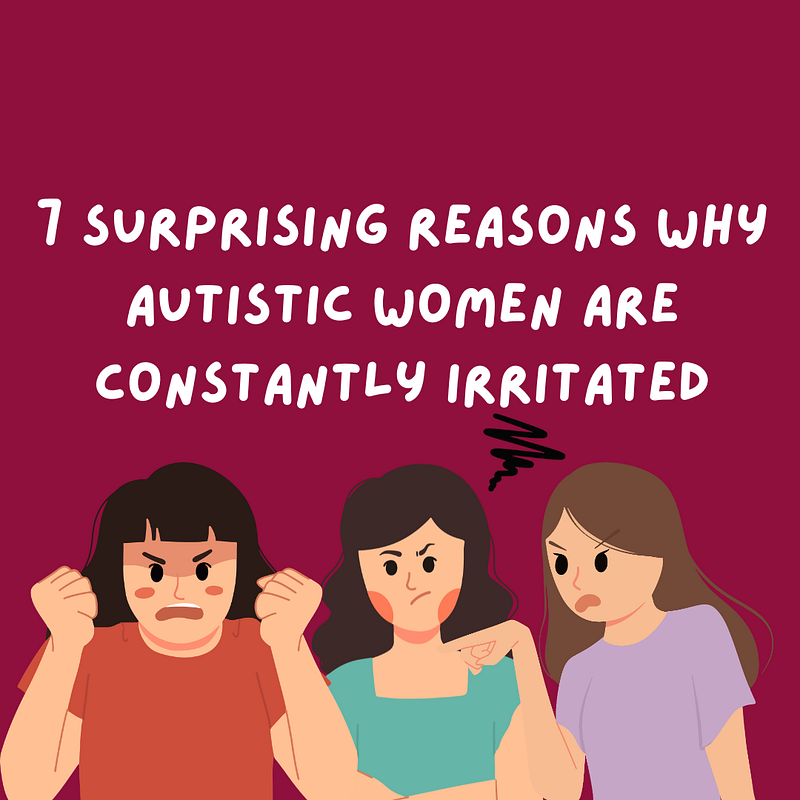
Image created on Canva by Author (Shamiha Said)

Autistic women are more likely to have heightened sensitivities and emotions, and therefore, many of us have problems with emotional regulation. This goes a step further for those of us who are high-masking, as I find that when I am masking, I feel highly irritated by everything around me.

Although I was only diagnosed with autism when I was 27 years old, I’ve felt irritated every single day for as long as I can remember. I desperately wish it wasn’t so easy for me to become irritated. Still, the slightest change or trigger can alert a sense of irritability, which is entirely outside my control.

Women (particularly neurodivergent women) are expected to tolerate and maintain pretences and appearances. To meet this unbearable expectation, we become accustomed to being irritated. For some of us, this is behind closed doors, and many of us become visibly irritated. I become irritated regularly because it’s not ‘ladylike’ or ‘polite’ to become angry, sad, or frustrated whenever something doesn’t happen the way I want. Still, neurotypical people tend to have less to say about irritability, or it’s an emotion which is easier to hide than others.

Here are seven everyday reasons why autistic women are constantly irritated:

  1. Sensory issues

I find myself regularly in a state of sensory overload because of things like bright lights, loud noises, the different sounds I hear during a single conversation, and the various and constantly changing smells around me. Daily sensory changes are inevitable, which means I’m continually irritated when my senses feel the slightest bit overwhelmed. To make things even more irritating, no day is ever the same. What irritates me today won’t be the same thing that irritates me tomorrow, so there is no ‘getting used to it’. To add, autistic women may have heightened sensory sensitivity when menstruating, and in my experience, the feeling of blood and pads/tampons always tip me over the edge!

Photo by Jeremiah Lawrence on Unsplash

2. I’m chronically exhausted no matter how much I sleep.

I can’t remember the last time I felt well-rested as I have been tired from masking since I was around 11. There is a higher expectation for women to socialise, keep up appearances, and, in some cultures, serve others. As an autistic woman, this can be incredibly irritating because it takes up so much energy that we rarely have any ‘spoons’ left for ourselves.

Masking and daily living tasks regularly take it out of me, and I never have enough time to rest because I have too many conflicting responsibilities. Insomnia and sleep disorders are also common factors, and I can tell you that as someone who regularly struggles with sleep, this strongly affects how irritated I am the next day, and I find that without good sleep, I don’t have the spoons to cope.
Photo by bruce mars on Unsplash

3. I feel frustrated that I have to choose between my dreams and my health.

There are SO many things I want to do, so many ideas I want to try- but they would demand more spoons than I have available. As well as being autistic, I have 10+ invisible illnesses, which means that I am limited in how much I can do. I find it so frustrating that everyone else who isn’t disabled doesn’t have to make this daily choice. I am so irritated and so angry that, as an autistic woman, productivity comes at the price of autistic burnout.

Photo by Wolf Zimmermann on Unsplash

4. Ableism: People assume I’m ‘able’ because my disabilities are invisible.

Everyone around me assumes and regularly forgets that I’m disabled. This means that I am periodically compared to people who are 100% able, and it is not an equitable comparison. It’s irritating that when this happens, I either have to disclose I am disabled and explain why, or I have to pretend that I am able, and both choices are infuriating.

This has left me burnt out, as for the last 15 years, I’ve been masking so hard just to feel accepted by others. I can’t help but feel if I looked more disabled, then people would give me more grace.
Photo by Arisa Chattasa on Unsplash

5. Communication issues

Unfortunately, neurotypical people love unnecessary politeness and ambiguity- and this is extremely difficult to cope with as an autistic person. This means that information is often misinterpreted and can lead to conflict. There have been so many times that I haven’t picked up on communication cues, or I haven’t done what was expected of me, or that I didn’t read between the lines and truly understand what someone wants from me. I find it so irritating when someone is upset or disappointed with me. I have no idea why, yet they provide me with no clarity.

Photo by Priscilla Du Preez 🇨🇦 on Unsplash

6. Emotional regulation issues

Most of the time, I don’t want to be snappy and irritated, but I find I can’t regulate my emotions enough to control this. Sometimes, I don’t even know why I’m so irritated, but I feel emotionally unbalanced. I can say that almost three years of therapy have helped me become calmer and have some form of control over my emotions, but every day, this is something I struggle with, and I tend to struggle with more around the time of my period.

Photo by Louis Galvez on Unsplash

7. Executive dysfunction

It is incredibly frustrating when I want to do something or finish a task, but my brain won’t cooperate. No matter how much I want to get things done, my brain refuses to take the next step — this can be as simple as putting the laundry away, even though it’s been on the floor in a bag for a week. This could be as simple as calling the doctor for a GP appointment for a rash on my leg, but I can’t, so the rash gets worse. This could be as simple as sending an email at work, but I forget and then get told off by my boss. In all fairness, ADHD medication does help me complete tasks, but I often find that by the end of the day, I am too burnt out because of the medication. I wish I were able to get things done without it impacting my mood and well-being, and this is the main reason why I’m constantly irritated as an autistic woman.

Photo by ThisisEngineering RAEng on Unsplash

I hope you found this helpful. Is there anything you’d add? Please comment if you found this insightful or enjoyed reading it, as Medium writers are now paid for engagement, including comments, claps, and highlights!

If you found my content relatable and insightful, please do all three. I love reading your comments; it keeps me going!

I frequently write about the Neurodivergent experience and write on Medium, so follow me for more content and subscribe to be the first to learn about my upcoming book! Thank you for all of your support!

Follow my socials; I recently started making daily TikTok videos and would love your support! Leave me a comment, and let me know if you came from Medium.

https://linktr.ee/shamihasaid

Mental Health
Psychology
Autism
Advice
Life
Recommended from ReadMedium