
Sleep Positions for back pain
7 SLEEPING Positions That Can REDUCE Your “Back Pain”
Seven sleeping positions that are helpful with lower back pain.
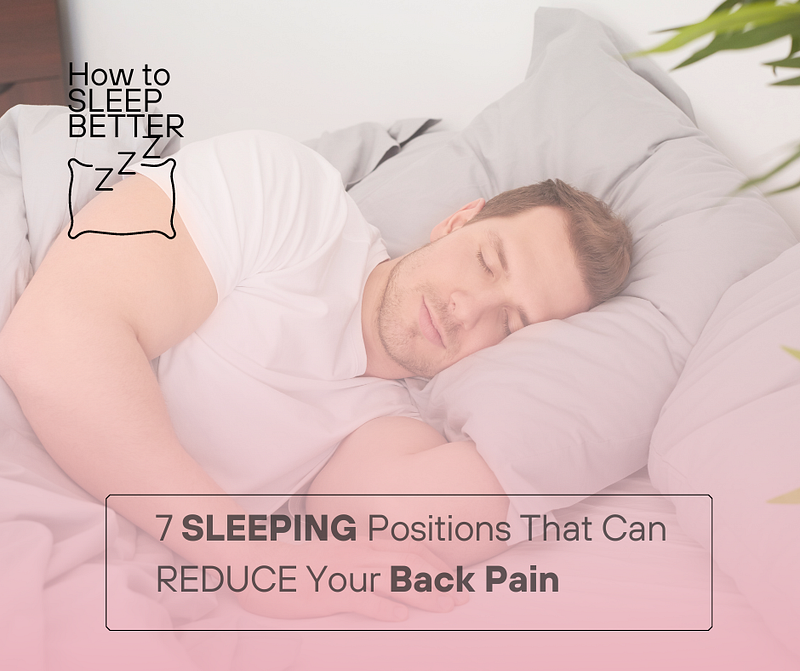
Back pain is a common ailment that can disrupt daily life and affect overall well-being. One aspect often overlooked in addressing back pain is the role of sleep and sleeping positions.
Disclaimer: This article has affiliate links which means that whenever you click on a link and make a purchase, we may earn a small commission at no additional cost to you. Thank You!
Choosing the right sleeping position can significantly impact back health and contribute to pain relief.
Here are the seven sleeping positions that have been known to reduce back pain and promote a more comfortable night’s sleep.
Sleeping on Your Back: Sleeping on your back is often recommended by healthcare professionals as it helps maintain the natural curve of your spine. Placing a pillow under your knees can provide additional support and alleviate pressure on the lower back. Using a supportive pillow for your head that keeps it in a neutral position is crucial for optimal spinal alignment.
Fetal Position: Curling up in a fetal position is a popular sleeping position that can benefit those with back pain. This position opens up the space between the vertebrae, reducing pressure on the spine. To adopt the fetal position, lie on your side and draw your knees toward your chest while keeping your back slightly rounded. Ensure you have a comfortable and supportive pillow to maintain proper alignment.
Sleeping on Your Side: Side sleeping is another position that can help alleviate back pain, especially for those with herniated discs or sciatica. Placing a pillow between your knees while sleeping on your side can keep your spine in a neutral position and reduce strain. Choose a supportive pillow for your head to maintain proper alignment with your spine.
Modified Stomach Sleeping: While stomach sleeping is generally discouraged due to its potential to strain the neck and lower back, some modifications can make it more back-friendly. If you prefer sleeping on your stomach, place a thin pillow under your pelvis to reduce strain on the lower back. Keep your head and neck in a neutral position using a flat pillow or none at all.
Reclined Position with Adjustable Bed: Investing in an adjustable bed can be beneficial for individuals with back pain. Elevating the upper body slightly can reduce pressure on the lower back and promote better spinal alignment. Use a supportive pillow for your head and neck, adjusting the bed to a comfortable position that suits your preferences.
Sphinx or Cobra Pose: For those who experience lower back pain, the Sphinx or Cobra pose can be a helpful sleeping position. Lie on your stomach and prop yourself up on your elbows, keeping your hips on the bed. This position can alleviate pressure on the lower back and provide relief for some individuals.
Legs Elevated: Elevating your legs while sleeping on your back can reduce pressure on the lower back and improve circulation. Place a pillow or cushion under your knees to elevate your legs slightly. This position is particularly beneficial for individuals with conditions like spinal stenosis or arthritis.
Do You Know Investing in a quality mattress can really improve your sleep? That is why Saatva is known the most comfortable mattress for a quality sleep at night: https://saatva.partnerlinks.io/Uooper 🛏️💤
Choosing the right sleeping position is a crucial factor in managing and reducing back pain. While these seven sleeping positions offer general guidelines, it’s essential to consider individual preferences and conditions.
Experiment with different positions and pillow arrangements to find what works best for your specific back pain. If back pain persists or worsens, seeking advice from a healthcare professional is advisable for personalized recommendations and further evaluation.
A good night’s sleep is not only essential for overall health but also plays a significant role in managing and preventing back pain.
Disclaimer: The information provided in this article is intended for general informational purposes only and is not a substitute for professional medical advice, diagnosis, or treatment.
Always seek the advice of your physician or other qualified health provider with any questions you may have regarding a medical condition.