
7 Reasons you need to be investing in your future today!
Today I have prepared a post about the power of compound interest and why you should be doing it now, including a few rules and tricks of the trade!
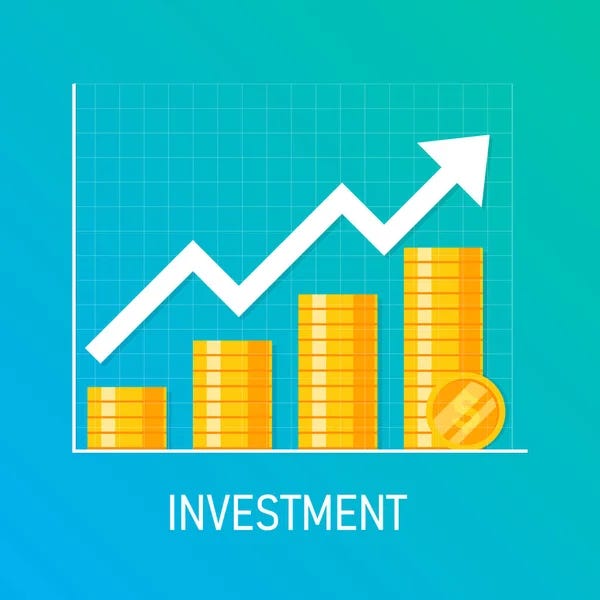
Consider a hypothetical scenario where a seed had the inherent capacity to develop into a robust oak tree when sown. The seed represents an individual’s monetary resources, while the oak tree symbolizes their future financial prospects. What is the process by which this transition occurs? By harnessing the power of investment and leveraging the compounding effect, remarkable financial outcomes can be achieved. This article aims to examine the significant implications of making good investment decisions and effectively utilizing the concept of compound interest in order to establish a stable and prosperous future.
1. An Introduction to Investment Fundamentals:
It is vital to comprehend the distinction between saving and investing. While the act of saving allows individuals to retain their money, investing has the potential to facilitate its growth. Each year that you save money in a bank account, the value of the money will lose more purchasing power. This is due to money being printed over time, and an increase in printed money will make the money you hold over time less valuable. Investing your money into a business (via stock and shares) will help protect your money from losing its purchasing power. The business you invest in will grow over time, meaning you will be keeping up with inflation or perhaps beating it and actually getting ahead.
Asset Classes: An examination of several asset classes, including equities, fixed income securities, real estate, and commodities, is conducted to ascertain the optimal allocation of investment resources.
2. An In-Depth Analysis of Compound Interest:
Compound interest has been famously referred to as the “eighth wonder of the world” by the renowned physicist Albert Einstein. Explore the reasons behind its formidable influence.
The mechanism of compound interest involves the reinvestment of earned income, resulting in an exponential increase over a period of time. Thus, the longer you hold the investment without taking money out, the more it will compound. This style of investing is known as intrinsic value investing, a fancy way of saying buying shares of a business and holding them over a long period of time while ignoring the fluctuations in the market.
In order to achieve this, you have to be emotionally and mentally prepared to see the value of your shares rise and fall. Please keep in mind that when the market drops and your investment account is showing a loss of money, this is not the time to get scared and pull out. In fact, it is quite the opposite. Look at it as if you were planning to buy a house; a good time to buy would be when the house prices drop.
3. The Advantage of Early Rising:
The timing of investments plays a crucial role in maximizing the benefits of compound interest. The earlier one initiates the process of investment, the greater the potential for accumulation.
The Rule of 72 is a fundamental idea in the field of investment that provides a straightforward and influential method for approximating the time required for an investment to double in value, given a consistent annual rate of return. In order to use this principle, you must perform a division operation whereby 72 is divided by the anticipated yearly interest rate that is projected to be accrued from the investment. The outcome represents an estimation of the duration required for the initial investment to increase to twice its original worth. As an illustration, assuming an anticipated annual return of 8%, the investment would require approximately 9 years (calculated by dividing 72 by 8) to achieve a doubling in value. This principle underscores the significance of both the temporal aspect and the rate of return in the process of amassing wealth. The tool serves as a convenient instrument for investors to expeditiously assess the prospective growth of their investments and make well-informed financial determinations.
4. The Trade-off between Risk and Reward:
Risk Tolerance: Evaluate your propensity for risk and develop an investment strategy that corresponds with your financial objectives and degree of comfort. Just £250 per month over a period of 35 years invested in the S&P 500 could see you a nice retirement, as long as you follow the 4% rule. Once you have reached a level where you can live on a yearly withdrawal of 4%, it is considered pretty safe, as only withdrawing 4% will help ensure that your account value does not decrease significantly.
Diversification: Understand the significance of implementing diversification strategies in your financial portfolio in order to proficiently mitigate risk. (Using index funds is a good method for this.)
The Long-Term Approach (V) focuses on strategies and actions that are designed to have lasting effects over an extended period of time.
The Significance of Patience and Discipline in Long-Term Investing: Exploring the Importance of These Attributes in Facilitating Substantial Wealth Accumulation
The topic of retirement planning will be explored, with a focus on the significant role that investing and compound interest may play in assuring financial security during one’s retirement years.
5. Case Studies of Achievements in Practical Contexts:
Case studies provide valuable insights into the experiences of individuals who have achieved financial independence through strategic investments and the compounding effects of interest. These real-life success stories shed light on how individuals with modest beginnings were able to attain significant financial growth.
7. Implementation Strategies:
Commencing Your Investment Journey: Pragmatic Measures for Novice and Seasoned Investors
Inquiry into Expert Consultation: Deliberate over the advantages associated with engaging a financial advisor in order to formulate an individualized investment strategy.
In summary, it may be argued that the act of investing and the concept of compound interest serve a greater purpose than mere wealth accumulation since they possess the potential to shape your financial legacy. By strategically allocating your funds into meticulously selected assets and leveraging the phenomenon of compound interest, you can witness the gradual expansion of your financial prospects, ultimately leading to a flourishing and stable future. The prudent use of financial resources towards investments in the present might enhance the feasibility of future aspirations, such as retirement, homeownership, or desired travel experiences. The efficacy of investment is derived not only from its capacity for generating financial profits but also from the sense of security and empowerment that accompanies the realization of one’s ability to shape their own financial future. I would highly recommend that you start as early as possible, and if you are not sure when to invest, use a technique called DCA. This stands for dollar Cost averaging. In simple terms, this means to invest a set amount per month, forget about it, and let it run for a long period of time. By doing this, you will buy at both high and low points in market fluctuation, and this has been shown to give effective results over time.
I hope you all enjoyed and learned something from this read.