
7 Quotes from Braiding Sweetgrass That Helped Me Heal
A book that truly comforted what disturbed me, and disturbed what I’ve come to take with such comfort
Art should comfort the disturbed and disturb the comfortable. — Cesar A Cruz
When I think about a good book, I think about one that balances between doing both. Sometimes, when I read this quote above regarding comforting the disturbed and disturbing the comfortable, I think of myself as falling into one of the two categories, rather than both. A good book gently nudges in both directions.
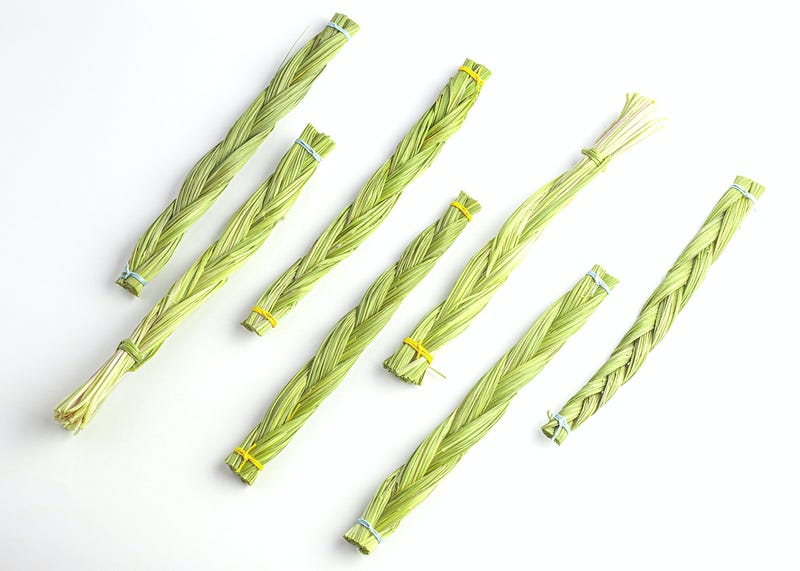
Braiding Sweetgrass: Indigenous Wisdom, Scientific Knowledge and the Teachings of Plants by Potawatomi botanist Robin Wall Kimmerer was a book that embodied these values.
There are aspects that helped shed magic and beauty on to things that felt simply of doom and gloom. And once comforted, there were aspects of the book that nudged me closer towards action.
So, the seven quotes that stood out to me most from this book really highlighted aspects of helping me heal, and holding me accountable to become a part of this healing journey for others and the planet.
This is really why I made my daughters learn to garden — so they would always have a mother to love them, long after I am gone.
As someone on her eternal journey of recovering from having an abusive mother, there was a time when simply reading about good mothering led me to believe that there was something inherently wrong with me that I could not have received that love.
Reading this quote in the book, I thought I’d feel the same; yet I noticed my feelings shift. Reading this quote was healing because I am opening myself to nurturing my inner child in different ways. There won’t ever be a single “mother” figure to me, no single human being who will be able to step in and take on that role.
Learning to be loved by nature, by others in different ways, will be one of many sources from which I derive nurturance. These words were healing to read.
Filed under: Quotes that helped me heal Sometimes I wish I could photosynthesize so that just by being, just by shimmering at the meadow’s edge or floating lazily on a pond, I could be doing the work of the world while standing silent in the sun.
I’m known as someone who hates nature with a passion, always making time to complain about how my body rejects it. For an excerpt of said complaints, see here.
In Robin Wall Kimmerer’s words though, there was love and connection and excitement and passion. It’s so connecting to read her words. For the first time in my life, I really get to see her love for nature, with words that highlight the magic and beauty of what she absorbs from what surrounds her.
It’s incredible how what’s salient to us in the same outdoor environment can so significantly change your experience of something.
Filed under: quotes that helped me heal and approach the world with a new set of eyes Even a wounded world is feeding us. Even a wounded world holds us, giving us moments of wonder and joy. I choose joy over despair. Not because I have my head in the sand, but because joy is what the earth gives me daily and I must return the gift.
This quote was powerful because it highlights a sense of hope and action, instead of the widespread climate despair and climate anxiety felt commonly in this era.
It highlights how she asks her students about how humans have had a negative impact on the earth, and students readily had responses. Yet when these students were asked about how humans have had a positive impact on the earth, no one could produce an answer. Her anecdote and quote here both highlight that while climate despair and anxiety specifically spotlight our need to do something about the environment, it’s not until we know how to care for our earth and have a positive relationship that we really enact the solution. In other words, in addition to stopping what’s damaging our earth, we need to replace this with behaviours and relationships with our earth and land that are sustainable and reciprocal.
Thus, amidst the scars on the earth, her words speak hope, if only we act and if only we reciprocate; and if only we do it now.
Filed under: quote that encouraged me to act, to be an agent of healing To become naturalized is to live as if your children’s future matters, to take care of the land as if our lives and the lives of all our relatives depend on it. Because they do.
I’m going to be truthful in sharing that in this precise moment that I’m writing this, it’s hard to plan ahead even a few months because of a number of uncertainties going on in my life. Even the next day seems like a lot to think about.
On a longer timescale, I am surrounded by friends whose retirement plan is jokingly “to die of climate-related reasons”, which actually serves as a bit of a relief, because saving up for retirement itself seems impossible when simply earning enough to cover skyrocketing rent and cost of existence. That is, even considering that we are a privileged bunch, and landed in professional careers that are supposed to pay well.
It’s a lot of stress to hold to be a part of this generation when older generations see delays in “adult development” (e.g., having a family, owning a house) as “too many lattes and avocado toasts” (i.e., lack of planning) and/or lack of effort rather than a systemic failure. Do you hear resentment in these words? There is such resentment for the choices made from places of greed by previous generations.
Yet, I must remind myself that as time moves forward, I am not without my own flaws; we as a generation can just be as susceptible to making these choices. This book is one of the things that highlights this future-oriented thinking to me in recent years.
I may not want to have a child of my own, but this thinking about how we are ancestry to others helps us plan and think seven generations ahead. Are the choices we make today only benefitting monetary “profit” for our own generation at the risk of safety for the next?
Filed under: quote that encouraged me to act, to be an agent of healing Each person, human or no, is bound to every other in a reciprocal relationship. Just as all beings have a duty to me, I have a duty to them.
Through this book, two big lessons were really highlighted to me — the language of animacy and the language of reciprocity. The language of animacy sets the stage that plants and wildlife are beings just the way that we are beings, rather than this hierarchical way that we often think about ourselves as humans relative to other species.
With animacy and treating environmental life as beings is then associated with reciprocity. Just as friendships, relationships, familial connections should be reciprocal, as should our relationship with the land. To take without giving back is really goddamn rude of us, and at best, we’ve been pretty damn rude human beings for a long time now. (My salty paraphrase, not author’s).
Shifting away from this immediate reaction that I have that humans are just bad for the environment (see above salty paraphrase; it leaked right through in my words), I’m learning how to be human in a way that’s not selfish. I’m learning how to co-exist with the environment through this new language of treating our environment as animated beings that give and should be nurtured in reciprocity. That is the powerful shift.
Filed under: quote that encouraged me to act, as an agent of healing The trees act not as individuals, but somehow as a collective. Exactly how they do this, we don’t yet know. But what we see is the power of unity. What happens to one happens to all. We can starve together or feast together.
In this chapter, the author writes about the science behind pecan trees, and how each individual tree might be bestowed with different resources as a result of chance, but together they synchronize fruiting events. That’s why in this quote, she says “the trees act not as individuals, but somehow as a collective”.
Having just emerged from several months of being told that one should think only of oneself because you can’t control other people’s behaviours, this analogy precisely described the types of narratives that I’ve grown up with that are not “toxic” by nature but sometimes considered so in relation to individualistic culture. My ideal is to be in a community where I’m one amongst the bunch of other pecan trees, somehow magically communicating and willing to grow and blossom together. We can starve together or feast together.
There can be a version of community or collective support that can be healthy — I think that was important to me to have the language and example to communicate. In my own experiences, the “communities” that were supposed to be like these pecan trees, supportive and synchronized, were not, and instead took and took and took, so the question becomes “well, if you’re the only one giving, then why?”, which I understand. These communities were not meant to be communities. Yet to then label all communities are impossible was damaging to me.
There are cultures out there that value community because when things work, the whole is greater than the sum of its parts. I need to hear more of that.
Filed under: both
- quote that healed me, helped me felt less isolated and like I was screaming into the ether
- quote that helped boost this energy of wanting to be an agent of change
We are showered every day with gifts, but they are not meant for us to keep. Their life is in their movement, the inhale and exhale of our shared breath. Our work and our joy is to pass along the gift and to trust that what we put out into the universe will always come back.
Finally, I wanted to revisit one of her most important messages of reciprocity with nature.
One of the common themes that I’ve been writing about in the past year has been about the reciprocity between humans, especially in the writing community. Writing can be such a lonely venture when you solely focus on what you write, without truly getting feedback (positive or negative, constructive or knee-jerk). Self-promotion as an indie author can feel like screaming into the ether. It’s with reciprocity between writers in truly supporting each other’s ventures that we build a sense of moving forward together rather than simply taking and existing as if the whole world is upon your shoulders.
This book takes this concept in a different direction, discussing the reciprocity between humans and nature. This lesson of reciprocity seems so obvious. If we simply take from the earth without truly reciprocating nor letting it heal, in the name of creating “profit”, it will be unsustainable. This is the reality that we’re living in right now. And it’s terrifying.
The gifts we are given by this earth are not for us to keep. It is our duty to return the love we have been given, in nurturing reciprocity.
Filed under: quote that encouraged me to act as an agent of change Final Words
I think I’m cautious when it comes to recommending books to others, because I don’t want to be a part of the noisy world that says you must read this! Being an avid reader, I still sometimes buckle under this weight.
Please know that it holds weight when I say, to me, this felt like a must-read kind of book. Or, let me rephrase that in line with my own values — of encouragement rather than forceful weight of societal pressure. I am avidly curious about what others think and take away from this book, simply because I think there’s such richness and complexity within the words, the style, and the lessons that everyone might come away with a different takeaway.
If you do read this book, or have done so already, please let me know what you think! I’d sincerely love to hear what your thoughts are!
Hi, I’m Lucy Dan 蛋小姐 (she/her/她) and I’ve been on a mission to document all that I’m reading so that it becomes more of an active and meaningful engagement with the material rather than something I’m passively doing to distract myself. Have a book recommendation? Drop it here (yes, please absolutely share your own books in the recommendations too)!