
7 Quick Writing Activities to Get Your Creative Juices Flowing
I challenge you to try these out
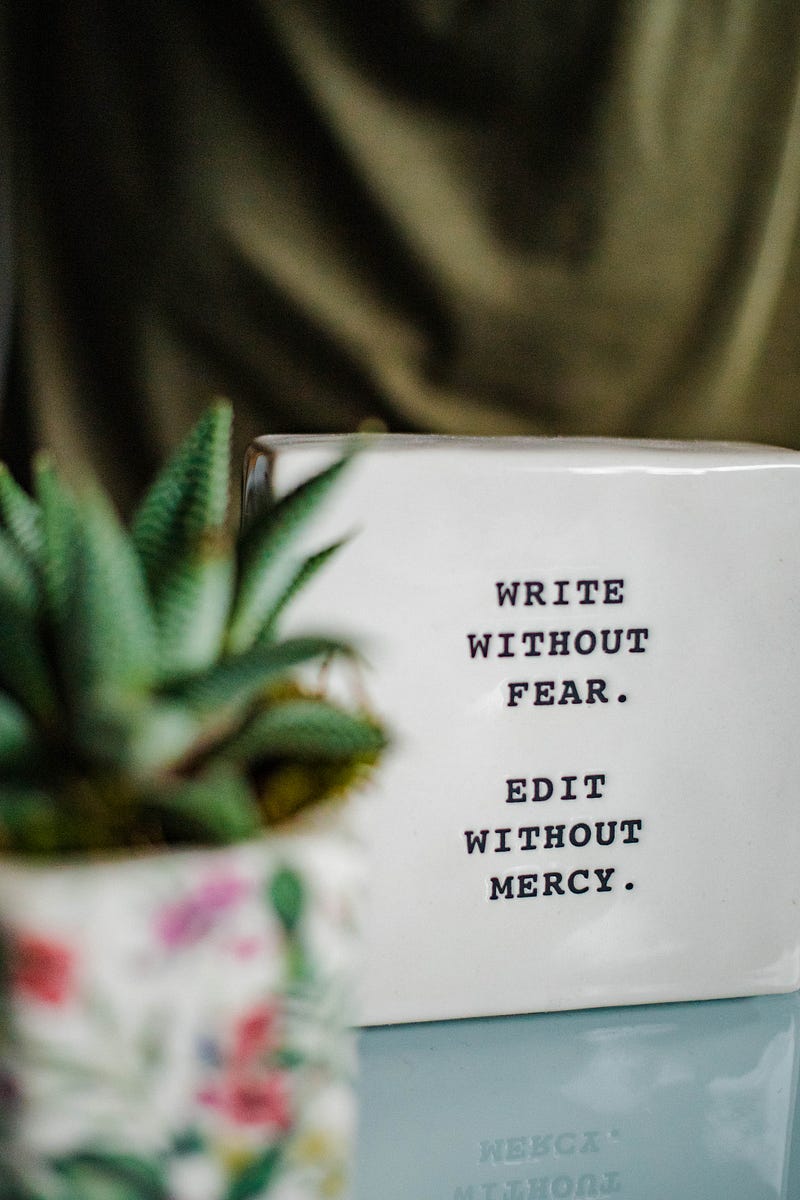
Dr Mehmet Yildiz suggested committing yourself to a 100-day writing challenge to grow your audience. While it is a great idea, I couldn’t commit to a 100-day challenge unless I had some prompts to get started.
So, I’ve compiled a list of my favourite writing activities I set for my students. I have been a high school English teacher for about 12 years, and I have found these prompts to be the easiest to write.
Some guidelines:
- Allow a maximum of 10 minutes each. You can’t spend too long on these activities because, otherwise, you will overthink them. They need to come from the top of your head. Set yourself a timer.
- These activities are meant to spark any type of writing, whether it be an article, a biography, poetry, fiction, etc.
- When you finish writing, highlight any key phrases that you would like to pursue further. That will be the basis of your writing piece. Eg, pretend you complete I Wonder and one of your questions is I wonder if Vanuatu’s active volcano has ever erupted? You could then use that question as a basis for your writing, such as historical research, poetry, short story.
If you complete and publish any of these writing tasks, please tag me because I would love to read them.
Without further ado, here are 7 of my favourite writing tasks:
1. Hindsight
Everything is better in hindsight.
Write a time when you did something not so good. Perhaps when you were little, you jumped off the roof to fly like superman, or maybe at school, you were caught plagiarising your assignment, or that time you stole your best friend’s boyfriend.
At the moment, you think it’s a good idea. It is with hindsight that we can see better ways to have done it.
Write 10 things you could have done to make the situation better. These ideas can be as realistic or as outlandish as you like.
One of those ideas could be the basis of your next writing piece.
2. 5 senses
Take 10 minutes to write about the 5 senses: touch, see, taste, hear and smell.
I like to take this outside and I like to list everything on a table with each sense as a heading. Find a beautiful outside spot, maybe one that you have never been to before. You must use lots of adjectives in your description.
- See: Look around you and list all the things you see. Write the colours too.
- Hear: Close your eyes and carefully take in all the sounds. Describe those sounds.
- Touch: Close your eyes and touch the ground, touch the trees and flowers. Touch any water and any objects around. Describe the textures.
- Smell: Close your eyes and smell things around you. Get low to the ground to smell the grass and the flowers. Smell the tree trunks and the leaves.
- Taste: For this, I usually bring some food when my students do this activity and I get them to close their eyes and taste it, without knowing what it is. You could do the same by asking a cafe to choose a food item at random for less than $5 and put it in a brown paper bag so you can’t see it. Close your eyes and taste it in your location. Make sure you let the cafe staff know any allergies before getting them to choose.
Look at everything you’ve written and see if there is something to base writing a piece on. Usually, this is a brilliant start for poetry or fiction.
3. I wonder
For this, you can use an atlas or a world globe or you could even scroll on Google Maps on your phone.
Take a map of the world and spin or flip through it with your eyes closed. Randomly stop. Where ever you have stopped, you need to write about it.
Step 1: As fast as you can, list all the things you know about that place. Don’t think about it, just write.
Step 2: Read over your list and wonder. Ask questions based on that place. For example, if you stopped in Italy and you know the language is Italian, you might wonder about the evolution of the Italian language from Latin.
Step 3: Use one of your questions as the basis of your writing
4. Guess the content from the headline
Open any newspaper or magazine or website and find an obscure headline. Try to guess the content of the article based on that headline. What do you think the article is about?
Then read the article and see if you’re correct. If you are incorrect, perhaps your guess is an entirely different angle on the same topic. That is the basis of your new article.
5. Finish the story
Again, open any newspaper, magazine, or website and find an article or story that interests you. Read the first couple paragraphs to get an idea of its content and stop. Don’t read the rest.
Now it’s time for you to finish the story. What do you think should be the body and conclusion of the piece?
Check to see how close you are. If yours is different, that could be your article.
6. 10-minute speed write
Find a starter sentence and just start writing for 10 minutes straight. Don’t stop. Don’t worry about spelling and punctuation and if you can’t think of how to continue, just write anything at all, even if it makes little sense.
Here is a list of prompts I use with my students:
- It was a beautiful day at work when my colleague said… at the 3-minute mark include the word peacock in your writing… at the 6-minute mark include the word suitcase.
- I feel happy about myself when… at the 3-minute mark include the word sport in your writing… at the 6-minute mark include the word intelligent.
- My biggest pet peeve is… at the 3-minute mark include the word dark in your writing… at the 6-minute mark include the word dog.
- My biggest failure was… at the 3-minute mark include the word improve in your writing… at the 6-minute mark include the word difficult.
- My biggest success was… at the 3-minute mark include the word happy in your writing… at the 6-minute mark include the word celebrate.
You can use any sentence starter that you like. Go through your piece at the end of the 10 minutes and see if there’s anything to start your next piece.
7. Write about art
Go to an art gallery, or look at the website of an art gallery and choose an artwork to write about. You might like to choose something realistic or something completely abstract.
Spend 10 minutes writing about it.
There are a couple of angles you could take:
- You could pretend that the subjects of the artwork are real and write out their scene and how they came to be there. You could give them a life and a backstory.
- You could imagine the life of the artist when they created it. What were they doing or thinking? What leads them to create the artwork?
Finally
If you complete one or more of these writing activities, you now should have a few starters for your own writing. Even if you don’t, it should help relieve any writer’s block.
Good luck!


