
7 Pinot Noir Alternatives That People Deserve to Know About
Expand your wine comfort zone and surprise your friends
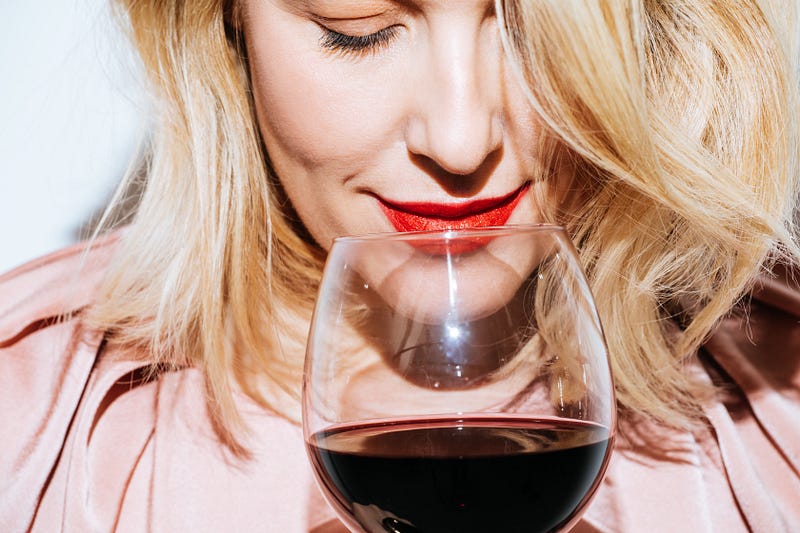
- Shall we get some Pinot Noir? — asked Stephanie.
- Didn’t know you are such a big fan of it.— I spent last year in the USA and noticed that many Americans often choose it over other varieties with similar properties. I was wondering why.
- Well, I kind of used to Pinot. — she replied. — I just don’t really know what else to choose. I don’t like strong wines, with a lot of… how they called? Tannins. So I stick to what I know.
“I just don’t really know what else to choose.”
“I stick to what I know.” Hm.
The irony was that we were talking about getting out of a comfort zone just a minute ago. Apparently, it’s too tiring to pull yourself out of it all the time.
“Explore more, try new things” sounds good in theory, but sometimes choosing between option A and option B can suck our energy to the last drop.
Decision fatigue is not a myth nowadays. This is the condition when you avoid, ignore, procrastinate any choice-making process. Blue or yellow? This or that? Screw it, I’ll think about it tomorrow.
This is where default choices are very helpful. Like Steve Jobs’s famous jeans and turtle neck, one choice for all life occasions. Drinking the same kind of wine, reading the same news source, using the same toothpaste save a lot of time and mental energy. Unfortunately, often we don’t love those things, we are just used to them.
Also, often we don’t have time, and frankly speaking, desire to explore more about ordinary things around us. It’s too many options.
Although some things should be more explored than others. Such as information related to health and well-being. Understanding the principles of how your body works can significantly increase your lifetime on this planet. Choosing good, balanced food and drinks will make it more enjoyable.
Some good things, such as wine, have been around for centuries and is a part of the healthy alimentation in many cultures worldwide if consumed wisely.
“Water for fish, wine for humans,” — an Italian proverb.
There is one little difficulty: if you come to almost any bar or restaurant in the USA, they usually have mostly 3 types of red wine: Pinot Noir, Cabernet Sauvignon, and Merlot. An acquaintance of mine who imports wine to this country explained that people tend to order something they are familiar with and avoid the unknown. Rossese is a great grape that makes a great wine, but nobody knows it, so nobody buys it. As a result, roughly speaking, there are a lot of “mass market” wines on the shelves.
A bottle of commercially produced Pinot Noir with no personality or a story behind it has much more chances to be picked than a peculiar, but not known bottle of Pollera or Schiava.
In a world where we have innumerable choices, why not challenge yourself to explore your own palate?
Pinot Noir has low tannins — natural components in wine. We feel them as a tongue-tingling feeling when molecules of tannin meet the proteins of saliva. As a result, saliva can’t lubricate our mouth anymore, that's why we experience dryness. Not everybody loves this effect, so here is a list of grape varieties that are also relatively low in tannins. However, it depends on the producer how much tannins they wanted to put into the wine. Knowing more about your wine also will help to:
- improve your gastronomic experience;
- expand your comfort zone with amazing wines;
- cure dull decision fatigue by choosing what you can pour in your glass.
Here we go:
1) Lacryma Christi Rosso — means “tears of Christ.” The legend says that Lucifer stole a piece of Paradise right before his banishment. From the hole in the surface, that the angel made when he fell from above and continued to proceed deep into Hell arose volcano, the Vesuvius. When Jesus saw the gulf of Naples, he recognized in it a piece of the stolen Paradise. His tears touched the ground, and the vines of this wine started to grow there.
Lacryma Christi Rosso is a blend of Piedirosso and/or Sciascinoso with up to 20% of Aglianico (optional). Piedirosso is one of the oldest native grapes from the Campania region. Look for the word “Vesuvio” on the label. It’ll mean it comes from the soils around the volcano itself!
2) Barbera is arguably the second most famous grape after Nebbiolo from the Italian region Piedmont. Interesting that two grapes are extremely opposite— Nebbiolo because it is one of the highest grape in tannins in the world, Barbera is because it has the lowest tannins.
This wine has concentrated color and high acidity, thanks to what can be an accompaniment to many foods, starting from a fish in a red sauce to most kinds of meat.
3) Dolcetto is another low tannin variety from Piemonte. “Dolce” means sweet in Italian, where the suffix -etto emphasizes that we are dealing with a sweet little one. This can be misleading, the grape is called this way because of the early ripening, not because of particular sweetness. It’s pretty dry, relatively acidic, and not high in tannins.
4) Schiava (also called Vernatch) — widespread variety in Trentino Alto Adige, a region in the Alps mountains. The colder climate is favorable for low tannin varieties. Low tannin, easy to drink, kind of a food pleaser.
5) Zinfandel, also know as Primitivo. The one that grows in Apulia, the heel of Italy, shows unique organoleptic properties. It’s slightly more tannic than Pinot Noir but loaded with fruit and has good acidity. It can be paired with a countless number of dishes, starting with mac’.n’cheese to the beef ragu.
6) Nerello Mascalese — wildly known in Italy for growing around the mount Etna in Sicily. Rosé made from this grape in this area is usually stellar if it cost around $30+. Being a wine from volcanic soils, it has a unique minerality that you can’t find in other wines. Feel the power of the volcano!
7) Rossese — Napoleon Bonaparte was a military genius and a wine lover. When he discovered Rossese, a humble Ligurian grape, he ordered plenty of it to drink in long campaigns for himself and his army. The rival of Rossese at Napoleon’s table was fine wine from Burgundy. “They say you’re judged by the strength of your enemies.” Not trying to say that any grape are an enemy to another, but the competition can be pretty intense.
Bonus: White or rosé is low tannins too. Grape’s skin is where tannins primarily come from. It also gives a red color to the wine during fermentation. That’s why winemakers remove the skin when making white wine, or leave it for a short period for rosé to get that cute pink color.
Stay well and happy!