
7 Money Lessons People Don’t Like to Talk About
Yes, smiling too much is why you won’t be a millionaire

Most People Will Never Come Close to Being Rich
As much as we like to discuss the latest investment trends and paths to wealth, rapper 50 Cent was right when he named his debut studio album, “Get Rich or Die Tryin” — unfortunately, most will do the latter.
There is big business in motivational speeches, financial podcasts, and (yes) church. The promise of a better life is what drives many of us, but the system is not designed for everyone to be rich; it simply doesn’t work that way. It’s like giving a group of children wooden blocks to build a tower, but each kid wanting their block to be on the very top. But telling people only 1–5% of you will actually come close to real financial independence is not very inspiring, and people need hope.
Becoming rich will require making a lot (did I say a lot) of net new income AND making really good investments to allow it to compound.
Luck Helps More Than a Little in Building Wealth
If you don’t believe me, just read Malcolm Gladwell’s book Outliers. I’m happy to recommend it again since it’s been some years since being the only thing everyone wanted to talk about.
The gist is that Gladwell gives numerous examples of highly successful people that were born at the right time, in the right country, or to the right parents that gave them some unique advantage that wasn’t obvious until many years later.
The most famous example is Bill Gates living close to one of the few high schools that had a computer in 1968 — the rest is history and a very good stock, but still pay attention to my 4th lesson below.
Money Loves Sin
Some of our greatest advancements have come from nefarious activities. From technologies developed for war to the development of crypto for buying and selling drugs and stolen goods. There is money to be made in many of the things that would make your mom blush — adult entertainment, casinos, alcohol, pick your poison, literally.
The greatest marketing directors have effectively used sex to sell their products. Before Mark Zuckerberg created Facebook, he had to create a website to rank the attractiveness of girls.
Today, we have non-playable characters (NPCs), real-life people who can make thousands of dollars on TikTok satisfying the fetishes of people online who ask them to do odd things (like pretend to eat ice cream).
Even with the facts behind this, my wife wouldn’t be too pleased with me running a consultant business to advise girls how to be profitable on OnlyFans.
Dollar Cost Averaging (DCA) Can Ruin You
Investing in stocks should be a big part of anyone’s game plan to building long-term wealth. However, most stocks are not worth holding “forever” no matter what the company produces. Investors passionate about a ticker will dollar cost average, adding more shares to their portfolio as the price goes down. The theory is that all businesses are cyclical and a good company will eventually go up in price. So, why not buy more shares on those dips, thereby lowering the total average share cost you have paid for that stock.
In reality, most stocks are complete crap over the long-term and there is maybe less than 20 stocks in a market of thousands that are worth holding 10, 20, or even 30 years.
Wars breakout, politics change, CEOs move on, disrupters take out the old guard, and you’re left with a surprisingly lower return. There’s a reason why hedge funds exist, and why millionaires just don’t play “set-it-and-forget-it” with their money.
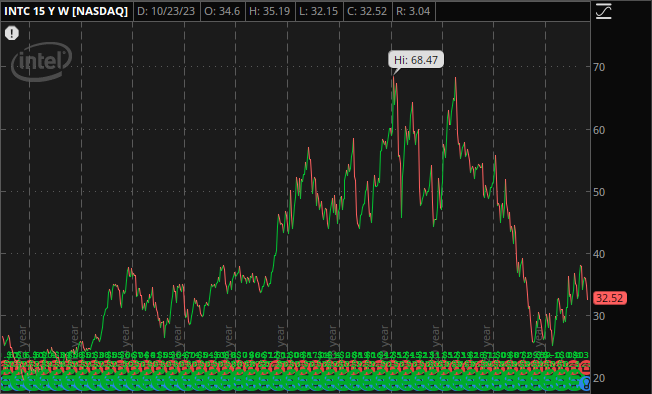
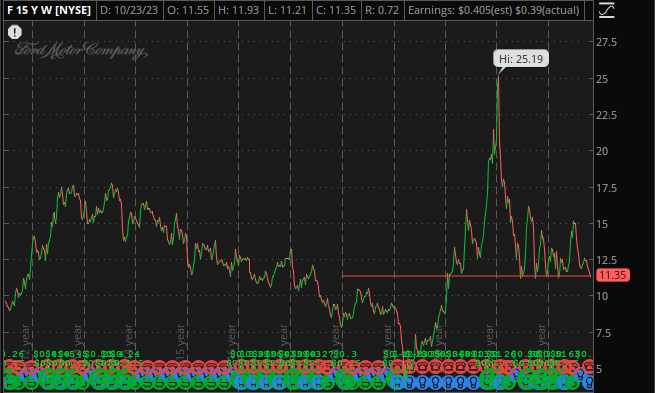
Even across industries, you’ll often find the shells of once great companies. Both Ford and Intel had huge leads in their respective industries yet most investors are barely profitable (or worse, underwater) in these companies many thought you could hold forever. How could you go so wrong partnering with Microsoft on almost every computer? How did the big autos get so entrenched with big oil to let Tesla come in?
Diversification is for Scared Investors
While we are on the topic of stock investments, another lesson that is just as egregious is the idea that diversification is the be all and end all to a good investment strategy. As Warren Buffett summed up quite well, “diversification is protection against ignorance.” You don’t make the highest return placing bets on everything. You make the highest return going “all in” on the one stock that is going to 10x in the shortest time. The problem is of course, it’s a big gamble that most people can’t afford to take.
Call diversification what it is — protection against the bad choices you will inevitably make in your investments. So, it’s not necessarily a “good” strategy for making money, it’s an insurance policy with premiums paid monthly in the form of opportunity costs.
The Richest, Most Successful People Are Not Nice
I’ll never forget my first manager and mentor telling me not to smile too much at work. It was such a weird request that I didn’t appreciate until much later in my career. Smiling, or being easy-going is a sign to people that you don’t project strength. I’ve sat next to and worked with millionaires and even billionaires — they rarely smile (at least not in public). High earners always tend to be more serious. When they walk in a room, it’s all business. If all they do is NOT smile, then it’s a blessing, but I’ve seen the worst personalities in the richest people. Everything from arrogance and god complexes to cursing people out and demeaning workers in front of a group.
The nicest, most down to earth people are often the ones in the lowest positions. While there are always exceptions, in order to get promotions, move up the ladder, get bigger positions, you need to be demanding, bring bravado, and sometimes be straight cutthroat.
I’ve lost count how many times I’ve seen the “nicest” people be the first to get laid off at a workplace. The serious, stone-faced, or even disagreeable person, with borderline inappropriate comments, not just does fine, but often excels.
Your Wealth Plan Will Be Sabotaged by Just a Few Events
My first point in this article was the requirement that you need to produce a lot of income to become rich. The other side of the coin is not getting thrown off track when life throws expensive curveballs.
In the twisted comedy, A Million Ways to Die in the West (2014), people are killed doing supposedly harmless things in random accidents. Life is sometimes not too far off from that.
Divorce and major health issues are just two examples of common “bad luck events” that can totally undermine years of wealth building. Some of the healthiest people get cancer. A family member gets in trouble with the law, substance abuse, or something worse. We try to psych ourselves out by saying that’s being pessimistic, but really that’s life.
Conclusion
There is a great quote that I will incorrectly paraphrase that says, “You can tell how little God thinks of money, based on who he gives it to on earth.” Regardless of whom or what you believe in, most humans on earth assume we are meant to live a life of abundance. In modern society, money is often a means to that abundance. While these lessons are not meant for you to lose hope or turn you into a stone-cold shark, it’s important to know they exist. Life is life and the path to wealth is often a long and winding journey. I’d rather have as much of a map as possible.
This article is not financial advice. The investments mentioned in this article are for illustrative purposes only and should not be construed as an investment endorsement/advice for or against a company, entity, person and/or its securities. Investing involves risks and everyone should perform their own independent due diligence before making any investment decision.
Visit my profile to read more viewpoints and stories from me!


