
7 (Miserable) Tell-Tell Signs AI Wrote Your Article
ChatGPT is wrecking writing as we know it.
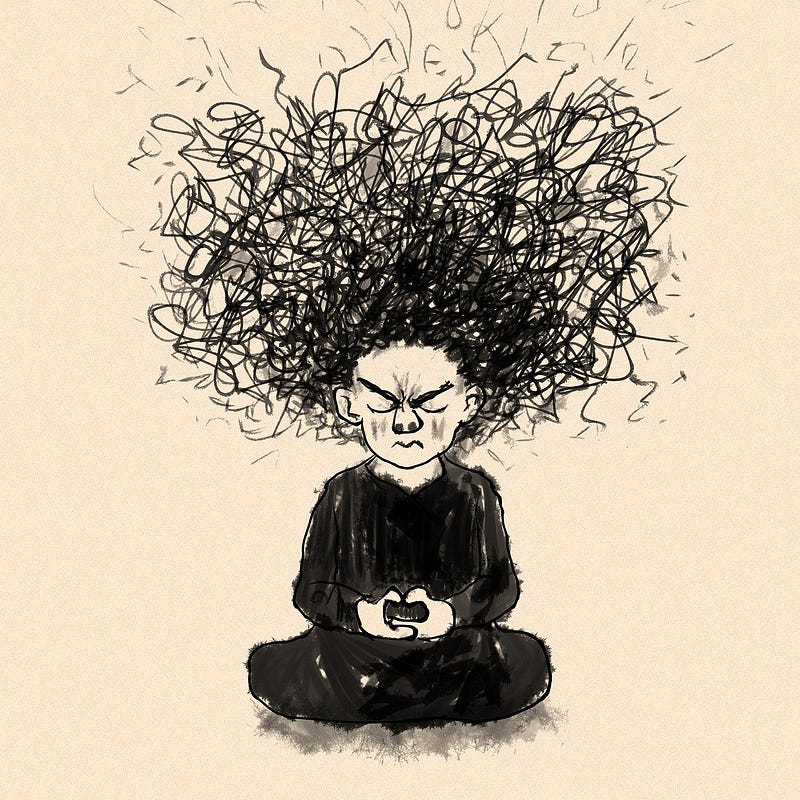
I’m over this sh*t.
Every second article smells like ChatGPT these days.
- What happened to creativity?
- What happened to authenticity?
- What happened to a good old typo?
Seriously.
I actually appreciate a good old typo nowadays.
At least it’s honest.
Here are 7 vital signs AI wrote your article.
Word pollution
Yes, our dear AI.
It’s the digital equivalent of a parrot that’s been taught one phrase.
It’ll squawk “Alexa, play Despacito” until even your dreams have a Latin dance theme! And why’s that? Because AI is all about consistency; it loves reruns more than coming up with fresh material.
Stop repeating yourself over and over and over.
Your conclusion doesn’t need a conclusion.
Got two words for ya: “Firstly”. “Secondly”. Ugh!
Firstly, let’s get this straight.
There’s a point where ‘firstly’ and ‘secondly’ turn from helpful navigational cues into verbal speed bumps.
It’s like always having to open doors labeled ‘firstly’ and ‘secondly’ only to find a third door lurking behind! As for why AI is so keen on using them?
Well, it’s got the sequential obsession of a crazed bingo caller. It likes ordering things more than an overzealous librarian, and can’t resist turning every sentence into a structured countdown.
Remember, your writing is not a step-by-step microwave dinner instruction manual, so mix it up a bit!
Your life’s gone AWOL in your writing
If there’s no telltale sign of burnt toast or a cringe-worthy pun, it’s probably AI-crafted!
What happened to you?
You are missing from your writing.
I don’t care about what new marketing strategies there are. I want to know about what new marketing strategies you’re using and what you’ve found to be the best.
I want to enter your dirty kitchen and see how you made that f*cking delicious Pâte à Choux. I want to see everything. Not just the end product.
AI doesn’t have the experience to make up these stories — yet.
Abuse them over and over and see your writing skyrocket past all the bots.
A brain buffet broader than the wifi range at Google headquarters
These clever algorithms munch on information faster than you can say “search it up!”
Sure, AI can feast on a smorgasbord of facts, but we humans?
We zoom in on the good stuff, honing our skills to evoke emotions and spin tales that make you snort-laugh and feel warm fuzzies inside.
So, let those AI bots chow down on their buffet, while we human writers rock the literary world, serving up wit, charm, and stories that make you go, “Wowzers!”
Be specific.
Find the story behind the story.
I’m missing that.
Opinion? I forgot mine at home.
AI’s writing has always been a source of both wonder and amusement.
While it can churn out sentences with impeccable grammar and flawless syntax, it lacks a crucial ingredient:
Opinion.
Sure, AI can regurgitate facts and figures like a robotic encyclopedia, but ask it for a fiery take on the latest movie or a scorching critique of pineapple on pizza, and you’ll be met with a blank digital stare.
Good writing is a wild bonfire of opinions.
It’s the sassy friend who passionately defends their favorite TV show, unapologetically rants about the Oxford comma, and fearlessly declares that cats are the superior pet (sorry, dogs).
It’s the spice that adds flavor to the literary feast, turning words into a rollercoaster of emotions. So next time you encounter a piece of writing that lacks opinion, just remember that AI may be clever, but it’ll never be as spicy as a fiery human mind.
The Syntax Circus
AI’s writing is like a grammar aficionado on steroids, armed with a dictionary and a red pen that can spot a misplaced comma from a mile away.
It’s pixel-perfect, more precise than an overzealous mathematician calculating the trajectory of a wayward tomato. But let’s not be fooled by its flawless grammar.
Great writing is not all that black and white.
It’s a dance of words, a symphony of emotions, and a circus of creativity. It’s the wild, untamed beast that takes us on rollercoaster rides of laughter, tears, and occasional bouts of confusion
While AI may have its grammar game on point, it’s us humans who bring that splash of colorful chaos and unpredictable brilliance to the world of writing.
Keep those red pens handy, but let’s not forget to embrace the delightful shades of gray in between.
AI is good.
But don’t let it fool you.
It can’t replace you — yet.
If this piece resonated with you and you’d like bite-size AI resources, tech, and marketing nuggets, do follow me on Twitter and I’ll leave some golden nuggets in your feed — promise.


