
7 Lessons Marketers Should Learn From Dating Apps
First impressions really matter

Have you ever used a dating app? Depending on your demographic, there’s nearly a 50% chance you have.
An eMarketer report predicted that dating-app users will grow to 28 million Americans every month by 2022 (up from 23 million in 2018). Between Bumble, Tinder, Match, Hinge, OkCupid, and others, that’s a pretty sizeable market to carve up.
You might not have any experience with the wonders of modern mobile dating, but I do. It’s actually how I met my current girlfriend and my previous two exes. Setting up a dating profile is basically a microlevel marketing campaign, except that the product is you.
Potential matches can be fickle, and the slightest detail or poor word choice can scare someone off into the digital ether in seconds. Through my failings and successes over the years, I’ve learned some good lessons that can be applied to business marketing campaigns.
While there are many more, here are seven lessons I learned during my three dating-app tours of duty:
1. First Impressions Really Matter
Do you know how long it takes to reject 10 dating profiles in a row?
Seconds. You can register an image and reject a profile almost reflexively.
Based on my micropolling-research efforts, many women don’t even expect many men on dating apps to read their profile write-up. That doesn’t really say much for my fellow gentlemen out there, but it does send a message.
You often only get one shot to hook a customer — so make that first impression count. Be brief. Be visually engaging. Stand out and pique their interest. Make a prospect want to know more. Draw them into the sales funnel before you lose their interest.
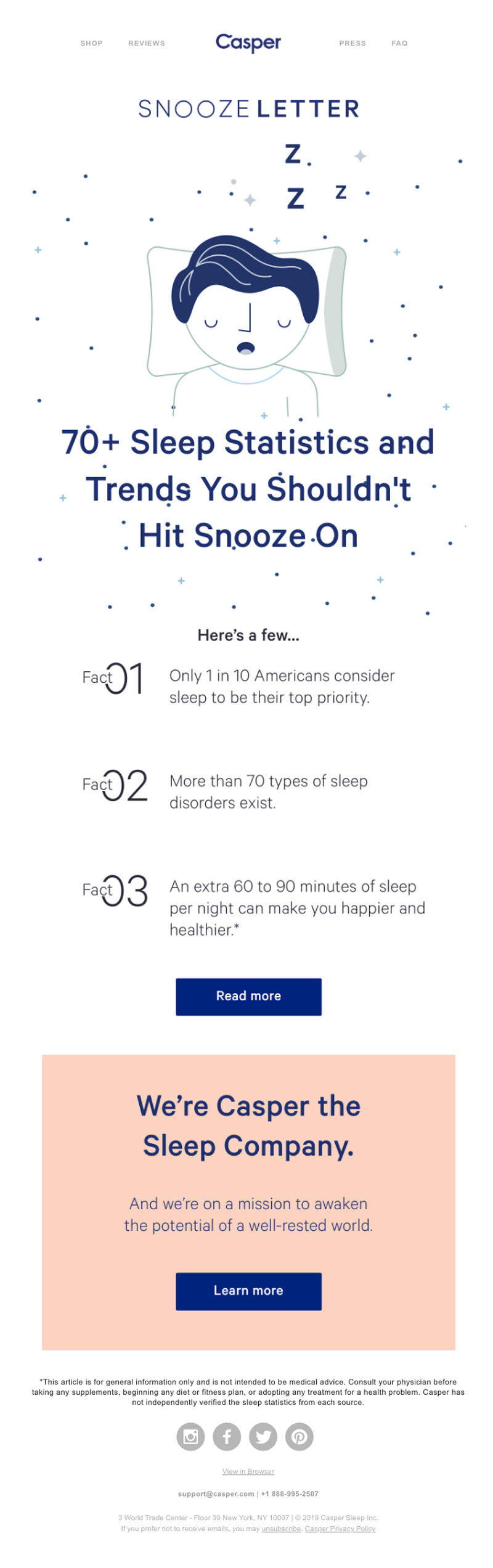
Casper (below) is a good example of an engaging customer-acquisition email. Let’s break down some of the details.
Casper’s clever subject line, “How much do you know about sleep?” entices the prospect by questioning their knowledge. The email is light on text, which makes it easier to read. The text highlights surprising factoids that draw a customer in and tease them to learn more. The visual imagery and email tone are consistent with what you’ll find on other channels, like its website or even its subway ads.
2. Get to the WIIFM Fast
Some marketers might call this the “So What?” test. In journalism, it’s known as the “What’s in It for Me?” In other words, don’t bury the lede.
You only have a few seconds to hook a potential customer — so don’t waste your time with shameless marketing or irrelevant boilerplate copy. Hit them with your value proposition in a way that’s credible and engaging. Show them how you can make their lives easier.
If you look at the Casper example above, the company’s claim of better sleep is baked in throughout … it’s a “snooze letter” with sleep statistics below an image of someone making Zs.
3. Listening Makes It Easier to Close
This is Dating 101 right here. Whether in person or virtual, we all really just want to be heard. Carl Rogers, the psychologist behind patient-centered therapy, often highlighted the value of active listening in building deeper relationships.
While romantic connection is just a metaphor, it’s true that the more marketers listen to their customers, the better they can serve their individual needs. When you can differentiate their customer preferences and primary pain points, you’re able to tailor your message more effectively and pull them further down the sales funnel.
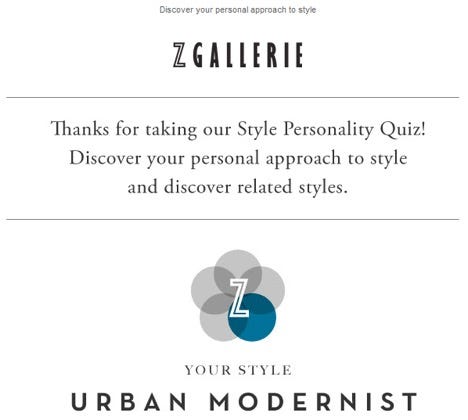
A great way to collect more detailed information about prospects and qualified leads is through quizzes on social media. While this can work in any industry, a good example is home decor brand Z Gallerie, which brought in a massive amount of leads by quizzing customer prospects on their style personality.
This information they captured enabled them to provide customized product recommendations for every sales lead. Facebook’s advertising tools make it easy to create quizzes and precisely target highly focused audiences.
Here are some detailed tips to create an engaging quiz, how to promote it on social, and the best way to effectively capture leads.
4. Don’t Be a Stalker — You’ll Scare Them Away
Let’s just be honest. Some guys on dating apps are creeps. They’ll send overly aggressive, rapid-fire text messages in an attempt to pressure a stranger to comply with their wishes. Unsurprisingly, these guys usually end up blocked (or worse).
Some brands simply need to learn this message. From what I see in my inbox every day, there are some pretty crappy marketers convinced that “more is more.” Well, I’m not buying what they’re selling (or even opening the message, for that matter).
Similar to dating, you need to know your audience. They’re busy, they’re stressed for time, they’re mobile, and their inbox is already cluttered. Don’t dump on them. Like partners on dating apps, customers are skeptical of your intentions; they’ve had bad experiences with other companies. A predatory approach will scare them away.

5. Clear and Consistent Communication Is Key
If you’ve ever been talking to two people at once, you know how easy it is to accidentally cross wires and send someone the wrong message. While it depends on the content of the misfire, this generally doesn’t end well.
This is what a customer feels like when a brand’s marketing is inconsistent in voice, tone, or content. It’s confusing and leaves the customer with a bad taste in their mouths. In addition, one bad joke or overly casual description of a sensitive social issue has the potential to drive massive customer backlash.
Nintendo offers us a good example of this lesson. The company released its Wii U platform in a confusing launch at E3, and it was perceived by some as nothing more than a new controller. Nintendo executives even admitted that the company wasn’t clear in its product positioning.
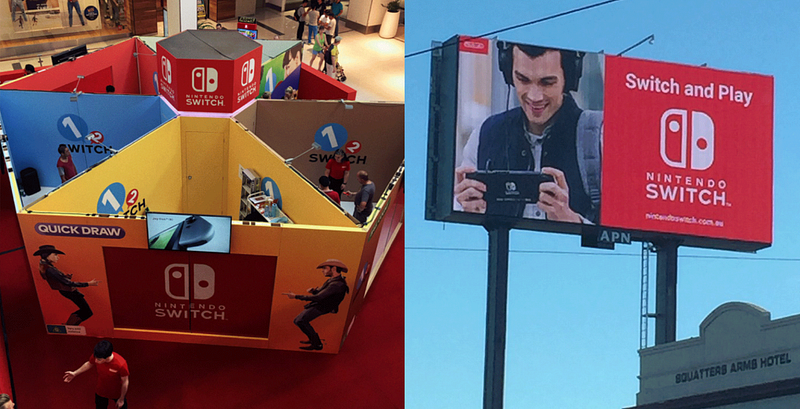
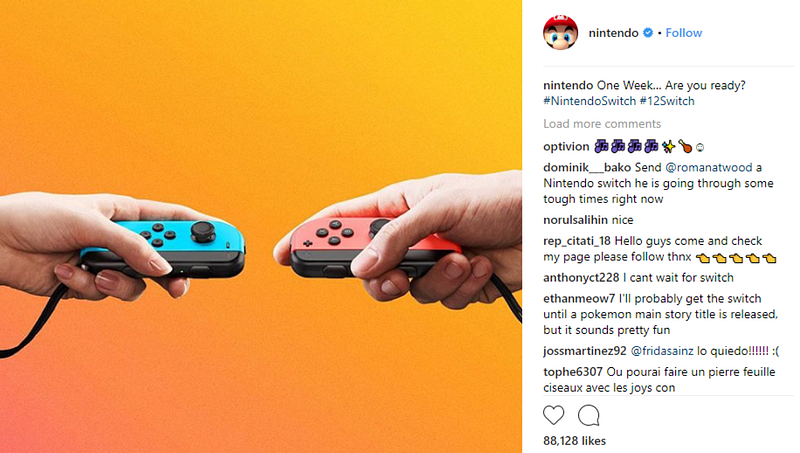
In stark contrast to that marketing failure, Nintendo achieved massive success when the company rolled out its multichannel marketing campaign to launch the Switch console.
Its message was simple: “You can play great content — anywhere, anytime, with anyone.” The company’s visual branding (note the color scheme and graphics below) and messaging was also consistent across all channels, which prevented marketplace confusion.
6. Propose a Long-Term Relationship to Take Them Off the Market
If you’ve been on a few dates with your ideal match and you’re certain they’re the one, you’ll likely want to agree to an exclusive long-term relationship. To prevent them from temptation from competing suitors, you’ll probably want them to delete the app as well.
Similarly, if you can convince your prospects to agree to a long-term plan, your risk of them running off to one of your competitors drops. Not only do longer contracts reduce customer churn, each customer also becomes more profitable.
7. Lying Is a Deal Breaker
As I said earlier, everyone on a dating app has had a bad experience. In fact, this Pew Research study found that four in ten users had a somewhat negative experience, and 9% had a very negative experience.
While marketers may not have sent any d*** pics, it’s safe to say that your prospects have had some bad experiences in the past. When you combine that with their underlying skepticism about your intentions, all it can take is one exaggeration or misrepresentation for them to leap off the hook forever.

Remember Dieselgate? In an effort to capitalize on green tech’s selling power, VW launched clean-diesel vehicles, claiming that the cars were low-emission and environmentally friendly. This, of course, was false; the cars had actually been rigged to outsmart normal emissions tests.
Beyond a massive blow to the company’s reputation and consumer trust, Volkswagen was forced to settle with government regulators and duped consumers at an estimated cost of $15 billion.
Long-term loyalty is built on honest interactions. Don’t let a short-term sales bump tempt you to compromise your brand reputation (or morals).