
7 Laws of UX that Netflix follows
Some Laws of UX Design that Netflix’s Interface follows.
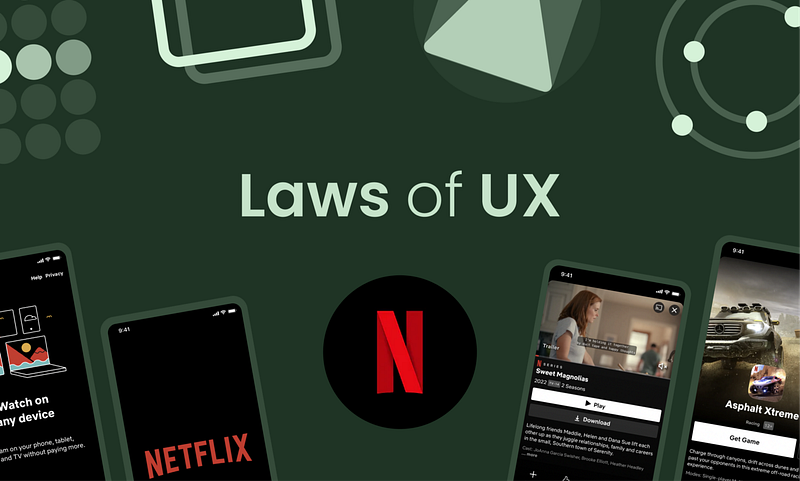
Hello Guys, Today I’m going to share some Laws of UX that Netflix follows in their design for both web and application, this article will give you some key insights on designing and how Laws of UX can be used in a real-world application. So without any delay let’s get started.
#1 Aesthetic-Usability Effect
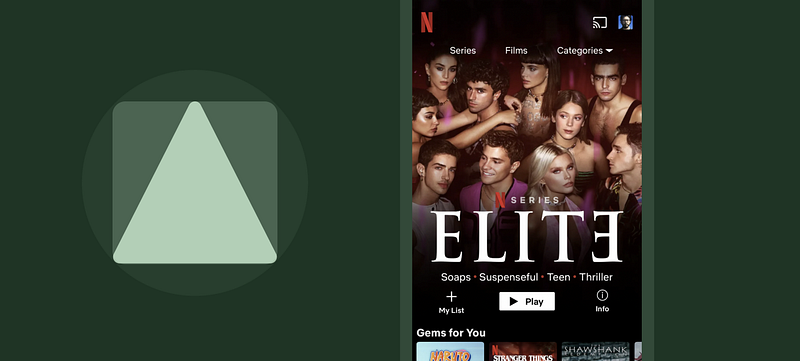
“Users often perceive aesthetically pleasing design as design that’s more usable.”
Netflix design is eye-pleasing, all the posters of movies, elements, icons, and typography are incredibly designed to grab your attention. When you compare Netflix to the competition you’ll see how pleasing the design is, a reason many people use it is that Netflix is old in the industry, and that is true because the experience and user data are important for great design.
#2 Fitt’s Law
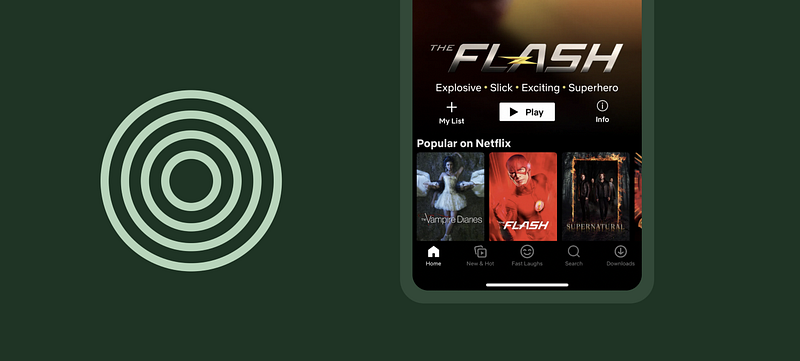
“The time to acquire a target is a function of the distance to and size of the target.”
Netflix follows Fitt’s Law, as the first screen of Netflix’s App is designed in a way that first you’ll see a big poster of a movie and then you’ll see the play button and other movies which basically start from the bottom and this means the play button and all the other movies are easily accessible with your thumb. and more near the more easy a user feels to click a button, etc.
#3 Law of Similarity
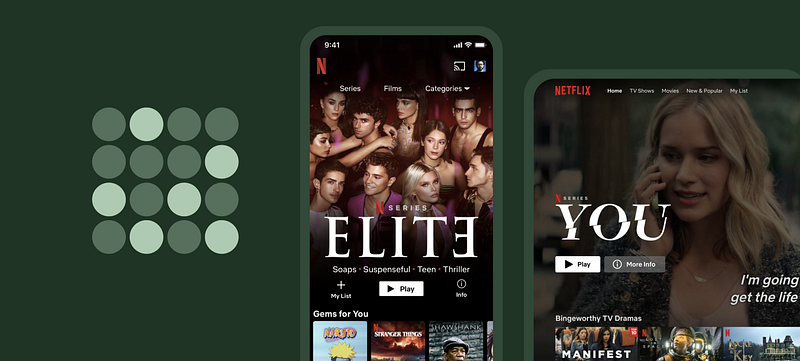
“The human eye tends to perceive similar elements in a design as a complete picture, shape, or group, even if those elements are separated.”
Both Netflix app and website are following the law of similarity as all the components like buttons are similar in all places, play button looks exactly like in the app which makes consistency and ease to the users.
#4 Hick’s Law
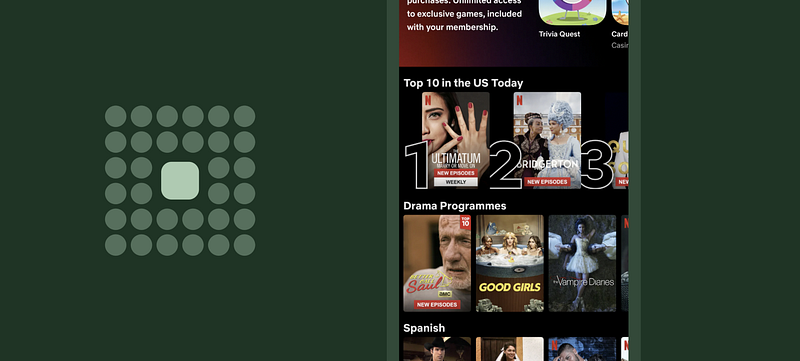
“The time it takes to make a decision increases with the number and complexity of choices.”
Netflix knows they have a big library of movies and series but they also know how to make them easy for you to choose what to watch if you have no idea, they show a trending page where you’ll see top #10 movies or series in your country which most of the time worth watching. By reducing the number of movies from a thousand to only 10 Netflix follows Hick’s Law.
#5 Doherty Threshold
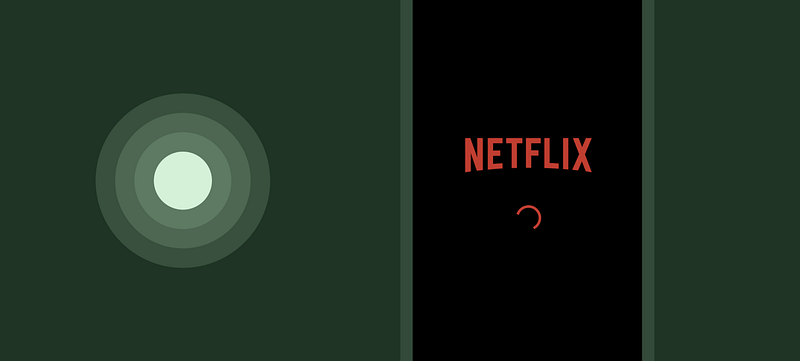
“Productivity soars when a computer and its users interact at a pace (<400ms) that ensures that neither has to wait on the other.”
Netflix doesn’t want you to wait for the content, therefore, it tries to make images compressed or small so it’ll not take up your time. Sometimes things went wrong but Netflix handles it well by using loading indicators, progress bars, design skeleton, etc.
#6 Jakob’s Law
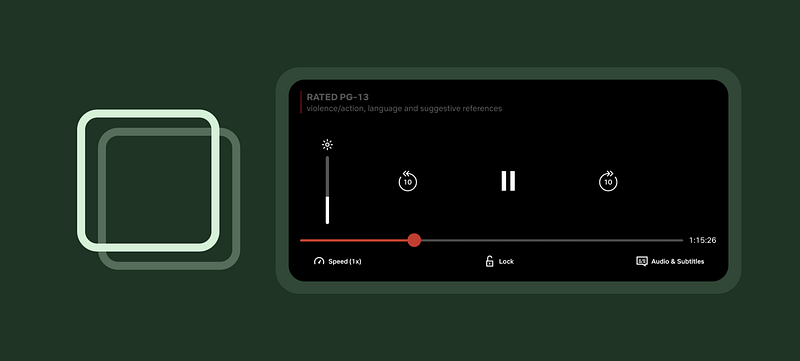
“Users spend most of their time on other sites. This means that users prefer your site to work the same way as all the other sites they already know.”
Users don’t like to learn new things every time they open a new application and Netflix knows it, Netflix tries to make things as simple as possible a great example of Netflix’s following Jackob’s Law is Netflix’s Video Player which is as similar as to other video apps like Youtube, Prime, Disney Plus, etc.
#7 Zeigarnik Effect
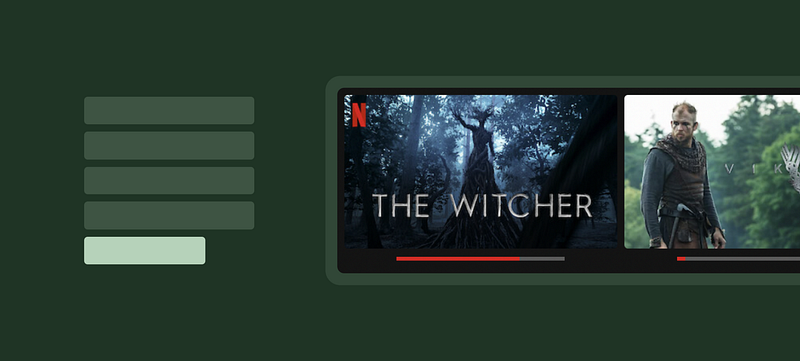
“People remember uncompleted or interrupted tasks better than completed tasks.”
Netflix doesn’t want you to go, and therefore they use the Zeigarnick Effect which basically makes you watch the full movie or series as you think you’ve spent too much time on it why not just watch it till the end. We remember all the unfinished series/movies (which you dropped in the middle or climax due to some reason) as compared to the finished series/movies.
Learn more laws of UX design from the official website:
and Look at Netflix Mobile Screens in a more systematic manner at:
Thanks a lot for reading. be our email subscriber, and learn to become better.