
7 Fresh Insights To Help You Time Your Day For Peak Performance
Discover the scientific secrets of perfect timing
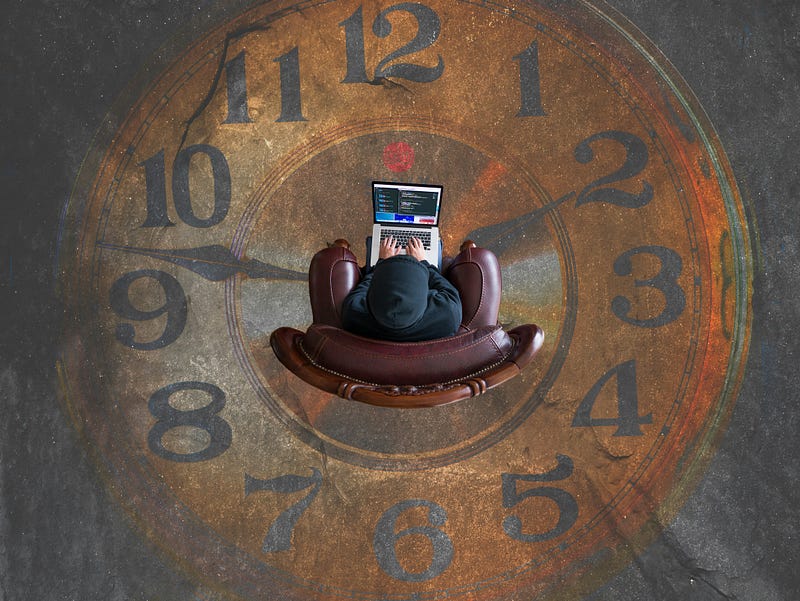
The famous jazz musician Miles Davis once said,
“Time isn’t the main thing. It’s the only thing.”
Although Davis was probably talking about timing in relation to music when he said this, timing also applies to everything we do on a daily basis.
From productivity to love, our lives are a constant stream of “when” decisions that relate to timing.
For instance:
- When should you schedule your doctor’s appointment?
- When should you deliver bad news to someone?
- When should you plan to stop working on your most important task of the day?
Unfortunately, we don’t know anything about timing. As a result, we fail to optimize our lives and live to our full potential.
Luckily, it doesn’t need to be like this. In the book When: The Scientific Secrets of Perfect Timing, bestselling author and researcher Dan Pink gives a few tips that will surely help you get better at timing.
Here are 7 fresh insights that will help you time your day for peak performance:
Let’s go!
1) Drink a Glass of Water Immediately After You Wake Up
How often during the day do you go 8 straight hours without drinking any water?
Almost never, right? However, that’s exactly what you do every night when you’re sleeping. As a result, you’ll naturally wake up dehydrated, and dehydration causes fatigue.
So every day, as soon as you wake up in the morning, it’s a good idea to immediately drink a glass of water. After you do this, you’ll immediately feel more alert and it will be a lot easier for you to get up and start your day.
Drinking water in the morning will also control your early morning hunger pangs, flush out toxins from your body, and improve brain function.
2) Why You Shouldn’t Go To The Doctors At This Specific Time
Imagine you’re an esteemed doctor running your own hospital in New York City.
Now, let me give you some stats about your hospital:
- Patients are 3 times more likely than at other hospitals to receive a potentially fatal dosage of anesthesia.
- Patients are considerably more likely to die within 48 hours of surgery.
- Gastroenterologists find fewer polyps during colonoscopies than their more scrupulous colleagues, so cancerous growths go undetected.
- Internists are 26% more likely to prescribe unnecessary antibiotics for viral infections, thereby fueling the rise of drug-resistant superbugs.
- Nurses and other caregivers are nearly 10% less likely to wash their hands before treating patients, increasing the probability that patients will contract an infection in the hospital they didn’t have when they entered.
Sounds pretty bad, right? I mean, if you weren’t the one running the hospital, you’d probably think the person in charge should be fired.
But here’s the interesting thing: In When, Dan Pink explains that this is exactly what happens in modern-day hospitals during the afternoons compared with the mornings.
In other words, afternoons can be a dangerous time to be a hospital patient!
Therefore, if you have to go to the doctor’s, Pink recommends that you never accept an appointment that isn’t before noon.
3) Should You Give The Good News First or The Bad News?
“I’ve got some good news and some bad news for you.”
Whether you’re a parent, a teacher, or a doctor, you’ve definitely had to deliver information to someone before — some of it good, some of it bad.
But the question is, which information should you give first? For most people, their instinct is to give the good news first in order to cushion the bad news.
However, this instinct is totally wrong. Several studies that were conducted over several decades have found that roughly 4 out of 5 people prefer to begin with a bad outcome and ultimately end with a good outcome.
It doesn’t matter who we are. Whether we’re a patient getting test results or an employee receiving an evaluation, we prefer bad news first, and good news last.
Why? Because we favor sequences of events that elevate rather than fall down. So the next time you have to give someone bad news and good news, always give the bad news first and the good news last.
4) Don’t Marry Too Young, Too Late, or Too Soon
It shouldn’t be a big surprise that people who marry when they’re young are more likely to divorce. For instance, according to an analysis by University of Utah sociologist Nicholas Wolfinger, an American who weds at 25 is 11% less likely to divorce than one who marries at age 24.
But waiting too long also has a downside. According to Wolfinger, if you wait until you’re past the age of 32 — even after controlling for religion, education, geographic location, and other factors — the odds of divorce increase by 5% per year for at least the next decade.
Additionally, even if you’re 32, don’t just marry the first person you see. Try to wait until your relationship matures. Andrew Francis-Tan and Hugo Mialon at Emory University found that couples who dated for at least one year before marriage were 20% less likely to divorce than those who made the move rather quickly.
5) Why You Should Stop Working On A Task Right In The Middle of It
When is the best time to stop working on a task?
In When, Dan Pink says the best time to stop working on a task is when you’re right in the middle of it.
This strategy comes from Ernest Hemingway, who published 15 books during his lifetime — all of which were amazing.
But how did he manage to do it? It’s simple. Hemingway never let himself finish a writing session at the end of a sentence. Instead, he always ended a writing session right in the middle of a sentence.
Why? Because by stopping his writing sessions right in the middle of his work, he was able to use the motivating force of the drive for closure to always feel impatient to write again the next day.
Pink explains that this method works because of what’s known as “The Zeignarik Effect,” which is our tendency to remember unfinished tasks better than finished ones.
So the next time you’re in the middle of a project, try ending the day right in the middle of a task that has a clear next step. This will help fuel your day-to-day motivation.
6) Reply Quickly To Email
Are you a leader in your company and you want your team to like you?
Then here’s what you should do: Reply quickly to their emails!
Not 5 hours later.
Not 1 hour later.
Right NOW.
I know this advice may surprise you, but the research backs it up. According to research by Duncan Watts, a Columbia University sociologist who is now a principal researcher for The Microsoft Research, email response time is the single best predictor of whether employees are satisfied with their boss.
Believe it or not, the longer it takes for a boss to respond to their emails, the less satisfied people are with them.
7) Always Finish Off With A Bang
Oftentimes, we evaluate the quality of meals, movies, and vacations not by the entire experience, but by very specific moments during these experiences.
Mainly, the ending.
How things end really shape the stories we tell ourselves about it later on. As University of British Columbia psychologist Elizabeth Dunn explained to New York magazine:
“The very end of an experience seems to disproportionately affect our memory of it… This means that going out with a bang, going on the hot air balloon, or whatever on the last day of the trip, could… be a good strategy for maximizing happiness.”
So the next time you plan your next vacation, you’ll enjoy your vacation a whole lot more both in the moment and in retrospect, if you consciously create an elevating final experience by saving the best for last.
Are You Ready To Take Advantage of Timing?
People often assume that timing is an art. But it’s not. It’s a science. And we can use this science to help us get more out of our lives. From deciding when you should go to the hospital to deciding when you should stop working on a task, you now have a better understanding of how to use timing to your advantage. Use it well.
Connect Deeper
If you enjoyed this article, then join thousands of others who have subscribed to my book club where I talk about the best ideas from the books I read!


