avatarFaze

Free AI web copilot to create summaries, insights and extended knowledge, download it at here

4461

Abstract

ped).jpg">Wikipedia</a></figcaption></figure><p id="a15f">The mummification process is one of the most infamous medical procedures in history. It was a highly spiritual and cultural practice in Ancient Egypt, intended to preserve the body of the deceased for the afterlife.</p><p id="c24b">However, it is important to note that this practice was not performed by medical professionals, and the techniques used were not meant for medical advancement.</p><p id="f735">Instead, they focused on the removal of moisture from the body, including brain tissue through a gruesome hook tool.</p><p id="a3dc">Despite its barbaric nature, the mummification process has fascinated people for centuries, and it still remains a subject of interest for archaeologists and medical historians today.</p><p id="cb7b">Although the medical knowledge gained from this practice was not used to advance medicine, it offers us a glimpse into the beliefs and practices of ancient cultures, and how they viewed the human body and its relationship to the spirit world.</p><h1 id="09da">3- Nose Job — Plastic Surgery</h1><figure id="4390"><img src="https://cdn-images-1.readmedium.com/v2/resize:fit:800/0*reoWqaJfpeDRodky.png"><figcaption>Source: <a href="https://en.wikipedia.org/wiki/Plastic_surgery#/media/File:Indian_method_of_nose_reconstruction,_illustrated_in_the_Gentleman's_Magazine,_1794.png">Wikipedia</a></figcaption></figure><p id="b74d">The concept of altering one’s appearance to meet beauty standards has been around for centuries. From the early Egyptians to modern times, plastic surgery has undergone a dramatic transformation.</p><p id="8bbe">Among the many types of procedures available today, one of the most popular is the nose job. However, the procedure’s roots go far back, as evidenced by the Edwin Smith Papyrus.</p><p id="e28c">In ancient times, those who wished to alter the appearance of their nose went through a process of manipulating it into the desired shape using splints and lint swabs.</p><p id="bfdb">It’s amazing how these ancient techniques are still utilized in modern procedures today.</p><p id="d820">With the advancements in technology and medical practices, nose jobs have become a common practice and are seen as a means to improve one’s appearance and confidence.</p><p id="8716">As with any procedure, there are risks and complications associated with nose jobs. It’s important to consult with a reputable surgeon and be fully aware of the procedure’s details before going through with it.</p><p id="de78">However, the transformation and impact that a successful nose job can have on an individual’s self-esteem and quality of life cannot be underestimated.</p><h1 id="8d75">2- Fire Drill — Remove Tumors</h1><figure id="ec94"><img src="https://cdn-images-1.readmedium.com/v2/resize:fit:800/0*RlAqM86JVd-sPAs0.jpg"><figcaption>Source: <a href="https://en.wikipedia.org/wiki/History_of_cancer#/media/File:Clara_Jacobi-Tumor.jpg">Wikipedia</a></figcaption></figure><p id="541a">Before the invention of modern surgical tools, doctors used some very questionable methods to treat their patients. One of the most haunting of these methods was using a fire drill to remove tumors.</p><p id="00d2">The process involved using a handheld drill to bore into the tumor and then cauterizing the area with a heated metal rod to stop the bleeding.</p><p id="a47b">This procedure was often performed without anesthesia, leaving the patient in excruciating pain.</p><p id="9343">It is difficult to imagine how anyone could endure such an ordeal, let alone survive it. Yet, this was a common practice for many centuries, especially in ancient times.</p><p id="a561">This gruesome method continued to be used until the 1800s, when advancements in medicine allowed for safer and less painful surgical procedures.</p><p id="46f5">Thankfully, we now have more advanced medical technologies that allow for the safe and efficient removal of tumors.</p><p id="3874">Despite the use of a fire drill serves as a stark reminder of the dark and dangerous practices that were once considered acceptable in the medical field.</p><h1 id="86d9">1- Blood Transfusion</h1><figure id="7c22"><img src="https://cdn-images-1.readmedium.com/v2/resize:fit:800/0*5tvdFF1Vx8xtTnqv.jpg"><figcaption>Source: <a href="https://en.wikipedia.org/wiki/Bloodletting#/media/File:4_transfusion.jpg">Wikipedia</a></figcaption></figure><p id="ce4c">Blood transfusions have come a long way from

Options

the gruesome practices of ancient times.</p><p id="8558">While it was once believed that the blood of another person held special healing powers, today, we know that blood transfusions can save lives in emergency situations.</p><p id="c18a">However, even modern-day transfusions come with their own set of risks, including the transmission of infectious diseases and allergic reactions.</p><p id="81b3">With advancements in medical technology, the process has become much safer, but it’s still important to take precautions to avoid any adverse effects.</p><p id="095f">Despite the benefits, blood transfusions are not a common solution for most illnesses and are typically reserved for life-threatening situations.</p><p id="a48f">Nevertheless, it’s fascinating to think how much we have evolved from drinking gladiator blood in ancient Rome to the modern-day blood transfusion procedures.</p><h1 id="1fca">Points To Ponder</h1><p id="afa1">As we take a look back at the darkest moments in medical history, it is clear that the field has come a long way.</p><p id="77be">Procedures and techniques that were once considered groundbreaking have now been replaced by much more advanced and safer methods.</p><p id="b6a4">While these images may be disturbing, they serve as a reminder of how far medicine has come and how much we still have to learn. It is important to acknowledge the errors of the past and to strive towards a better future.</p><p id="660a">By learning from our past mistakes, we can continue to advance and improve the field of medicine, ultimately leading to better outcomes for all patients.</p><p id="b31d">As we move forward, it is important to keep these haunting images in mind and to use them as a motivation to continue improving medical practices.</p><h1 id="3f56">Join Medium Today</h1><div id="2bd6" class="link-block"> <a href="https://medium.com/@faze17/membership"> <div> <div> <h2>Join Medium with my referral link — Faze</h2> <div><h3>Read every story from Faze (and thousands of other writers on Medium). Your membership fee directly supports Faze and…</h3></div> <div><p>medium.com</p></div> </div> <div> <div style="background-image: url(https://miro.readmedium.com/v2/resize:fit:320/0*KfGf3apTSh4FONfo)"></div> </div> </div> </a> </div><p id="f179">More from the author:</p><div id="9b89" class="link-block"> <a href="https://readmedium.com/7-iconic-photographs-and-the-stories-that-define-them-93b2929e4be3"> <div> <div> <h2>7 Iconic Photographs And The Stories That Define Them</h2> <div><h3>Iconic historical pictures — A look back at moments that defined our world.</h3></div> <div><p>medium.com</p></div> </div> <div> <div style="background-image: url(https://miro.readmedium.com/v2/resize:fit:320/0*hDRlJ2CZvniJTjR5.JPG)"></div> </div> </div> </a> </div><div id="5057" class="link-block"> <a href="https://readmedium.com/7-astonishing-photos-of-well-known-figures-we-didnt-think-could-be-snapped-873e54deb554"> <div> <div> <h2>7 Astonishing Photos Of Well-Known Figures We Didn’t Think Could Be Snapped</h2> <div><h3>Startling historical figures caught on camera.</h3></div> <div><p>medium.com</p></div> </div> <div> <div style="background-image: url(https://miro.readmedium.com/v2/resize:fit:320/1*Qt8JghBaGhSZbY3ax_MthA.png)"></div> </div> </div> </a> </div><div id="0c57" class="link-block"> <a href="https://readmedium.com/7-photos-of-the-21st-century-chosen-by-netizens-1b23444720d1"> <div> <div> <h2>7 Photos Of The 21st Century Chosen By Netizens</h2> <div><h3>Artistic masterpieces best pictures since 2000.</h3></div> <div><p>medium.com</p></div> </div> <div> <div style="background-image: url(https://miro.readmedium.com/v2/resize:fit:320/1*Ji1cw5yONGTrzPdQSlJnyg.png)"></div> </div> </div> </a> </div></article></body>

7 Forbidden Medical Photos — Images That Doctors Want To Keep Hidden

Beyond the brink of human experimentation.
Source: Wikipedia

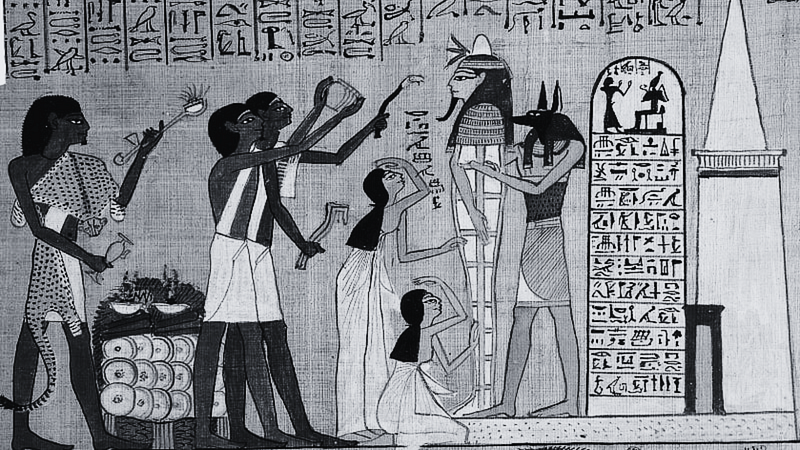
History is full of some of the most sinister medical photos ever taken.

From images of surgery being performed without anesthesia to gruesome treatments, these photos tell a haunting story of medical practices throughout time.

In this article, we’ll take a look at seven of the darkest and most disturbing medical photos ever taken, and discuss why doctors never want us to see them.

By taking a closer look at these images, we can get a better understanding of medical practices both in the past and present.

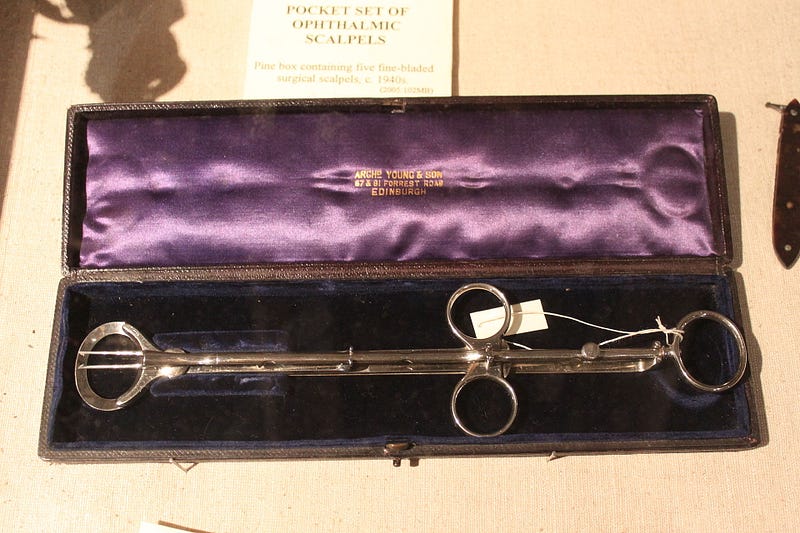
7- Tonsil Guillotine — Surgical Tool
Source: Wikipedia

Back in the 1860s, the tonsil guillotine was a surgical tool that stirred up quite a bit of controversy. This device had a curved blade that was positioned around the tonsil, and was often used without any form of anesthesia.

The use of the tonsil guillotine came with significant risks such as bleeding, tissue damage, and infection.

As surgical techniques and anesthetics became more advanced, the use of this tool declined.

Nowadays, the tonsil guillotine is no longer a part of modern medical practice. It’s hard to believe that such a brutal tool was once a common sight in hospitals.

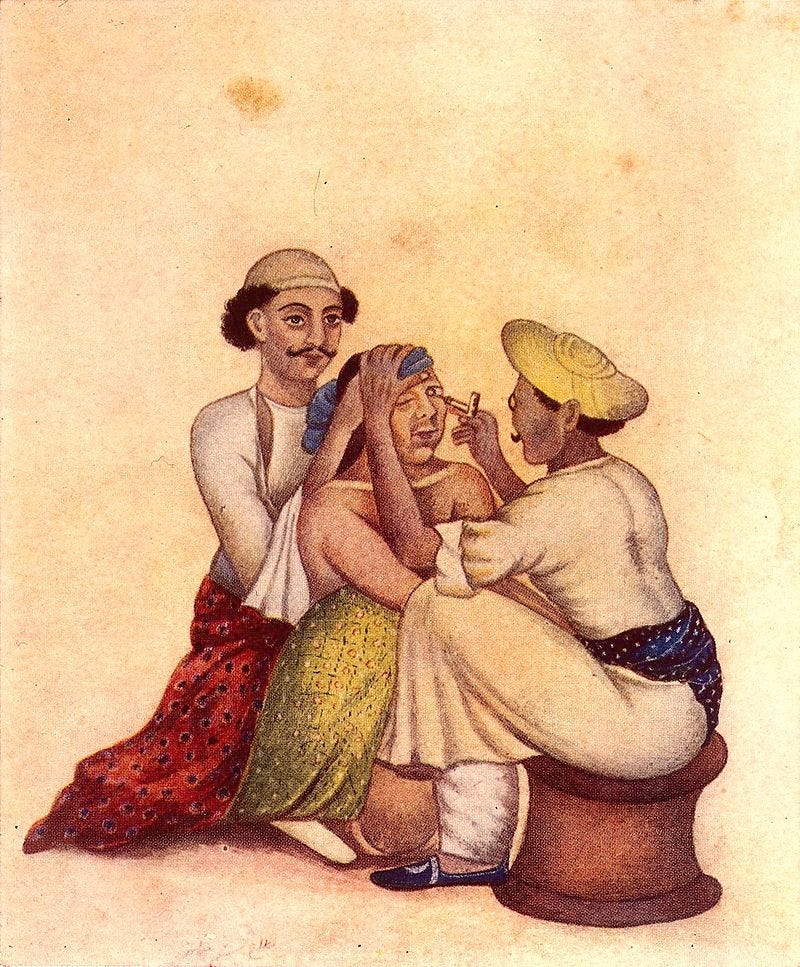
6- Cataract Surgery — Ancient Egypt
Source: Wikipedia

Cataract surgery has been a procedure for centuries, and the earliest evidence dates back to ancient Egypt.

A painting from a tomb shows a doctor performing couching, a technique where a needle pushes the cloudy lens to the bottom of the eye.

The goal was to improve vision. While tools from Egypt date back 4,000 years, couching was performed in various parts of the world.

However, the modern cataract extraction surgery wasn’t performed until Jacques Daviel in France in 1747.

Unlike couching, Daviel’s technique involved removing the cloudy lens and replacing it with a clear one. This innovation improved outcomes and led to the development of modern-day cataract surgery.

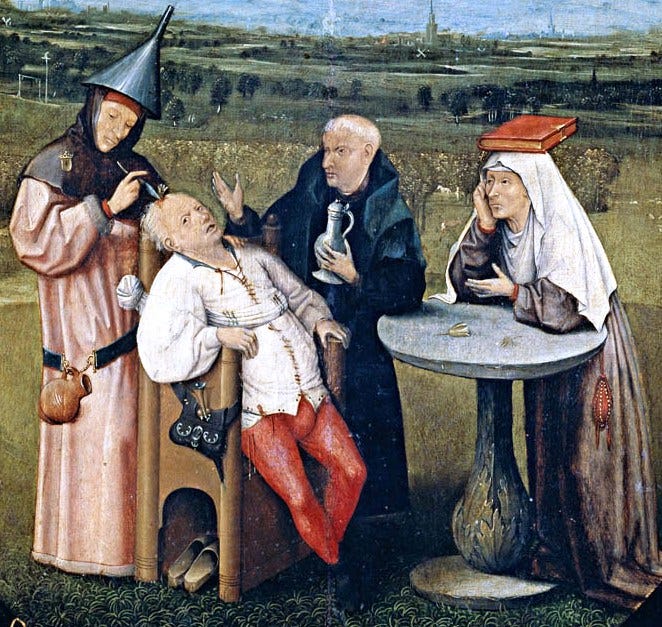
5- Transplantation — Surgery
Source: Wikipedia

The concept of transplantation has been around for centuries, with the first successful surgical transplantation taking place in 1954.

However, the history of transplantation dates back to around 1000 BC, with Indian surgeon Samira pioneering successful transplants.

The Renaissance period saw significant advancements in the field of transplantation, with Gasparo Taglia Cozy and Alexis Carell being at the forefront. They introduced new techniques, including skin grafting and animal blood vessels.

In 1904, they saved a dog’s life through the first successful animal transplant. Today, transplantation remains an essential aspect of medicine, helping save countless lives.

4- Mummification Process — Spiritual And Cultural Practice
Source: Wikipedia

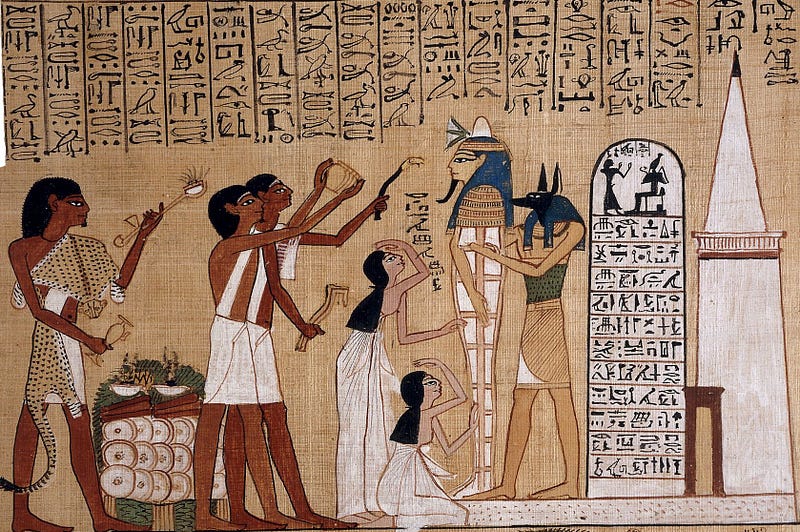
The mummification process is one of the most infamous medical procedures in history. It was a highly spiritual and cultural practice in Ancient Egypt, intended to preserve the body of the deceased for the afterlife.

However, it is important to note that this practice was not performed by medical professionals, and the techniques used were not meant for medical advancement.

Instead, they focused on the removal of moisture from the body, including brain tissue through a gruesome hook tool.

Despite its barbaric nature, the mummification process has fascinated people for centuries, and it still remains a subject of interest for archaeologists and medical historians today.

Although the medical knowledge gained from this practice was not used to advance medicine, it offers us a glimpse into the beliefs and practices of ancient cultures, and how they viewed the human body and its relationship to the spirit world.

3- Nose Job — Plastic Surgery
Source: Wikipedia

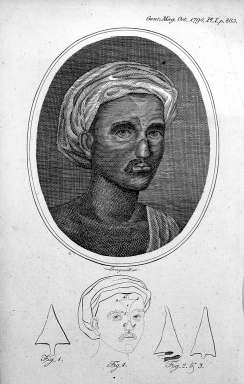
The concept of altering one’s appearance to meet beauty standards has been around for centuries. From the early Egyptians to modern times, plastic surgery has undergone a dramatic transformation.

Among the many types of procedures available today, one of the most popular is the nose job. However, the procedure’s roots go far back, as evidenced by the Edwin Smith Papyrus.

In ancient times, those who wished to alter the appearance of their nose went through a process of manipulating it into the desired shape using splints and lint swabs.

It’s amazing how these ancient techniques are still utilized in modern procedures today.

With the advancements in technology and medical practices, nose jobs have become a common practice and are seen as a means to improve one’s appearance and confidence.

As with any procedure, there are risks and complications associated with nose jobs. It’s important to consult with a reputable surgeon and be fully aware of the procedure’s details before going through with it.

However, the transformation and impact that a successful nose job can have on an individual’s self-esteem and quality of life cannot be underestimated.

2- Fire Drill — Remove Tumors
Source: Wikipedia

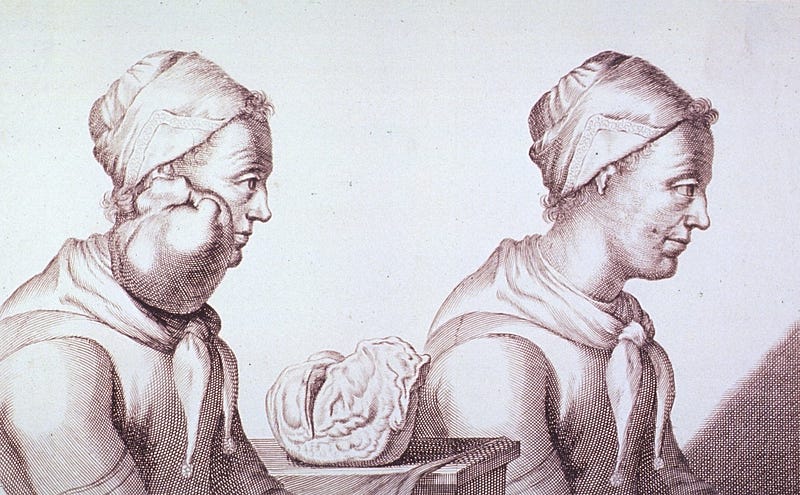
Before the invention of modern surgical tools, doctors used some very questionable methods to treat their patients. One of the most haunting of these methods was using a fire drill to remove tumors.

The process involved using a handheld drill to bore into the tumor and then cauterizing the area with a heated metal rod to stop the bleeding.

This procedure was often performed without anesthesia, leaving the patient in excruciating pain.

It is difficult to imagine how anyone could endure such an ordeal, let alone survive it. Yet, this was a common practice for many centuries, especially in ancient times.

This gruesome method continued to be used until the 1800s, when advancements in medicine allowed for safer and less painful surgical procedures.

Thankfully, we now have more advanced medical technologies that allow for the safe and efficient removal of tumors.

Despite the use of a fire drill serves as a stark reminder of the dark and dangerous practices that were once considered acceptable in the medical field.

1- Blood Transfusion
Source: Wikipedia

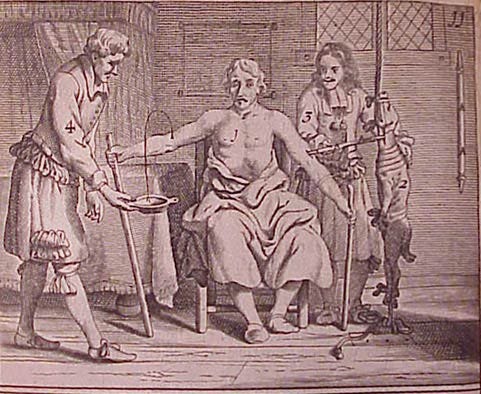
Blood transfusions have come a long way from the gruesome practices of ancient times.

While it was once believed that the blood of another person held special healing powers, today, we know that blood transfusions can save lives in emergency situations.

However, even modern-day transfusions come with their own set of risks, including the transmission of infectious diseases and allergic reactions.

With advancements in medical technology, the process has become much safer, but it’s still important to take precautions to avoid any adverse effects.

Despite the benefits, blood transfusions are not a common solution for most illnesses and are typically reserved for life-threatening situations.

Nevertheless, it’s fascinating to think how much we have evolved from drinking gladiator blood in ancient Rome to the modern-day blood transfusion procedures.

Points To Ponder

As we take a look back at the darkest moments in medical history, it is clear that the field has come a long way.

Procedures and techniques that were once considered groundbreaking have now been replaced by much more advanced and safer methods.

While these images may be disturbing, they serve as a reminder of how far medicine has come and how much we still have to learn. It is important to acknowledge the errors of the past and to strive towards a better future.

By learning from our past mistakes, we can continue to advance and improve the field of medicine, ultimately leading to better outcomes for all patients.

As we move forward, it is important to keep these haunting images in mind and to use them as a motivation to continue improving medical practices.

Join Medium Today

More from the author:

History
Culture
Life
Education
Crime
Recommended from ReadMedium