
7 Essential Frameworks Every Entrepreneur Needs to Build a Million-Dollar Startup
“There’s a tremendous amount of craftsmanship in between a great idea and a great product” — Steve Jobs
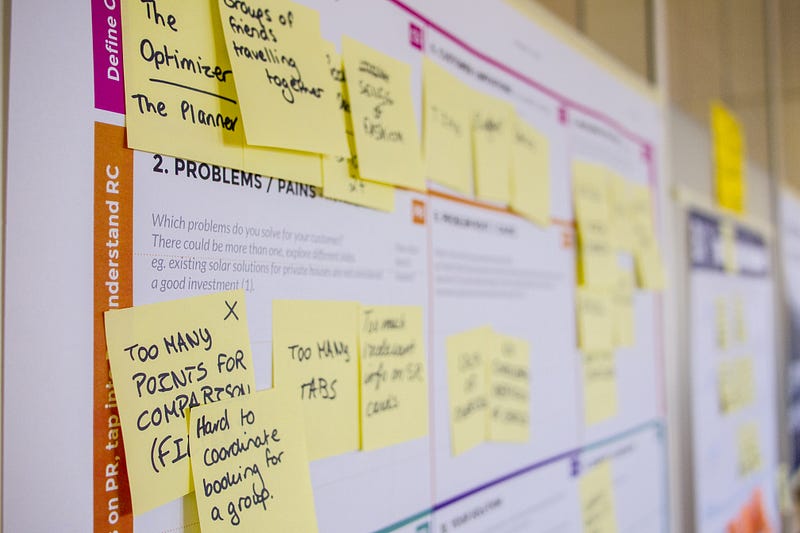
You may think that a really great idea is 90% of the work.
But the truth is a great product idea will never turn out as initially conceived.
You’ll learn a lot from the details of building it, and there will be tradeoffs you’ll have to make.
And starting a business from scratch can be daunting, especially if you have no idea where to begin except for that lonely idea.
Many aspiring entrepreneurs are brimming with passion and willpower. Still, they need a roadmap to successfully navigate the turbulent waters of business development.
That’s why I scoured deep for the most simple but powerful frameworks that successful startups use to navigate the five crucial phases of building a business: Idea Generation and Validation, Product Development and Launch, Internal Development and Growth, and Scaling and Taking It to the Next Level, and Overall Business Review.
Let’s dig in.
Phase 1: Idea Generation and Validation
Painkillers vs. Vitamins: The Key to Building a Scalable Startup
Every significant venture begins with a brilliant idea, but how do you ensure it’s worth pursuing?
That’s where the Painkillers vs. Vitamins framework comes in.
To create a successful startup, you must identify your target audience’s pain points and design your solution as a “painkiller” that addresses their most urgent needs.
You should avoid falling into the “vitamin” category, which provides additional benefits but is not essential.
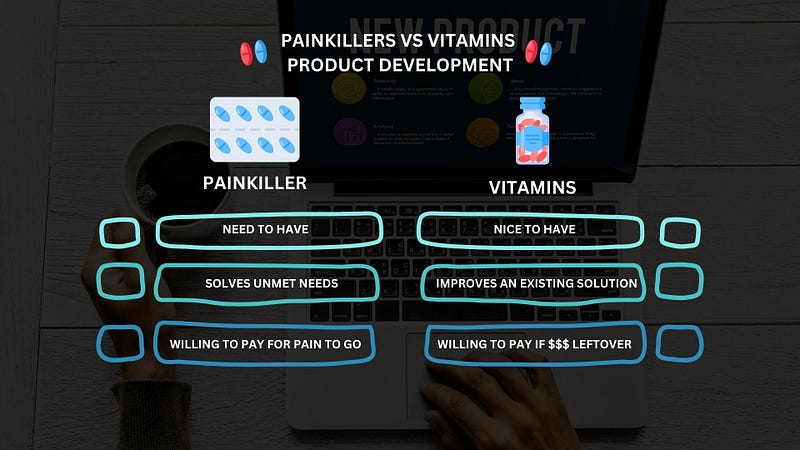
Example: MediHelp is a telemedicine platform that provides on-demand medical consultations.
- Essential Painkiller: Many people in remote areas struggle to access immediate medical advice. By offering video consultations with licensed doctors 24/7, MediHelp acts as a painkiller, addressing an urgent need for medical care.
- Additional Vitamin: As a “vitamin” feature, MediHelp also provides personalized health tips and daily reminders for users to lead a healthier lifestyle, enhancing overall wellness beyond immediate medical consultations.
Phase 2: Product Development and Launch
After validating your idea, it’s time to develop and launch your product. Two frameworks can guide you through this phase:
Amazon’s Product Framework: A Customer-Centric Approach
This framework emphasizes understanding the customer, their problems, and the customer experience by following five questions:
- Who is the customer?
- What is the problem/opportunity?
- What is the leading customer benefit?
- How do you know customers want this?
- What is the customer experience?
Example: FreshFix delivers pre-portioned meal kits and chef-curated recipes, making home cooking effortless and healthy.
- Who is the customer?: busy professionals, working parents, and health-conscious individuals who value convenience and quality.
- What is the problem/opportunity?: many people find it challenging to plan meals and buy fresh ingredients due to their busy schedules, leading to unhealthy eating habits.
- What is the leading customer benefit?: save time for its customers by delivering pre-portioned, fresh recipes right to their doorsteps.
- How do you know customers want this?: market research, surveys potential customers, and tests the concept with a pilot program to gather feedback and validate their meal kit service demand.
- What is the customer experience?: a seamless user experience through a user-friendly website, easy-to-follow recipes, and exceptional customer support.
Outcome: Using Amazon’s product framework, FreshFix can tailor its meal kit delivery service to cater to its target customers’ specific needs and preferences, leading to high customer satisfaction and retention.
STARS: Measuring User Engagement for Success
This framework is an easy way to create groups for your users and correctly evaluate feedback based on where the users are at.
It breaks down into five stages:
- Segment → Define the feature’s target audience
- Tried → Measure feature awareness
- Adopted → Measure feature activation
- Retained → Measure feature retention
- Satisfied → Measure satisfaction of retained accounts
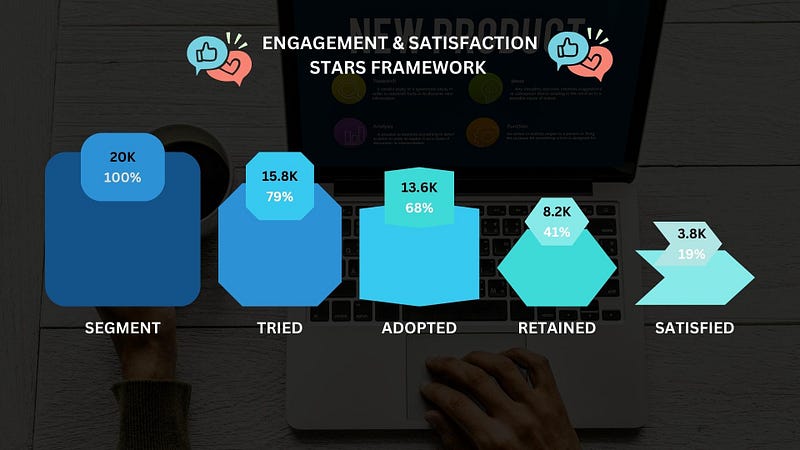
Example: Let’s consider FitBuddy, a fitness and wellness app.
- Segment: health-conscious individuals who want a comprehensive fitness and wellness platform.
- Tried: how many users know about a new workout planner feature through in-app notifications and email announcements.
- Adopted: the percentage of users who activate the workout planner feature and start creating personalized workout routines.
- Retained: how many users continue using the workout planner regularly over time, ensuring it retains users and provides long-term value.
- Satisfied: feedback from users who are actively using the workout planner feature to measure satisfaction and identify areas for improvement.
Outcome: Based on user engagement and satisfaction metrics, FitBuddy can make data-driven decisions to enhance the feature and drive higher user retention rates.
Phase 3: Internal Development and Growth
Entrepreneurial Operating System (EOS): Aligning Your Team Towards Success
As your startup gains momentum, internal development, and growth become critical.
The Entrepreneurial Operating System (EOS) outlines six key components to operate a business efficiently and align the team towards a shared vision.
- Vision: Define a clear, inspiring vision for the company.
- People: Place the right people in the right positions.
- Data: Identify key metrics for tracking performance.
- Issues: Hold problem-solving meetings to overcome obstacles.
- Process: Systematize processes for consistency and scalability.
- Traction: Focus on execution and making the vision a reality.
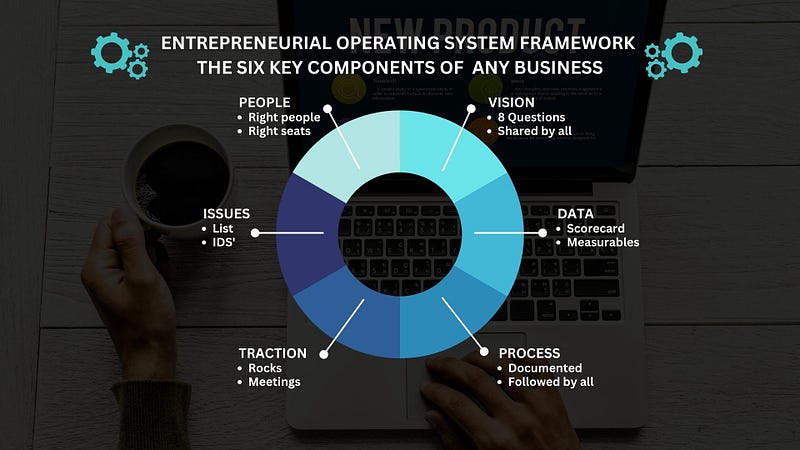
Example: HealthWise is a fast-growing health-tech startup that offers a personalized health and wellness app.
- Vision: “To empower individuals to take control of their health through personalized and data-driven insights.”
- People: skilled engineers, data scientists, and health experts to drive innovation and user engagement.
- Data: key metrics to track the effectiveness of their health recommendations, such as user engagement, improvements in health markers, and user satisfaction.
- Issues: data privacy, user retention, and feature development challenges.
- Process: streamline the onboarding process and optimize user interactions within the app to provide a seamless user experience.
- Traction: improving their app’s functionality, adding new features based on user feedback, and collaborating with healthcare providers for seamless integration.
Outcome: They create scalable processes that efficiently address challenges and capitalize on opportunities, leading to rapid user growth and positive reviews from satisfied users.
Phase 4: Scaling and Taking It to the Next Level
If you’ve made it this far, your startup is thriving, and now it’s time to scale it to new heights. Two frameworks that can guide you in this phase:
SPADE: Making Decisions Like a Pro
SPADE helps make decisions and prioritize projects or features. It stands for:
- Setting → What, when, and why are we doing?
- People → Who is responsible, who should consult, and who should approve?
- Alternatives → Create a feasible, diverse, and comprehensive list
- Decide → Collect feedback, get approval, and make the call
- Explain → Call a commitment meeting (if necessary) and broadcast your decision
Example: FitBoost, the fitness and nutrition app, is gaining popularity, and now it’s time to take it to the next level.
- Setting: expand its user base by 50% within the next six months by targeting fitness enthusiasts, gym-goers, and health-conscious individuals.
- People: marketing experts, data analysts, and fitness trainers, to drive the expansion.
- Alternatives: strategic partnerships with fitness influencers, launching targeted ad campaigns, and a premium subscription plan.
- Decide: analyze data, conduct A/B testing, and gather user feedback to determine the most effective growth strategies.
- Explain: discuss the chosen strategies with all team members, ensuring everyone is on the same page. They then share them with the app’s user community to foster transparency and excitement.
Outcome: growth strategies that align with FitBoost’s vision, leading to a significant increase in user engagement and revenue.
Hierarchy of Engagement: Building an Engaged Community
The Hierarchy of Engagement prioritizes user actions, creating a self-reinforcing cycle.
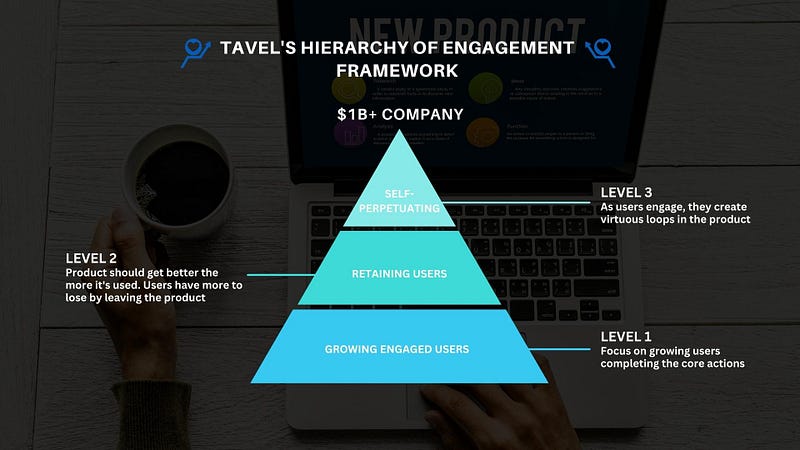
Example: QuestCraft, a fantasy role-playing game (RPG) app.
- Level 1 — Core Action: completing quests and battling monsters to progress in the game.
- Level 2 — Network Effects: As more players join, the in-game community thrives, allowing players to team up for challenging raids and explore virtual worlds together.
- Level 3 — Flywheels: a feature where players can earn unique rewards and in-game currency by referring their friends to join the game. New players joining through referrals also receive a bonus, encouraging word-of-mouth growth.
Outcome: an immersive gaming experience with a vibrant player community. Players are motivated to continue their quests, collaborate with others, and invite friends to join the adventure, leading to increased retention and continuous growth of the player base.
Phase 5: Product Review
At this stage of a startup’s journey, doing a full product review or seeing yourself out of business soon is mandatory.
The best way to do so is to wear the customer’s shoes.
AArrr Pirate Framework: Sailing Towards Success
The AArrr Pirate Framework outlines the stages in a user’s journey through a product:
- Acquisition
- Activation
- Retention
- Revenue
- Referral
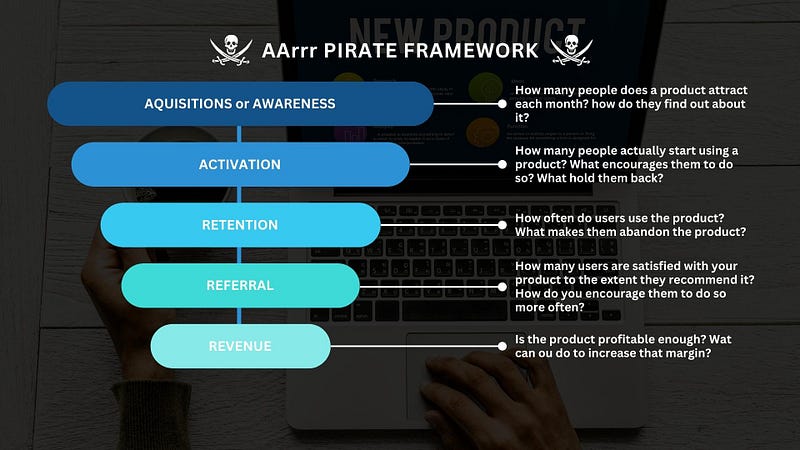
Example: WriteWell is an app and online platform that offers writing tools, resources, and community support for aspiring writers.
- Acquisition: targeted online ads, content marketing, and partnerships with writing communities and bloggers and a free trial of their writing tools.
- Activation: an interactive onboarding process through the platform’s features, such as writing templates, grammar checkers, and idea generators.
- Retention: regular newsletters with writing tips, success stories from other writers, and prompts to keep users engaged and motivated. They also host virtual writing workshops and webinars, fostering a sense of community and support.
- Revenue: a freemium model, where basic writing tools are free, but advanced features, such as plagiarism checkers and professional editing services, are available under a premium subscription. They also partner with publishers to offer self-publishing options for writers, earning a percentage of book sales.
- Referral: a discount on premium subscriptions for each successful referral. WriteWell also runs writing contests and rewards top contributors with cash prizes and publishing opportunities.
Outcome: By applying the AARRR Pirate Framework, WriteWell experiences a steady influx of new writers through targeted marketing and partnerships.
Conclusion
As you embark on your journey to building a startup, remember that every successful entrepreneur needs a set of proven frameworks to guide them, no matter the size of the company.
By adopting these essential frameworks, you’ll gain a deeper understanding of your customers, drive user engagement, optimize your internal processes, and set your startup on the path to sustainable growth and success.
Join The MOAM 30-Day Money Mindset Challenge
This article is for informational purposes only. It should not be considered Financial or Legal Advice. Not all information will be accurate. Consult a financial professional before making any major financial decisions.


