
7 Discoveries in Space Exploration That Will Shock You
This will surely amaze you
Hubble’s Deep Field Image:
One of the most awe-inspiring discoveries in space exploration was the Hubble Space Telescope’s Deep Field Image. In 1995, Hubble focused on a seemingly empty patch of the sky for ten days, revealing thousands of previously unseen galaxies. This image revolutionized our understanding of the universe’s vastness, showing billions of galaxies, each containing countless stars and potential planets.
Water on Mars:

In recent years, scientists have made remarkable discoveries indicating the presence of water on Mars. This includes the detection of liquid water beneath the planet’s surface, as well as the identification of water ice at the poles. These findings are crucial for future manned missions to Mars, as they provide potential resources for sustaining human life and fueling spacecraft.
Gravitational Waves:

Albert Einstein’s theory of general relativity predicted the existence of gravitational waves, ripples in spacetime caused by massive objects in motion. In 2015, scientists observed these waves for the first time. This groundbreaking discovery confirmed Einstein’s theory and opened up a new age of astronomy, allowing us to study the universe in a new way.
Exoplanets and Habitable Zones:
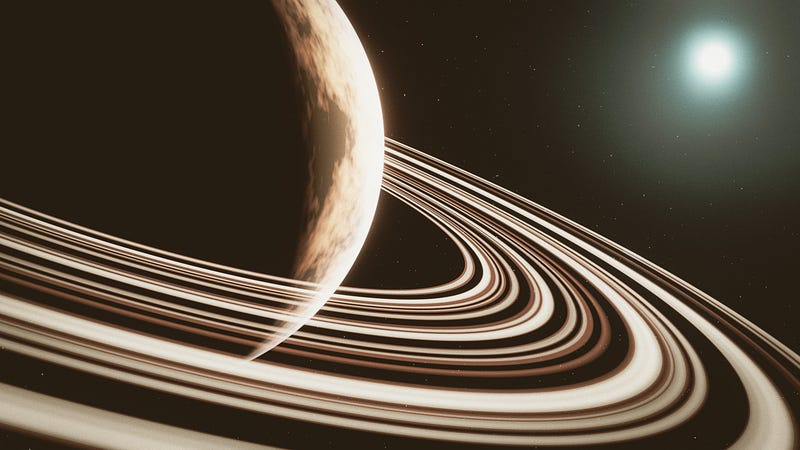
The discovery of thousands of exoplanets has been a game-changer in the search for extraterrestrial life. Researchers have identified planets within their star’s “habitable zone” where conditions could potentially support life as we know it. These findings expand our understanding of the diversity of planetary systems and increase the chances of finding life beyond Earth.
New Horizons Pluto Flyby:
In 2015, NASA’s New Horizons spacecraft provided our first close-up images of Pluto, a dwarf planet at the edge of our solar system. The images revealed a stunningly diverse world with icy mountains and a heart-shaped region, challenging our previous assumptions about distant celestial bodies and shedding light on the mysteries of the outer solar system.
Dark Matter and Dark Energy:

Although not directly observed, the existence of dark matter and energy has been inferred from various astronomical observations. Dark matter makes up a significant portion of the universe’s mass, while dark energy is thought to be responsible for the universe’s accelerated expansion. Understanding these enigmatic substances is one of the biggest challenges in modern cosmology.
Landing on a Comet:
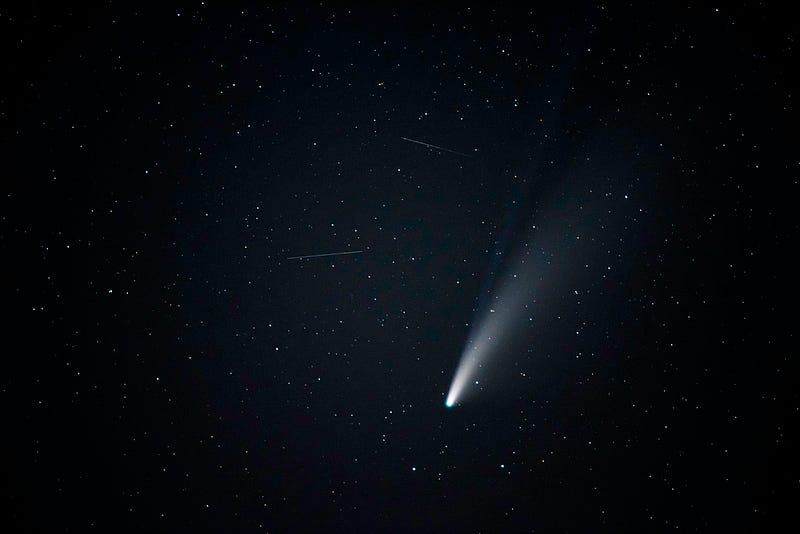
In 2014, the European Space Agency’s Rosetta spacecraft landed a probe called Philae on a comet known as 67P/ Churyumov-Gerasimenko. This event marked the first time humanity had successfully landed a spacecraft on a comet’s surface. The mission provided valuable insights into the composition and behavior of these ancient celestial objects, shedding light on the origins of our solar system.
Hi I am Mahnoor Shafiq. Follow me and subscribe to my profile


